Understanding life cycles Normal Science Worksheets for 6-Year-Olds
3 filtered results
-
From - To
Explore our engaging "Understanding Life Cycles" worksheets designed specifically for 6-year-olds! These printable resources help young learners grasp the concept of life cycles in a fun and interactive way. Through vibrant illustrations and age-appropriate activities, children will discover the life cycles of plants, butterflies, frogs, and more. Our worksheets encourage critical thinking, observation skills, and creativity, making science enjoyable and accessible. Perfect for classroom use or at-home learning, these worksheets provide a solid foundation in scientific concepts while fostering a love for discovery. Download now to enrich your child's understanding of the natural world and its fascinating life cycles!
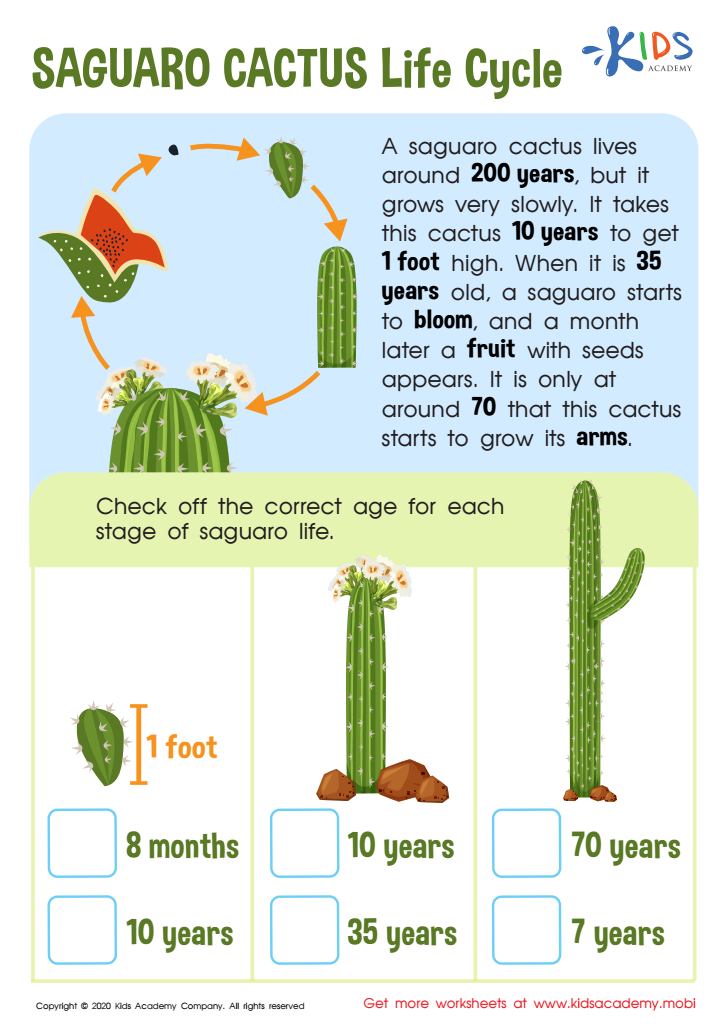
Saguaro Cactus Life Cycle Worksheet
 Assign to My Students
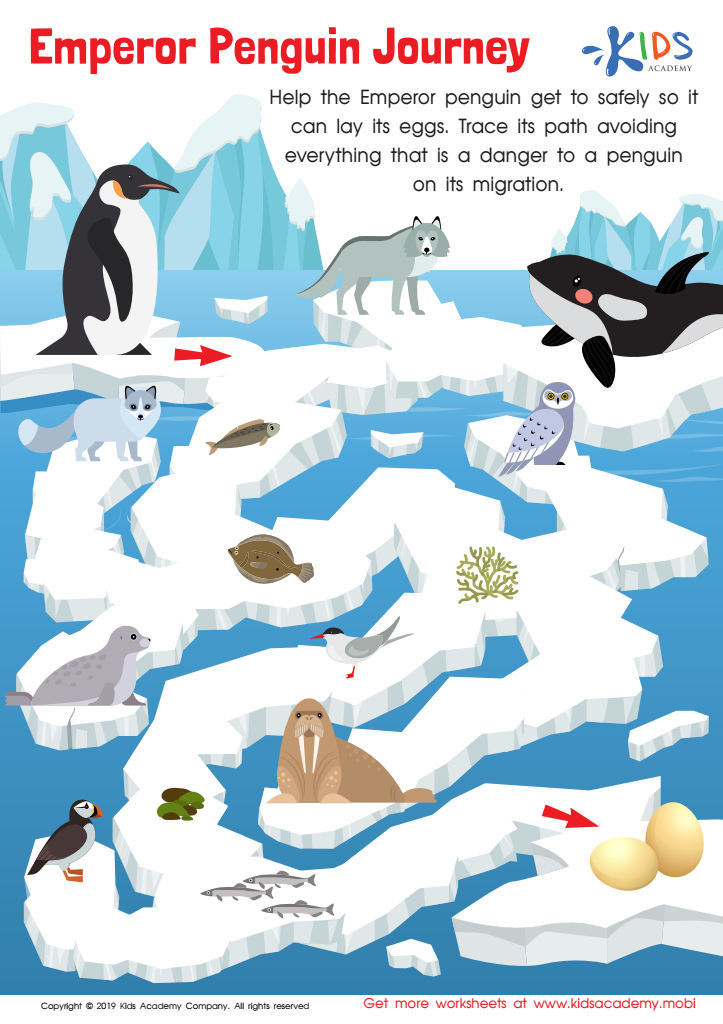
Emperor Penguin Journey Worksheet
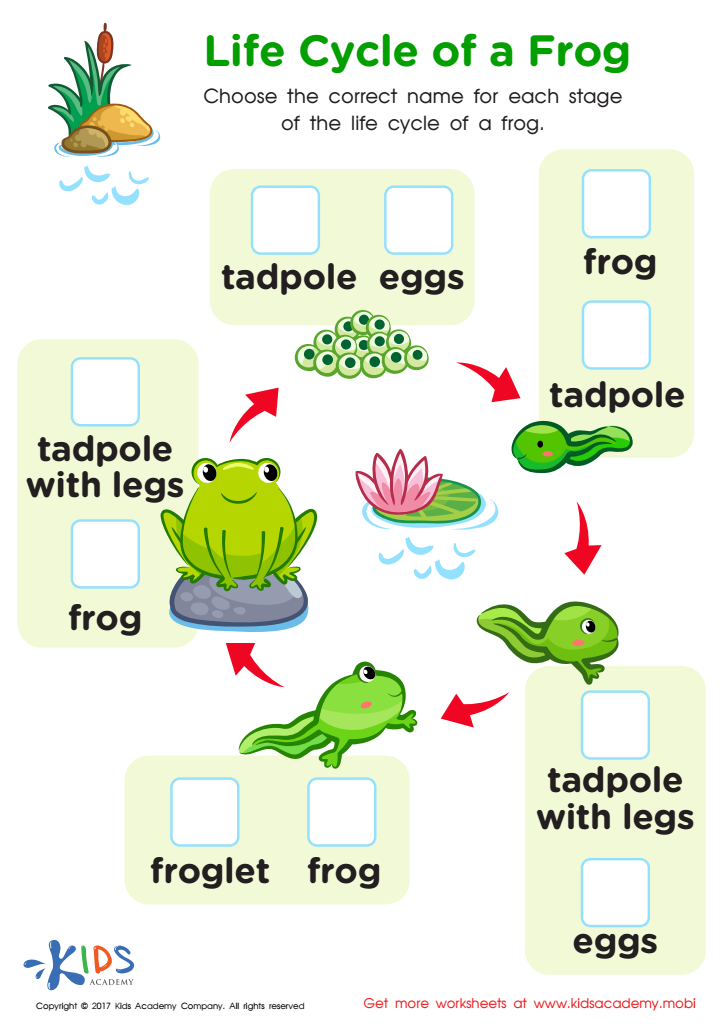
Life Cycle Frog Printable






Understanding life cycles is essential for parents and teachers of 6-year-olds as it lays the foundation for scientific literacy, critical observation skills, and a deeper appreciation of the natural world. At this age, children are naturally curious about the environment around them. Introducing concepts like the life cycles of plants and animals helps satisfy their curiosity while fostering a sense of wonder.
Life cycle education aids children in grasping basic scientific principles, such as growth, change, and the interconnectedness of ecosystems. Through hands-on activities, like planting seeds or observing caterpillars transform into butterflies, both parents and teachers can engage children in experiential learning, which enhances their retention of information. This hands-on approach not only makes learning enjoyable but also develops essential skills like patience and empathy as children witness and understand the growth processes of other living beings.
Additionally, learning about life cycles can also instill values of responsibility, as children come to understand the importance of caring for the environments and creatures around them. By encouraging these discussions and explorations, parents and teachers help cultivate informed, environmentally conscious individuals who are likely to appreciate and advocate for the world around them in the future.







