Understanding photosynthesis Normal Science Worksheets for 6-Year-Olds
3 filtered results
-
From - To
Introduce 6-year-olds to the amazing process of photosynthesis with our engaging, age-appropriate worksheets designed for young learners! "Understanding Photosynthesis" offers clear and enjoyable activities that help children grasp the basics of how plants convert sunlight into energy. Through colorful illustrations and simple explanations, kids will explore the role of sunlight, water, carbon dioxide, and chlorophyll in plant life. Ideal for curious minds, these worksheets support early science skills, fostering a love for nature and the environment. Perfect for home or classroom use, our worksheets make learning science fun and accessible for young children!
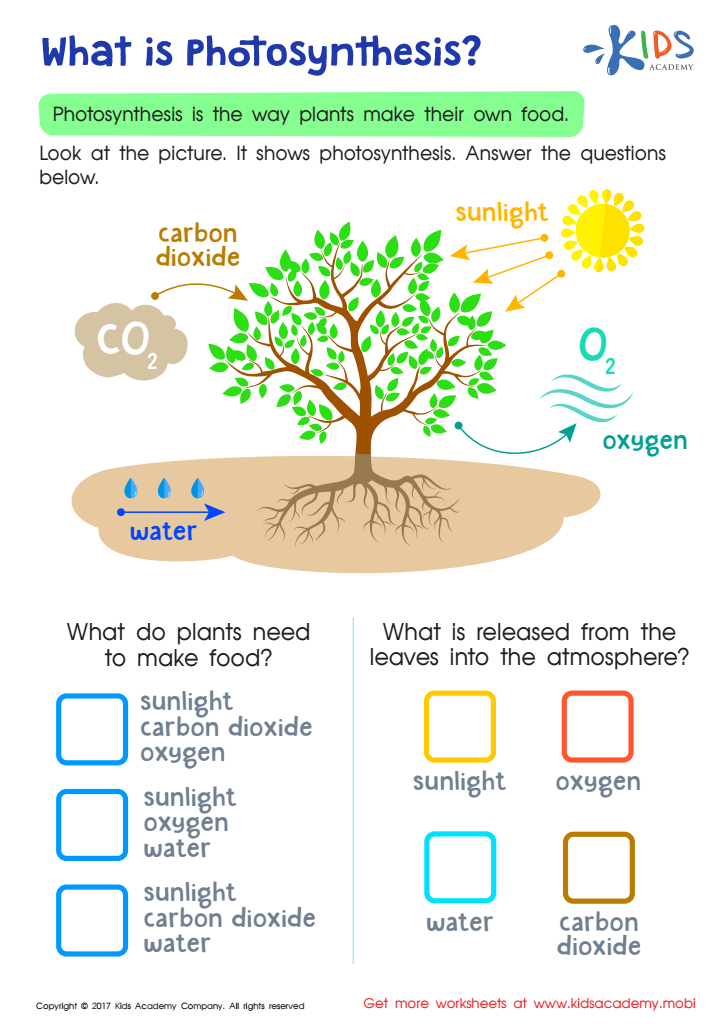
What is Photosynthesis Printable
 Assign to My Students
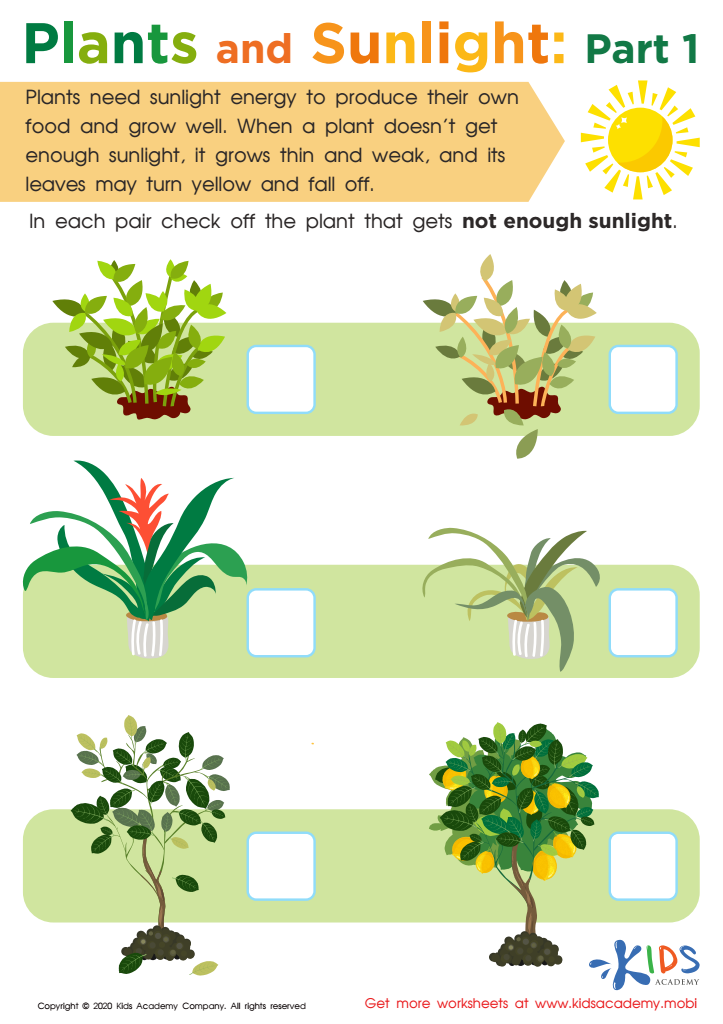
Plants and Sunlight: Part 1 Worksheet
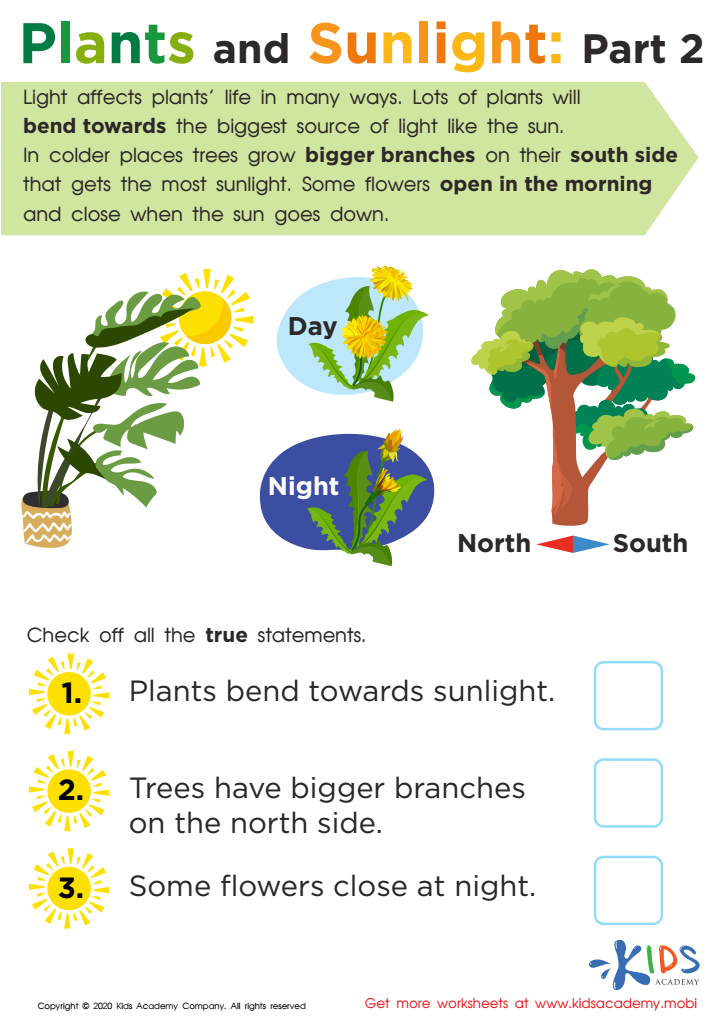
Plants and Sunlight: Part 2 Worksheet







Parents and teachers should prioritize helping 6-year-olds understand photosynthesis because it lays a foundation for their scientific curiosity and critical thinking skills. Simplifying the concept of photosynthesis—a process by which plants convert sunlight, carbon dioxide, and water into food and oxygen—whets young learners' interests in the natural world. It nurtures an appreciation for nature, teaching children the importance of plants in sustaining life on Earth.
This basic knowledge introduces them to broader principles of biology and helps them understand interconnected systems, like the food chain and ecological balance. By fostering this early awareness, children appreciate the vital role plants play in providing food and oxygen, setting the stage for more complex scientific concepts later on.
Engaging lessons on photosynthesis also promote inquisitiveness and a proactive learning attitude. Kids gain skills in observing, questioning, and reasoning, crucial for their overall intellectual development. Plus, these discussions could nurture environmental stewardship, encouraging behaviors that support sustainability, such as plant care and protecting green spaces.
In short, understanding photosynthesis, even at a rudimentary level, equips young children with knowledge and attitudes that underpin informed engagement with their environment, supporting academic growth and responsible citizenship.







