Spatial awareness Normal Space Worksheets for 6-Year-Olds
3 filtered results
-
From - To
Enhance your 6-year-old’s spatial awareness with our engaging Normal Space Worksheets! Designed to improve understanding of spatial relationships, these worksheets feature fun activities that encourage children to navigate directions, differences, and positions. Kids will learn important concepts through interactive exercises, puzzles, and drawing tasks that capture their imagination. Our user-friendly resources help develop critical thinking, boost problem-solving skills, and foster creativity. From identifying shapes to understanding spatial directions, these worksheets are perfect for early learning at home or in the classroom. Download now and watch your child thrive as they explore the wonders of spatial awareness in an exciting way!
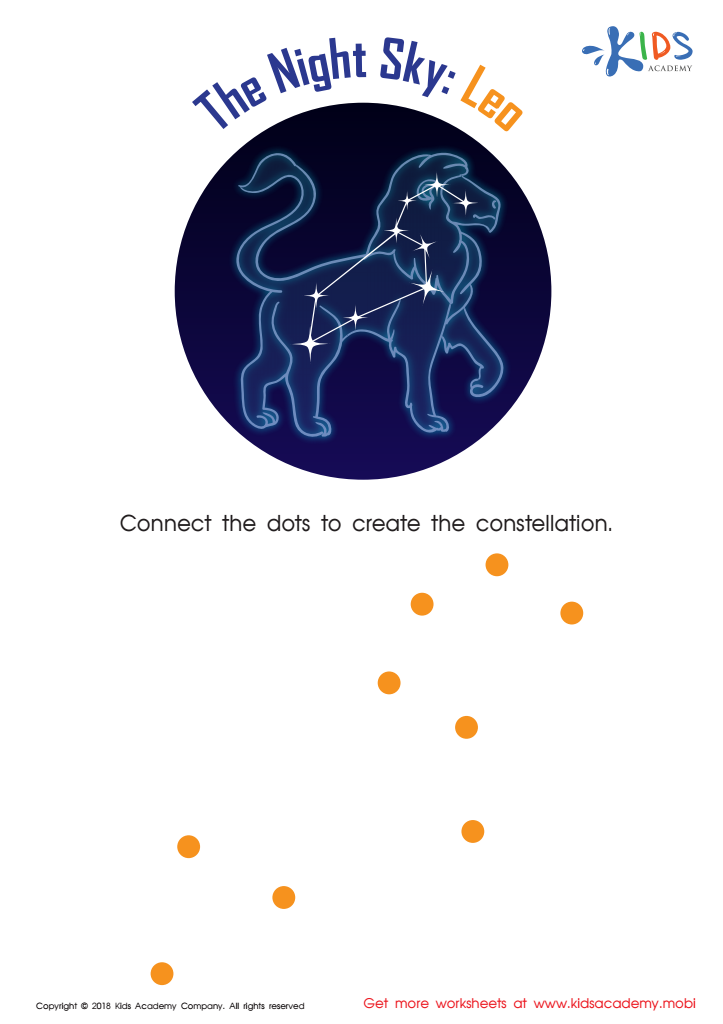
The Night Sky: Leo Worksheet
 Assign to My Students
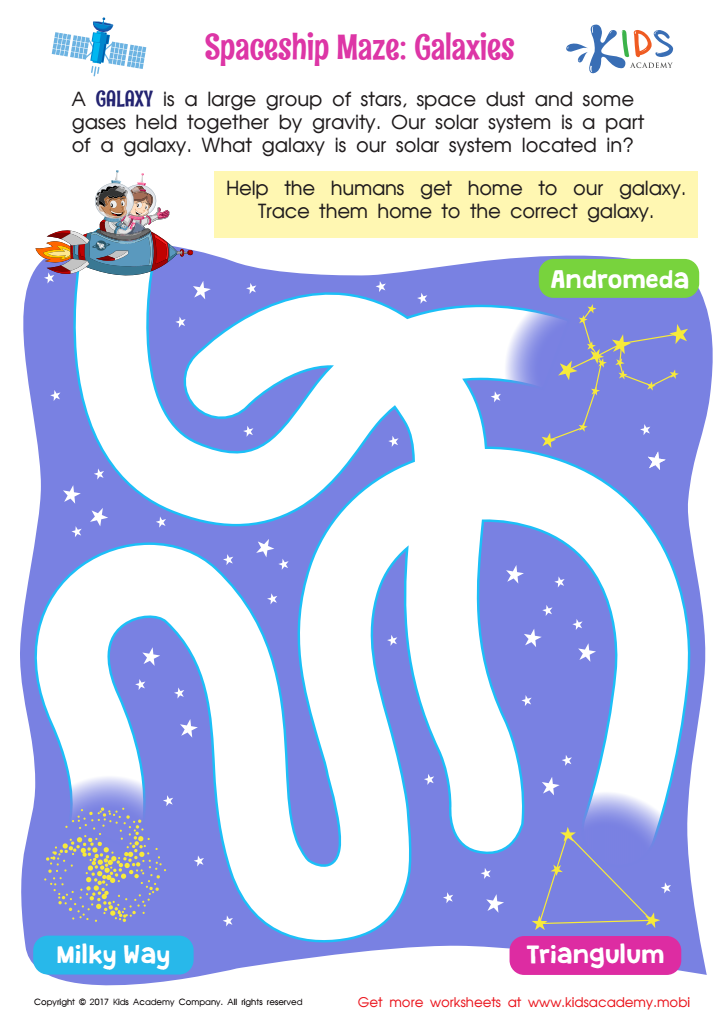
Spaceship Maze: Galaxies Worksheet
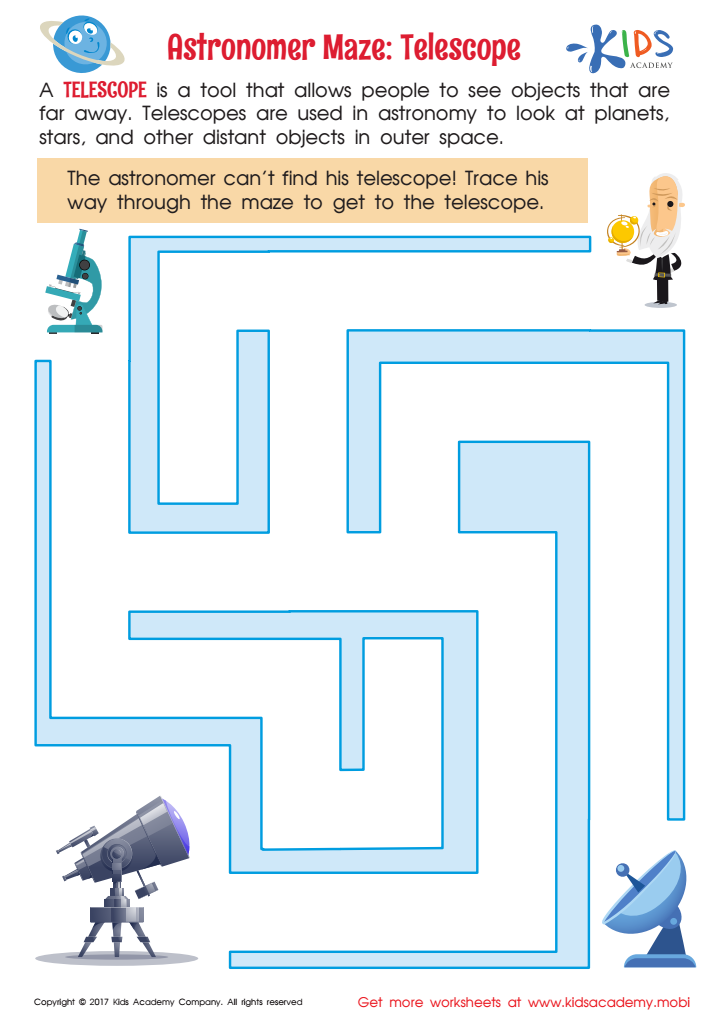
Astronomer Maze: Telescope Worksheet






Spatial awareness is a critical skill for 6-year-olds that significantly impacts their overall development and learning. At this age, children are beginning to understand how their bodies relate to the surrounding environment, making it crucial for parents and teachers to foster this skill through activities and play.
Firstly, spatial awareness is foundational for essential skills in math and science. Understanding the spatial relationships of objects helps in grasping concepts like geometry, measurement, and problem-solving. It encourages logical thinking, which enhances academic performance across various subjects.
Moreover, strong spatial awareness contributes to physical coordination and motor skills. Children who can navigate spaces effectively are typically more confident in activities that require movement, like sports or dance, which also promotes a healthy lifestyle and social interactions.
Additionally, this emerging sense of orientation fosters independence and confidence as children seek to safely explore their surroundings. As they develop these skills, they learn about boundaries, safety, and navigation, which are vital for personal growth.
In conclusion, prioritizing spatial awareness in early education helps shape well-rounded individuals, equipping them with essential skills that will benefit their academic, physical, and social development. Parents and teachers should indeed care about cultivating this important skill in young children.







