Matching skills Normal Social Studies Worksheets for 6-Year-Olds
3 filtered results
-
From - To
Discover our engaging Matching Skills Social Studies Worksheets tailored for 6-year-olds! Designed to make learning fun, each worksheet stimulates young minds by focusing on essential social studies concepts. By matching images, terms, and ideas, children develop critical thinking, enhance memory, and grasp key topics in geography, history, and community awareness. Perfect for early grade learners, these interactive activities balance education and enjoyment, fostering a love for learning. Ideal for both classroom use and at-home practice, our carefully crafted worksheets set the foundation for lifelong understanding of social studies in an age-appropriate, accessible format.
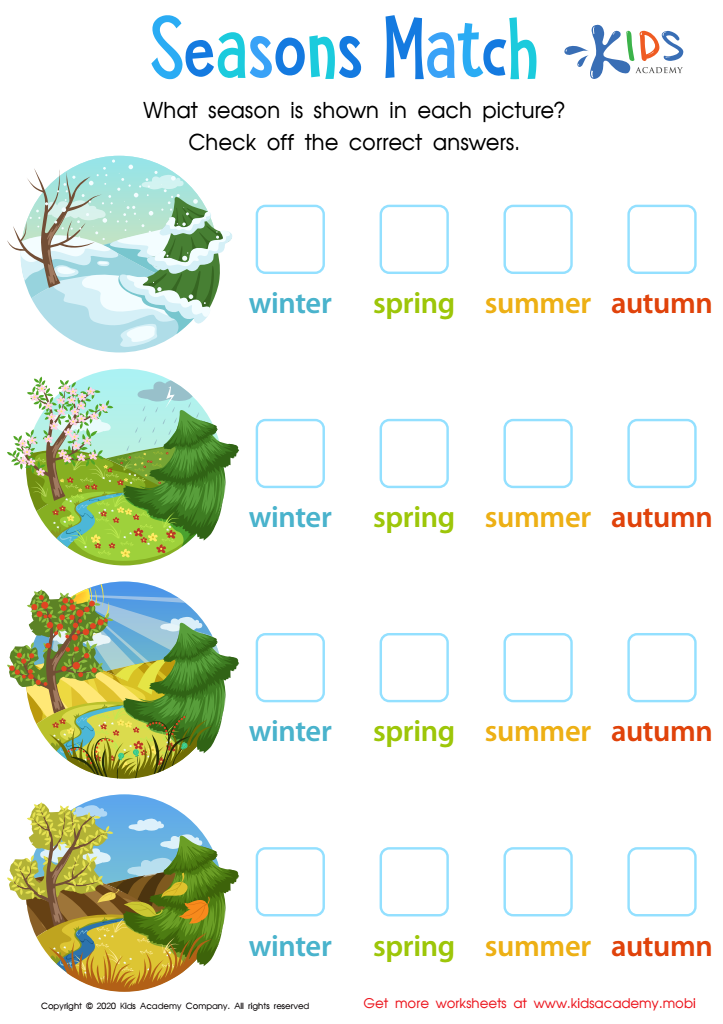
Seasons Match Worksheet
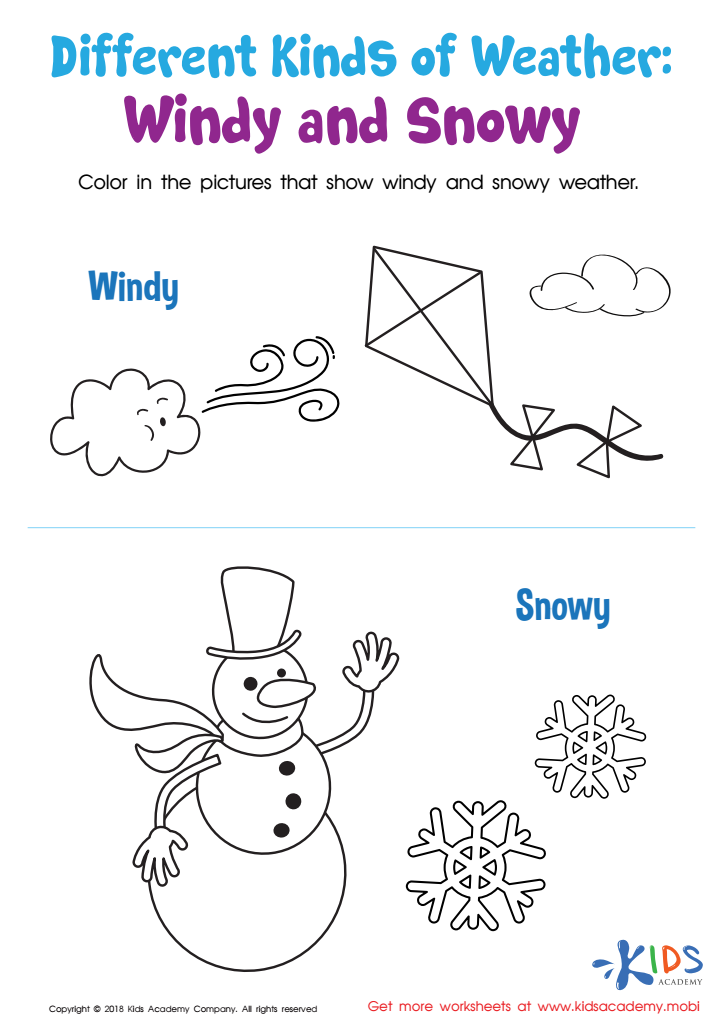
Different Kinds of Weather: Windy and Snowy Worksheet
 Assign to My Students
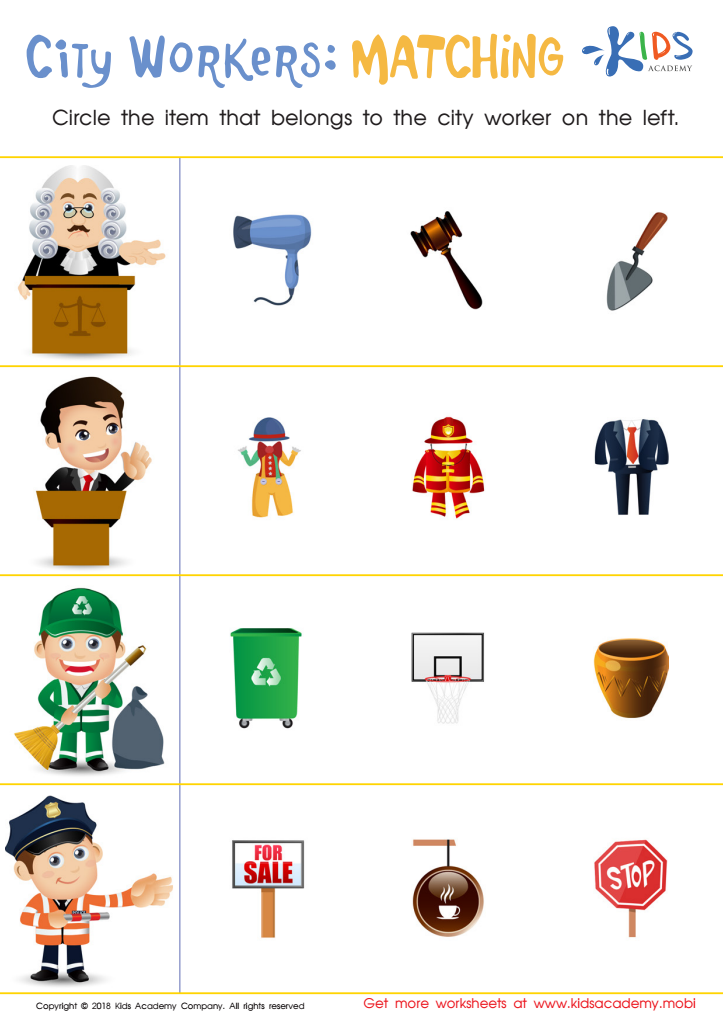
City Workers: Matching Worksheet







Parents and teachers should care about matching skills in normal social studies for 6-year-olds because these foundational concepts foster cognitive and social development critical for lifelong learning. Matching activities enhance a child's ability to recognize patterns, categorize information, and make connections between different concepts. For instance, matching pictures of community helpers with their roles (like a firefighter with a fire) reinforces knowledge about societal functions and emphasizes the importance of each role, fostering an appreciation for the community.
Furthermore, matching skills improve memory and attention to detail, essential for academic success across various subjects. When children match landmarks to locations or historical figures to their contributions, they're practicing recall and comprehension in meaningful ways.
Social studies also introduce young learners to the diverse world around them, promoting empathy and cultural awareness. Understanding basic geography, national symbols, and historical events through engaging matching games can spark curiosity and a sense of connection to the larger world.
Additionally, these skills encourage collaborative learning and communication when done in group settings, teaching children to work together productively. By investing in these early skills, parents and teachers set the stage for more complex problem-solving and informed citizenship in the future, contributing overall to a well-rounded education.