Fine Motor Skills Normal Tracing Words Worksheets for 6-Year-Olds
6 filtered results
-
From - To
Enhance your 6-year-old's fine motor skills with our engaging Normal Tracing Words worksheets! Designed specifically for young learners, these worksheets provide an enjoyable and effective way to develop writing prowess. By tracing letters and beginner words, children will not only refine their hand-eye coordination but also build confidence in their writing abilities. Our printables offer a variety of themed words to keep kids motivated while they practice. Perfect for home or classroom use, these worksheets support early literacy development while allowing children to express their creativity. Discover the joy of learning through play, and watch your child's skills grow!

Cupid Maze: An Printable
 Assign to My Students
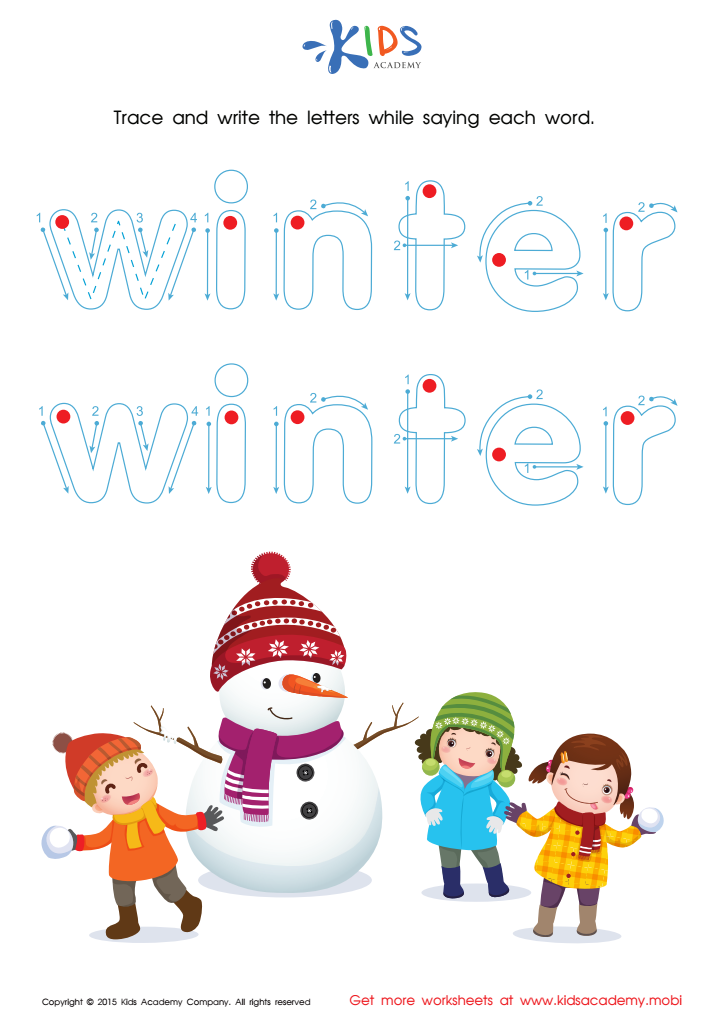
Snowman Tracing Winter Words Worksheet
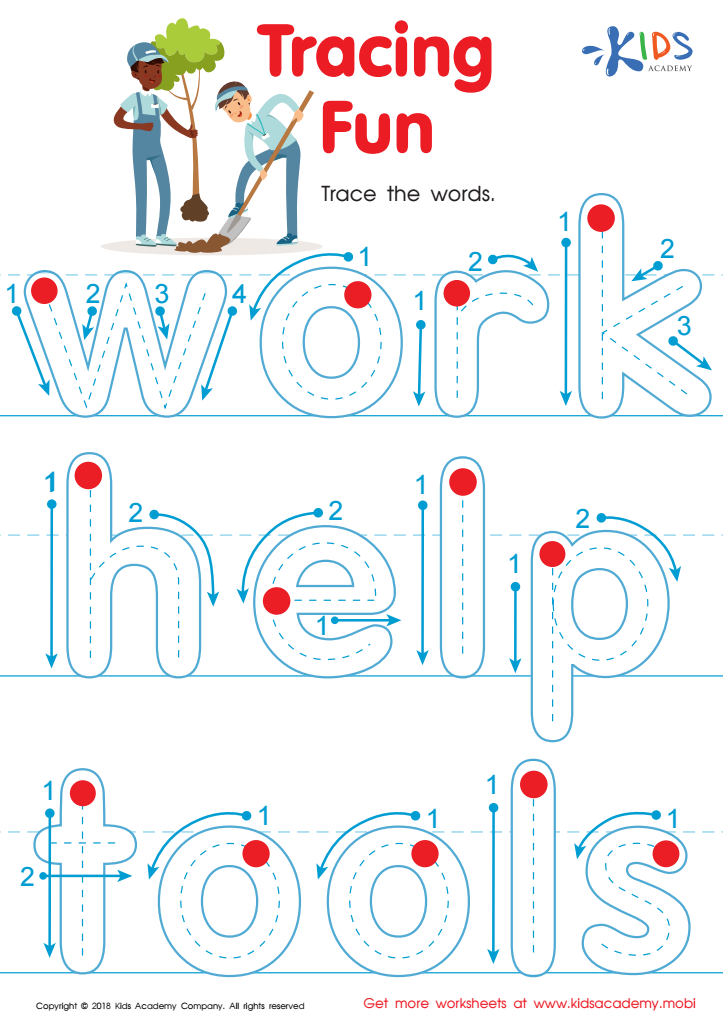
Tracing Fun Worksheet
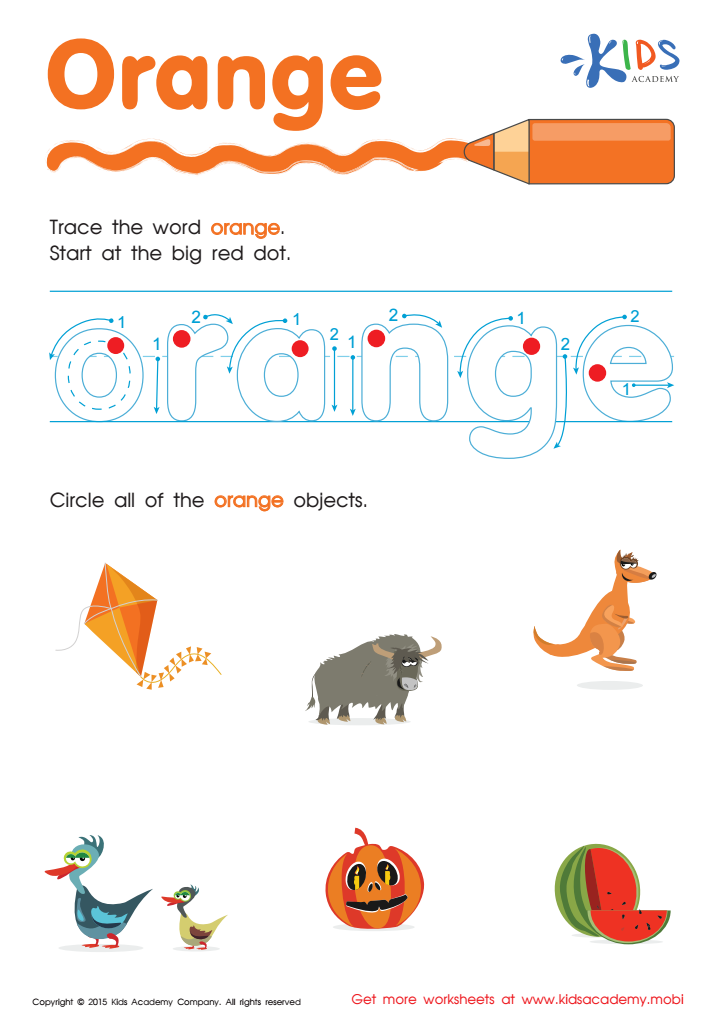
Orange Tracing Color Words Worksheet
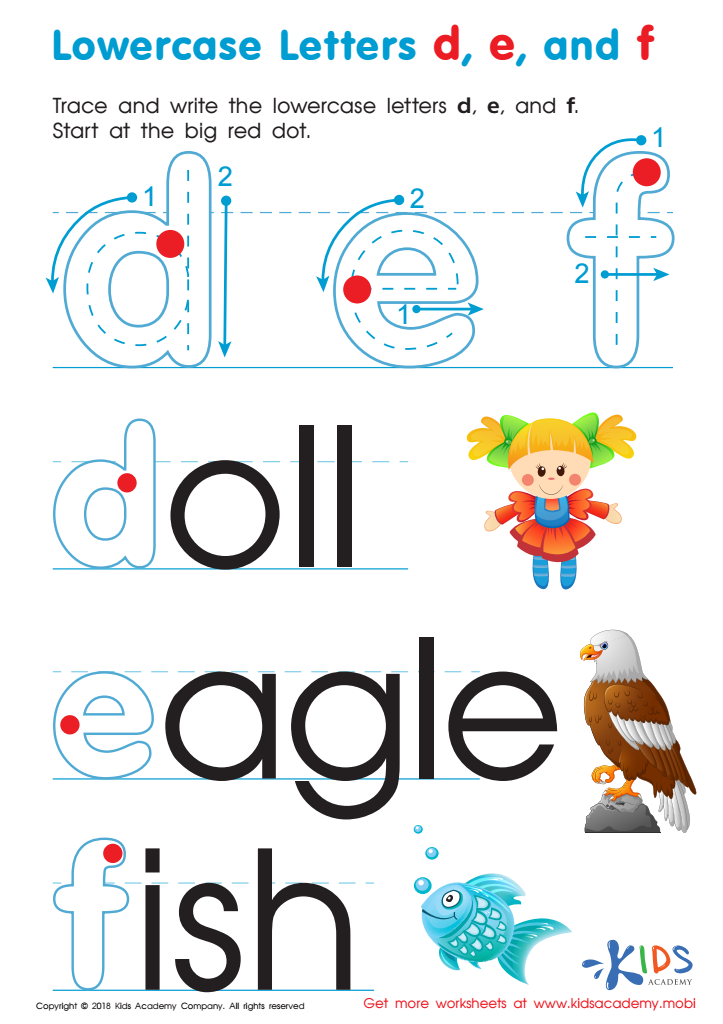
Lowercase Letters d e f Worksheet

White Tracing Color Words Worksheet








Fine motor skills are crucial for a child's overall development, particularly in early educational settings. At age six, children are refining the small muscle movements in their hands and fingers, which significantly impacts their ability to perform everyday tasks, such as writing, drawing, and using utensils. Normal tracing words activities help engage fine motor skills by encouraging children to control their hand movements, improve grip strength, and develop hand-eye coordination.
Parents and teachers should care about these skills because they lay the foundation for literacy and academic success. A child who can trace words with confidence is likely to transition smoothly into writing letters and sentences independently. This proficiency not only boosts their academic performance but also enhances their self-esteem, encouraging a love for learning.
Moreover, practicing fine motor skills offers structure and focus, allowing children to practice patience and perseverance. These characteristics serve them well beyond the classroom. By supporting activities that promote fine motor skills, parents and teachers foster essential life skills, paving the way for well-rounded development and preparing children for future learning challenges. In essence, caring about fine motor skills now means investing in a child's brighter, more productive future.