Reading proficiency Normal Alphabet Worksheets for Ages 7-8
5 filtered results
-
From - To
Boost your child's reading skills with our "Reading Proficiency Normal Alphabet Worksheets" designed for ages 7-8. These engaging worksheets focus on enhancing letter recognition, phonics, and vocabulary development. Tailored to foster confidence in young readers, each activity features colorful illustrations and interactive tasks that make learning fun. Perfect for parents and educators alike, these worksheets provide essential practice to help children master the alphabet and improve their reading proficiency. Explore a variety of exercises that promote critical thinking, comprehension, and literacy skills, setting the foundation for a lifelong love of reading. Download today to start your child's journey towards becoming a proficient reader!
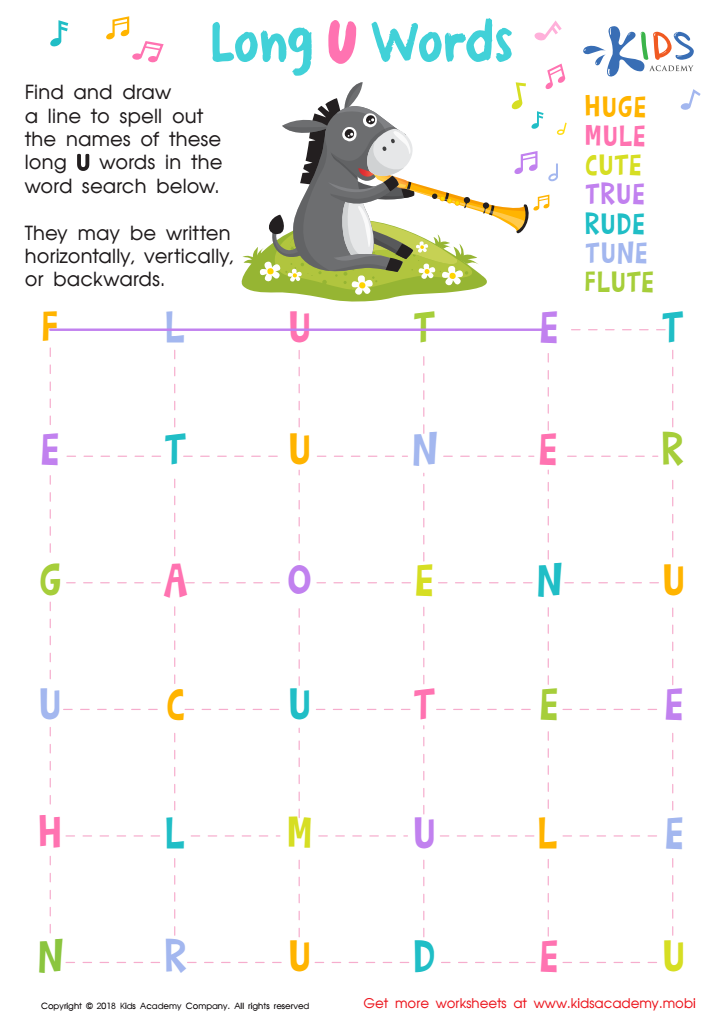
Long /u/ Words Worksheet
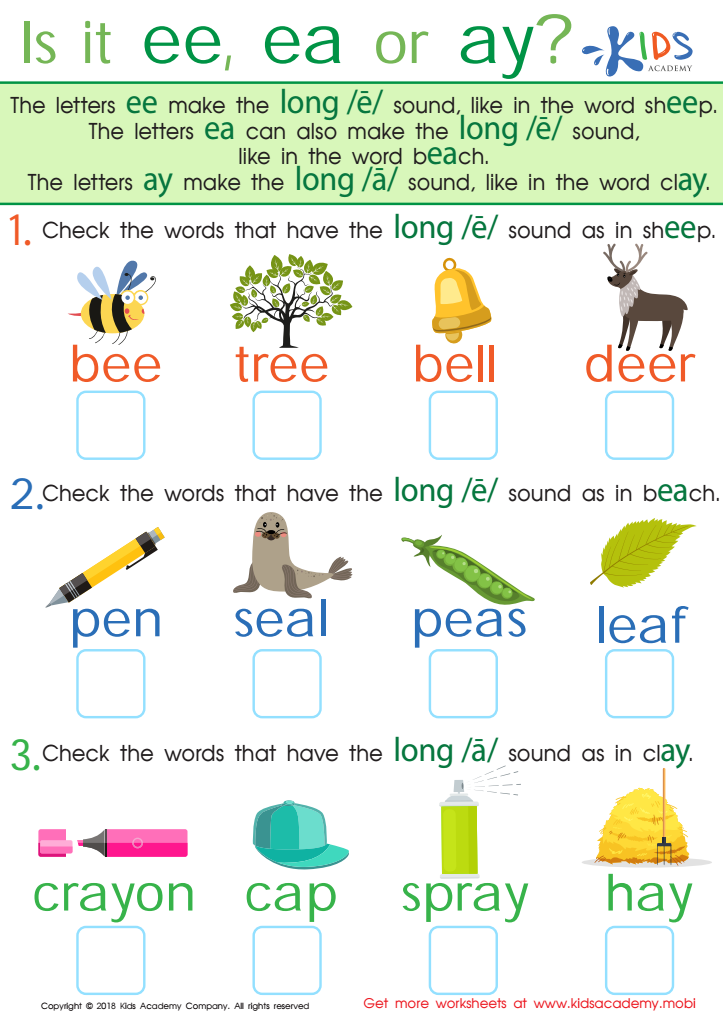
Is It EE, EA, or AY? Worksheet

Long and Short U Worksheet
 Assign to My Students
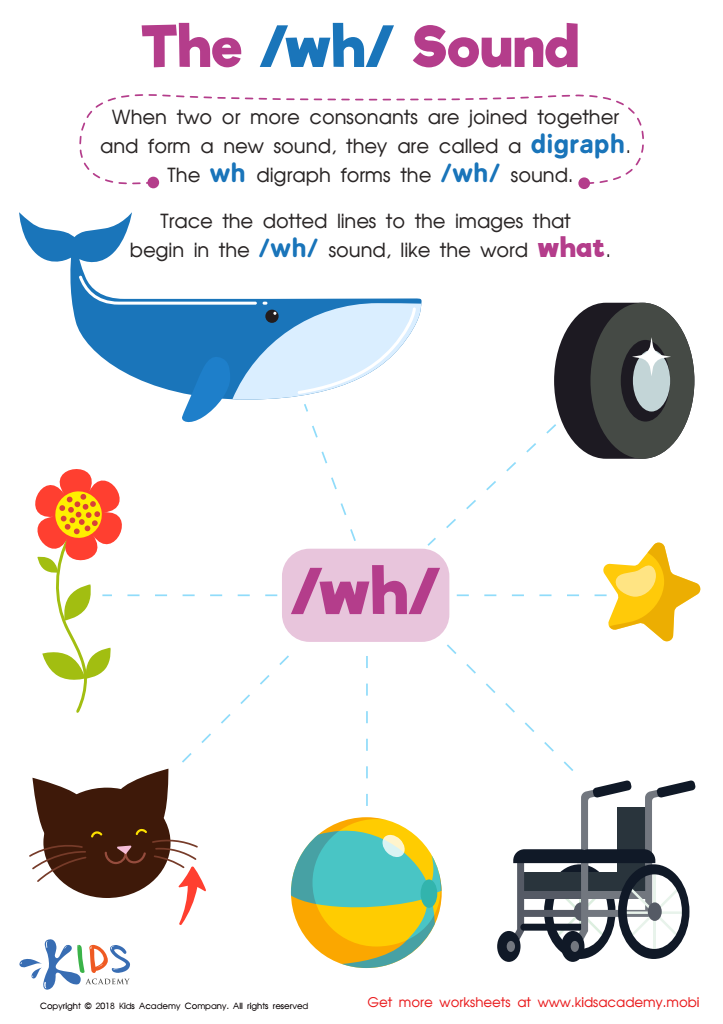
The /wh/ Sound Worksheet
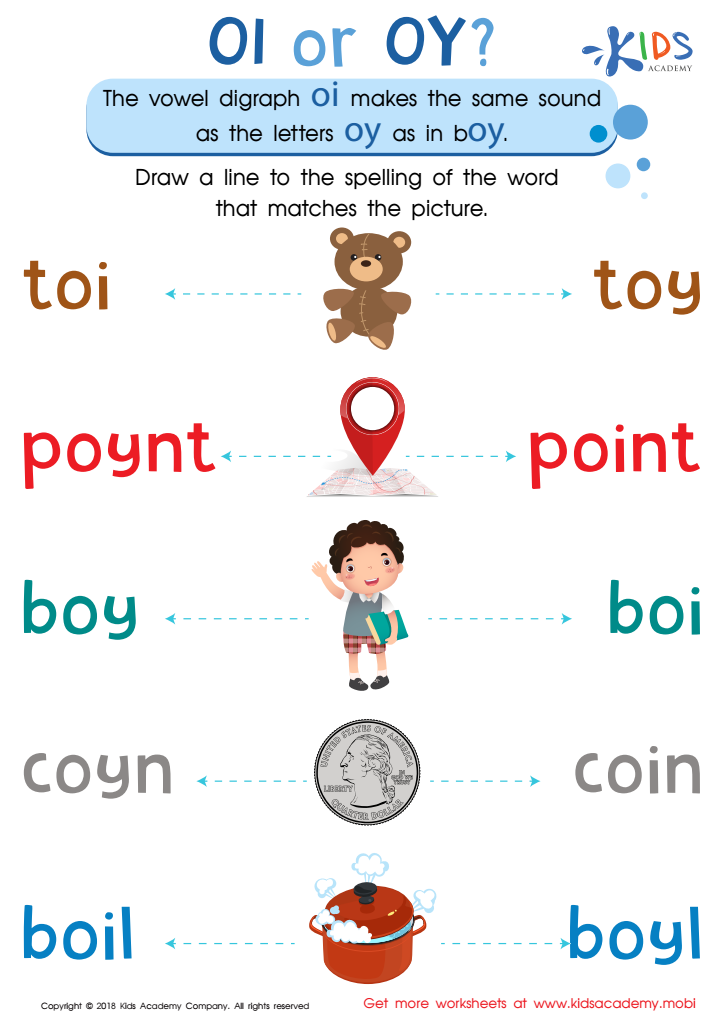
Reading: OI and OY Worksheet







Reading proficiency in ages 7-8 is crucial for several reasons. At this age, children transition from learning to read to reading to learn, meaning that their ability to read fluently impacts their overall academic success. Proficient reading skills are foundational for understanding texts across subjects, which influences their performance in math, science, and social studies.
Moreover, reading proficiency boosts a child's confidence and encourages a love for learning. Children who read well are more likely to engage with books and seek out new knowledge, fostering critical thinking and creativity. This age group also begins to grasp complex sentences and vocabulary, which can enhance their communication skills.
Furthermore, developing early reading skills can help identify challenges such as dyslexia or other learning disabilities timely, allowing for support systems to be put in place. Parents and teachers play a vital role in nurturing these skills through interactive reading activities, discussions about texts, and providing access to a diverse range of literature.
In summary, ensuring reading proficiency in children aged 7-8 not only supports academic achievement but also cultivates essential life skills, making it crucial for both parents and educators to prioritize.







