Vocabulary enhancement Normal Long And Short Vowel Worksheets for Ages 7-8
5 filtered results
-
From - To
Enhance your child's vocabulary with our Normal Long and Short Vowel Worksheets designed for ages 7-8. These engaging worksheets focus on reinforcing phonetic awareness and understanding of long and short vowel sounds. Children will practice identifying, reading, and using vocabulary words through fun activities that make learning enjoyable. Our carefully crafted exercises promote critical thinking and increase language skills, helping young learners develop a solid foundation in reading and pronunciation. Ideal for classroom use or at-home learning, these worksheets will boost your child's confidence and vocabulary, setting them up for future academic success. Download now and watch their language skills flourish!
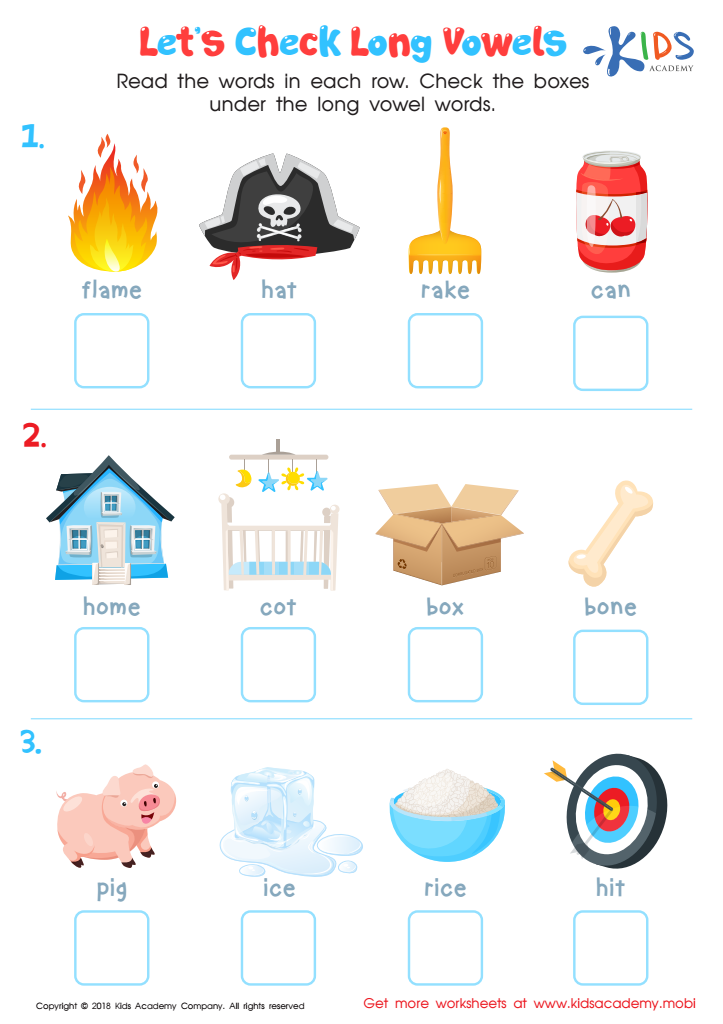
Let's Check Long Vowels: Assessment Worksheet
 Assign to My Students
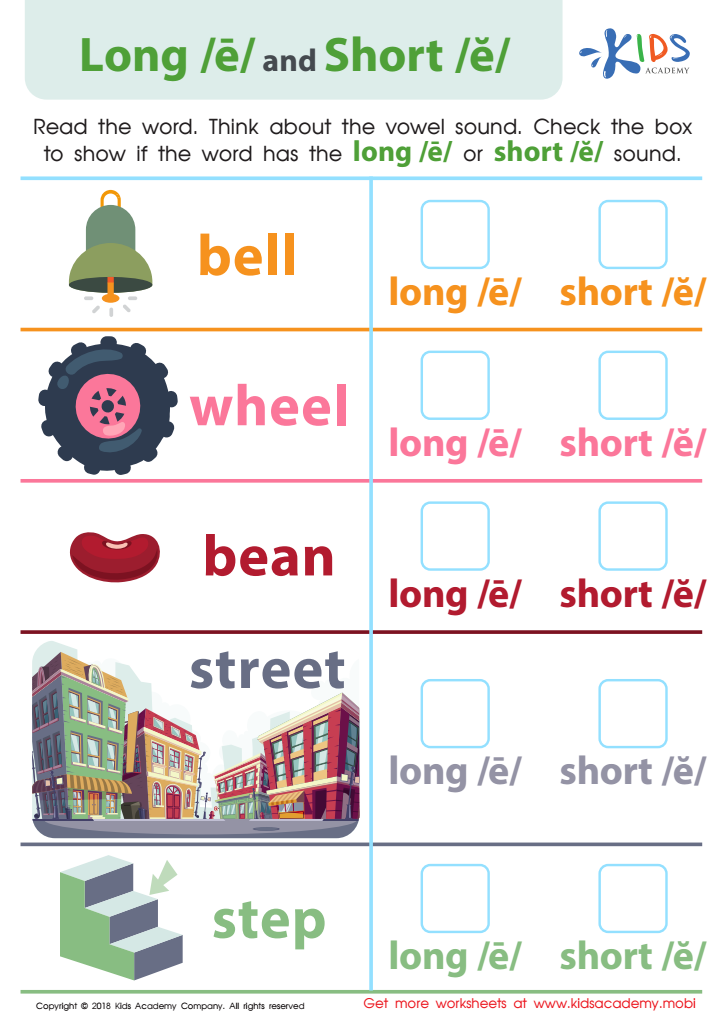
Reading: Long E and Short E Worksheet
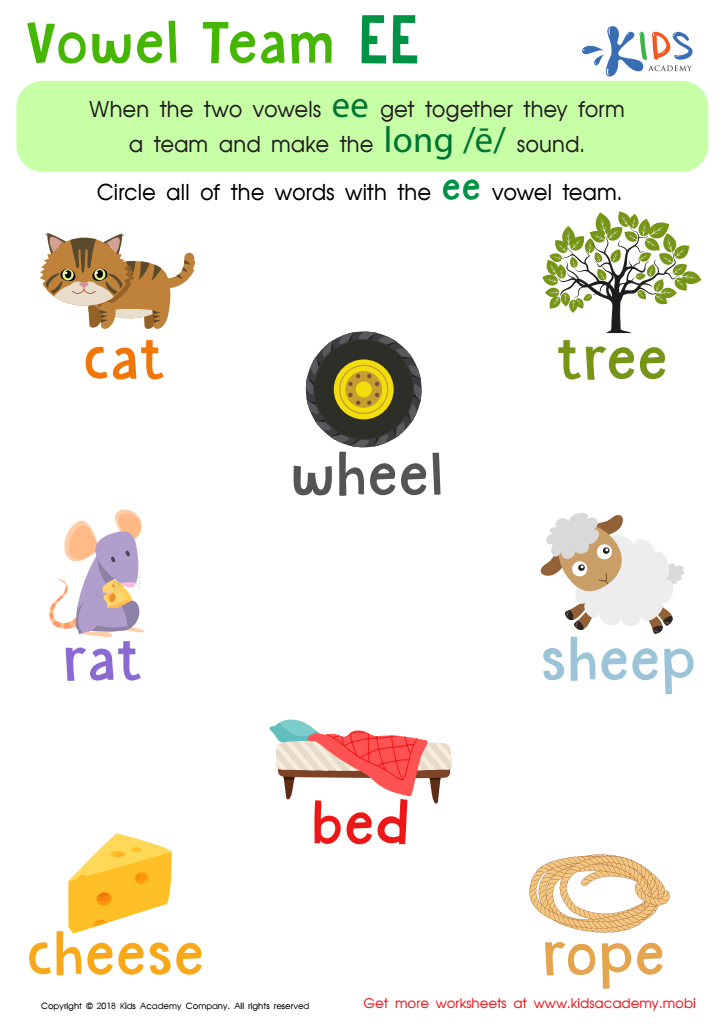
Reading: Vowel Team EE Worksheet
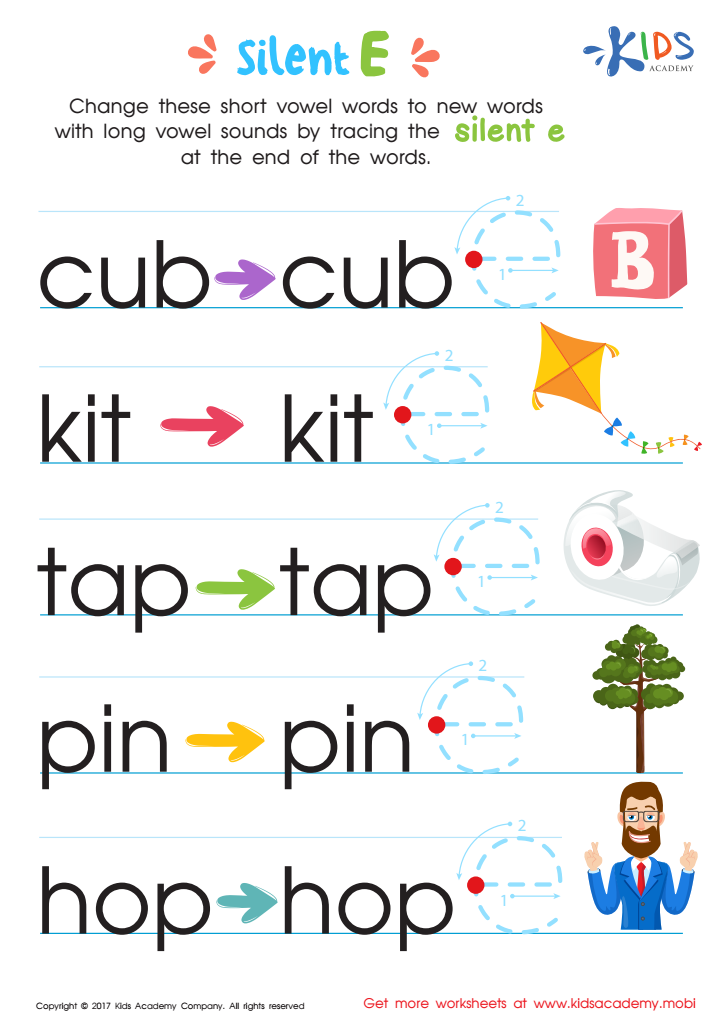
Silent E Words Worksheet
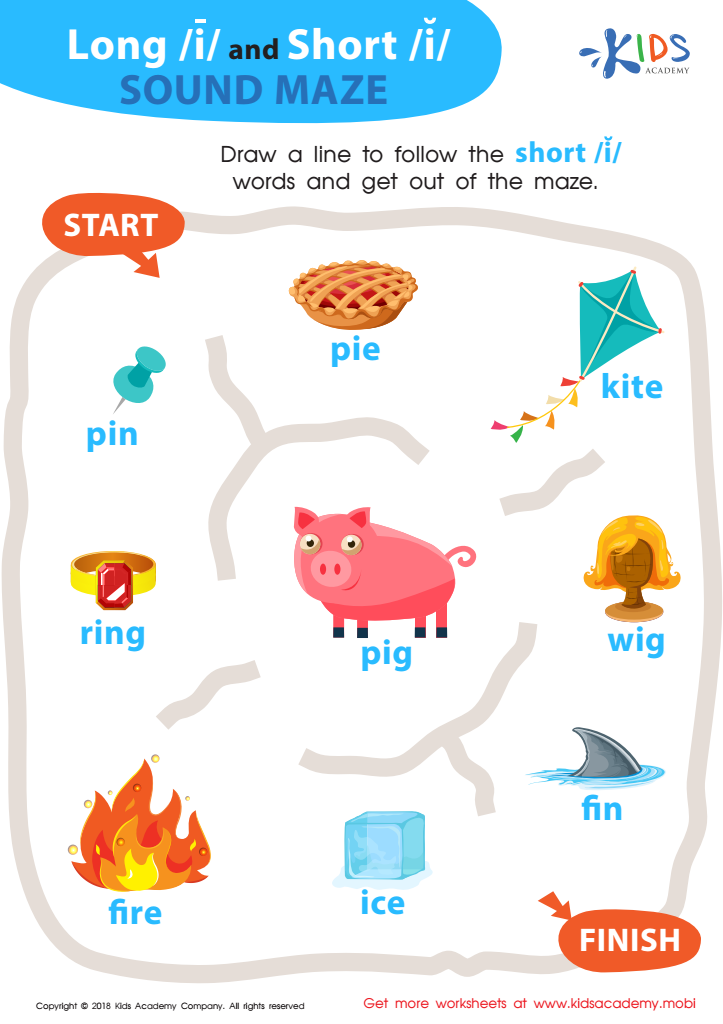
Reading: Long I and Short I Sound Maze Worksheet




Vocabulary enhancement, particularly focusing on normal long and short vowels, is crucial for children aged 7-8 as it significantly impacts their reading and writing skills, comprehension, and overall language development. During this critical age, children are transitioning from learning to read to reading to learn. A strong vocabulary lays the foundation for understanding complex texts and developing critical thinking skills.
Parents and teachers should care because a rich vocabulary improves communication abilities—children can express themselves more clearly and confidently. Long and short vowel sounds play a pivotal role in phonetics, aiding in decoding unfamiliar words, which is essential for literacy. By grasping how vowel sounds influence word meaning and pronunciation, children enhance their reading fluency.
Engaging in vocabulary activities not only makes learning interactive and enjoyable but also nurtures a love for reading. As children expand their vocabularies, they become more engaged learners, helping them build stronger connections with literature. Moreover, solid vocabulary skills contribute to improved academic performance across all subjects. Investing time and effort into vocabulary enhancement with this age group equips them with lifelong communication skills and a deeper appreciation for language, thus shaping their educational journeys and social interactions.








