
Sound Association Normal Phonics Worksheets for Ages 7-8
6 filtered results
Difficulty Level
Grade
Age
-
From - To
Subject
Activity
Standards
Discover our engaging Sound Association Normal Phonics Worksheets designed specifically for children aged 7-8! These interactive resources help young learners strengthen their phonetic skills by associating sounds with letters, enhancing their reading and pronunciation abilities. With a variety of fun activities, our worksheets encourage creativity and critical thinking, making learning enjoyable. Perfect for at-home study or classroom instruction, these printable worksheets offer clear instructions and visually appealing designs. Empower your child’s literacy journey as they explore the exciting world of sounds and unlock their reading potential. Start nurturing their phonics skills today for a confident reading future!
Favorites
With answer key
Interactive
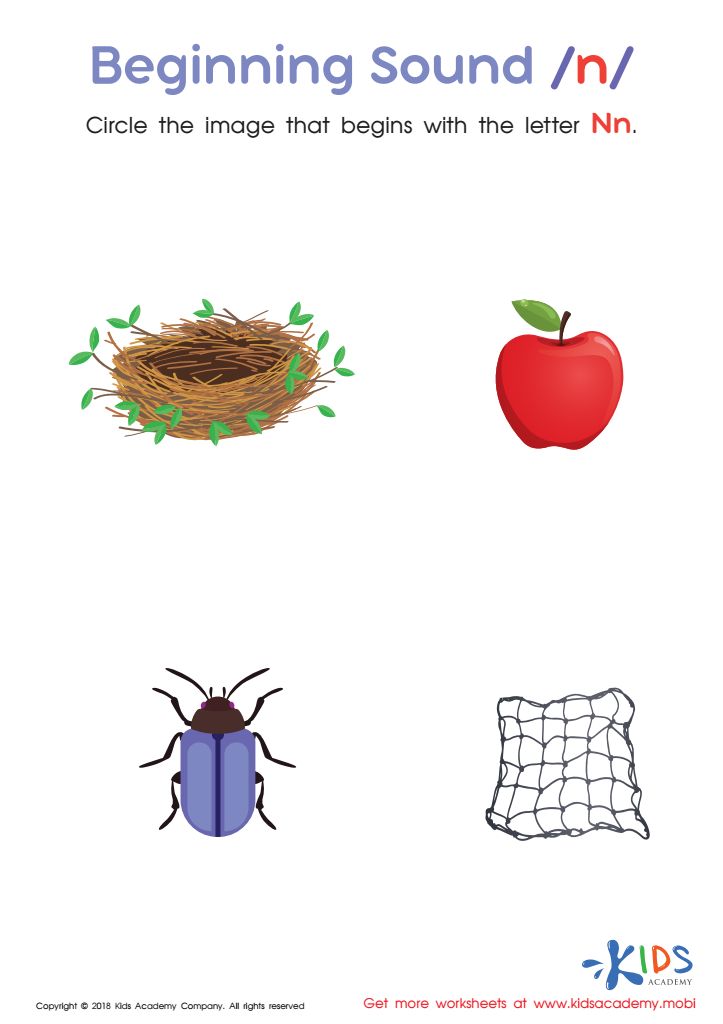
Beginning Sound «n» Worksheet
Help your emerging reader learn the initial «n» sound with this free PDF worksheet! Strengthen fine motor skills by tracing circles around words beginning with «n». Pictures are clear and engaging, giving beginning Phonics learners the right amount of practice and the confidence to succeed.
 Assign to My Students
Beginning Sound «n» Worksheet
Worksheet
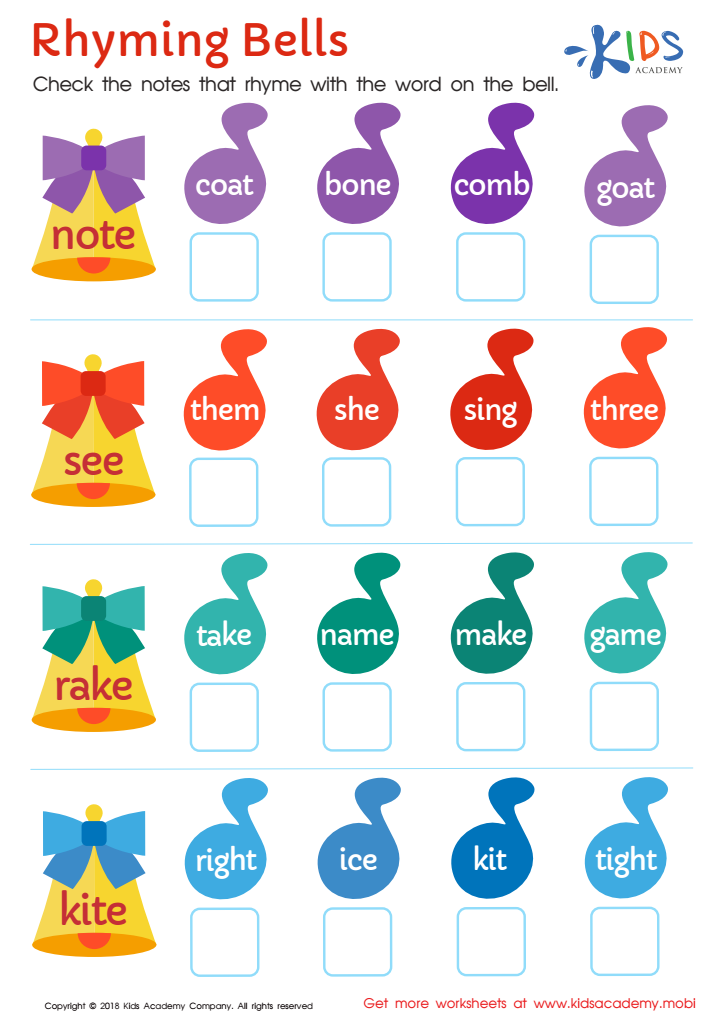
Rhyming Bells Worksheet
This printable worksheet helps students recognize rhyming words. Read a word, then pick the 4 words that rhyme. Look out for words with different spellings but same ending sound. It's a great exercise to improve understanding of rhyming words.
Rhyming Bells Worksheet
Worksheet
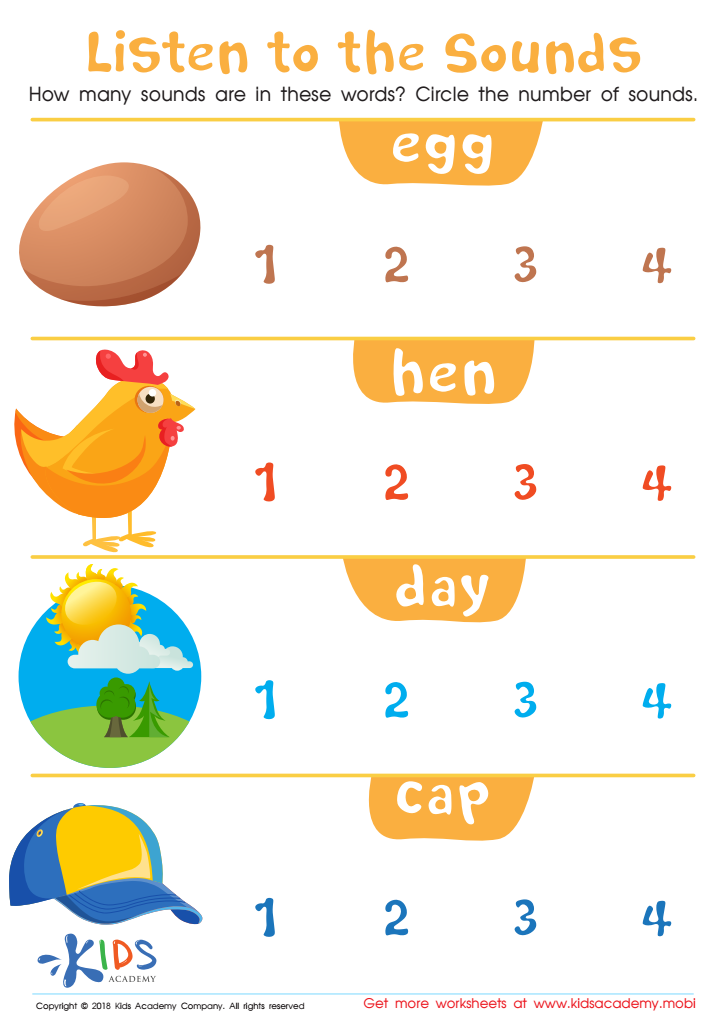
Listen to the Sounds Worksheet
This worksheet builds emerging readers' skills in using sounds for reading and spelling. It helps strengthen auditory processing by having them count the sounds in each word, then trace the corresponding number. Fun and cheerful!
Listen to the Sounds Worksheet
Worksheet
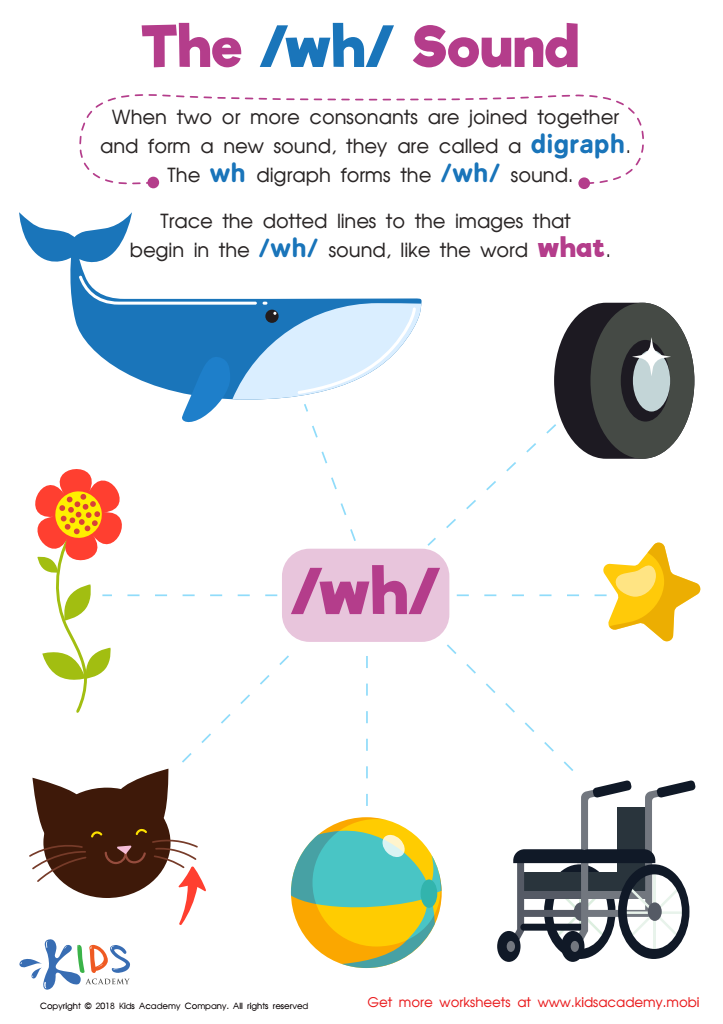
The /wh/ Sound Worksheet
Digraphs join two consonants to make a new sound, like /wh/. Give examples, like "whale", "when" and "why". Ask kids to name pictures in a worksheet and trace dotted lines to images beginning with the /wh/ sound; "what" is one example.
The /wh/ Sound Worksheet
Worksheet
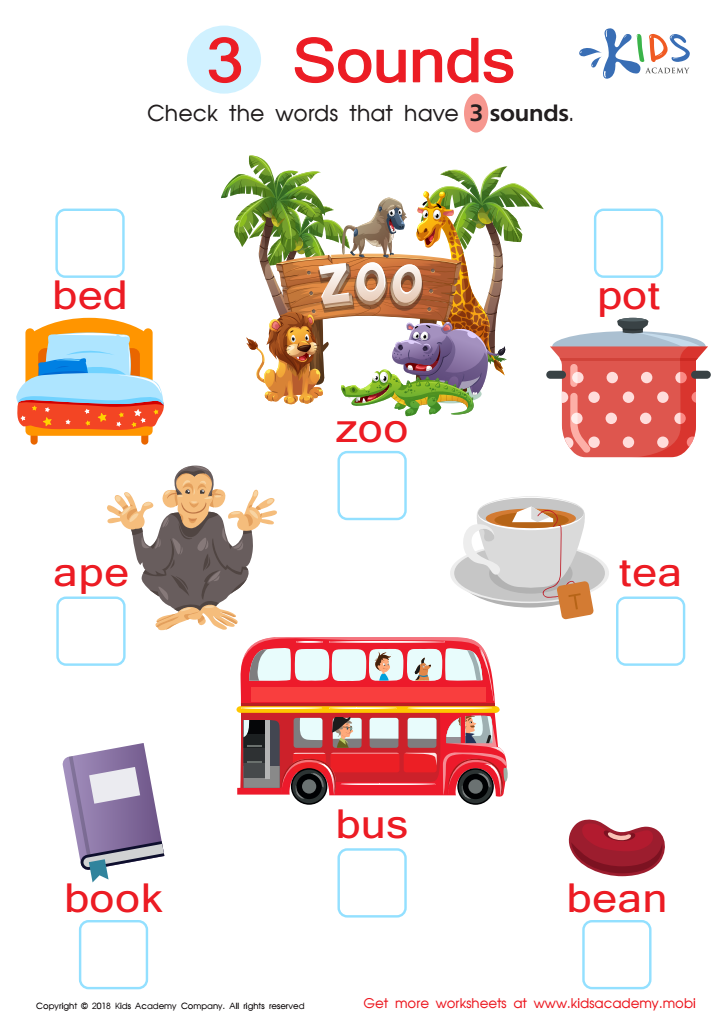
3 Sounds Worksheet
Kids will love learning with this free, colorful worksheet. It's full of familiar words they can name and sound out with three distinct sounds. This helps build decoding skills, plus they get to check off words they read. It's a fun way to teach children to identify and use sounds.
3 Sounds Worksheet
Worksheet
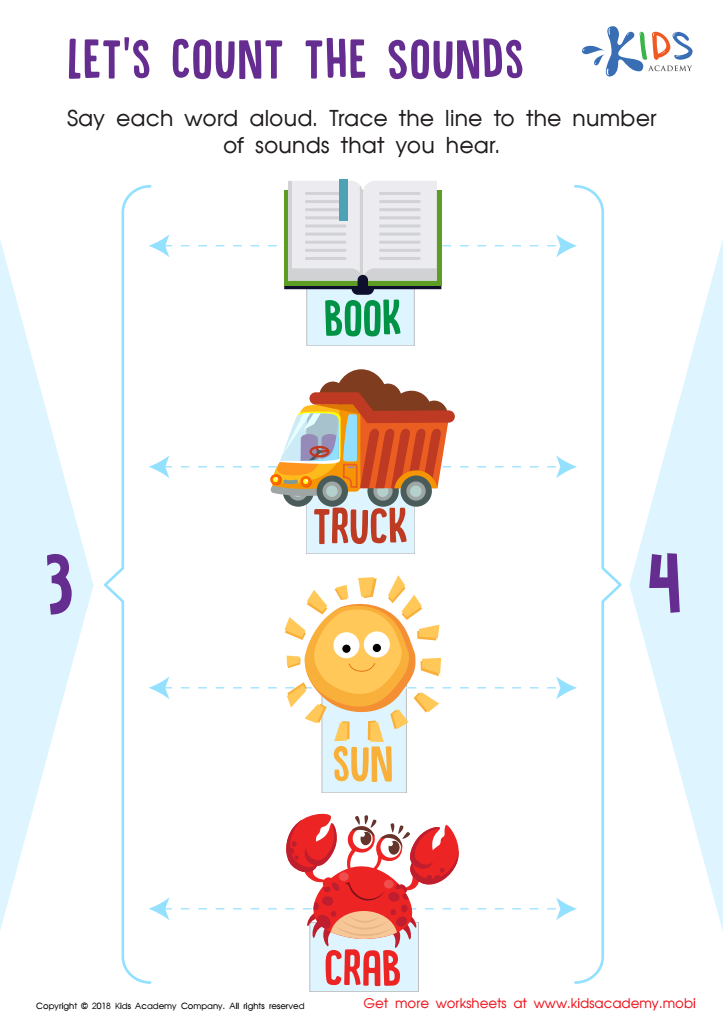
Let's Count the Sounds Worksheet
This bright and cheery traceable worksheet encourages children to practice auditory discrimination and phonological awareness. Using picture clues, they read each word and trace the line that represents the number of sounds heard. This builds decoding skills and helps them become successful readers.
Let's Count the Sounds Worksheet
Worksheet
Join Kids Academy for Free
Who is primarily going to use this learning content?








Sound Association Normal Phonics is crucial for children ages 7-8 as it significantly impacts their reading and writing skills. At this developmental stage, children are transitioning from learning to read to reading to learn. A strong foundation in phonics enhances their ability to decode unfamiliar words, which fosters confidence and engagement in literacy activities.
Parents and teachers should prioritize phonics instruction because it enhances vocabulary development and comprehension. Children who master phonics can better understand the relationship between sounds and letters, enabling them to tackle more complex texts. This ability not only supports academic achievement but also nurtures a lifelong love for reading.
Moreover, Sound Association Normal Phonics incorporates fun and interactive methods that cater to varied learning styles, making it appealing for children. Engaging in phonics activities together can create opportunities for bonding and reinforce a positive attitude towards learning.
In conclusion, emphasizing Sound Association Normal Phonics enriches children's literacy experience, laying the groundwork for future learning successes. For parents and teachers, advocating for phonics is an investment in children's education and personal growth, equipping them with essential skills that will serve them well beyond the classroom.







