Spelling practice Normal Vowel Diphthongs Worksheets for Ages 7-8
12 filtered results
Difficulty Level
Grade
Age
-
From - To
Subject
Activity
Standards
Enhance your child's phonetic skills with our Spelling Practice Normal Vowel Diphthongs Worksheets for Ages 7-8! Designed specifically for young learners, these engaging worksheets help children master complex vowel combinations through fun and interactive activities. Each exercise is crafted to boost spelling proficiency, improve pronunciation, and build a strong foundational understanding of vowel diphthongs. With a variety of creative tasks, kids will enjoy learning as they connect sounds with letters, fostering both confidence and literacy skills. Perfect for classroom or at-home use, these worksheets will support your child’s journey to becoming a proficient reader and speller.
Favorites
With answer key
Interactive
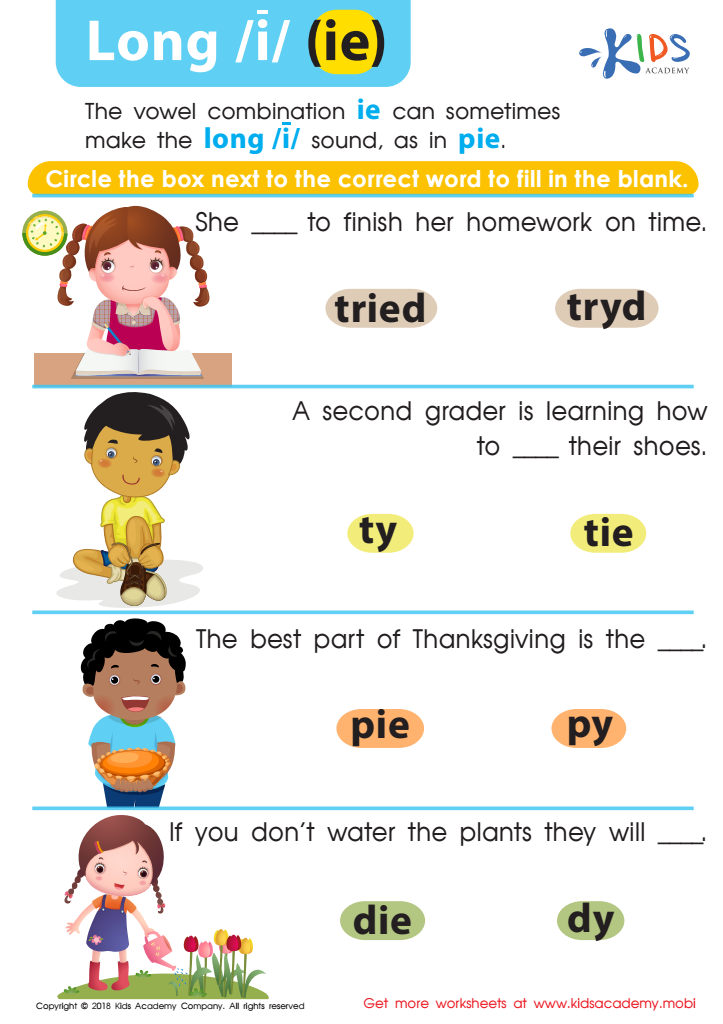
Reading: Long I and IE Worksheet
Have your child list words with the long /i/ sound (eg. 'pie'), and if needed, help them out with some examples. Read each word in the worksheet together and check their answer by having them circle the correct word.
 Assign to My Students
Reading: Long I and IE Worksheet
Worksheet
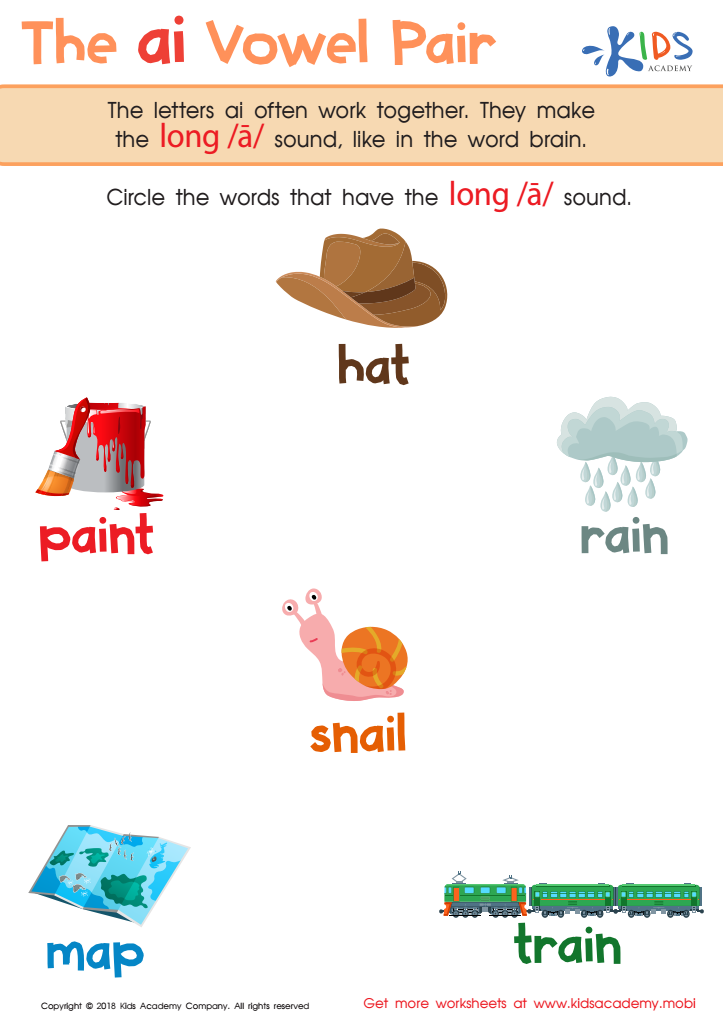
The AI Vowel Pair Worksheet
Vowel pairs make different sounds than individual letters. The 'ai' combination often forms the long /a/ sound, like in 'brain' and 'strain'. Get your kids to look at the pictures in the worksheet, identify each and say the name aloud. Help them circle the words with the long /a/ sound.
The AI Vowel Pair Worksheet
Worksheet
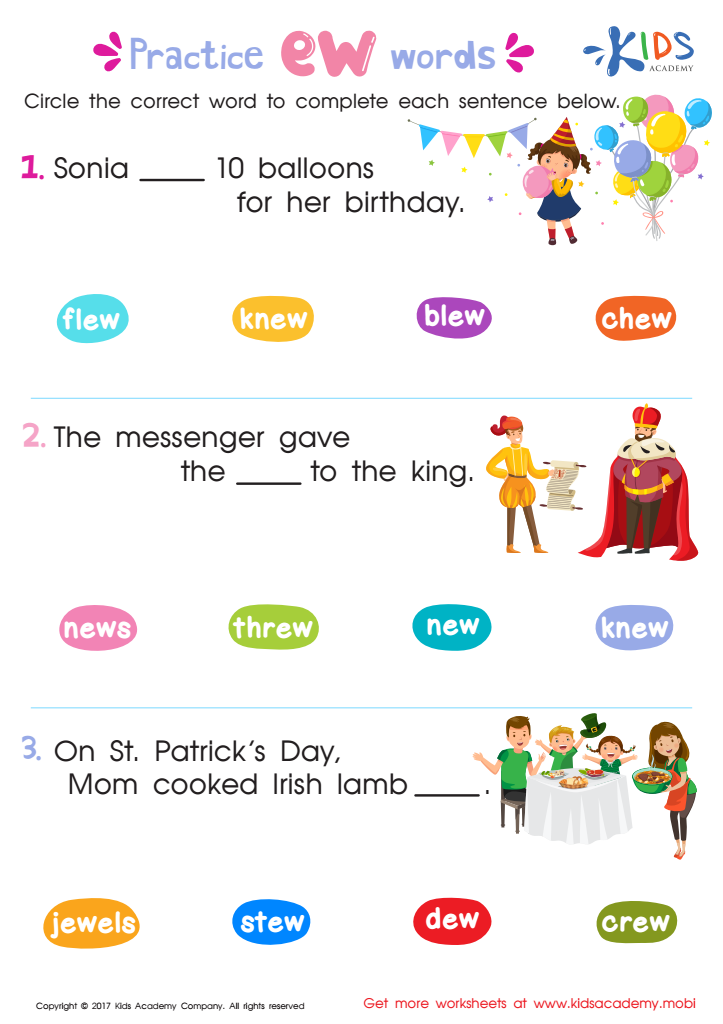
EW Words Worksheet
Practice the diphthong ew and boost your child's vocabulary with this fun ew words worksheet! Filled with illustrations, it will help your child hone their reading and spelling skills. Plus, the tricky words will make it both enjoyable and rewarding!
EW Words Worksheet
Worksheet
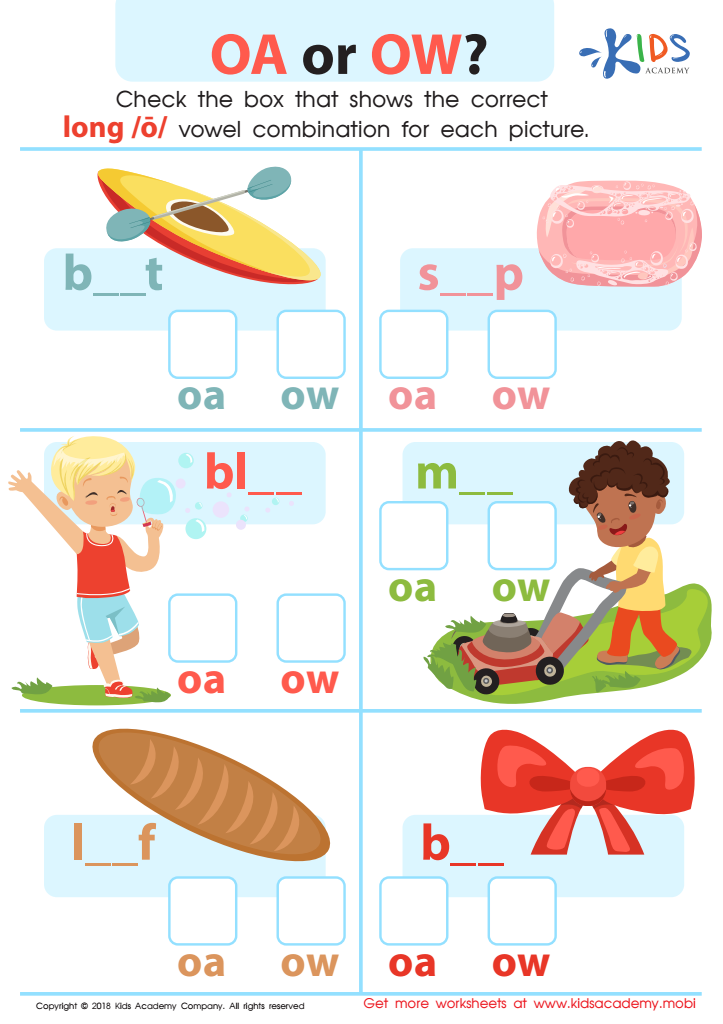
Reading: OA or OW Worksheet
This printable worksheet helps young and emergent readers with decoding words and understanding digraphs (two letters with one sound). It requires students to complete the spelling for each word based on the picture, focusing on /oa/ and /ow/ spellings. It's ideal for a reading classroom and for spelling practice.
Reading: OA or OW Worksheet
Worksheet
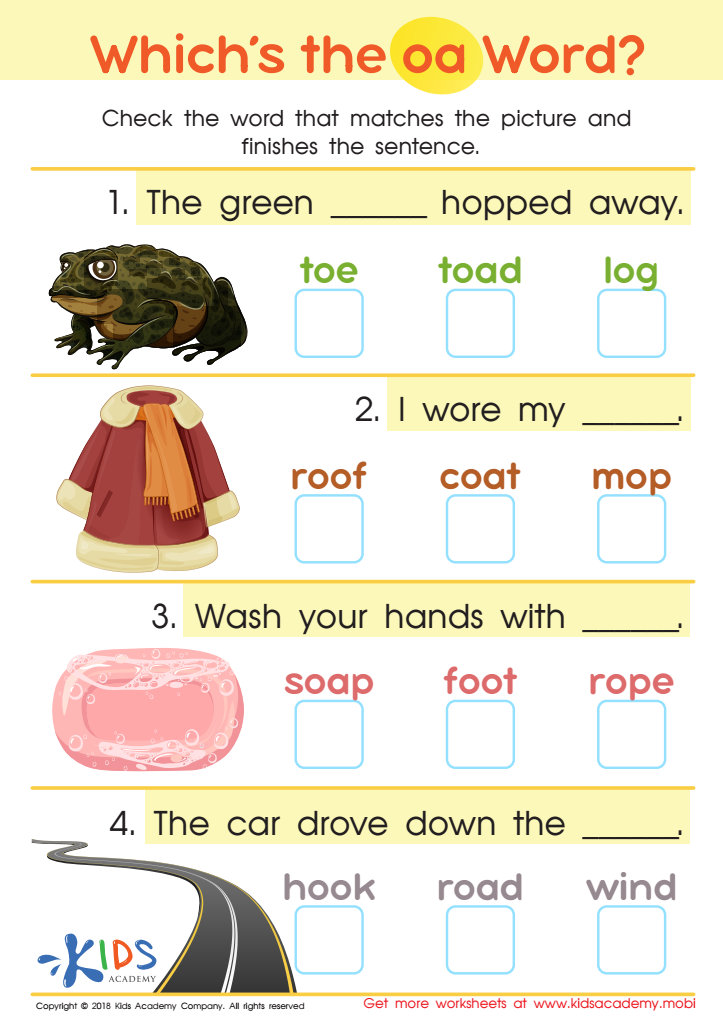
Which's the OA Word? Worksheet
Encourage your kids to complete this fun worksheet. Ask them to identify the animals and objects in the pictures. Read the incomplete sentences aloud, and then find the correct word to finish the sentence. Check their work.
Which's the OA Word? Worksheet
Worksheet
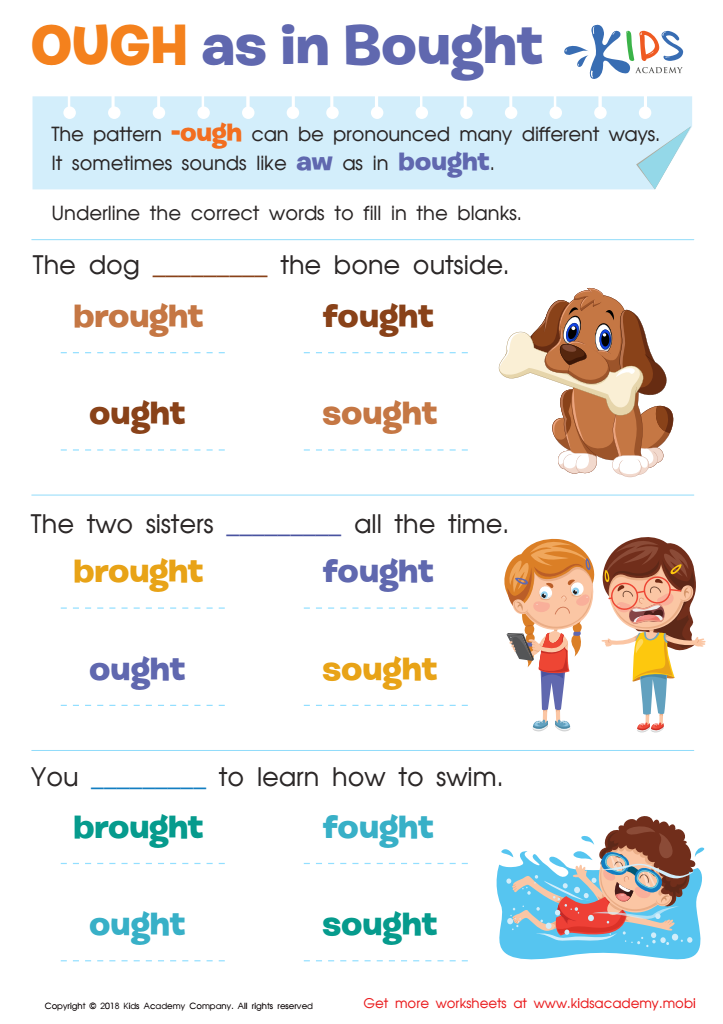
OUGH as in Bought Worksheet
Use this worksheet to teach your child the different pronunciations of -ough. For example, -ough can sound like ‘aw’ in ‘bought’. Ask your child to give more examples and help them underline the correct answers to fill in the blanks.
OUGH as in Bought Worksheet
Worksheet
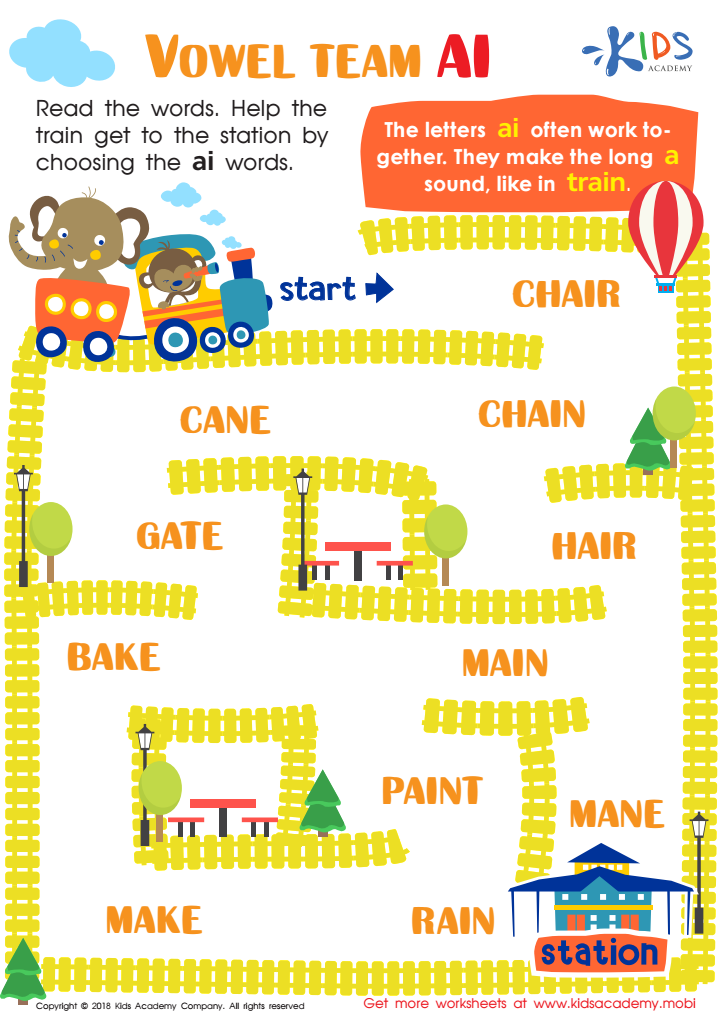
Vowel team ai Worksheet
Kids will have a blast learning about the -ai digraph with this fun worksheet. They'll read words with it and practice their motor skills as they help the animal duo get back to the train station. With success, they'll smile and enjoy the activity!
Vowel team ai Worksheet
Worksheet
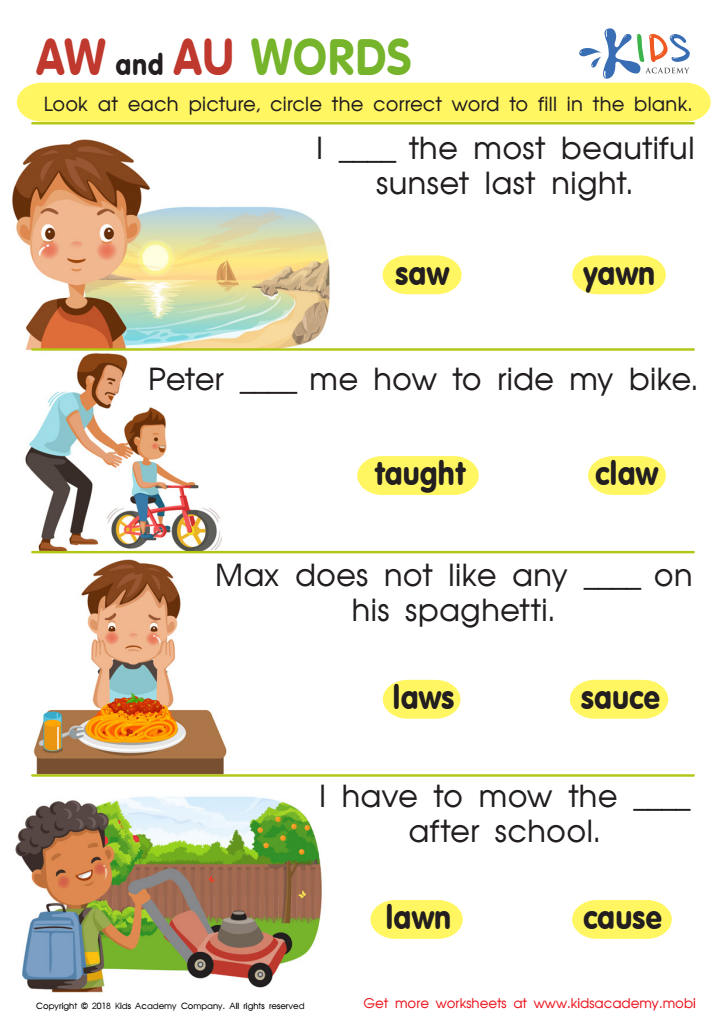
Reading: AW and AU Words Worksheet
This worksheet helps kids recognize that /au/ and /aw/ can make the same sound. Students read sentences and pick the correct word with one of the digraphs. Understanding digraphs improves decoding and reading fluency. Perfect for reading and phonics classes.
Reading: AW and AU Words Worksheet
Worksheet
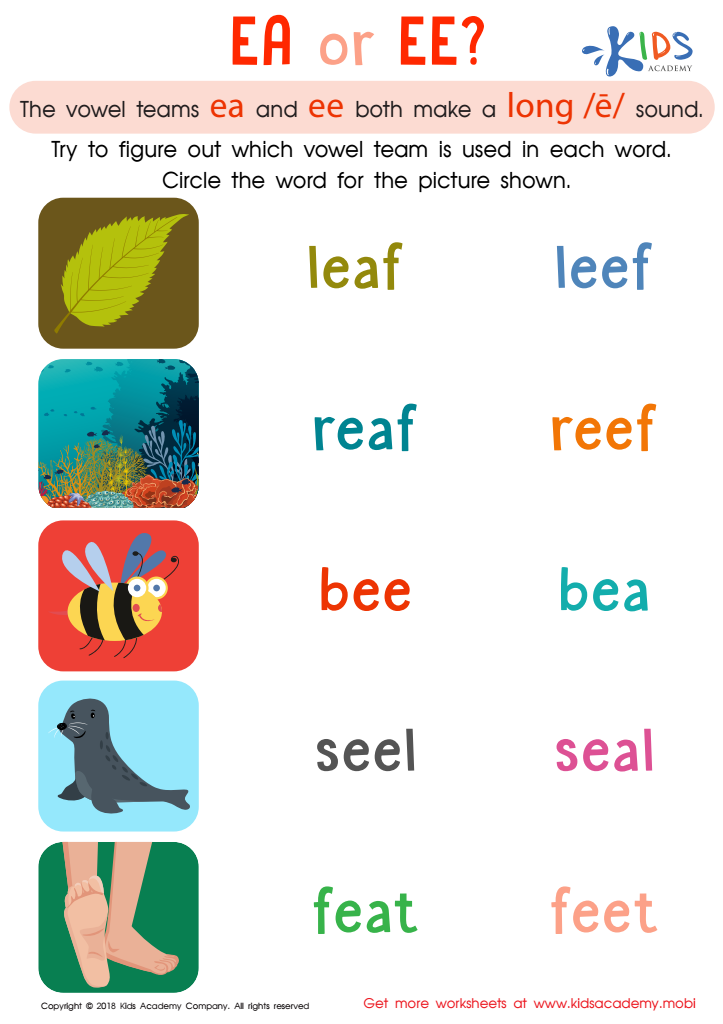
Reading: EA and EE Worksheet
Confused by the long E sound's varying spellings? Give students practice with this printable. It will improve their reading and spelling skills by helping them identify the correct spellings for words with the /ee/ and /ea/ vowel teams. Clear up the confusion and sharpen their skills.
Reading: EA and EE Worksheet
Worksheet
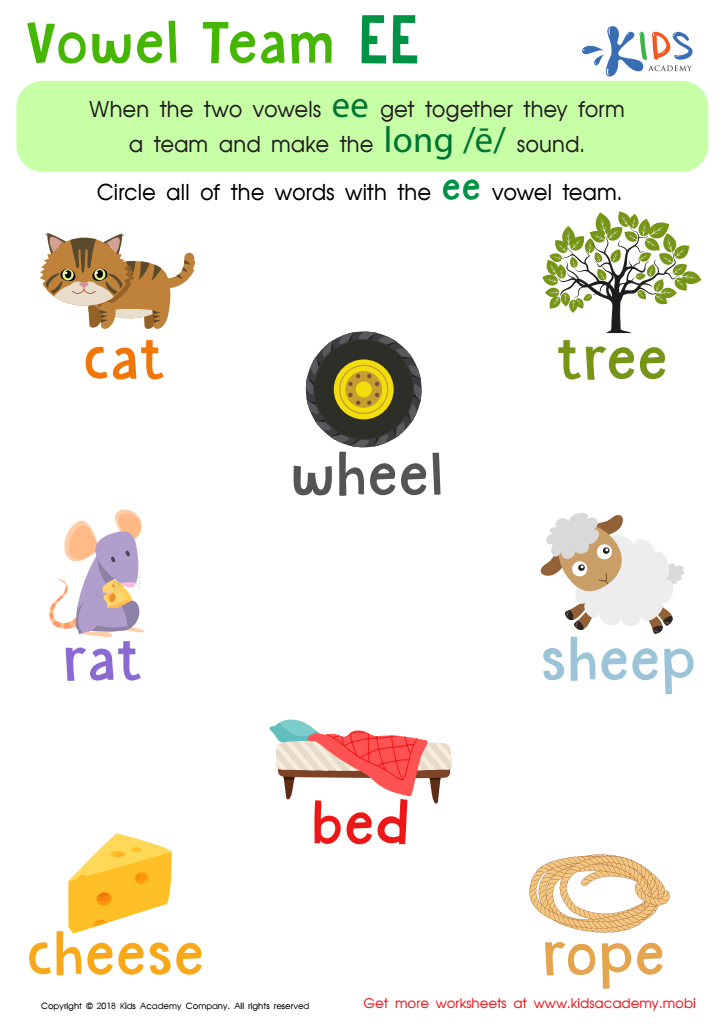
Reading: Vowel Team EE Worksheet
This worksheet is perfect for helping young learners master the /ee/ vowel team. It shows the first vowel with a long sound and the second vowel silent. It also provides pictures for unfamiliar words for readers of all levels. It's an ideal resource for teaching phonics skills.
Reading: Vowel Team EE Worksheet
Worksheet
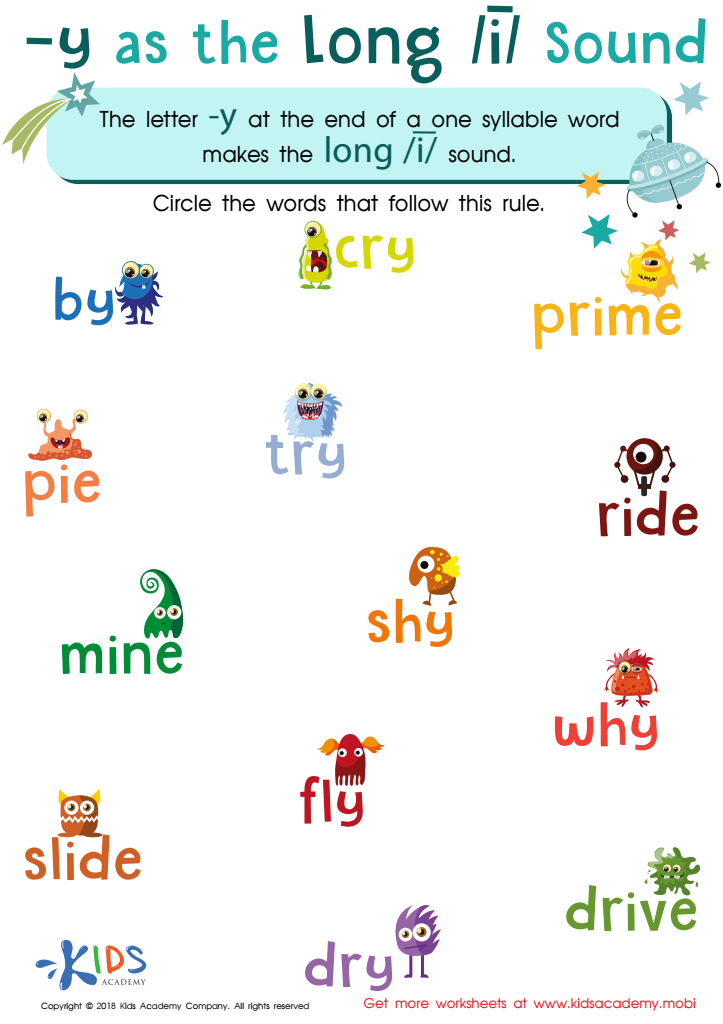
Reading: Y as Long I Worksheet
Students need practice and exposure to letters that make different sounds for decoding and reading success. This printable is a great resource for language arts classes: it explains that words ending with Y and having only one syllable make the long I sound. Students will circle all words with Y that have this sound.
Reading: Y as Long I Worksheet
Worksheet
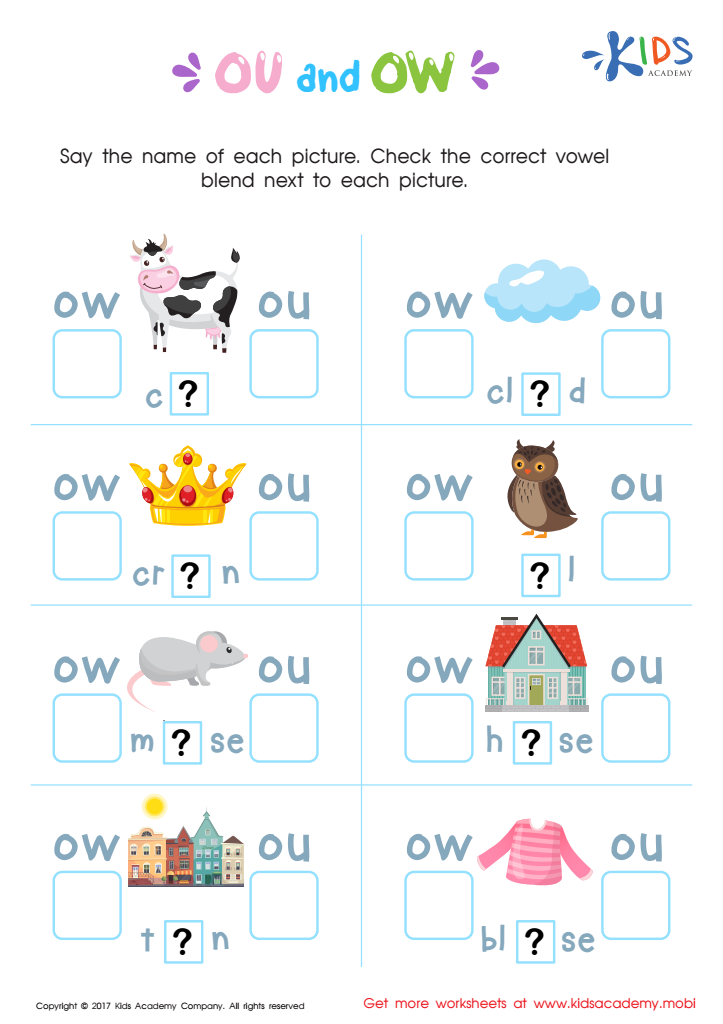
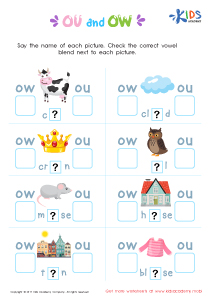
OU and OW Words Worksheet
Enhance your child's reading and spelling with this ou and ow words worksheet! Fun pictures and common words make mastering the diphthongs ou and ow easy and enjoyable.
OU and OW Words Worksheet
Worksheet
Join Kids Academy for Free
Who is primarily going to use this learning content?


Spelling practice involving normal vowel diphthongs is critical for children aged 7-8 because it significantly enhances their linguistic skills and reading fluency. Vowel diphthongs are two-vowel sounds blended in one syllable, such as "oi" in "boil" or "ou" in "cloud". Mastery of these complex sound patterns can be challenging for young learners but offers multifaceted benefits.
Firstly, understanding diphthongs aids in accurate pronunciation, helping kids articulate words correctly. This clarity in speech transcends to better communication skills.
Secondly, proficiency in diphthongs improves decoding ability, the skill of sounding out words while reading. Children become more confident readers and can tackle unfamiliar words with ease, boosting their overall literacy.
Thirdly, spelling practice using vowel diphthongs supports vocabulary expansion. As students encounter and spell new words incorporating diphthongs, their vocabulary grows, enriching their language use.
Lastly, being adept in spelling enhances writing skills. Children become more precise and expressive writers when they can spell complex words correctly, elevating their writing from simple to more elaborate and creative expression.
Therefore, focused spelling practice on vowel diphthongs equips young learners with foundational linguistic skills that foster proficient reading, clear communication, expanded vocabulary, and improved writing. For parents and teachers, investing time in this area is essential for the child’s overall language development.