Word Recognition Normal Vowels Worksheets for Ages 7-8
5 filtered results
-
From - To
Boost your child’s reading skills with our engaging Word Recognition Normal Vowels Worksheets, specially designed for ages 7-8. These printable worksheets help young learners identify and understand normal vowel sounds in various words. Each activity encourages children to practice pronunciation, enhance vocabulary, and improve comprehension. Fun and colorful designs keep kids motivated while fostering a love for reading. Perfect for home or classroom use, these worksheets offer a variety of interactive exercises that cater to different learning styles. Give your child the tools they need to succeed in literacy with our effective and enjoyable vowel-based learning resources!
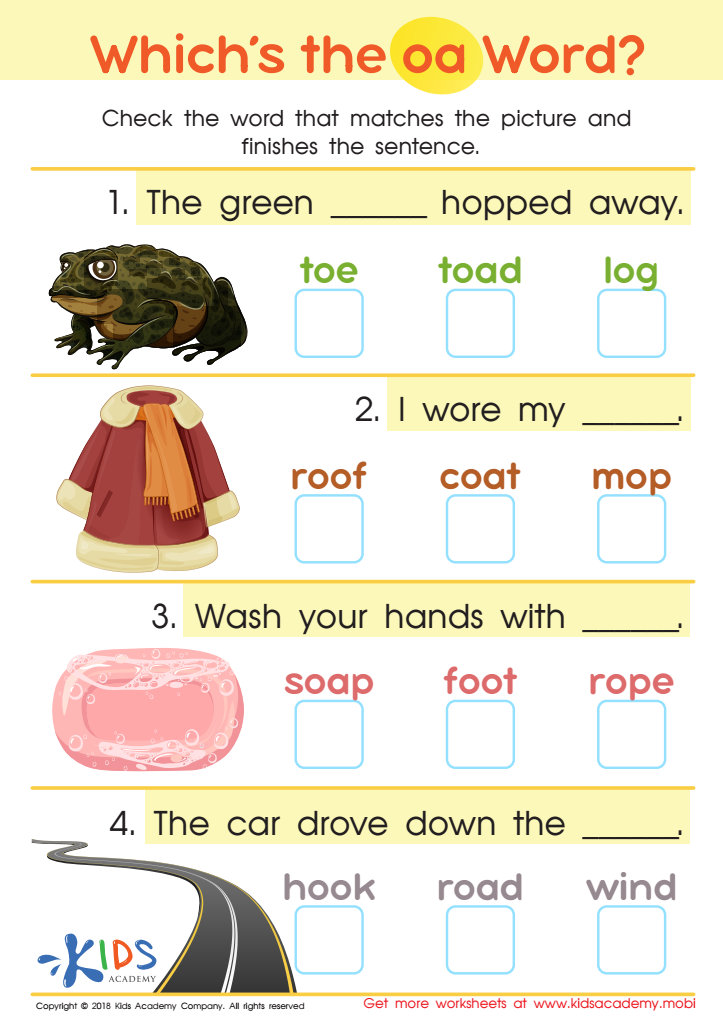
Which's the OA Word? Worksheet
 Assign to My Students
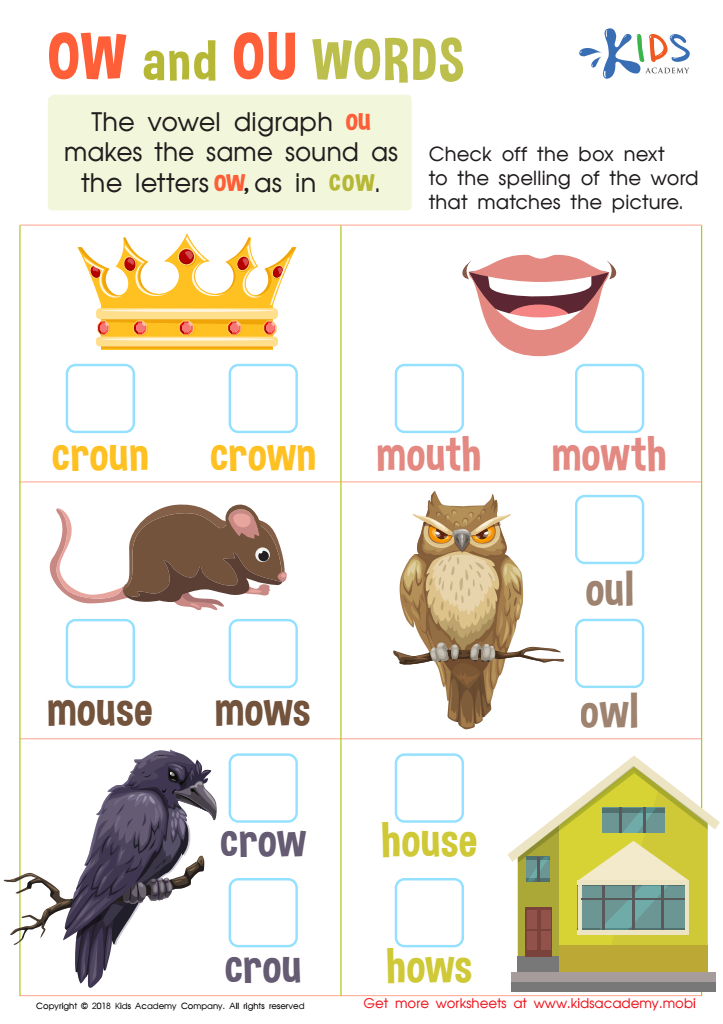
Reading: OW and OU Words Worksheet
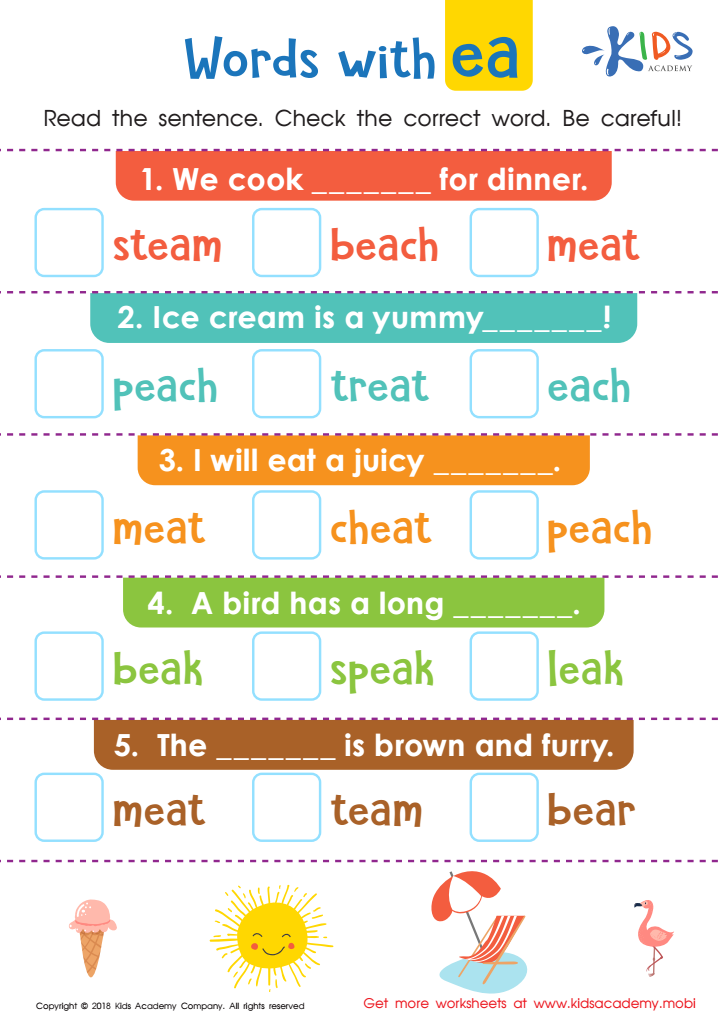
Words with ea Worksheet
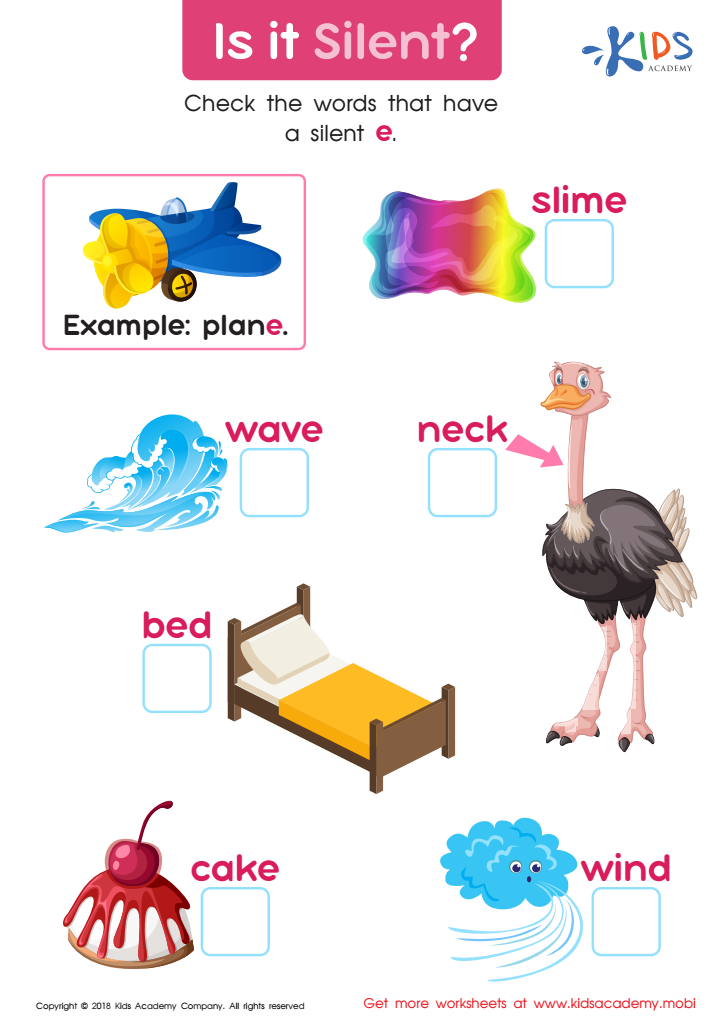
Is It Silent? Worksheet
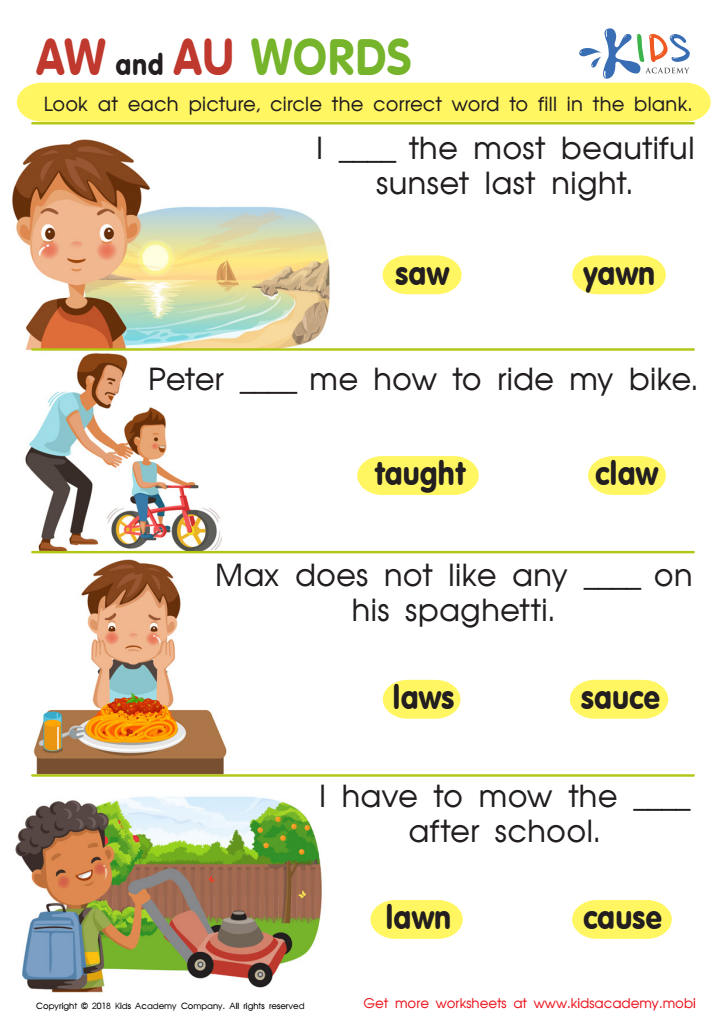
Reading: AW and AU Words Worksheet





Word recognition is a fundamental skill that significantly impacts a child's reading development, particularly for children ages 7-8. At this stage, learners transition from learning to read to reading to learn. Recognizing words, especially those with normal vowels, lays the groundwork for fluent reading and comprehension.
Parents and teachers should pay close attention to word recognition of normal vowels because it helps children decode words effortlessly, enhancing their confidence and enjoyment in reading. When children can quickly identify words, they can focus more on understanding the text rather than struggling with pronunciation, allowing for deeper comprehension of content across subjects.
Additionally, mastering word recognition aids vocabulary development. The more familiar children are with words, the more likely they are to encounter and understand new words in different contexts. Strong word recognition skills also have a direct correlation with academic success; children who read well are more likely to excel in other subjects.
Moreover, reinforcing normal vowel recognition fosters phonetic awareness. This understanding equips children with strategies to tackle unfamiliar words, promoting independent learning and critical thinking. In essence, by prioritizing word recognition in early education, parents and teachers set the stage for lifelong literacy, enhancing a child's overall learning experience.