Capitalization rules Normal Worksheets for Ages 7-8
3 filtered results
-
From - To
Enhance your child's writing skills with our "Capitalization Rules Normal Worksheets" designed specifically for ages 7-8. These engaging worksheets offer a fun and interactive way to teach young learners the essential rules of capitalization, including proper nouns, sentence beginnings, and titles. Each worksheet is crafted to reinforce understanding through a variety of exercises—matching, fill-in-the-blanks, and creative writing prompts. Perfect for use at home or in the classroom, our worksheets help children build confidence in their writing abilities while developing crucial language skills. Explore our collection today and set the foundation for your child’s literacy journey!
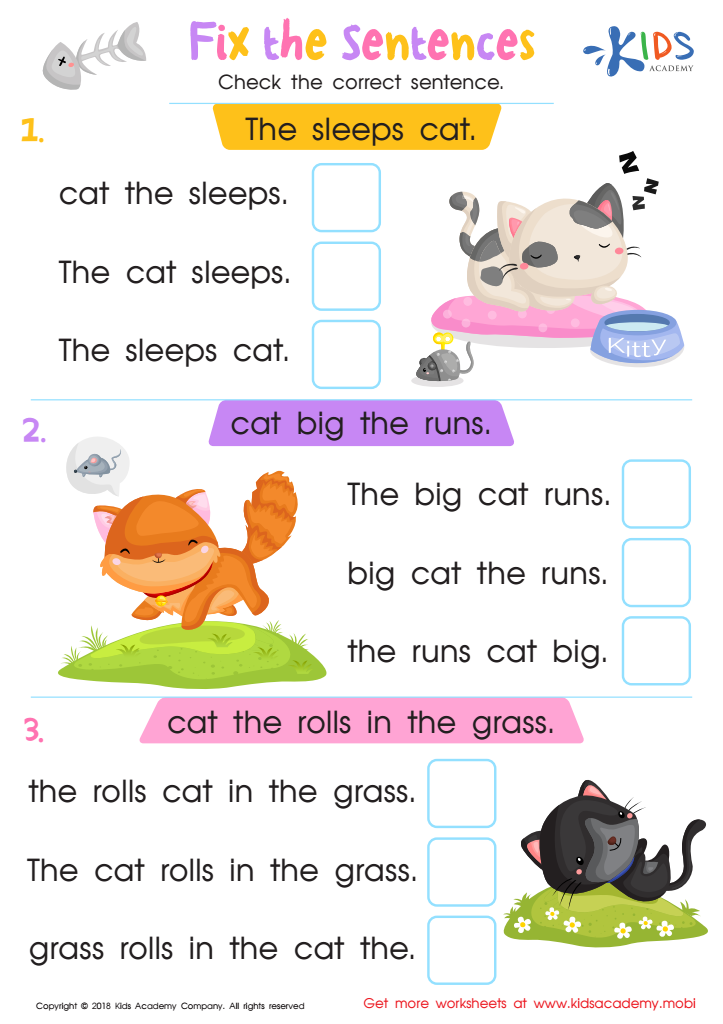
Fix the Sentences Worksheet
 Assign to My Students
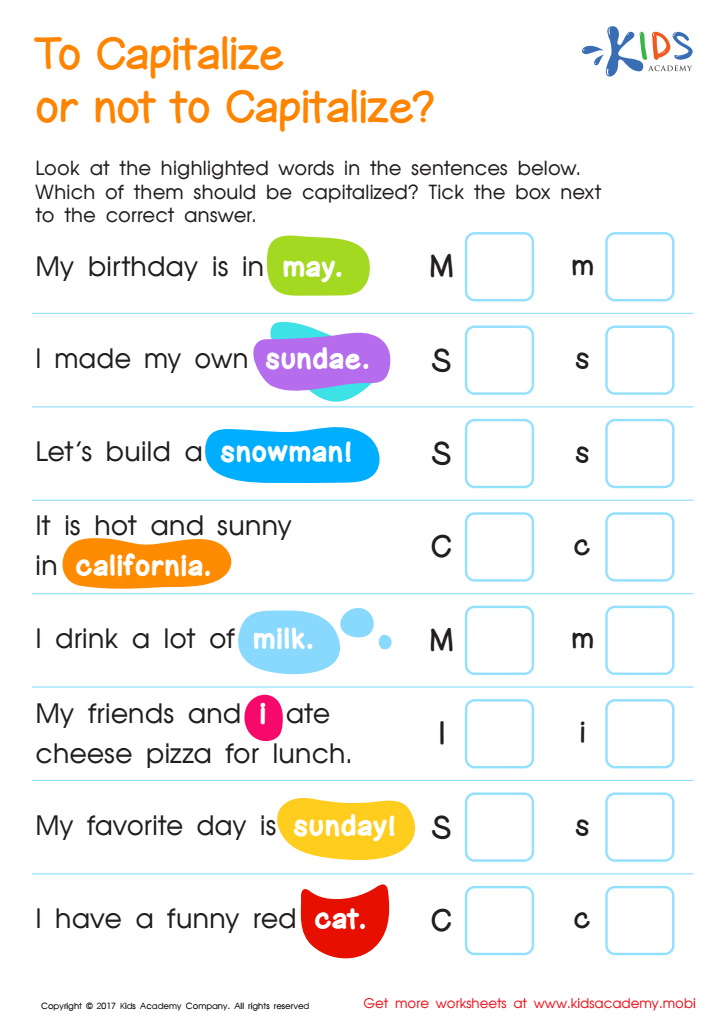
Capitalization: To Capitalize or Not? Printable
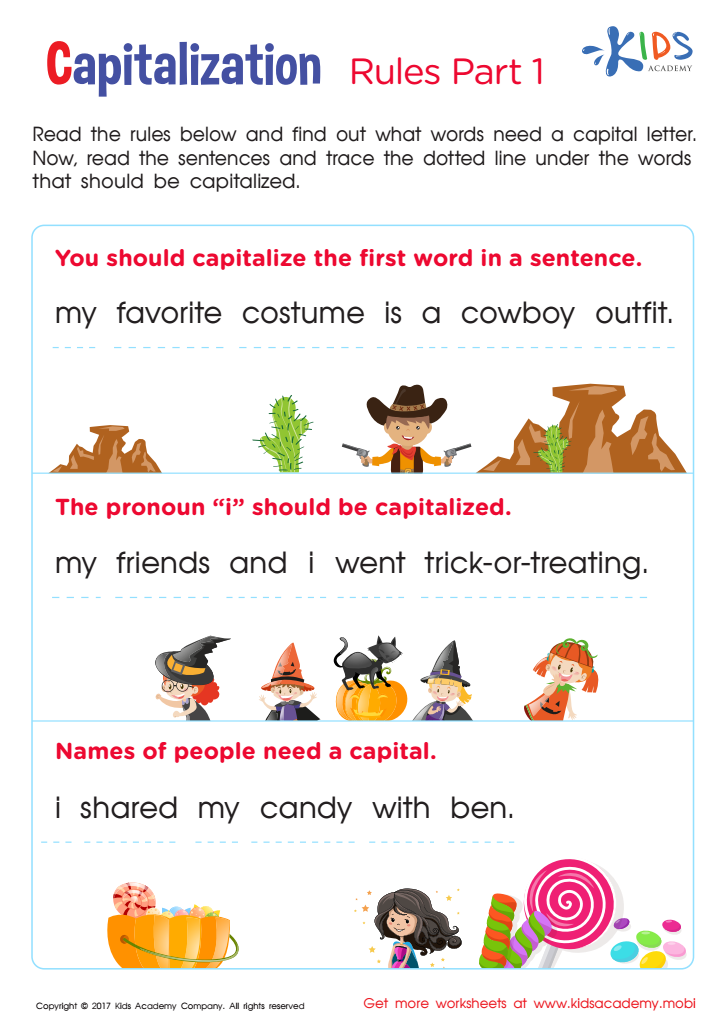
Capitalization Rules: Part 1 Worksheet








Capitalization rules are essential for children aged 7-8, as they play a crucial role in their literacy development and communication skills. Understanding when to use capital letters not only enhances reading comprehension but also helps with writing clarity and expression. Proper capitalization distinguishes names, places, and the beginning of sentences, guiding readers and making text easier to understand.
For parents and teachers, reinforcing capitalization rules can significantly contribute to children's overall language proficiency. As young learners begin to engage more deeply with writing, knowing when to capitalize religiously aligns with developing good writing habits, leading to increased confidence and competence in their abilities.
Moreover, mastering these rules fosters attention to detail, an essential skill in academics and beyond. As children read and write more complex sentences, incorrect usage can alter meanings, leading to miscommunication.
Encouraging practice through fun and interactive activities, such as games or worksheets, can make learning capitalization enjoyable. In turn, this sets the foundation for effective communication, helping students express themselves clearly and confidently as they navigate their literary journeys. Caring about capitalization now benefits their future academic success and their ability to articulate thoughts throughout life.








