Differentiating goods/services Normal Worksheets for Ages 7-8
3 filtered results
-
From - To
Introduce your 7-8 year-olds to the world of economics with our Differentiating Goods/Services Normal Worksheets! Designed to engage young learners, these printable resources help children understand the key differences between goods and services in an interactive manner. Through fun exercises, illustrations, and relatable examples, kids will develop essential critical thinking and decision-making skills. These worksheets promote cognitive development and reinforce social studies concepts in an enjoyable way. Ideal for classroom use or at-home learning, our resources boost confidence and knowledge, allowing students to grasp foundational economic principles that will serve them well in the future. Start your child's learning journey today!
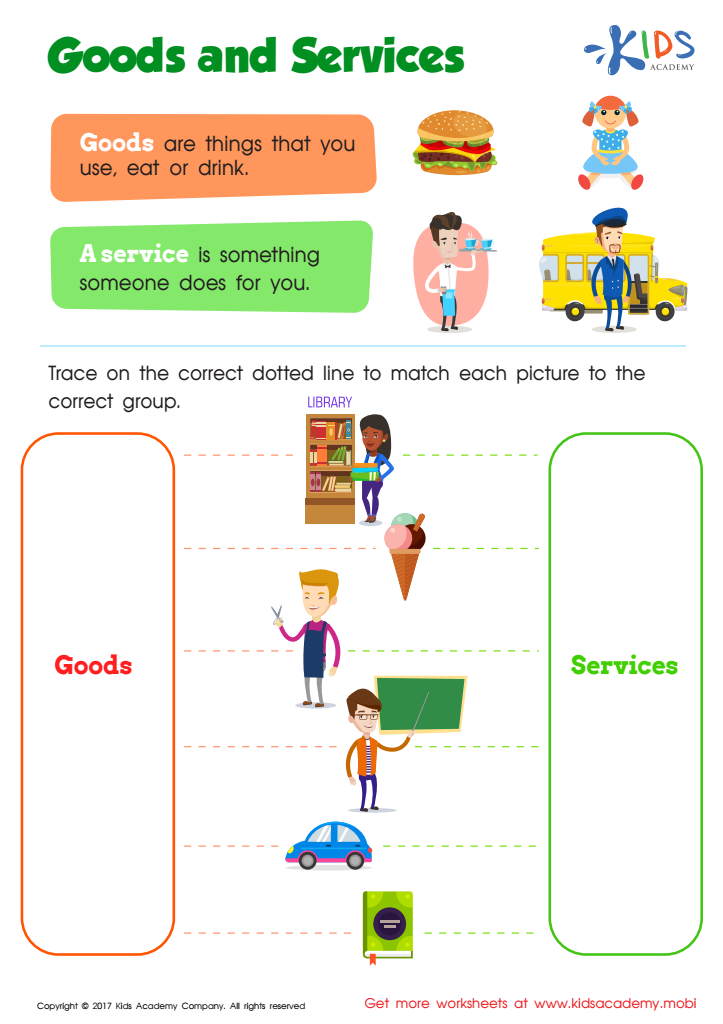
 Assign to My Students
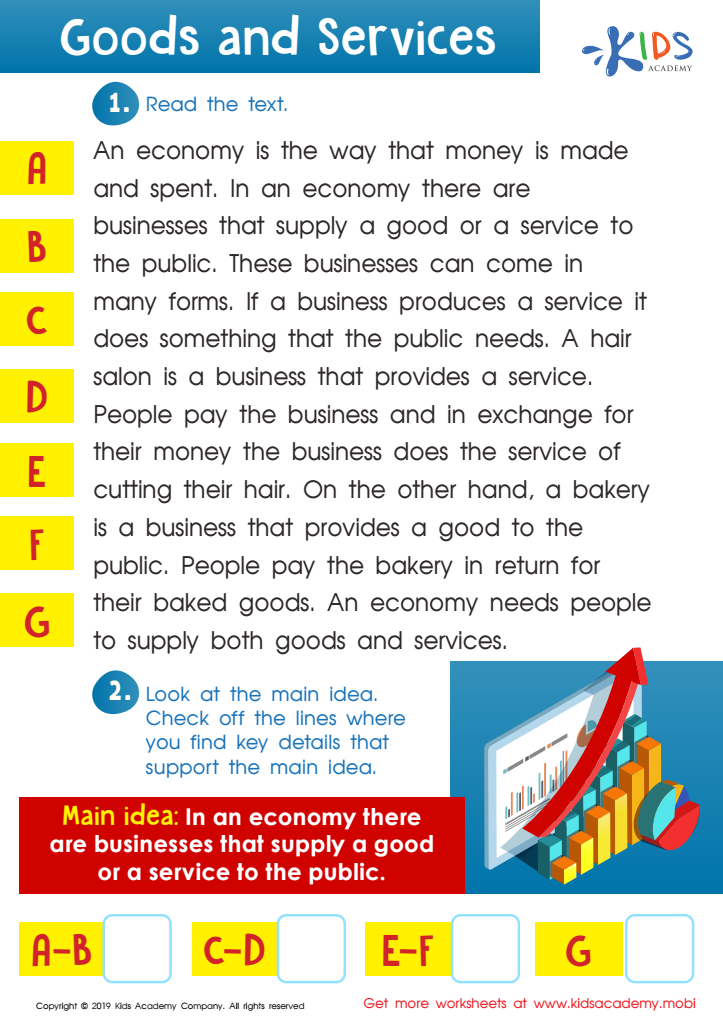
Goods and Services Worksheet
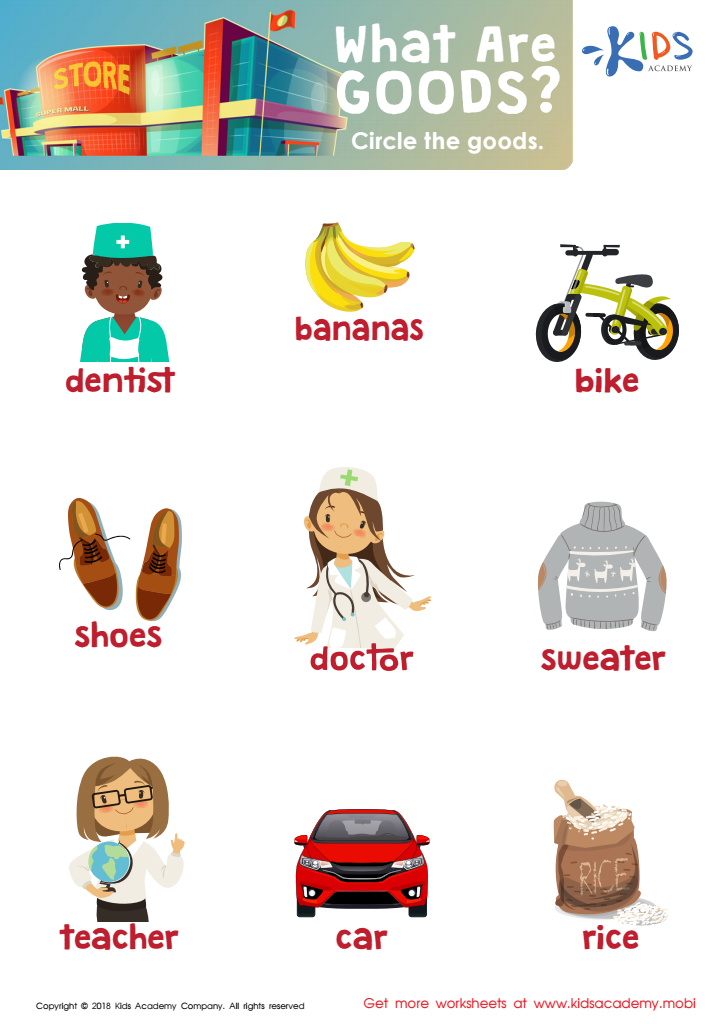
What Are Goods? Worksheet



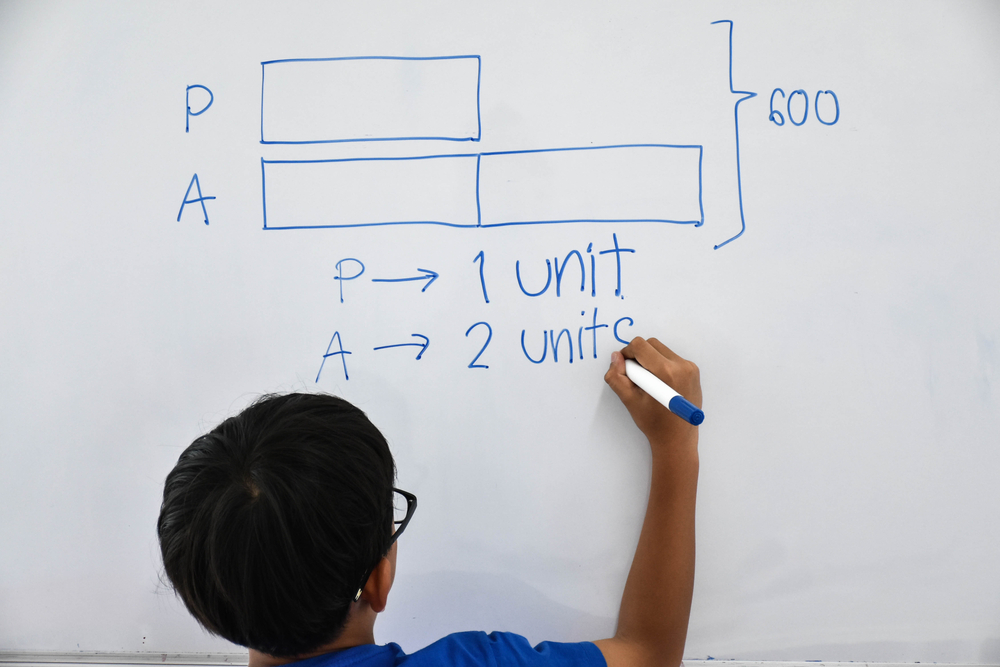



Differentiating goods and services refers to tailoring the way products and offerings are designed to meet the varied needs and preferences of individuals. For children aged 7-8, understanding this concept can greatly enhance their educational experiences.
Parents and teachers should care about this topic for several reasons. Firstly, children at this age are beginning to realize that not everyone has the same likes or needs. Introducing them to the concept of differentiation fosters empathy, encouraging them to consider the perspectives of others. It nurtures critical thinking, as students learn to identify what makes a good or service unique and why that matters.
Secondly, this knowledge aligns well with various subjects, from economics to social studies. Simple discussions around everyday items, such as toys or snacks, can lead to enriching conversations about quality, price, and marketing strategies. Kids can engage in fun, practical activities like class projects, where they differentiate their favorite books or games, which promotes collaborative learning.
Finally, as children learn to differentiate, they develop important life skills such as decision-making and analytical thinking, essential for their growth. Thus, understanding differentiating goods and services can lead to empowered, well-rounded students ready to navigate a diverse world.








