Improving categorization skills Normal Worksheets for Ages 7-8
3 filtered results
-
From - To
Enhance your child's learning experience with our "Improving Categorization Skills Worksheets" designed for ages 7-8. These engaging and interactive worksheets help children develop critical thinking and organization skills by categorizing items based on various attributes. By participating in fun activities like sorting, matching, and classifying, students can reinforce their understanding of different categories in a playful manner. Ideal for home or classroom use, our worksheets promote cognitive development and enhance vocabulary while ensuring children stay motivated and focused. Foster a love for learning and create lifelong skills in your young learners with these essential categorization exercises!
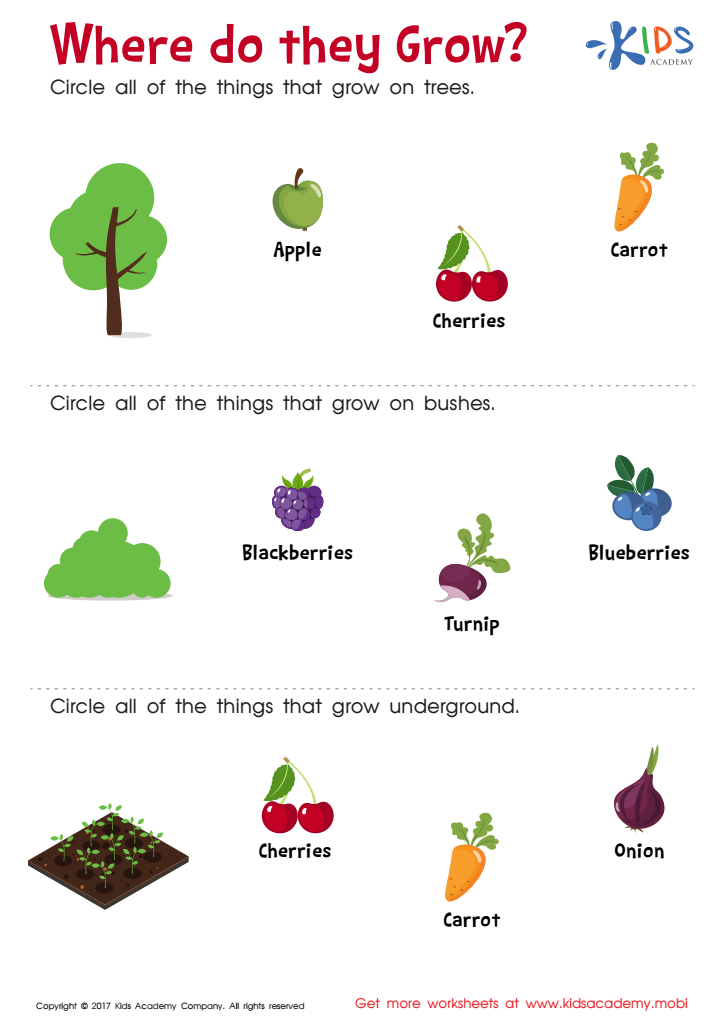
Where Do They Grow Worksheet
 Assign to My Students
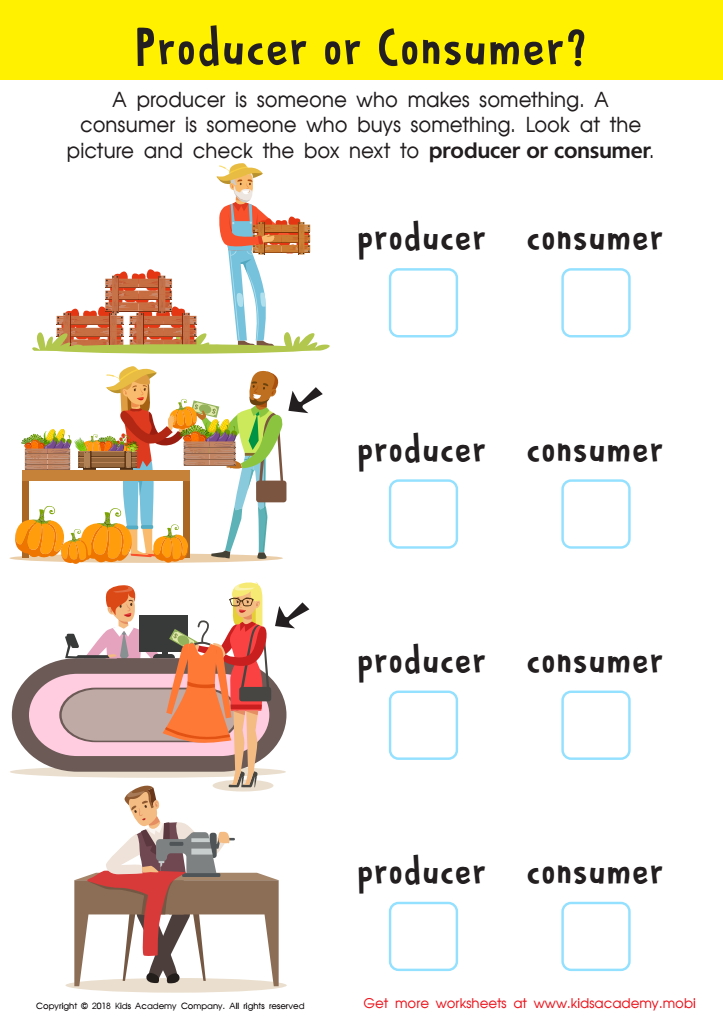
Producer or Consumer? Worksheet
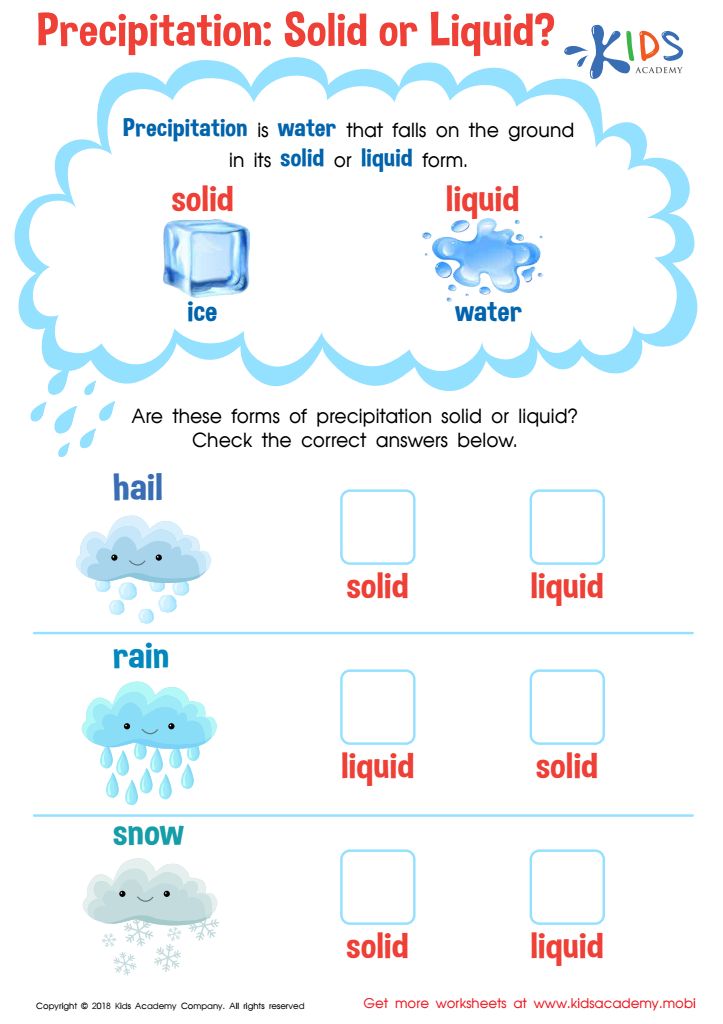
Precipitation: Solid or Liquid? Worksheet



.jpg)

Improving categorization skills in children aged 7-8 is essential for several reasons. At this developmental stage, children are honing their ability to group and classify information, which is foundational for critical thinking and cognitive development. By clustering information into categories, children enhance their understanding of relationships and distinctions among various concepts, aiding in effective learning.
Effective categorization aids problem-solving; when children learn to categorize, they can break down complex problems into manageable parts, which fosters independence in their learning processes. Moreover, good categorization skills support reading comprehension—children often need to classify information to summarize or analyze content accurately, increasing their overall understanding of the material.
Additionally, categorization skills can contribute significantly to emotional intelligence. By recognizing different emotions, children learn to identify and categorize their feelings and those of others, leading to better social interactions and empathy-building.
For parents and teachers, encouraging these skills can facilitate more effective communication, allowing children to articulate their thoughts more clearly. Ultimately, fostering strong categorization skills equips children with competencies that will benefit them academically and socially as they progress through their education and into adulthood. Investing time in developing these skills is crucial for holistic child development.








