
Logical thinking development Normal Worksheets for Ages 7-8
6 filtered results
Difficulty Level
Grade
Age
-
From - To
Subject
Activity
Standards
Enhancing logical thinking skills in children aged 7-8 is crucial for their academic success and cognitive growth. Our collection of Normal Worksheets provides engaging activities designed to develop these vital skills. Each worksheet is carefully crafted to challenge young minds with puzzles, patterns, and problems that promote critical thinking and reasoning. Perfect for both classroom and home use, these exercises help children improve their analytical abilities in a fun and interactive way. Build a strong foundation in logical thinking with our expertly designed worksheets, ensuring your child thrives now and in their future educational endeavors.
Favorites
With answer key
Interactive
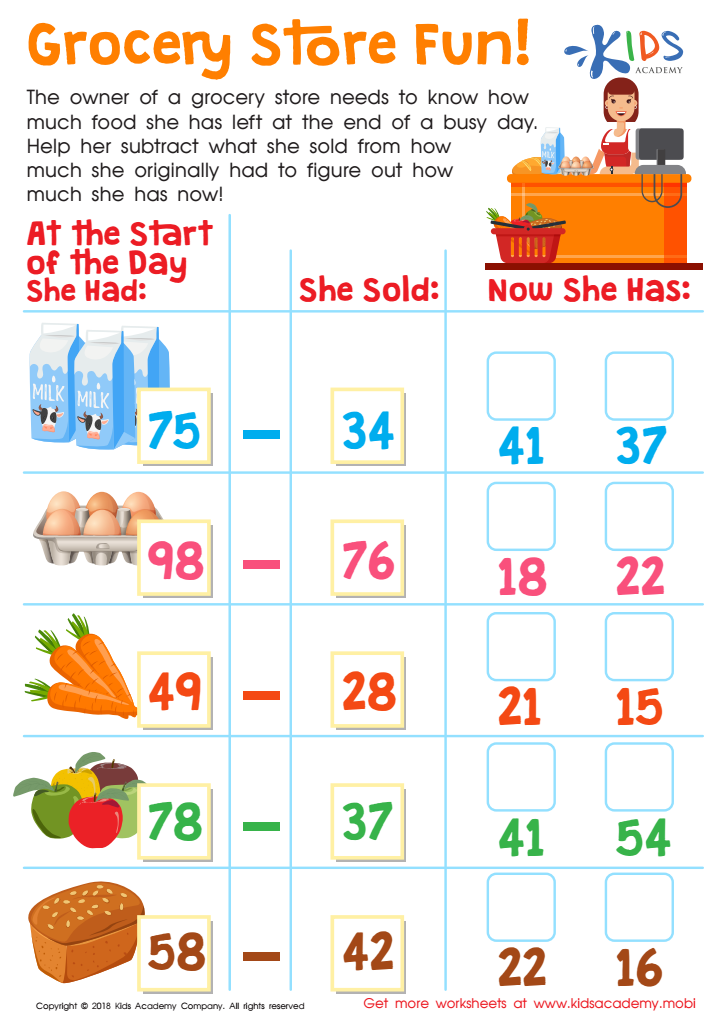
Grocery Store Fun! Worksheet
Let your kids have fun with this store worksheet. It requires them to help the owner by subtracting what she has sold from the original amount to figure out how much is left. Have them read and solve the equations in the printout to give the store owner the answer.
 Assign to My Students
Grocery Store Fun! Worksheet
Worksheet
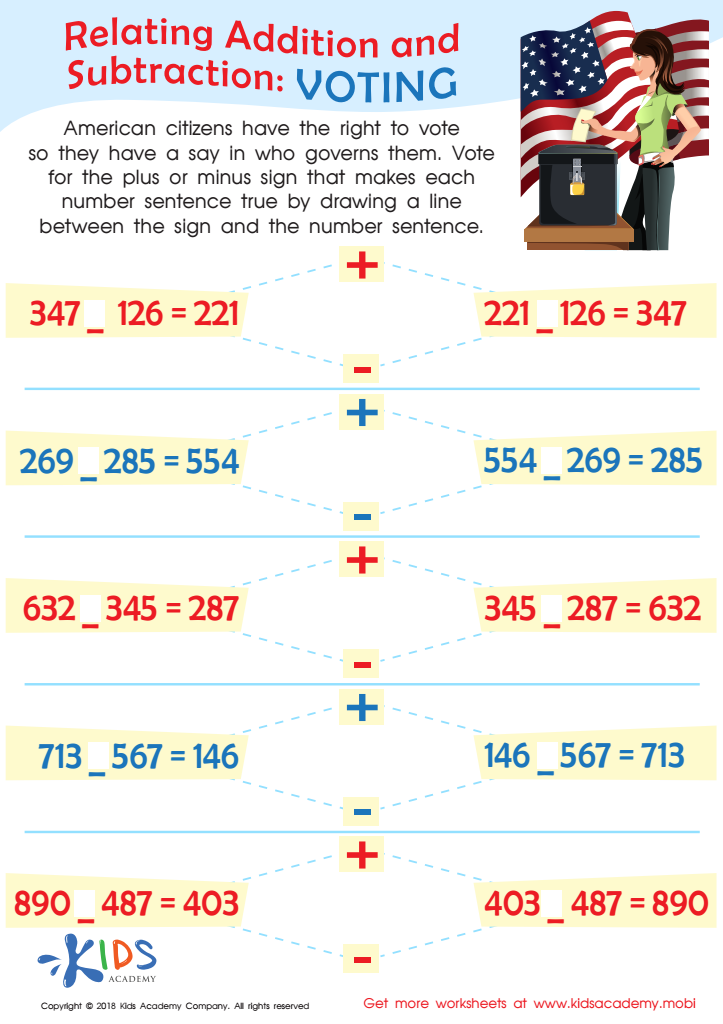
Voting Worksheet
This worksheet combines Social Studies and Math, teaching kids the democratic concept of voting. Guide learners to observe the problem, and decide if it needs a plus or minus. They "vote" for the correct answer by drawing a line from the problem to the correct operation symbol. Tally up the votes to check the answers!
Voting Worksheet
Worksheet
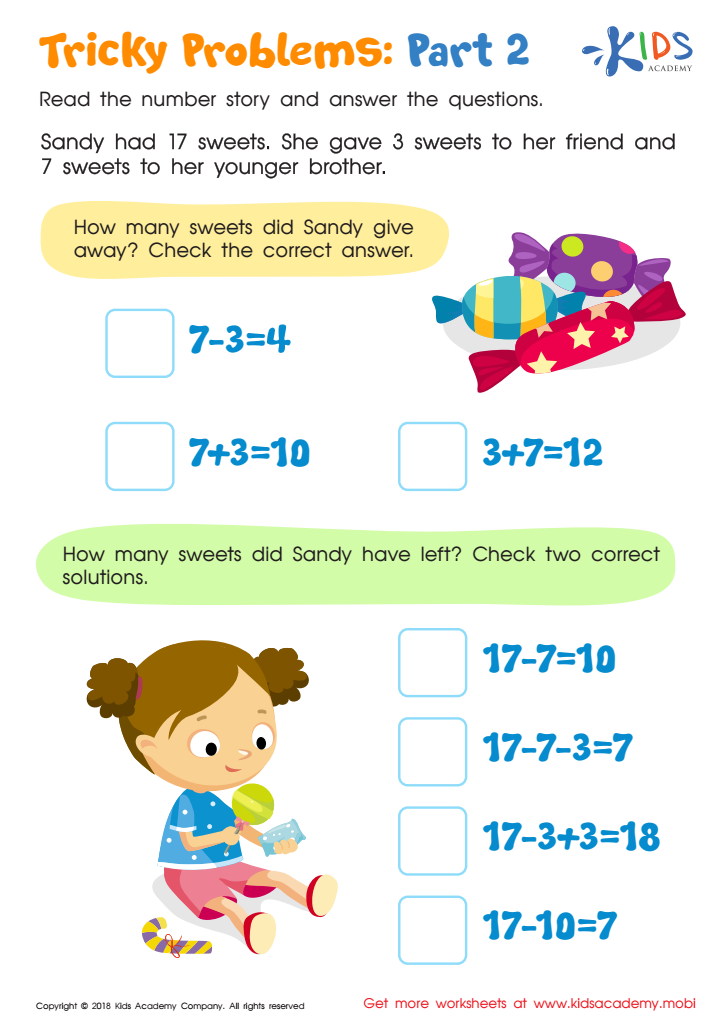
Tricky Problems Worksheet: Part 2
Help your little math learner visualize number stories with this engaging worksheet. They'll connect pictures to the story and use math facts to find the sums. After that, they'll be able to identify the correct number sentences to match. Let them practice and get better at problem solving!
Tricky Problems Worksheet: Part 2
Worksheet
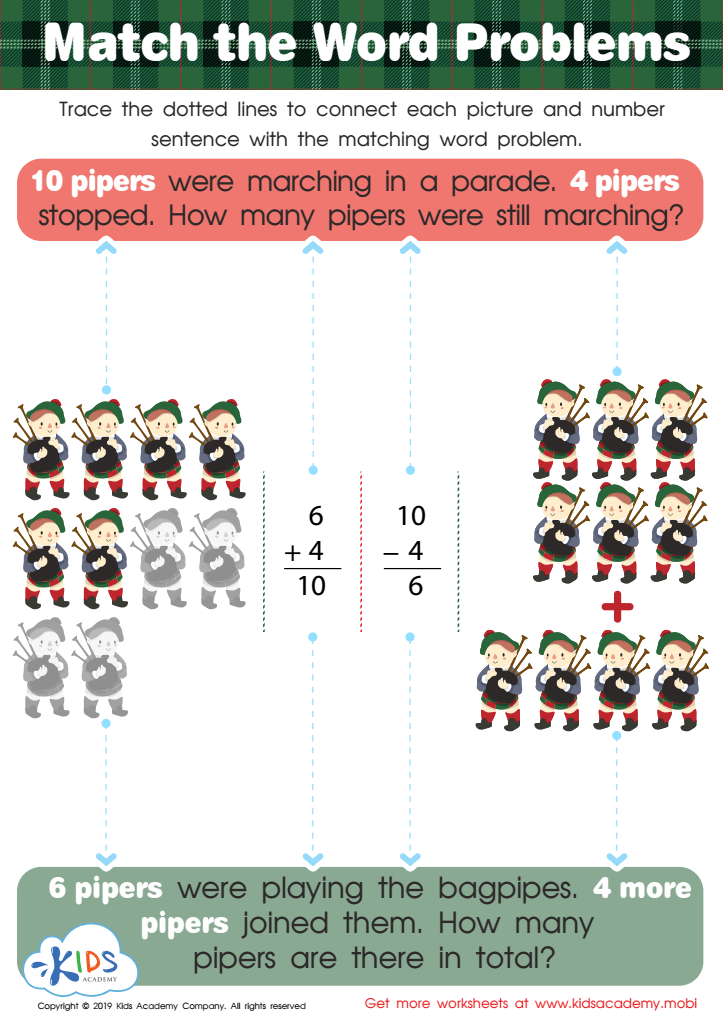
Match the Word Problems Worksheet
Read this word problem to your kids: Help them understand how it can be translated into a number problem. Trace the dotted lines to see how each picture and number sentence match the problem. With this worksheet, you can show your kids how easy it is to transform a word problem into a number problem.
Match the Word Problems Worksheet
Worksheet
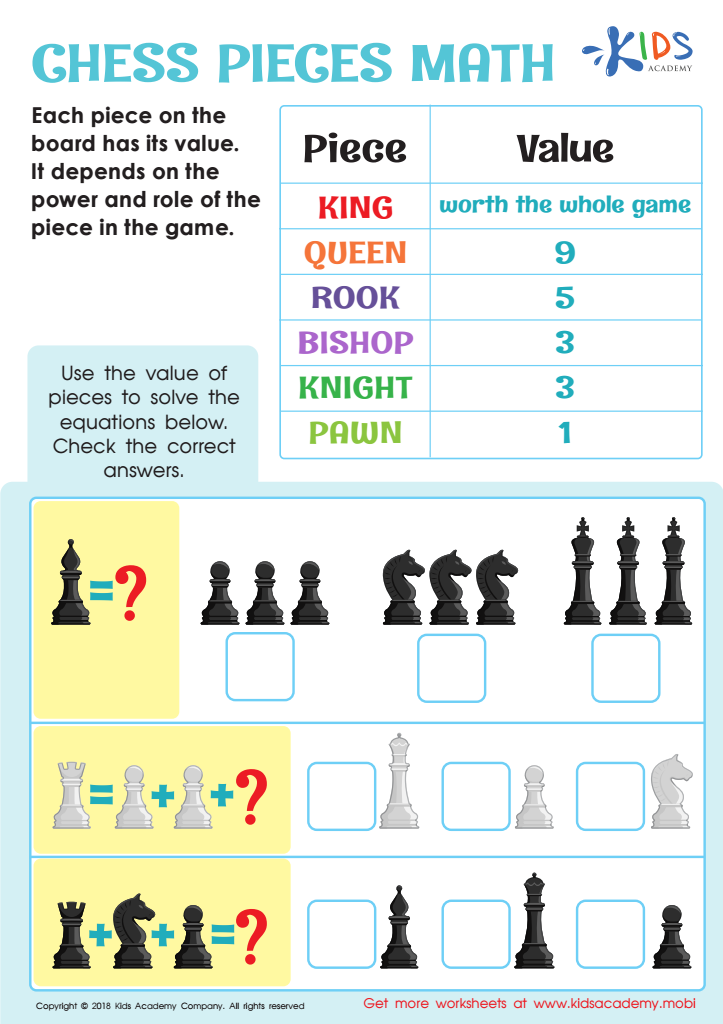
Chess Pieces Math Worksheet
Chess involves math! Each piece has its own value, from the king (worth the entire game) to the queen (9 points), varying according to their power and role. In the worksheet, your child must use these values to solve the equations at the bottom.
Chess Pieces Math Worksheet
Worksheet
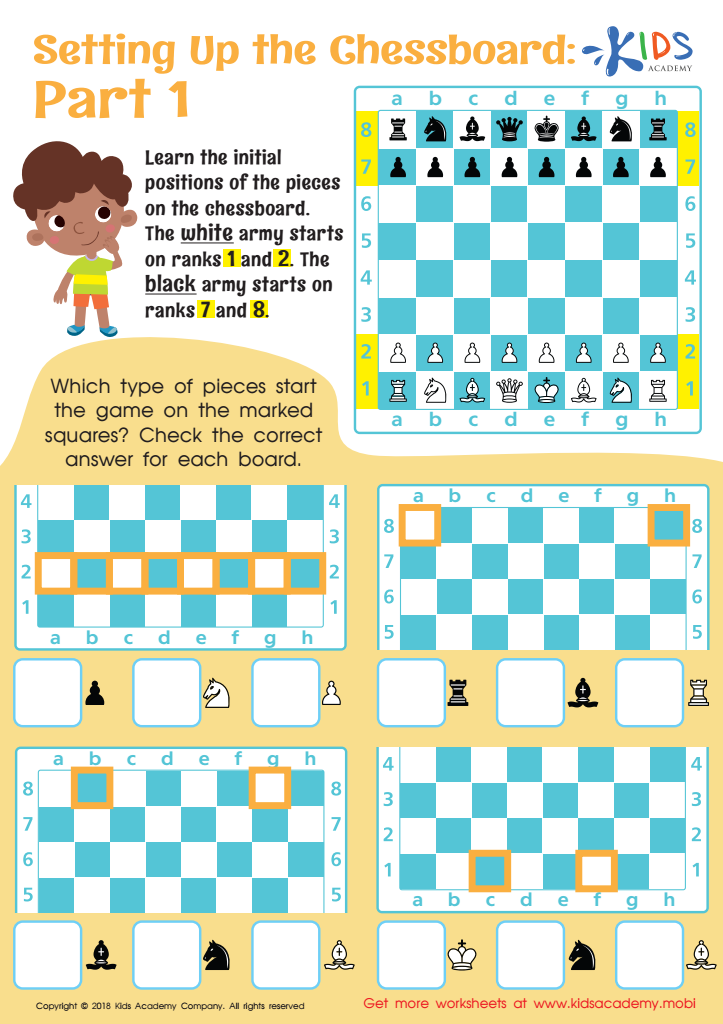
Setting up the Chessboard: Part 1 Worksheet
Teach your child the starting positions of the black and white armies on the chessboard. Black pieces are placed on ranks 7 and 8, and white pieces on ranks 1 and 2. Have them check the highlighted boxes on the chessboard to make sure they know the correct pieces to start with.
Setting up the Chessboard: Part 1 Worksheet
Worksheet
Join Kids Academy for Free
Who is primarily going to use this learning content?








Logical thinking is crucial for children ages 7-8, as it lays the foundation for cognitive development and problem-solving skills. During these formative years, children's brains are highly receptive and can develop the ability to process information in structured, rational ways. Encouraging logical thinking helps them understand cause and effect, make informed decisions, and approach new challenges methodically.
For parents, fostering logical thinking aids in children's academic success. Subjects like math and science fundamentally rely on logical reasoning. When children grasp these concepts early, they build confidence that extends across all subjects. Logical thinking also improves communication skills. As children learn to sequence their thoughts, they can express ideas more clearly and effectively.
For teachers, emphasizing logical thinking development helps create an engaging learning environment. Activities that challenge students to think critically, such as puzzles and strategy games, enhance their ability to reason systematically. Moreover, strong logical skills enable students to tackle complex problems independently, leading to a more in-depth understanding of the material and better academic performance overall.
Ultimately, nurturing logical thinking at ages 7-8 equips children with essential tools for lifelong learning. It prepares them not just for academic challenges, but also for everyday situations that require clear, rational thought. Investing in this aspect of their development offers them a strong start in their educational journey and beyond.








