Phonics skills improvement Normal Worksheets for Ages 7-8
6 filtered results
-
From - To
Enhance your child's phonics skills with our engaging printable worksheets designed for ages 7-8. Our Phonics Skills Improvement worksheets provide a structured and effective way for young learners to grasp essential phonetic concepts. Each activity focuses on building reading fluency, vocabulary recognition, and spelling proficiency through fun, interactive exercises tailored to this age group. With vibrant illustrations and varied tasks, children will enjoy practicing their phonics while boosting their confidence in reading. Perfect for at-home learning or classroom support, these worksheets are an invaluable resource for nurturing your child's literacy development. Explore our collection now and watch their reading skills soar!
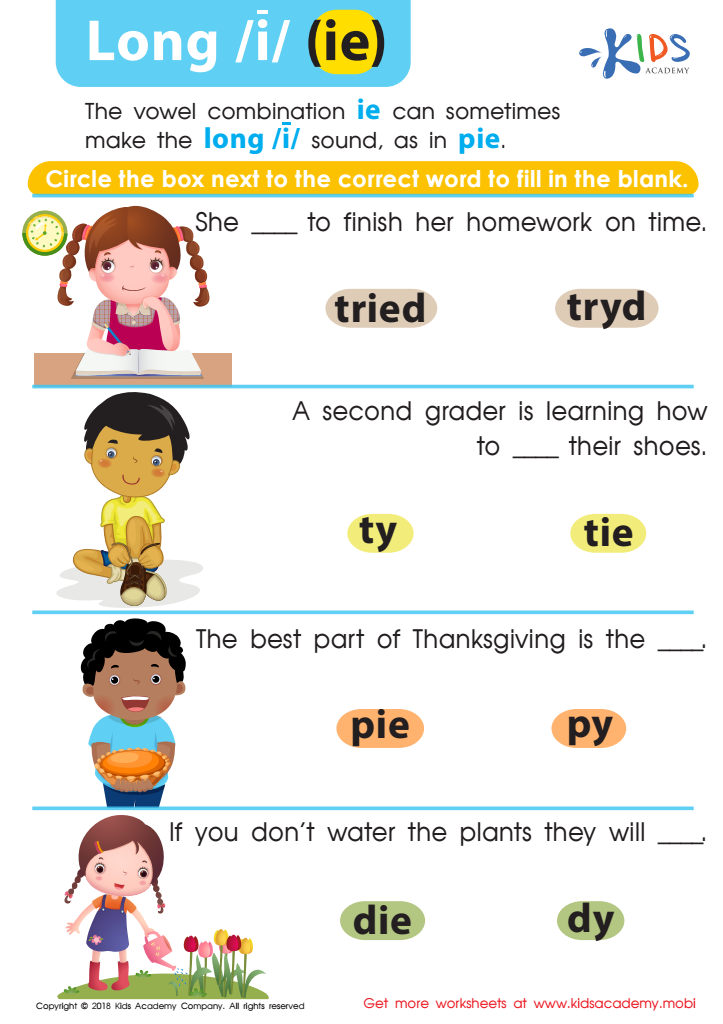
Reading: Long I and IE Worksheet
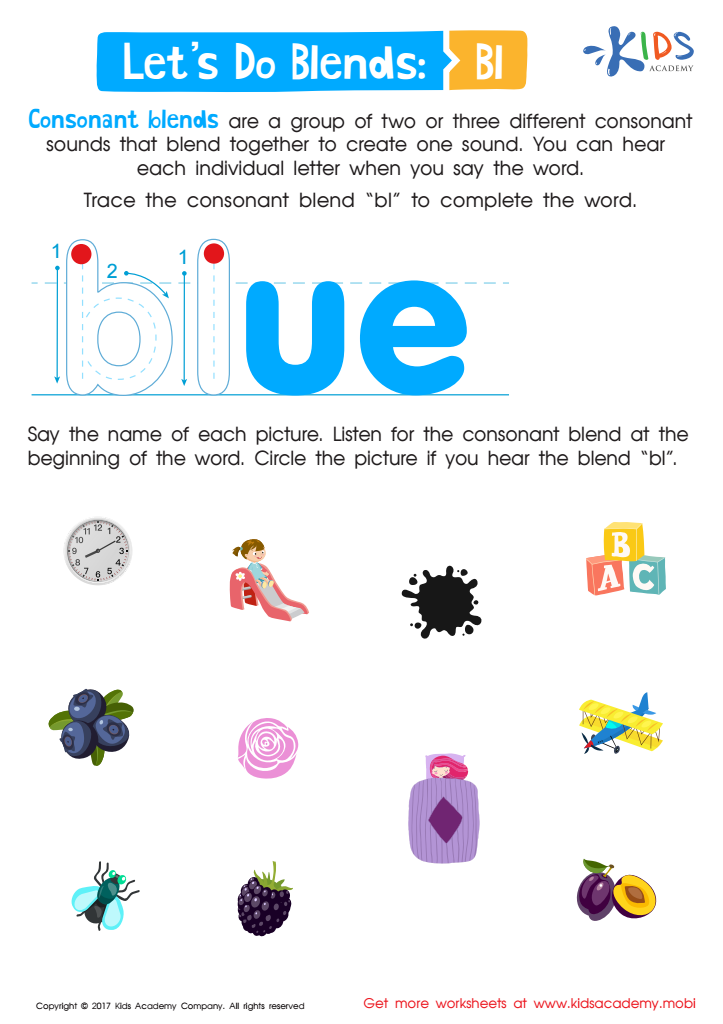
Beginning Blends: "Bl" Words Worksheet
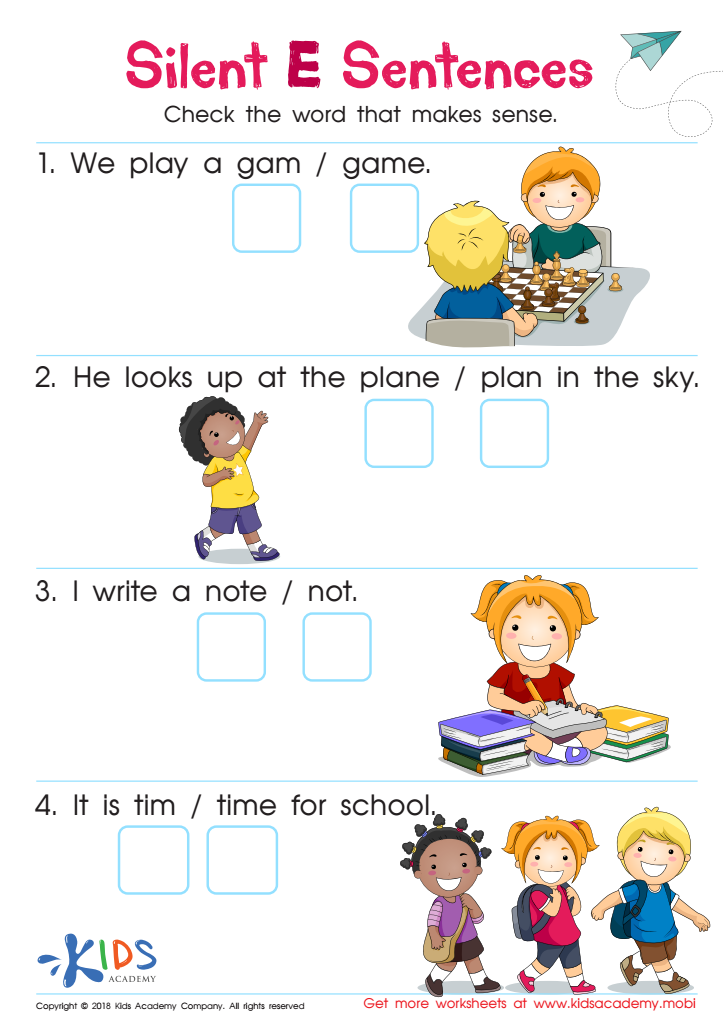
Silent E Sentences Worksheet

Long and Short U Worksheet
 Assign to My Students
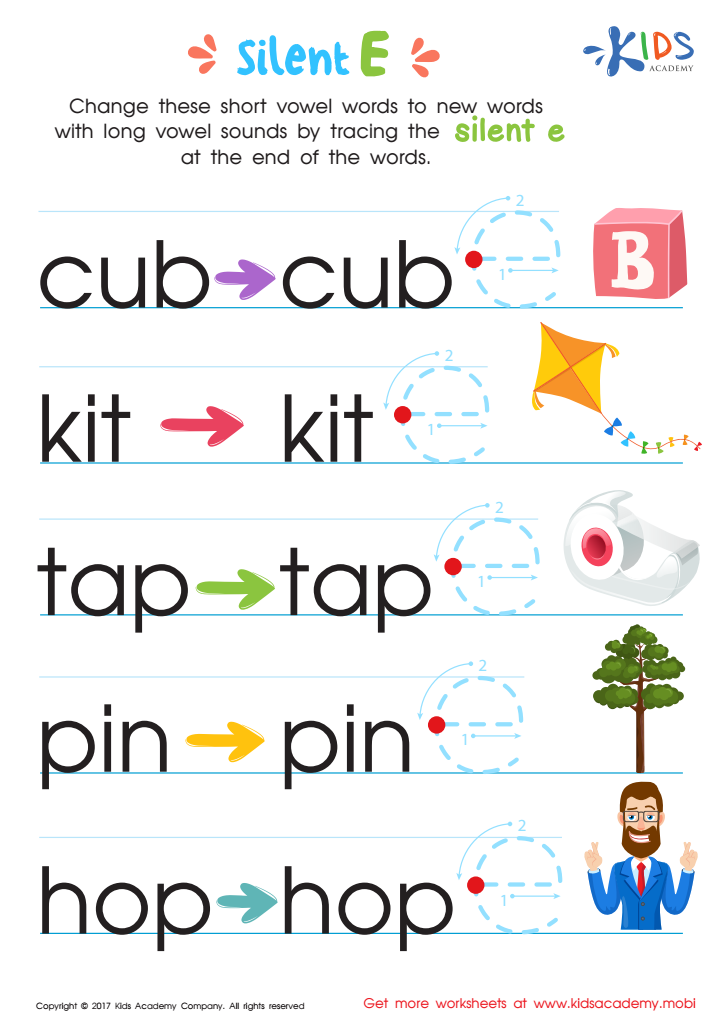
Silent E Words Worksheet
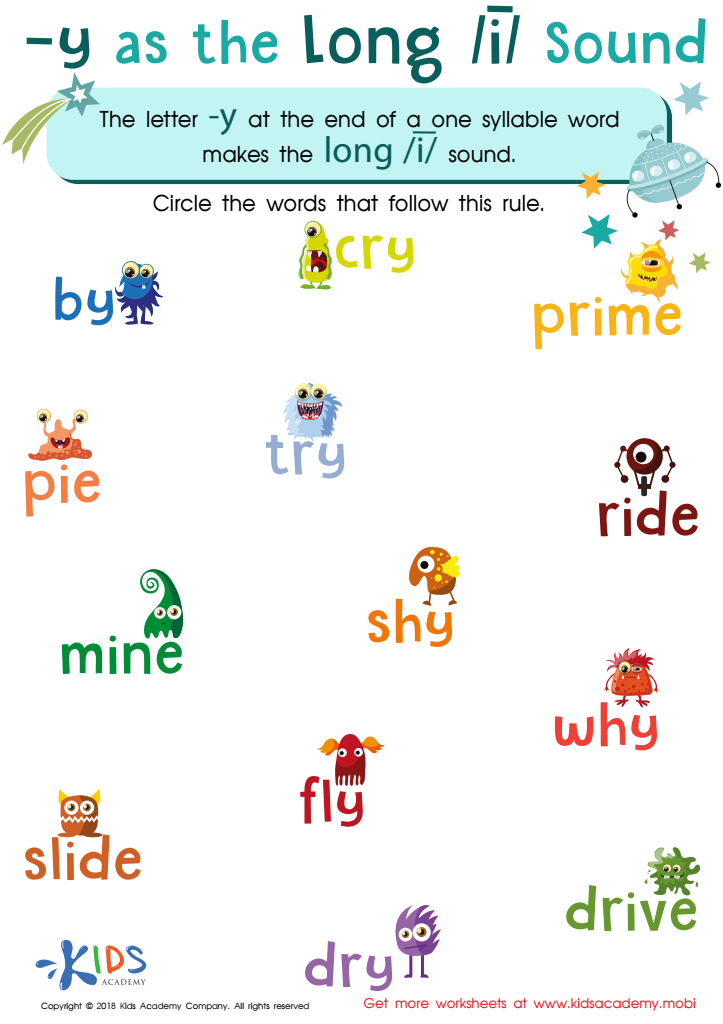
Reading: Y as Long I Worksheet







Phonics skills are fundamental for children aged 7 to 8 as they serve as the building blocks for reading and writing proficiency. At this age, students are transitioning from learning to read to reading to learn. This is a critical period where phonics helps strengthen their decoding skills, allowing them to break down and understand unfamiliar words. When children master phonics, they are better equipped to tackle diverse texts, enhancing their vocabulary and comprehension.
Parents and teachers should be concerned about phonics development because it directly impacts a child's academic success. Strong phonics skills lead to improved reading fluency, which boosts confidence and encourages a lifelong love for reading. Additionally, children who struggle with phonics at this stage may face difficulties in other subjects, as reading is integral to learning across the curriculum.
Moreover, improved phonics skills can reduce instances of frustration and disengagement in young learners. By investing time in enhancing these skills, parents and educators foster not just literacy, but critical thinking and communication abilities that are important for overall development. Thus, prioritizing phonics is essential for nurturing competent, confident readers who can thrive in school and beyond.








