Understanding chess rules Normal Worksheets for Ages 7-8
5 filtered results
-
From - To
Introduce young minds to the strategic world of chess with our "Understanding Chess Rules" worksheets tailored for ages 7-8. These engaging activities help children grasp the basics of chess, including piece movements, game setup, and key strategies. Perfect for beginner players, our worksheets are designed to boost critical thinking and problem-solving skills while making learning fun and interactive. With clear instructions and colorful illustrations, kids will master chess rules step-by-step and develop a love for this classic game. Elevate their learning experience by making chess an exciting and accessible educational opportunity today!
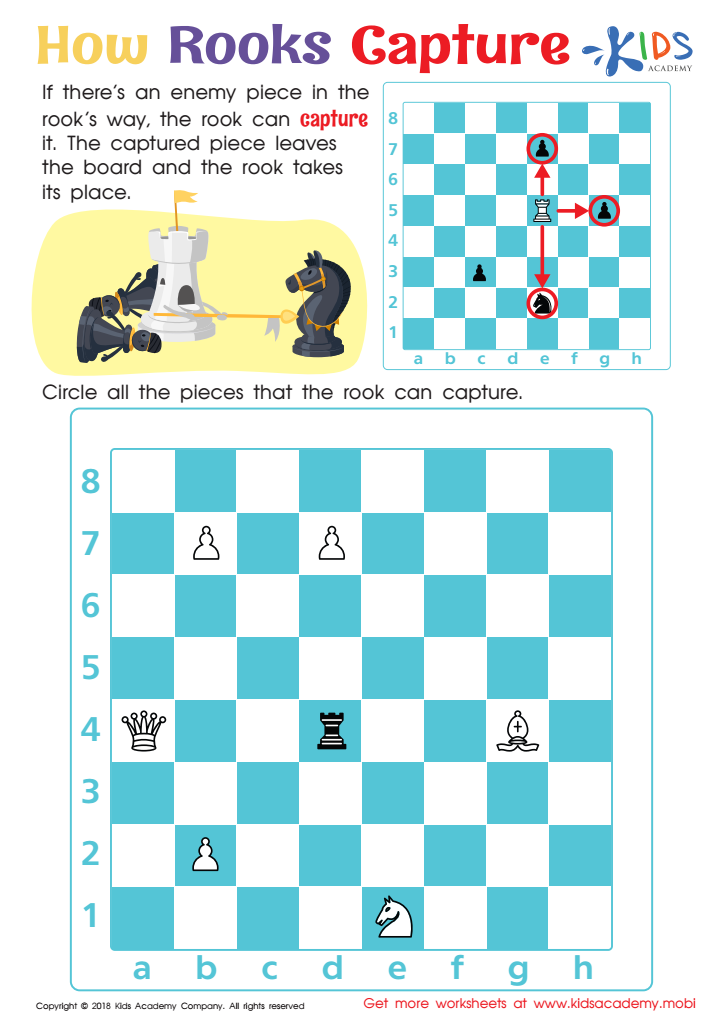
How Rooks Capture Worksheet
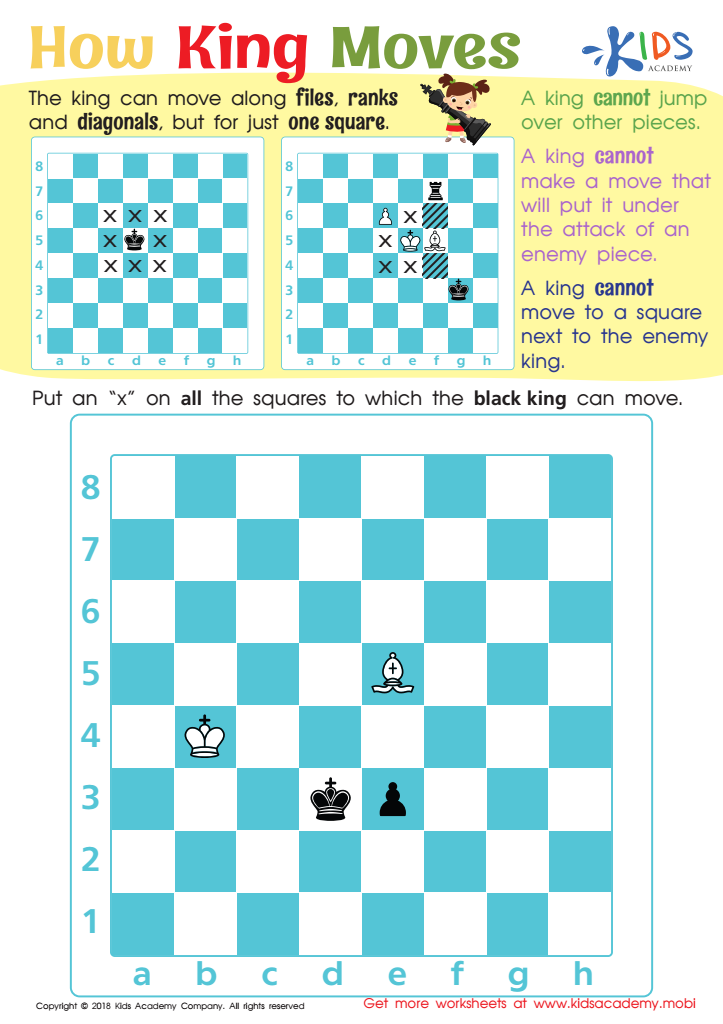
How King Moves Worksheet
 Assign to My Students
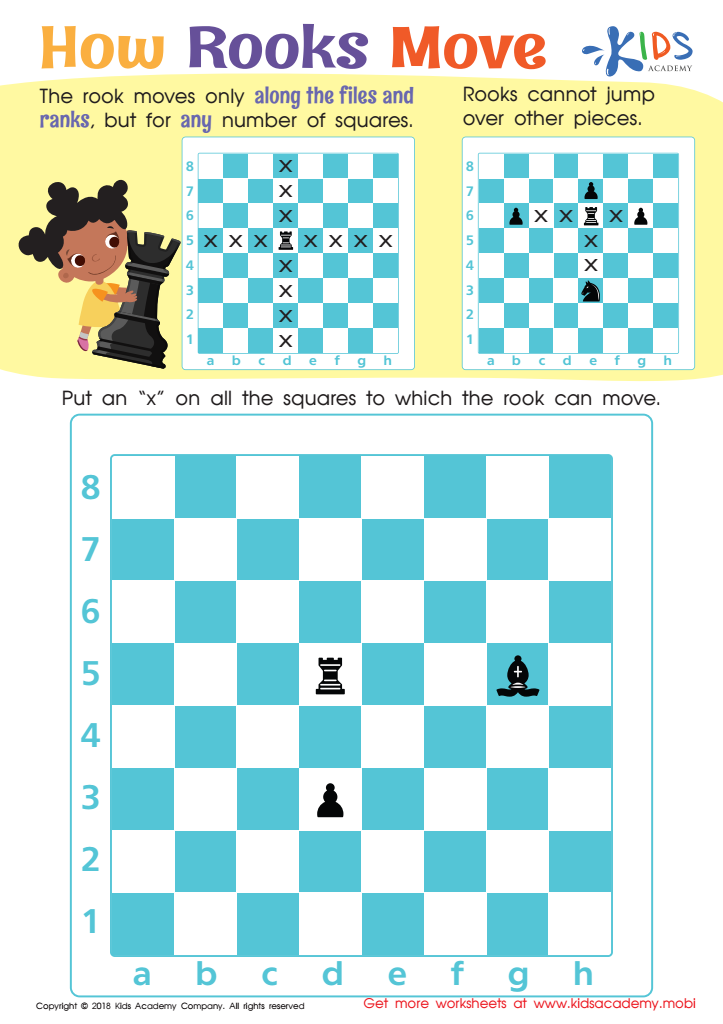
How Rooks Move Worksheet
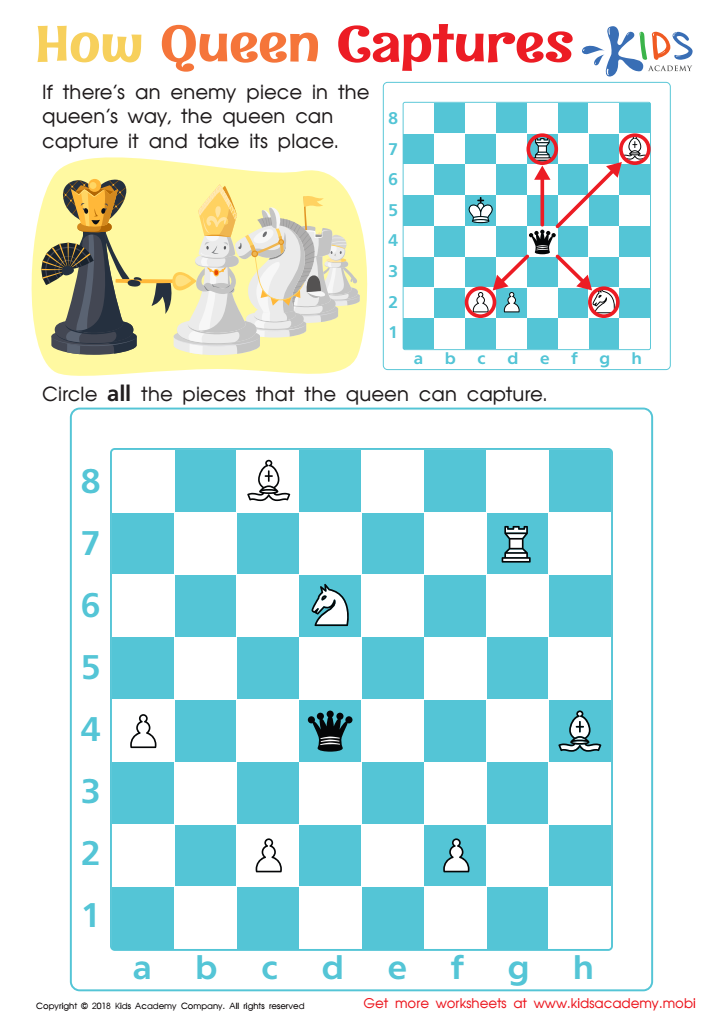
How Queen Captures Worksheet
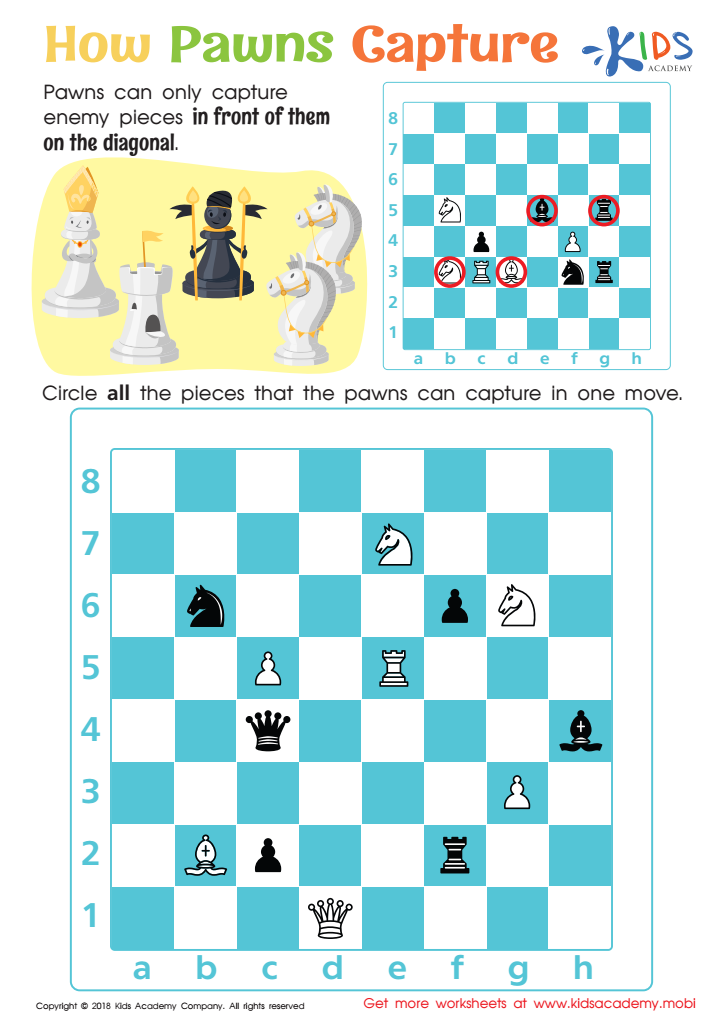
How Pawns Capture Worksheet








Understanding the rules of chess can be profoundly beneficial for children aged 7-8. Chess isn't merely a game; it's a powerful educational tool. Firstly, learning chess enhances critical thinking and problem-solving skills. Each move requires thoughtful consideration, fostering strategic planning and foresight. This habit of thinking ahead helps children in their academic endeavors and everyday decision-making.
Secondly, chess boosts memory and concentration. Remembering moves and strategic patterns translates to improved attention spans and better retention of information, which can positively impact their school performance.
Social skills also benefit from chess. Playing the game teaches children patience, sportsmanship, and how to handle wins and losses gracefully. It provides a platform for children to engage with peers, encouraging communication and collaboration.
Introducing chess at an early age sets a foundation for lifelong cognitive skills. Parents and teachers who encourage chess are not only helping with immediate academic and social development but also preparing children for future challenges. By understanding the game’s rules, kids gain a structured approach to tackling problems methodically and creatively. Thus, the seemingly simple act of learning chess can cultivate a myriad of essential life skills in young minds.








