
Understanding economics Normal Worksheets for Ages 7-8
3 filtered results
Difficulty Level
Grade
Age
-
From - To
Subject
Activity
Standards
Explore our engaging "Understanding Economics Normal Worksheets" designed for children ages 7-8. These worksheets aim to introduce young learners to fundamental concepts of economics in a fun and accessible way. Covering topics such as needs versus wants, basic trade concepts, and the importance of money, each activity enhances critical thinking and decision-making skills. With colorful illustrations and age-appropriate language, kids will enjoy learning about their role in the economy while completing a variety of interactive tasks. Perfect for home or classroom use, these worksheets foster a strong foundation in economic principles, making learning enjoyable and impactful for young minds.
Favorites
With answer key
Interactive
 Assign to My Students
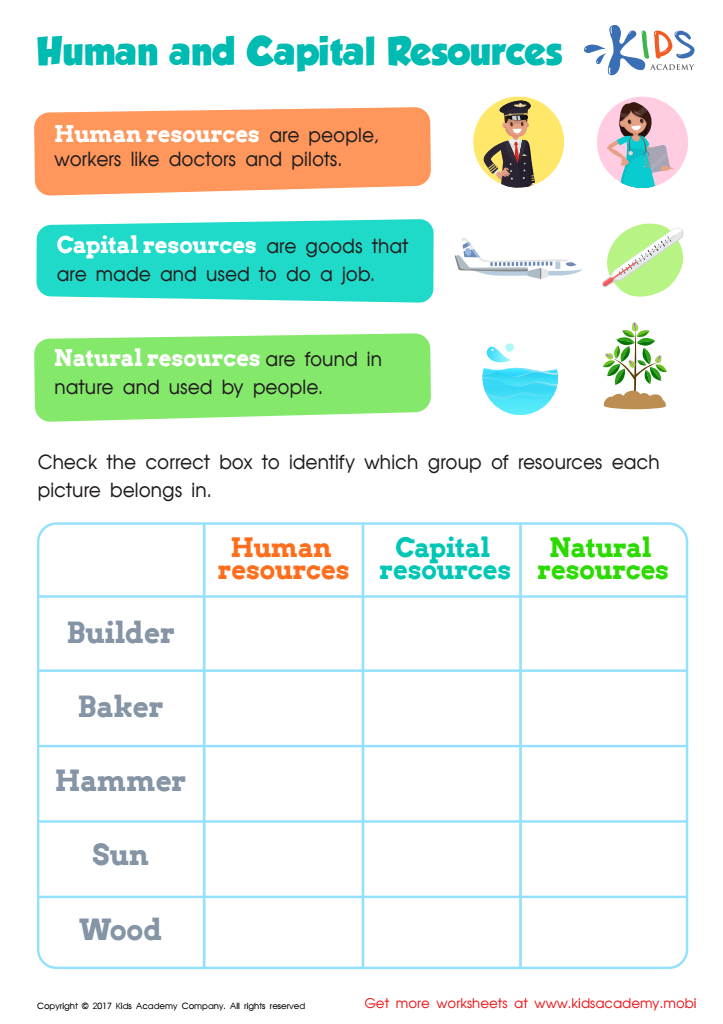
Human and Capital Resources Worksheet
It helps identify and differentiate human, natural and capital resources, so your kid can understand how each affects their world.
Human and Capital Resources Worksheet
Worksheet
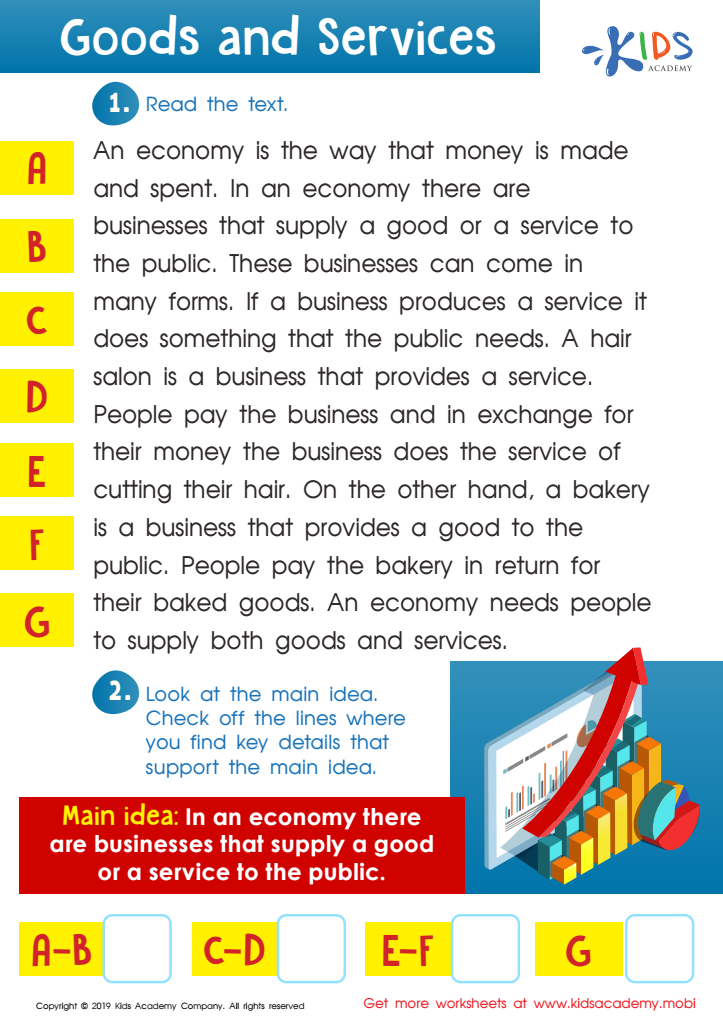
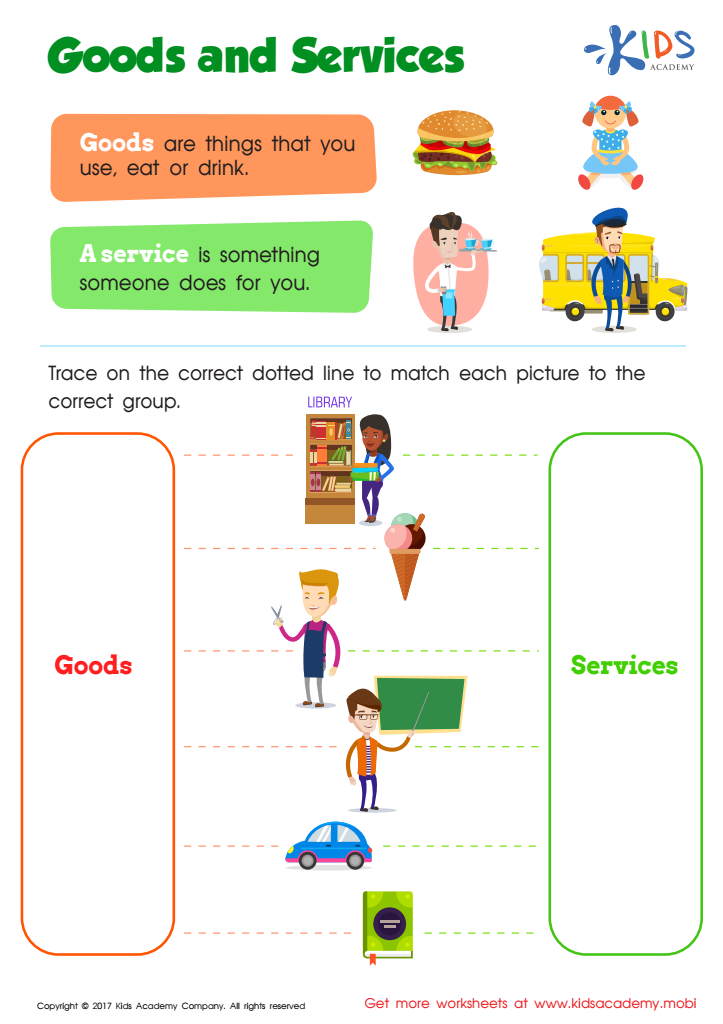
Goods and Services Worksheet
Teach your kids about the economy and businesses with this worksheet. Ask them if they know what goods and services are. After they complete the worksheet, they'll have a better understanding. Read the text to them and guide them step-by-step through the instructions. Help them learn!
Goods and Services Worksheet
Worksheet
Join Kids Academy for Free
Who is primarily going to use this learning content?







Understanding economics is essential for children aged 7-8, as it lays the foundation for informed decision-making and responsible citizenship. At this age, young learners are curious about how the world works, and introducing them to basic economic principles can spark that curiosity. Economics helps children grasp concepts such as scarcity, choice, and trade, illustrating how resources are limited and why decisions matter. For example, children can learn why saving money is important or how businesses operate within a community.
Moreover, understanding economics fosters essential life skills, such as critical thinking and problem-solving. When children comprehend the value of money and resources, they become more aware of their consumption habits and the impact of their choices on society. It encourages them to be thoughtful consumers, understanding the advantages of sharing and collaborating.
Parents and teachers play a crucial role in this learning process. By incorporating economic concepts into everyday discussions, such as budgeting for a family trip or sharing toys with friends, adults can reinforce these valuable lessons. Ultimately, equipping young learners with a basic understanding of economics prepares them for a future where they can make wise choices, contribute to their communities, and adapt to the evolving economy.








