Understanding perspectives Normal Worksheets for Ages 7-8
3 filtered results
-
From - To
Explore our "Understanding Perspectives Normal Worksheets" designed for children ages 7-8! These engaging worksheets focus on developing critical thinking and empathy by encouraging young learners to recognize and appreciate different viewpoints. Each worksheet features fun activities that promote discussion and reflection, helping kids learn to put themselves in others' shoes. Ideal for enhancing social skills while supporting literacy and comprehension, these resources offer a perfect blend of educational value and enjoyment. Perfect for both classroom settings and home use, our worksheets will inspire curiosity and foster understanding among peers. Download now to help your students sharpen their perspective-taking abilities!
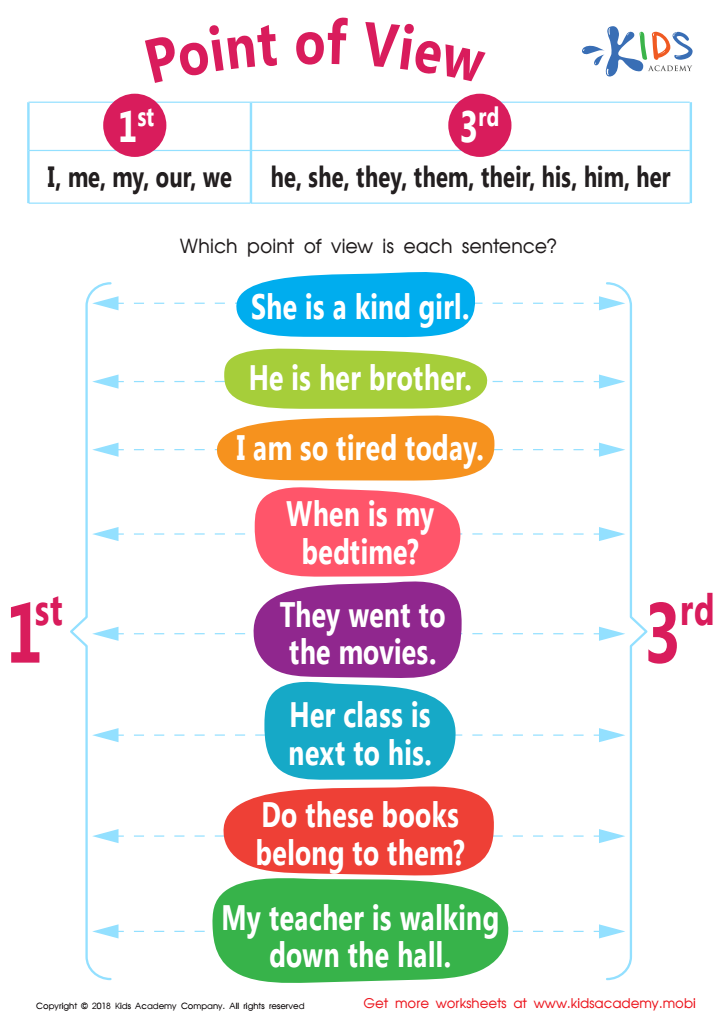
Point of View Worksheet
 Assign to My Students
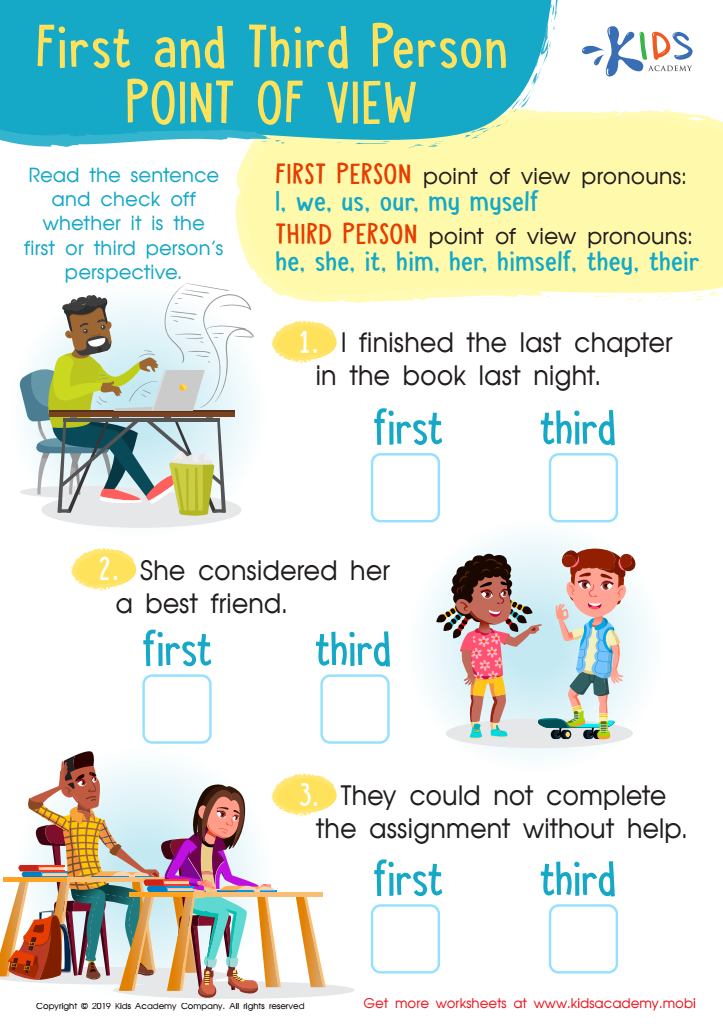
First and Third Person Point of View Worksheet
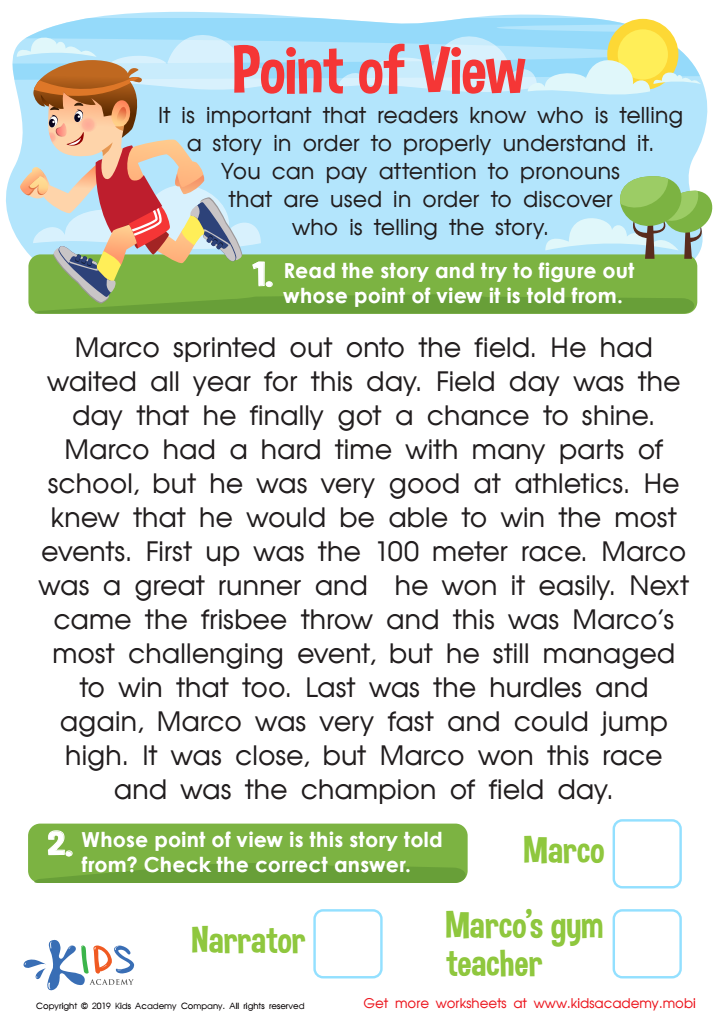
Point of View Worksheet








Understanding perspectives is crucial for children aged 7-8 because it helps develop their social-emotional skills. At this age, children are increasingly capable of recognizing that others have thoughts, feelings, and viewpoints different from their own. Teaching them to understand perspectives fosters empathy, allowing them to relate to their peers, navigate social situations, and build friendships.
When parents and teachers prioritize teaching this skill, they empower children to communicate better and resolve conflicts. For instance, a child who understands why a friend might be upset can respond compassionately, rather than reacting with frustration. This not only improves their relationships but also enhances their emotional intelligence.
Moreover, understanding different perspectives cultivates critical thinking and adaptability. When children learn to consider various viewpoints, they become more open-minded and innovative, skills that are essential in today's diverse and interconnected world.
In the classroom, activities that promote perspective-taking—such as role-playing or discussing stories with diverse characters—engage students and make the learning experience more enriching. Ultimately, by nurturing this ability, parents and teachers help children become more inclusive, respectful individuals, better prepared to contribute positively to society.








