Understanding pollination Normal Worksheets for Ages 7-8
4 filtered results
-
From - To
Explore our engaging "Understanding Pollination" worksheets tailored for ages 7-8! These beautifully designed resources introduce young learners to the fascinating world of pollination, the crucial process that helps plants reproduce. Each worksheet offers fun activities that enhance comprehension of plant biology, the role of pollinators like bees and butterflies, and the importance of ecosystems. Ideal for classrooms or at home, our normal worksheets promote critical thinking and creativity while aligning with educational standards. Discover the joy of learning about nature through interactive exercises that make understanding pollination both enjoyable and informative. Start your child's journey into the wonders of the natural world today!
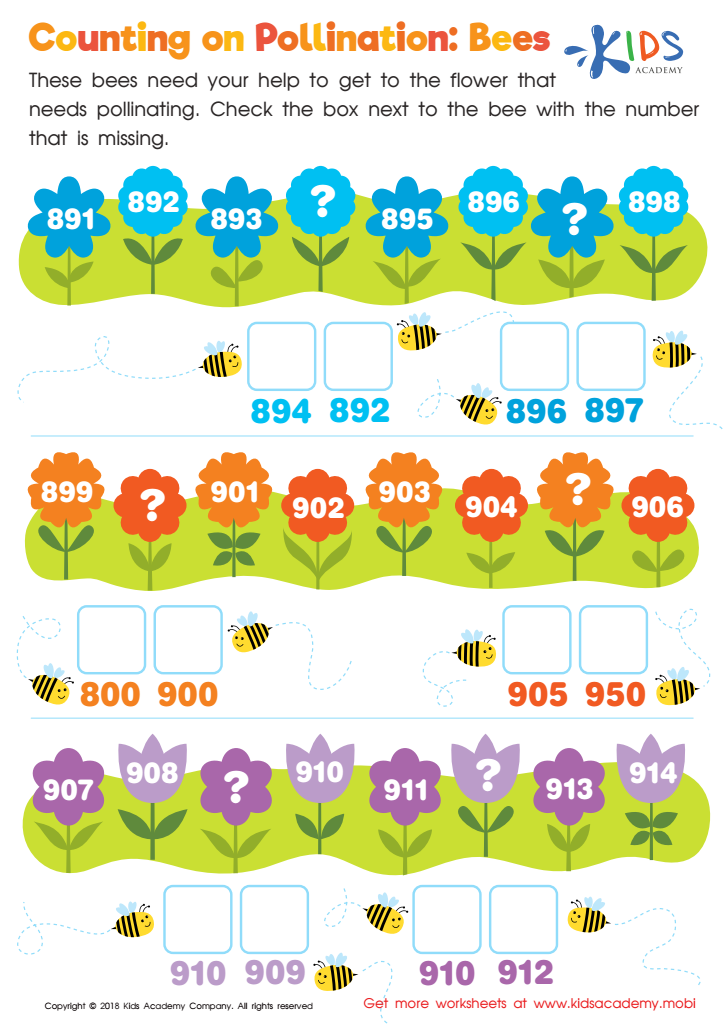
Counting on Pollination: Bees Worksheet
 Assign to My Students
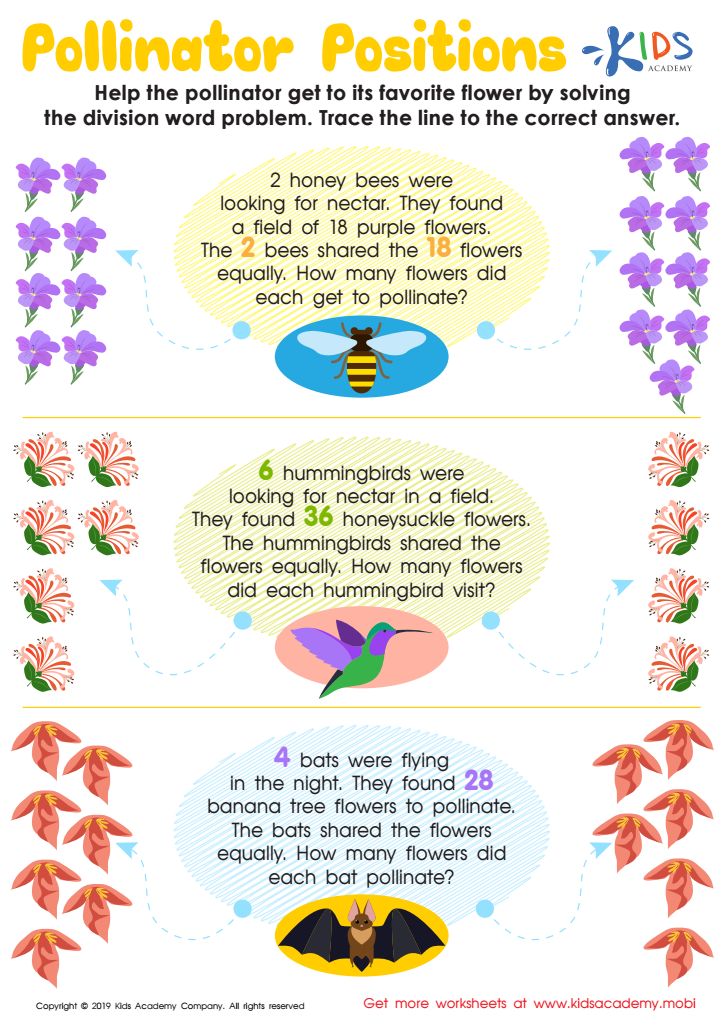
Pollinator Positions Worksheet
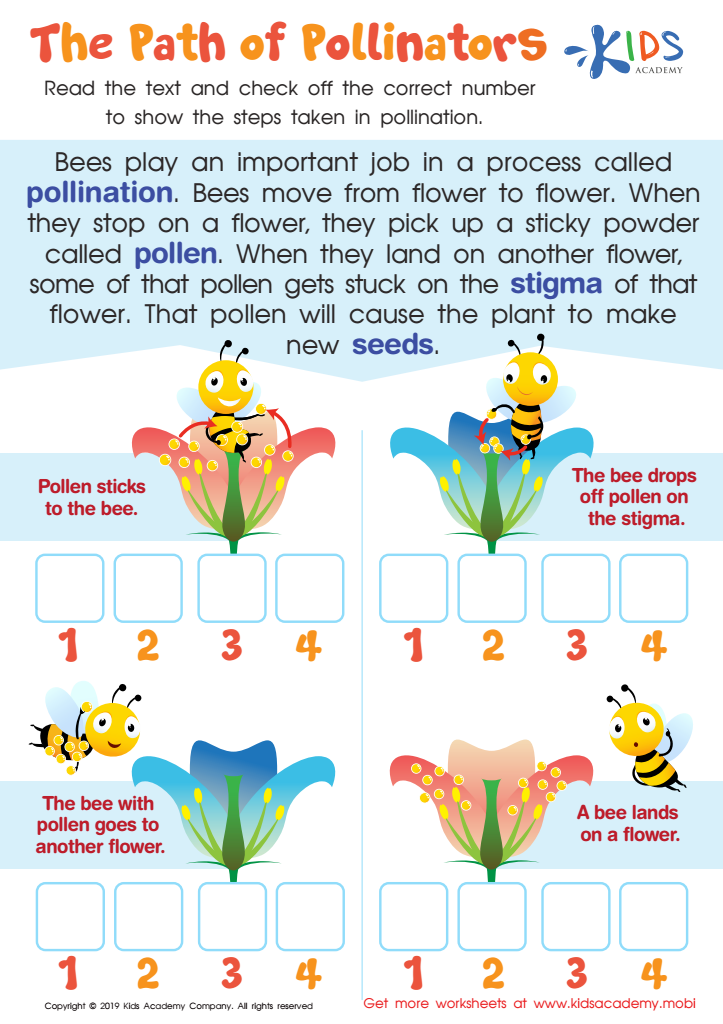
The Path of Pollinators Worksheet
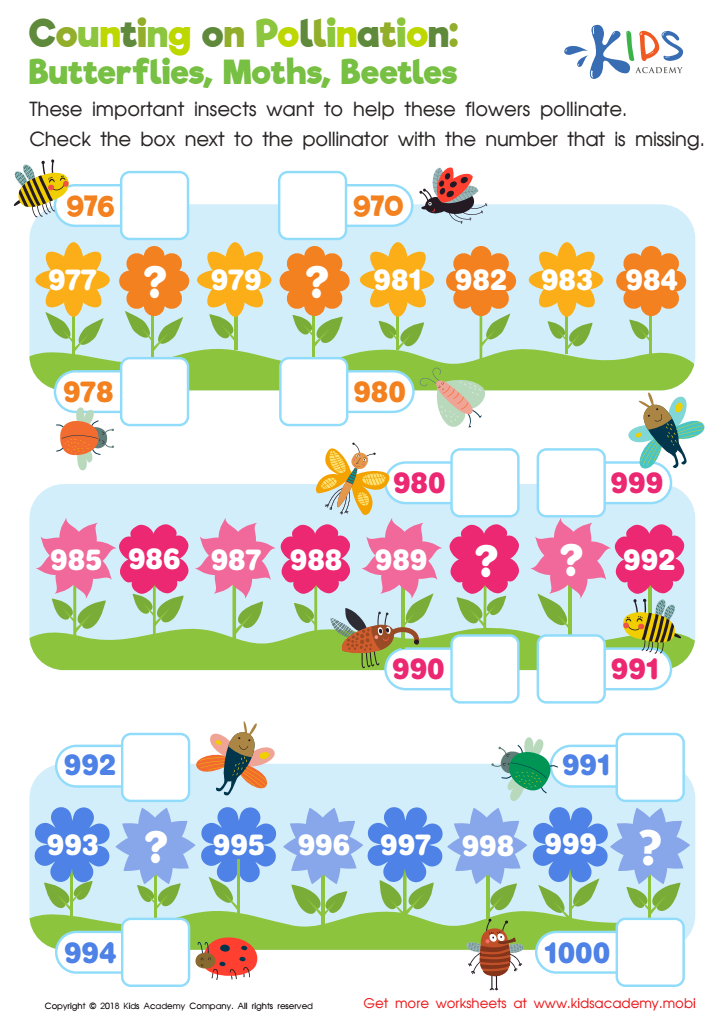
Counting on Pollination: Butterflies, Moths, Beetles Worksheet




.jpg)
Understanding pollination is important for both parents and teachers because it helps children grasp how plants grow and produce food. Pollination is a vital process involving bees, butterflies, and other animals that transfer pollen from one flower to another, enabling plants to make seeds and fruits. By learning about this, kids can develop a greater appreciation for nature and learn about the role each creature plays in the ecosystem.
Additionally, teaching children about pollination supports their scientific curiosity and critical thinking. They can explore concepts such as symmetry, life cycles, and habitats, which fosters a love for science and encourages them to ask questions. Engaging with this topic also promotes environmental awareness, teaching students about plant biodiversity and the importance of protecting pollinators, which face threats from habitat loss and pesticides.
When parents and teachers discuss pollination, they can also encourage outdoor activities, such as gardening or nature walks, which further enhance observational skills and nurture a connection to the environment. Overall, understanding pollination equips children with knowledge that not only enriches their academic experiences but also fosters responsible stewardship of the Earth.








