Understanding shapes Normal Worksheets for Ages 7-8
3 filtered results
-
From - To
"Understanding Shapes Normal Worksheets for Ages 7-8" offers engaging and educational activities designed to help young learners grasp essential geometry concepts. Tailored for kids in grades 2-3, these worksheets feature fun exercises covering a variety of shapes, their properties, and spatial reasoning skills. Through interactive practice, children will enhance their math abilities, recognizing shapes, understanding symmetry, and more. Ideal for classroom use or at-home learning, these resources ensure that students build a strong foundation in geometry while enjoying the learning process. Download now and boost your child's confidence and proficiency in understanding shapes!
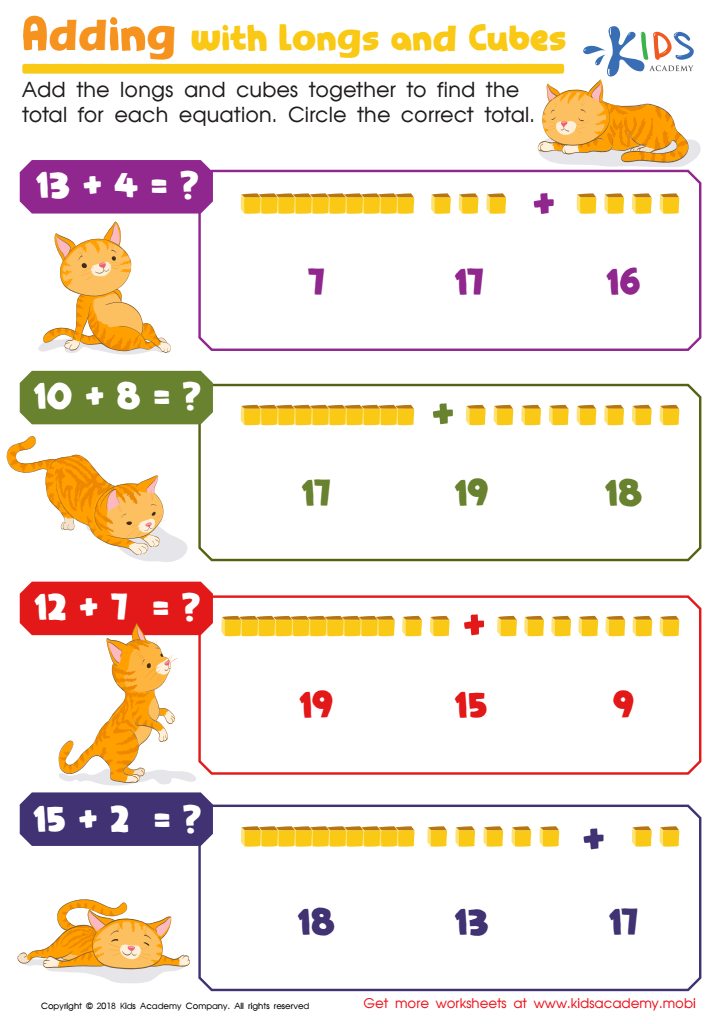
Adding With Longs and Cubes Worksheet
 Assign to My Students
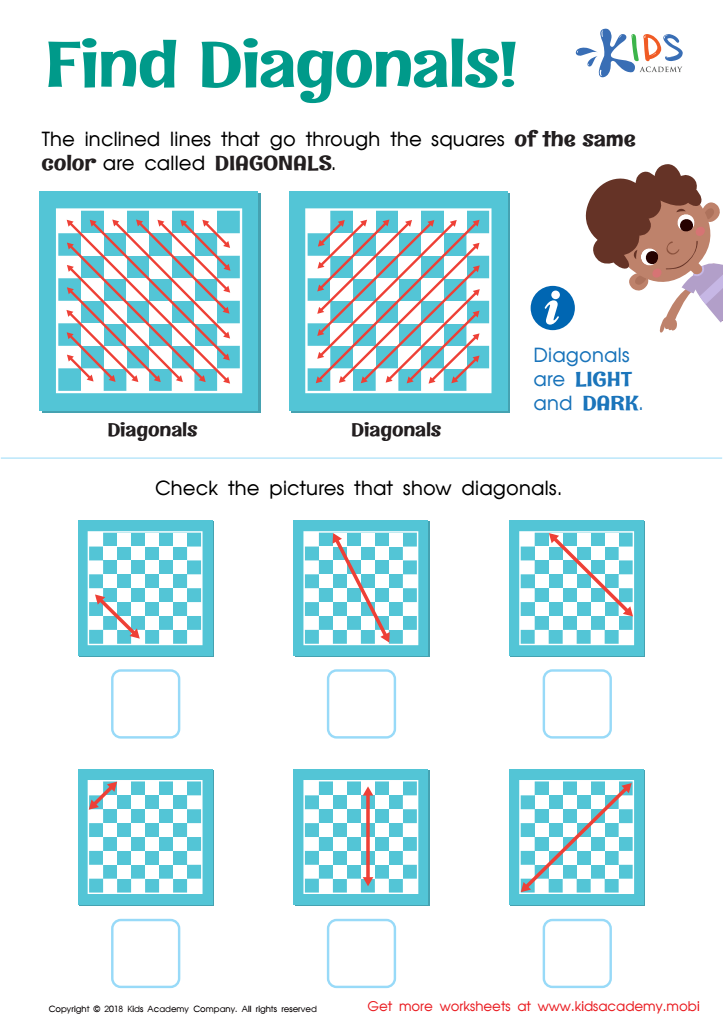
Find Diagonals Worksheet
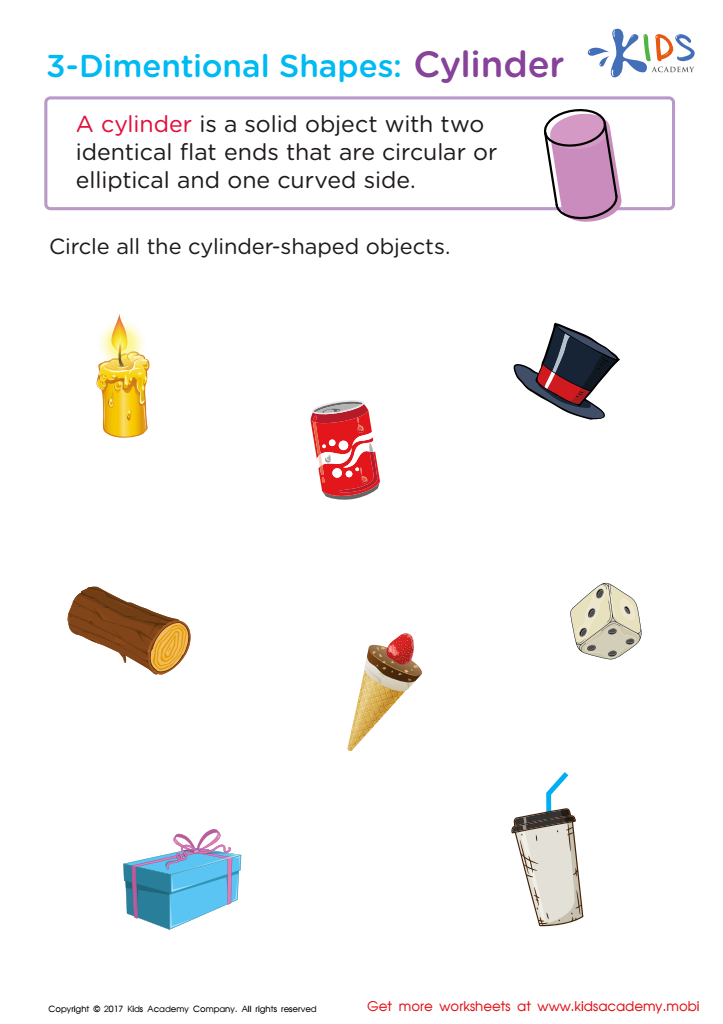
Three–Dimensional Shapes: Cylinder Worksheet




.jpg)

.jpg)

Understanding shapes is pivotal for children aged 7-8 as it forms the foundation for both cognitive and academic development. At this age, students build mental models of the world around them, and recognizing shapes plays a crucial role in spatial awareness and visual processing. These skills not only enhance early mathematics concepts like geometry but also improve problem-solving and critical thinking.
Parents and teachers who emphasize shape recognition set the groundwork for future learning in math, science, and even art. Comprehending the properties and differences between shapes aids in grasping more complex mathematical ideas such as symmetry, area, and volume. Beyond academics, understanding shapes improves fine motor skills—important for writing and drawing—and bolsters organizational skills by helping children categorize and interpret information effectively.
Socially, grasping shape concepts enables better navigation and interaction with their environment. Games, puzzles, and hands-on activities involving shapes also provide enjoyable ways to bond, whether in class or at home. Engaging with shapes through pattern recognition and construction aids intellectual curiosity and a love for learning.
Thus, fostering a solid understanding of shapes between ages 7-8 enhances overall cognitive development and equips children with essential skills for future educational and life success.








