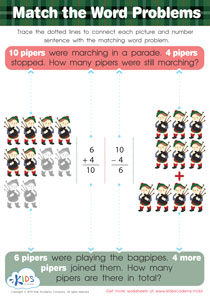
Mental math skills Normal Addition Worksheets for Ages 7-8
5 filtered results
-
From - To
Enhance your child's mental math skills with our engaging Normal Addition Worksheets, designed specifically for ages 7-8. These worksheets focus on developing quick and efficient addition strategies, fostering numerical fluency and confidence. With a variety of fun exercises, students can practice solving problems in their heads, making math enjoyable and interactive. Our resources are crafted to align with grade-level standards, ensuring that children build a strong foundation in addition concepts. Perfect for classroom use or home practice, these worksheets will help your child master essential math skills while cultivating a love for learning. Get started today and watch their confidence grow!
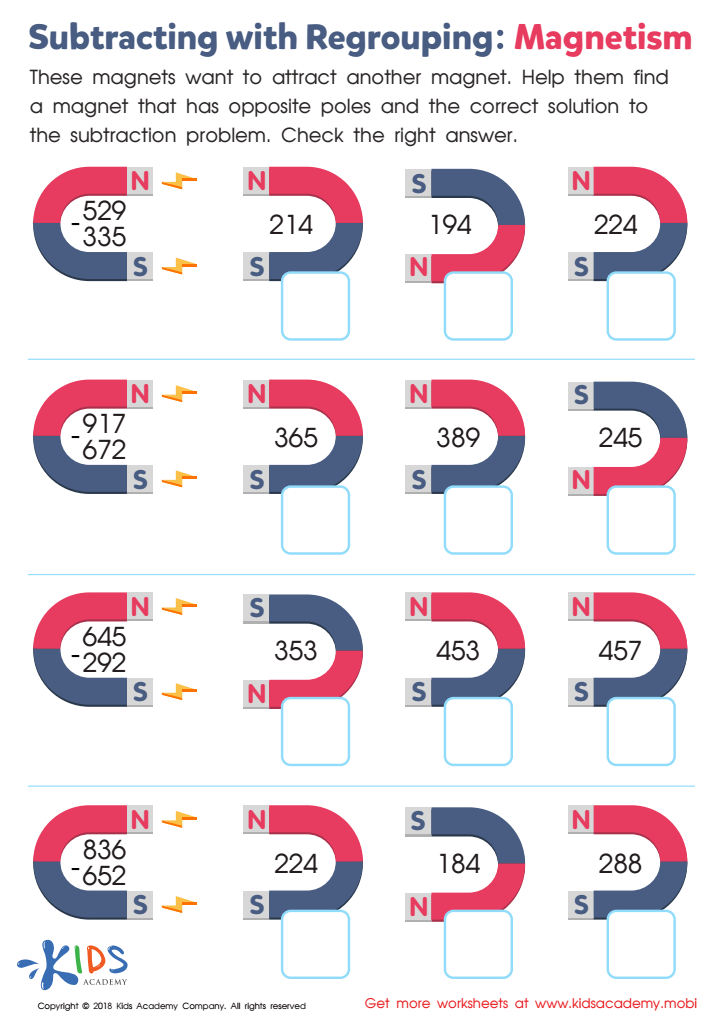
Subtracting with Regrouping: Magnetism Worksheet
 Assign to My Students
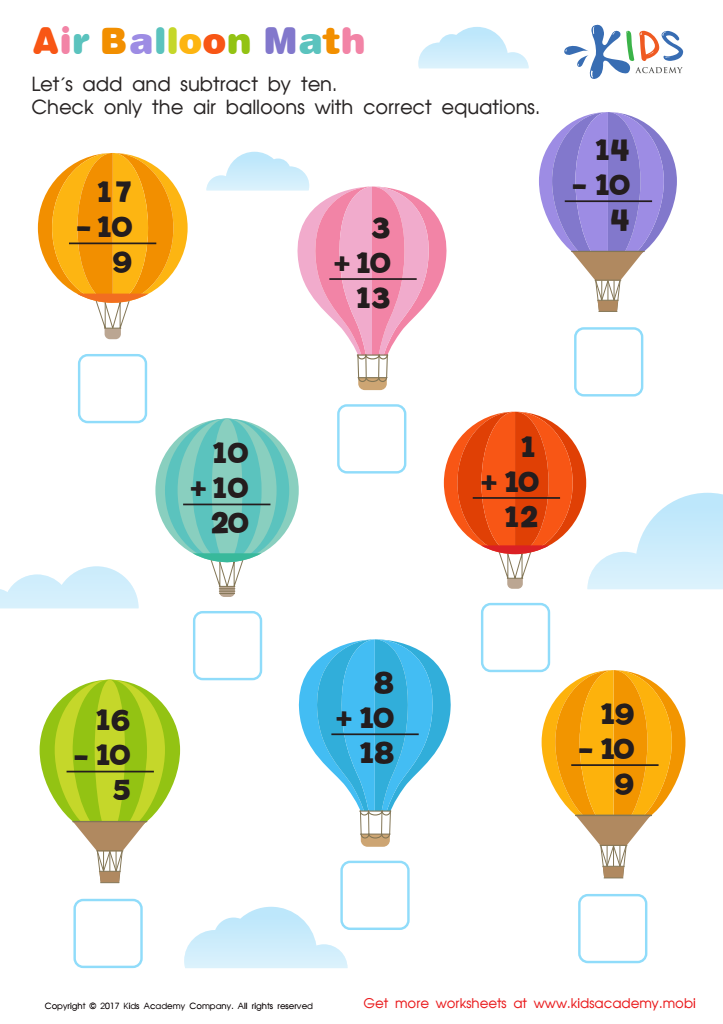
Air Balloon Math Worksheet
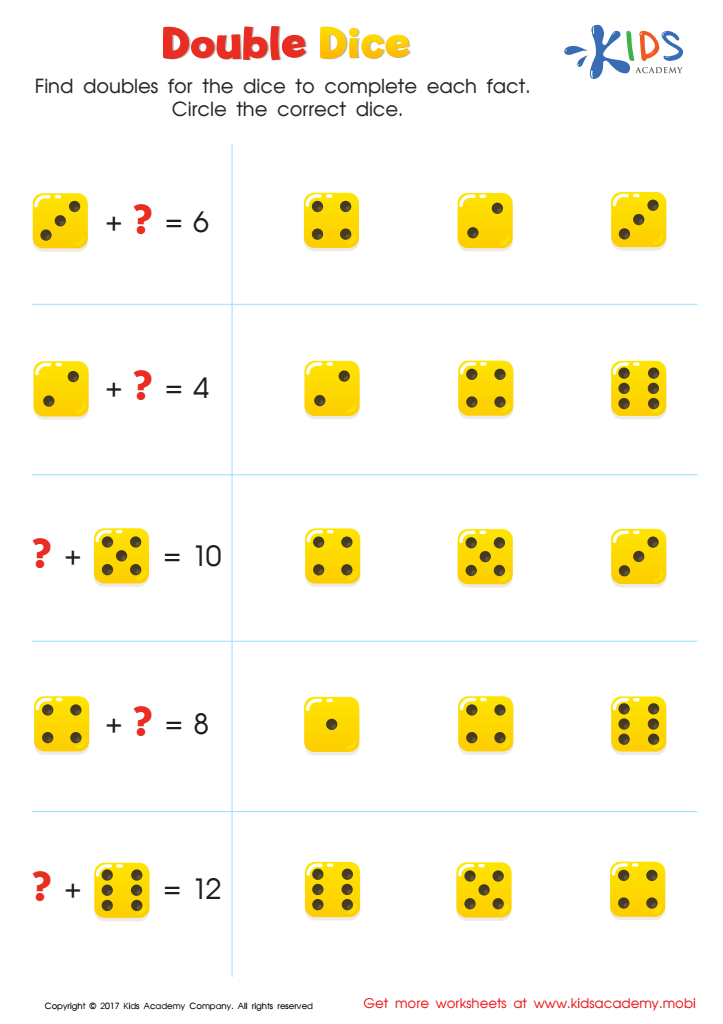
Addition Facts: Double Dice Worksheet
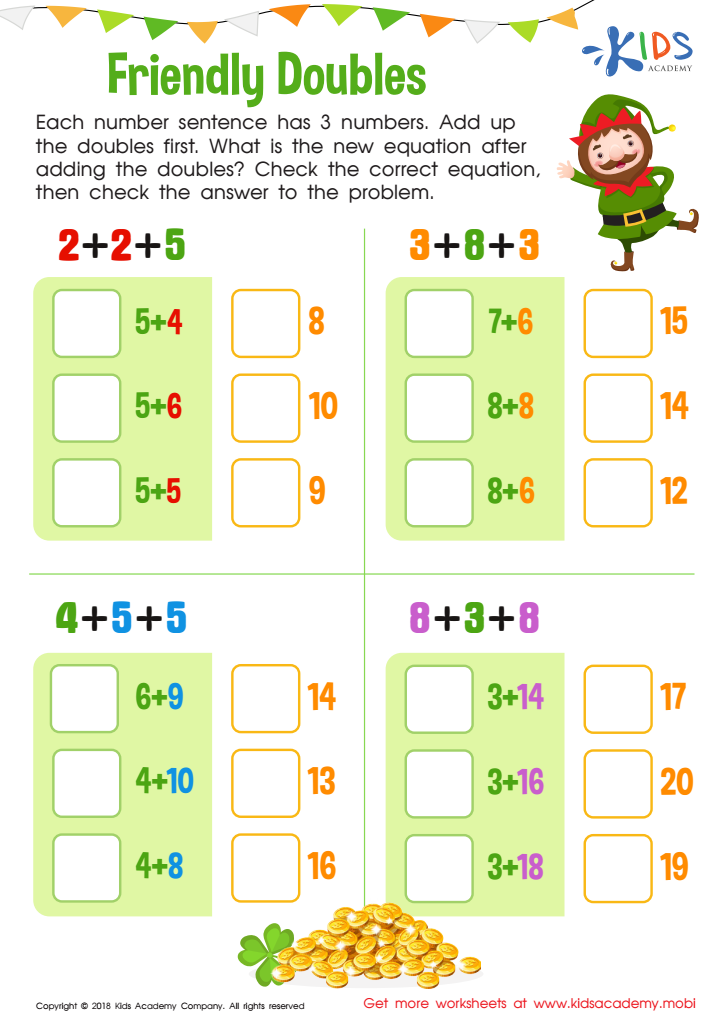
Friendly Doubles Worksheet
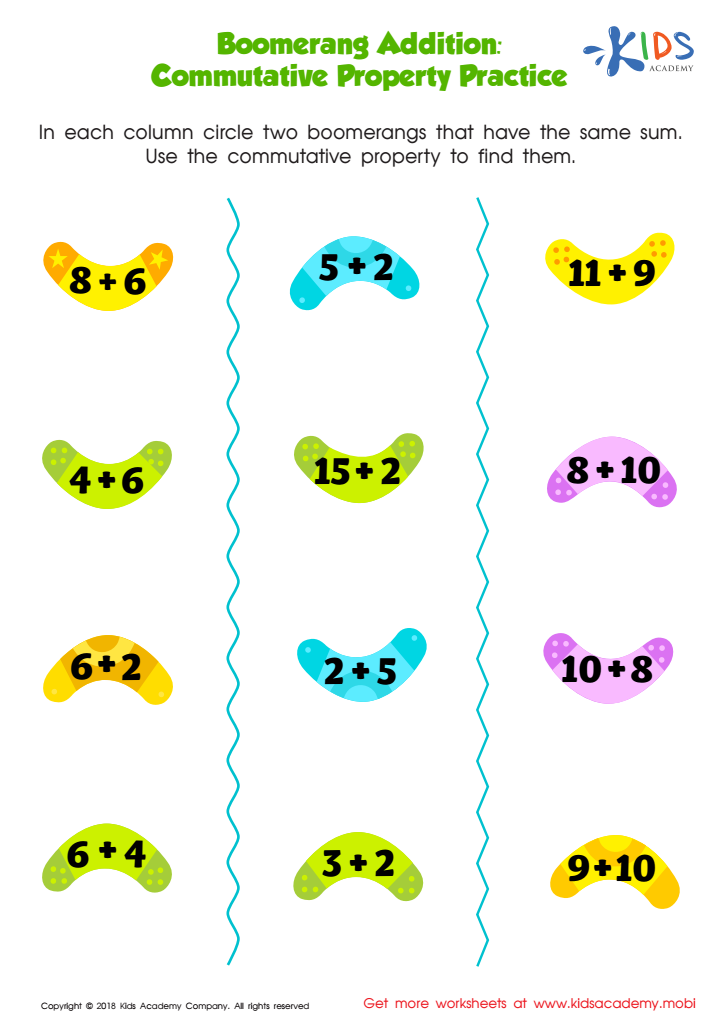
Boomerang Addition Worksheet








Mental math skills, particularly for normal addition, are crucial for children ages 7-8 as they serve as the building blocks for more advanced mathematical concepts. During this developmental stage, children are becoming more adept at understanding numbers and arithmetic. Mastering mental addition fosters confidence and independence in solving problems, which enhances their overall mathematical literacy.
Parents and teachers should care about these skills because early math competencies significantly influence future educational success. Proficiency in mental math can lead to improved performance in higher-level math, where quick calculations are essential. Additionally, strong mental math abilities promote critical thinking and problem-solving skills, vital tools for navigating everyday life challenges.
Moreover, practicing mental addition develops cognitive skills, such as memory and concentration. It encourages children to visualize math problems and recognize patterns, making math more enjoyable and less daunting. When parents and teachers actively support this skill, they help establish a positive attitude towards mathematics, reducing anxiety associated with the subject.
Investing time and effort in mental math during the formative years not only sets a solid foundation for academic growth but also helps children develop resilience and adaptability, essential traits for lifelong learning and overall success.