
Matching skills Normal Numbers Worksheets for Ages 7-8
3 filtered results
Difficulty Level
Grade
Age
-
From - To
Subject
Activity
Standards
Introducing our "Matching Skills Normal Numbers Worksheets for Ages 7-8" – a fun way to build essential math skills for early learners! These engaging worksheets focus on matching activities that help children practice recognizing and understanding numbers. Designed specifically for ages 7-8, our printable sheets are perfect for reinforcing key learning objectives at home or in the classroom. Each activity is crafted to boost confidence, improve attention to detail, and enhance numerical fluency. Ideal for young mathematicians who are ready to take their number recognition and matching abilities to the next level. Start exploring our collection today and watch your child’s math skills blossom!
Favorites
With answer key
Interactive
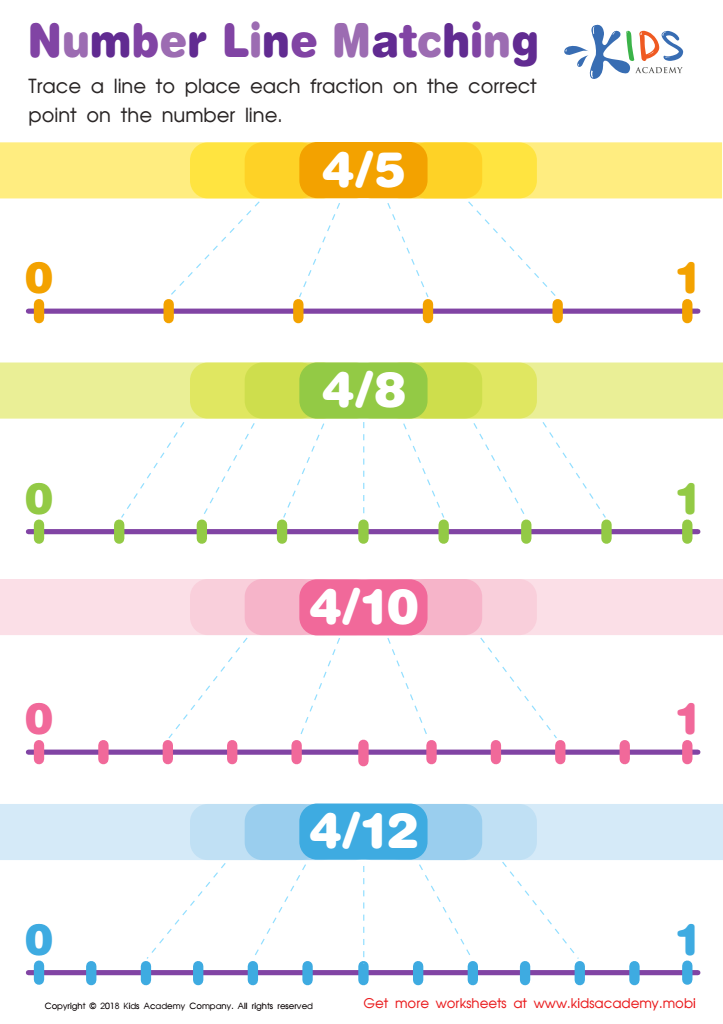
Number Line Matching Worksheet
Math can be fun! Have your child count points on the number line, then identify and trace fractions above it. It's a great way for them to learn and have some fun!
 Assign to My Students
Number Line Matching Worksheet
Worksheet
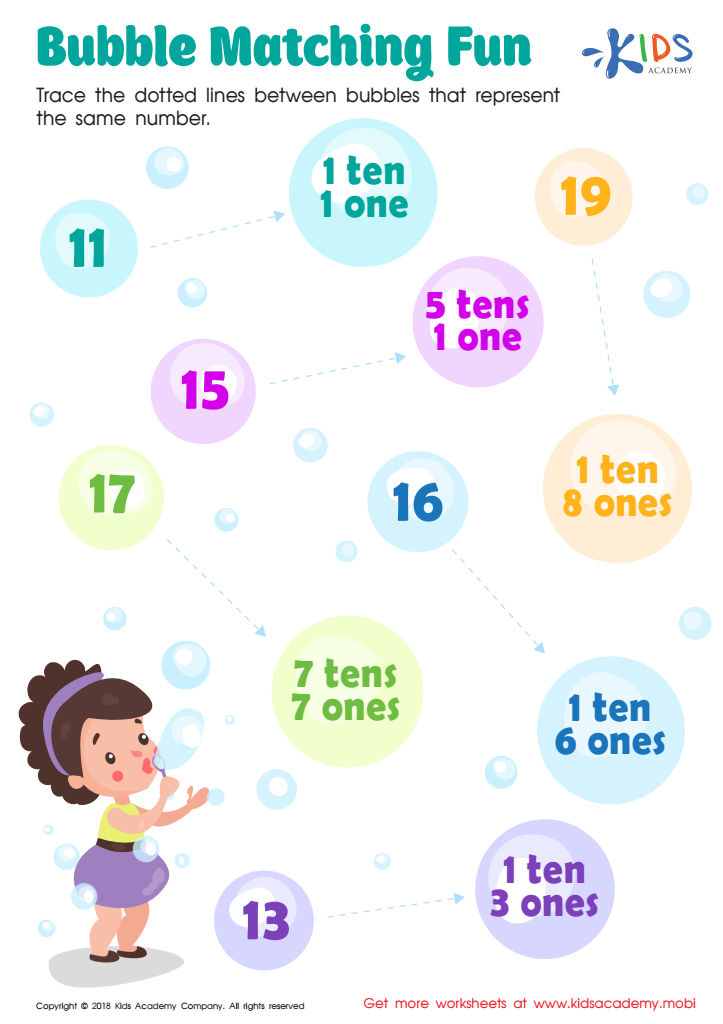
Bubble Matching Fun Worksheet
Try this fun worksheet to stimulate your young one's learning! Test their number matching skills by having them trace the dotted lines between bubbles representing the same numbers. Look through the exercise with your child and watch their understanding of how two numbers can add up to the same value grow!
Bubble Matching Fun Worksheet
Worksheet
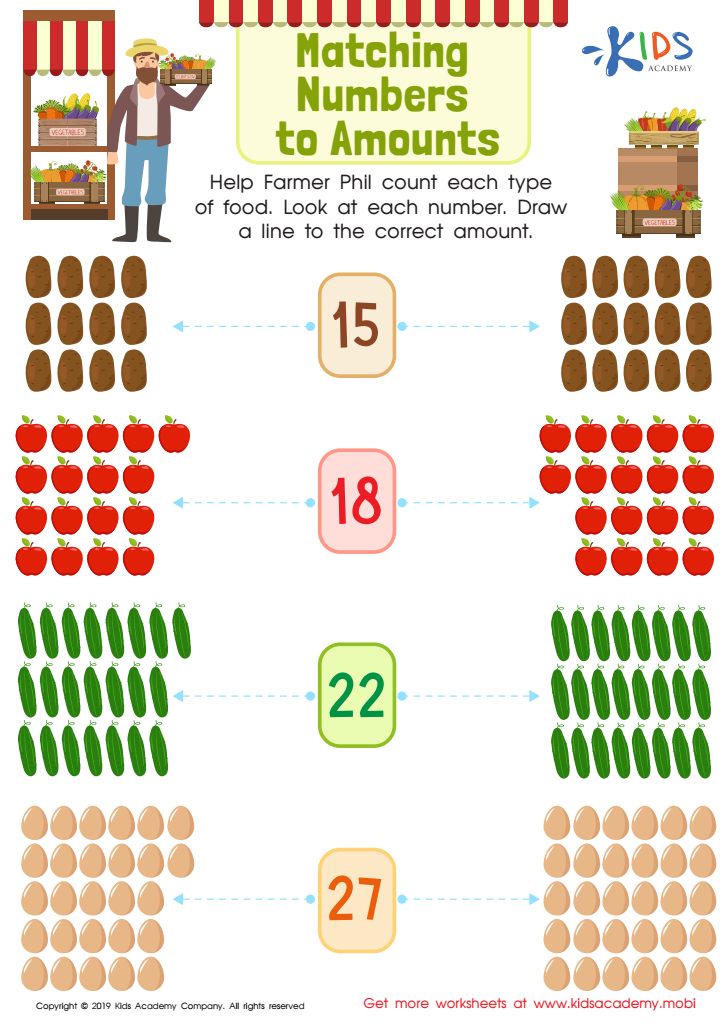
Matching Numbers to Amounts Worksheet
Farmer Phil needs your kid's help! Ensure they know the basics of math such as counting, adding and subtracting. Before beginning, help your child identify and count the different foods in the picture. Then, draw a line to the correct amount.
Matching Numbers to Amounts Worksheet
Worksheet
Join Kids Academy for Free
Who is primarily going to use this learning content?








Matching skills and familiarity with normal numbers are foundational components of mathematical learning for children aged 7-8. At this stage of development, students are transitioning from basic counting to more complex arithmetic concepts. Engaging exercises in matching skills help improve children's ability to recognize patterns, understand sequences, and bolster their overall cognitive development.
Firstly, matching skills enhance visual discrimination by requiring children to identify similarities and differences among shapes, symbols, and numbers. This sharpens their observational abilities and attention to detail, which are crucial for learning mathematical concepts and problem-solving strategies. Secondly, mastering normal numbers (also termed whole numbers) enables children to perform basic arithmetic operations confidently, setting a strong foundation for advanced mathematical skills such as multiplication, division, and fractions.
When parents and teachers emphasize these skills, they help children build a solid numerical sense and logical thinking ability. Furthermore, early success in math can foster a growth mindset, encouraging persistence and resilience. Therefore, by focusing on matching skills and normal numbers, parents and educators provide essential support for children’s long-term academic success, helping them become proficient and enthusiastic learners who are well-prepared for future mathematical challenges.








