
Visual perception Normal Numbers Worksheets for Ages 7-8
3 filtered results
Difficulty Level
Grade
Age
-
From - To
Subject
Activity
Standards
Explore our engaging Visual Perception Normal Numbers Worksheets designed for children ages 7-8! These worksheets aim to strengthen your child's visual recognition and understanding of numbers through fun activities. With appealing illustrations and interactive exercises, our resources enhance visual processing skills while reinforcing numeracy knowledge. Children will enjoy tracing, identifying, and visualizing numbers in various contexts, fostering essential cognitive development. Perfect for classroom use or at-home learning, these worksheets cater to diverse learning styles, making math enjoyable and accessible. Encourage your child's confidence in mathematics today with our carefully crafted Visual Perception activities, promoting a solid foundation for future math skills!
Favorites
With answer key
Interactive
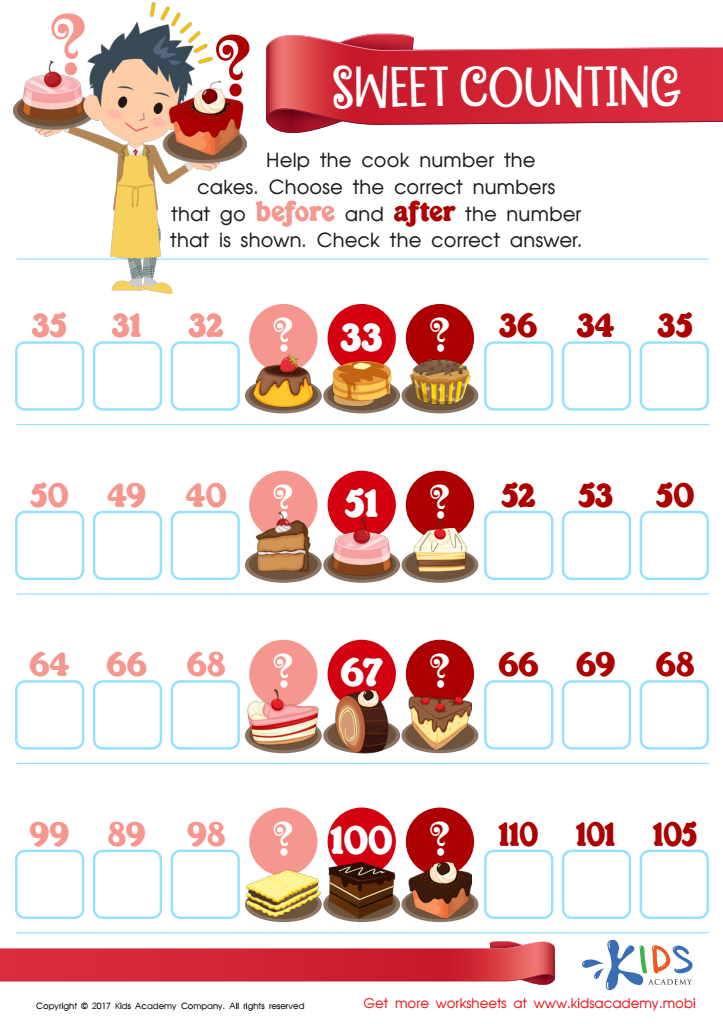
Sweet Counting - Part 1 Worksheet
Help your child learn numbers by counting cakes! Download this fun worksheet and have them fill in the numbers missing in the line of cakes. They'll have fun helping the cook and be learning at the same time!
 Assign to My Students
Sweet Counting - Part 1 Worksheet
Worksheet
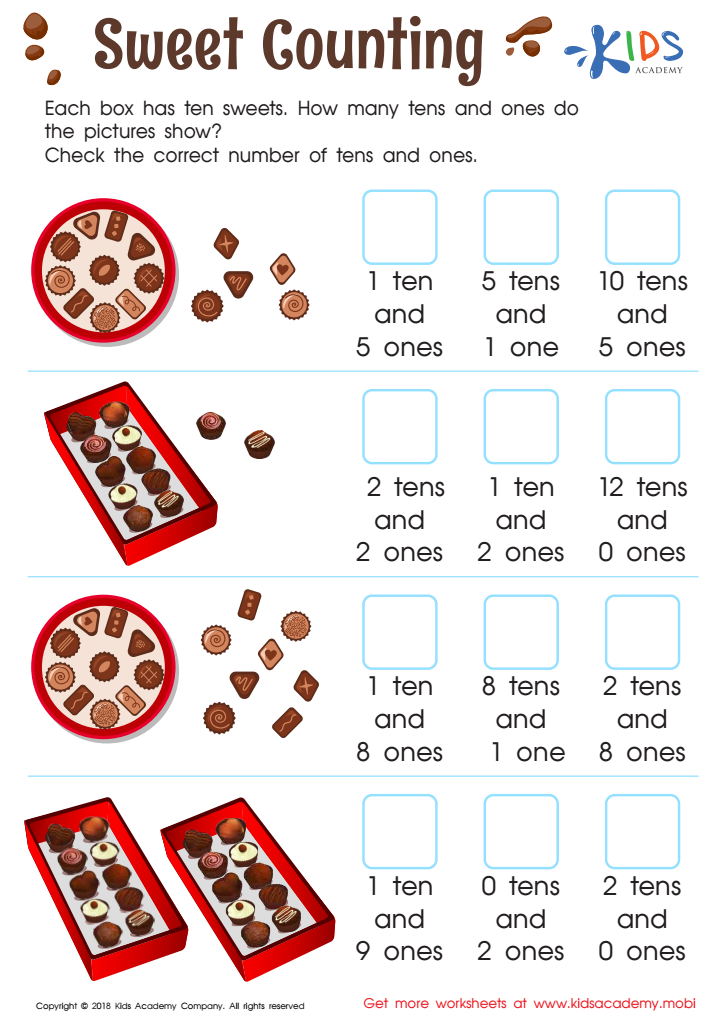
Sweet Counting - Part 2 Worksheet
Kids adore sweets! Make counting fun with this sweet-themed worksheet. Guide your child to count chocolates in boxes of 10, plus individual candies. Group them into tens and ones. Ask: "How many ones and tens are in each row?" Check the answer and complete the practice sheet.
Sweet Counting - Part 2 Worksheet
Worksheet
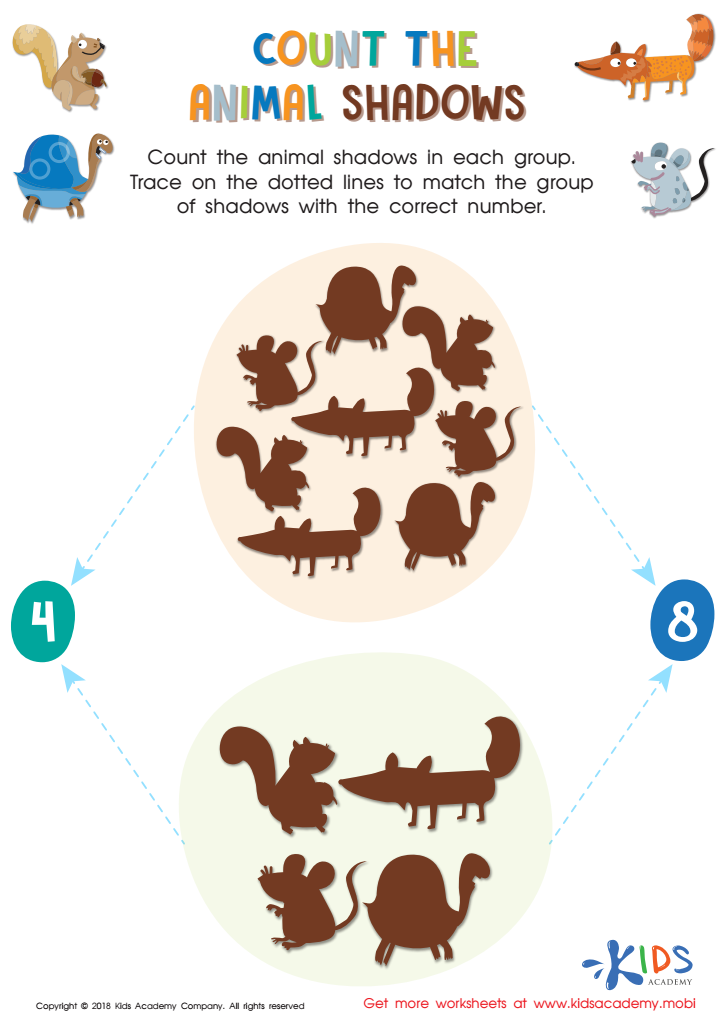
Count the Animal Shadows Worksheet
Our shadows accompany us wherever we go. Even your kids have seen theirs! Did they know that animals have shadows too? Count the animal shadows in each group with this worksheet. Ask your child to identify the animals pictured, then help them trace the dotted lines to match with the right number.
Count the Animal Shadows Worksheet
Worksheet
Join Kids Academy for Free
Who is primarily going to use this learning content?







%20(1).jpg)
Visual perception, particularly in relation to normal numbers for ages 7-8, is crucial for children's overall learning and development. During this stage, children are honing their ability to interpret and process visual information, which lays the foundation for their understanding of numerical concepts. Normal numbers are those numbers typically encountered, such as whole numbers in counting and basic arithmetic.
Parents and teachers should care about visual perception because it directly impacts a child's mathematical abilities. Effective visual perception skills help children identify patterns, recognize shapes, and understand spatial relationships, all of which are essential for grasping mathematical concepts. When students can visualize numbers and quantities, they can better comprehend operations like addition and subtraction.
Furthermore, strong visual perception aids in reading skills, as children can more easily distinguish between letters and numbers. This interconnectedness helps develop confidence and proficiency in both math and literacy.
Moreover, investing in activities that enhance visual perception can lead to improvements in fine motor skills and overall cognitive development. By prioritizing visual perception skills, parents and teachers can foster a conducive learning environment that equips children with the tools they need for future academic success.








