Comparative analysis Normal Math Worksheets for Ages 7-8
3 filtered results
-
From - To
Discover our expertly crafted Normal Math Worksheets for Ages 7-8! Our comprehensive collection includes engaging activities designed to sharpen fundamental math skills through comparative analysis. These worksheets help children enhance their understanding of numbers, patterns, and operations by comparing various mathematical concepts. Ideal for classroom or at-home learning, each worksheet supports critical thinking and problem-solving while aligning with curriculum standards. Fun, interactive, and educational, our resources make learning math enjoyable and effective. Boost your child's confidence and proficiency in math with our diverse and thoughtfully developed worksheets. Explore today and watch your child’s math skills soar!
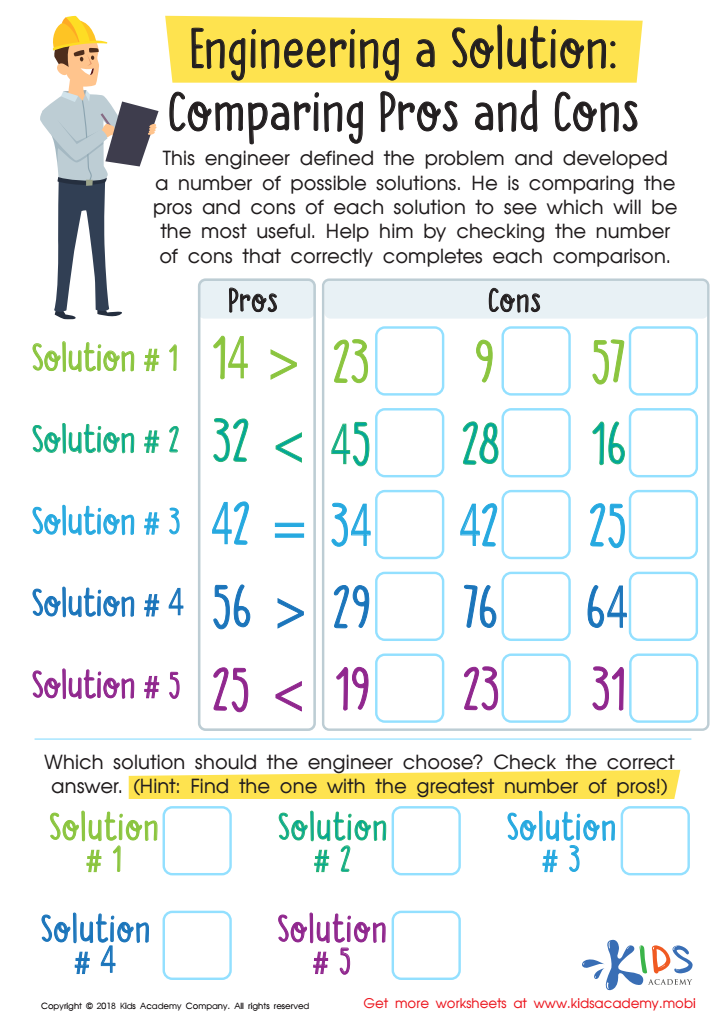
Engineering a Solution: Comparing Pros and Cons Worksheet
 Assign to My Students
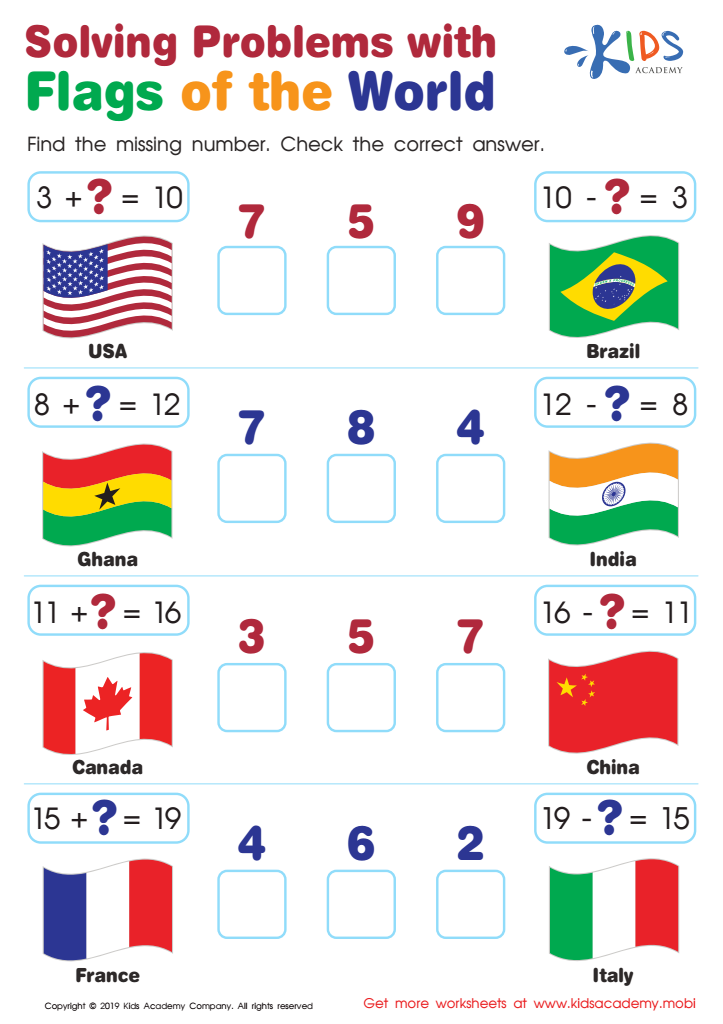
Solving Problems with Flags of the World Worksheet








Parents and teachers should care about comparative analysis in normal math for children aged 7-8 because it provides a critical benchmark for understanding and measuring students' mathematical development. At this age, children are foundationally building their math skills, which include basic operations, an understanding of number sense, and the ability to solve simple problems.
A comparative analysis enables educators and parents to evaluate whether a child is on track compared to peers and standard expectations. Identifying potential gaps through such analysis means timely and targeted intervention can happen, supporting a child before they fall significantly behind. This proactive approach fosters a more positive attitude towards math by ensuring children build confidence and competency early on.
Additionally, comparative analysis in normal math helps in curriculum planning and personalizing learning experiences. It guides educators in effectively crafting lesson plans that cater to individual learning needs and styles, subsequently boosting overall class performance.
For parents, it offers insight into their child's strengths and areas that require additional support, facilitating better communication with educators. It empowers parents to reinforce concepts at home, providing a cohesive learning experience between school and home environments.
In essence, such a comparative analysis serves as a vital tool in ensuring children achieve essential math competency, setting a strong foundation for future education and daily problem-solving skills.








