Developing analytical thinking Normal Math Worksheets for Ages 7-8
3 filtered results
-
From - To
Our "Developing Analytical Thinking: Normal Math Worksheets for Ages 7-8" are designed to boost young learners' cognitive abilities. These worksheets focus on enhancing logical reasoning and problem-solving skills via engaging mathematical exercises. Children will encounter a variety of tasks aimed at improving their understanding of patterns, sequences, and critical thinking. Tailored specifically for this age group, the worksheets ensure that learning remains both fun and educational, preparing kids for more advanced math concepts. Ideal for classroom or home use, these tools foster a supportive environment where children develop a love for math while advancing their analytical skills.
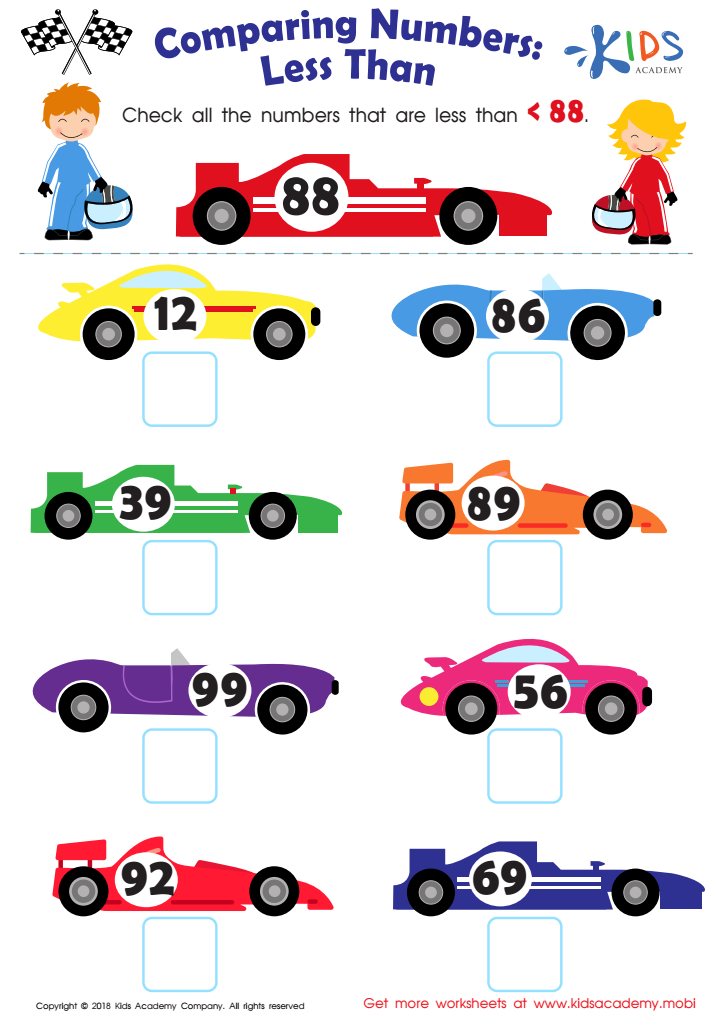
Less Than Worksheet
 Assign to My Students
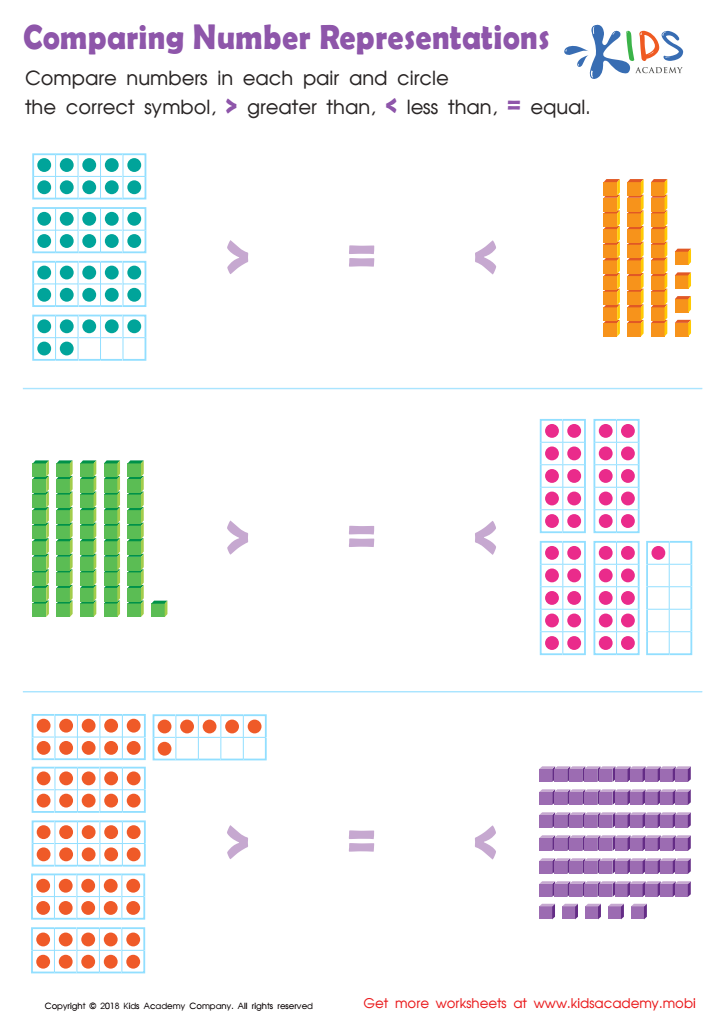
Comparing Number Representations Worksheet
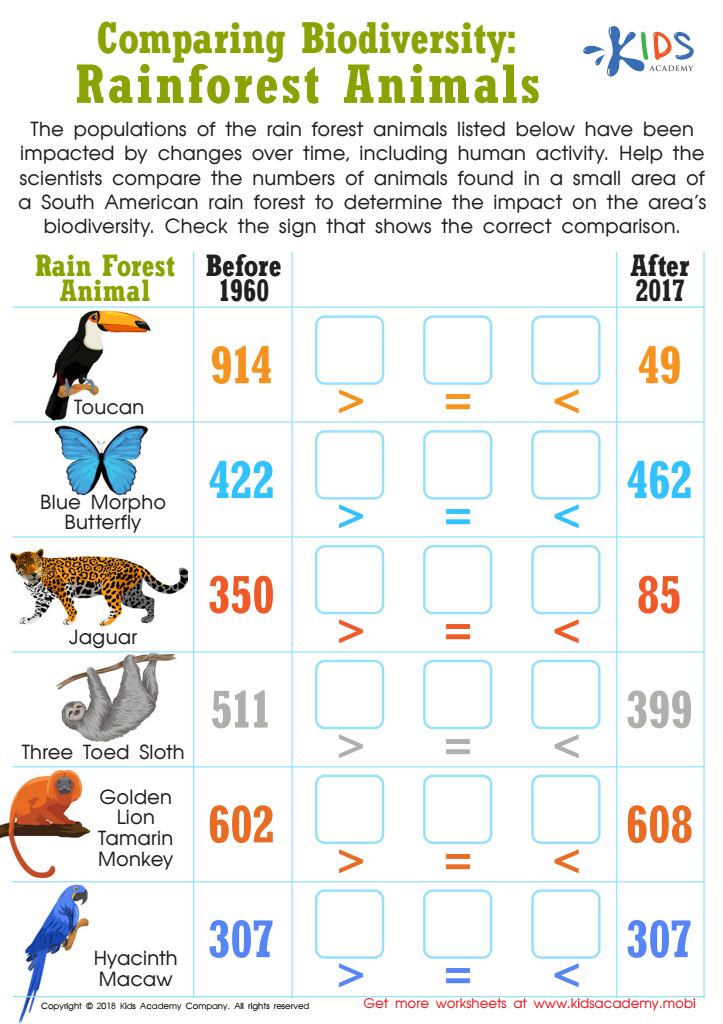
Comparing Biodiversity: Rainforest Animals Worksheet








Developing analytical thinking in math for children aged 7-8 is crucial for several reasons. Firstly, it empowers them to approach problems methodically, breaking down complex questions into manageable parts. This not only enhances their understanding of mathematical concepts but also fosters a problem-solving mindset that is beneficial in everyday life.
At this formative age, children's brains are highly adaptable, making it the perfect time to instill critical thinking skills that will serve them throughout their education and beyond. Analytical thinking helps students understand patterns, sequences, and relationships, all of which are fundamental to math and many other subjects.
Moreover, when children learn to think analytically, they build confidence in their abilities. This confidence translates into a willingness to tackle more challenging problems, promoting a positive attitude towards learning. It encourages a growth mindset, where mistakes are viewed as opportunities to learn rather than failures.
Parents and teachers play a pivotal role in this development by providing stimulating activities and an environment that encourages questioning and exploration. By focusing on developing analytical thinking, they prepare children not just for academic success, but for intelligent decision-making and effective problem-solving in their everyday lives. Essentially, it lays a strong foundation for lifelong learning and intellectual resilience.








