Multiplication practice Normal Math Worksheets for Ages 7-8 - Page 2
30 filtered results
-
From - To
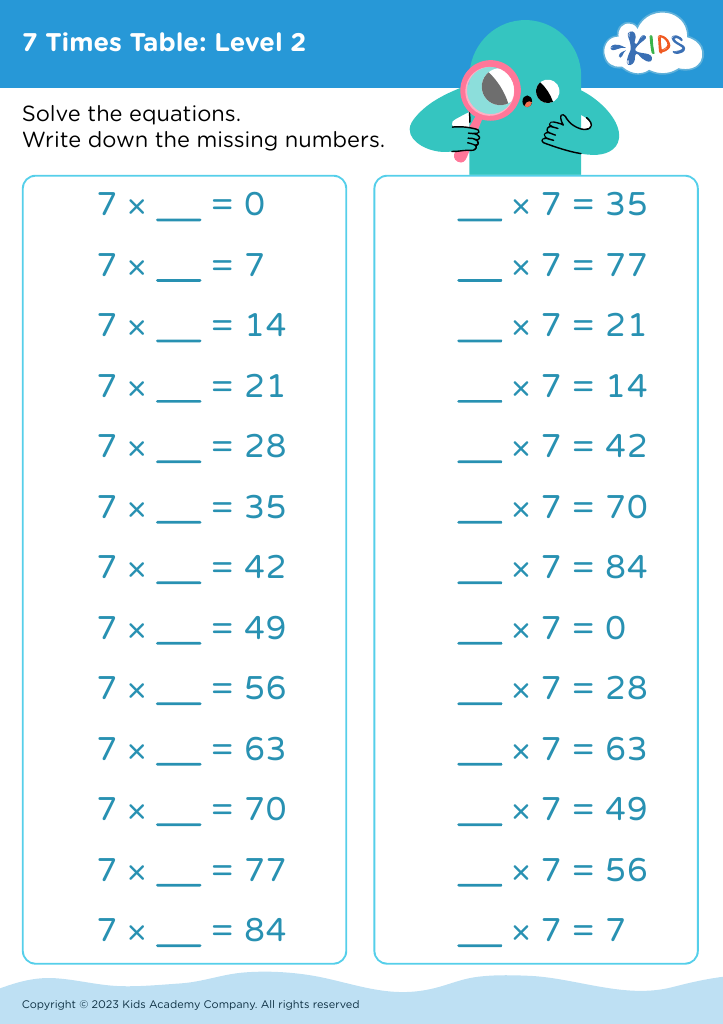
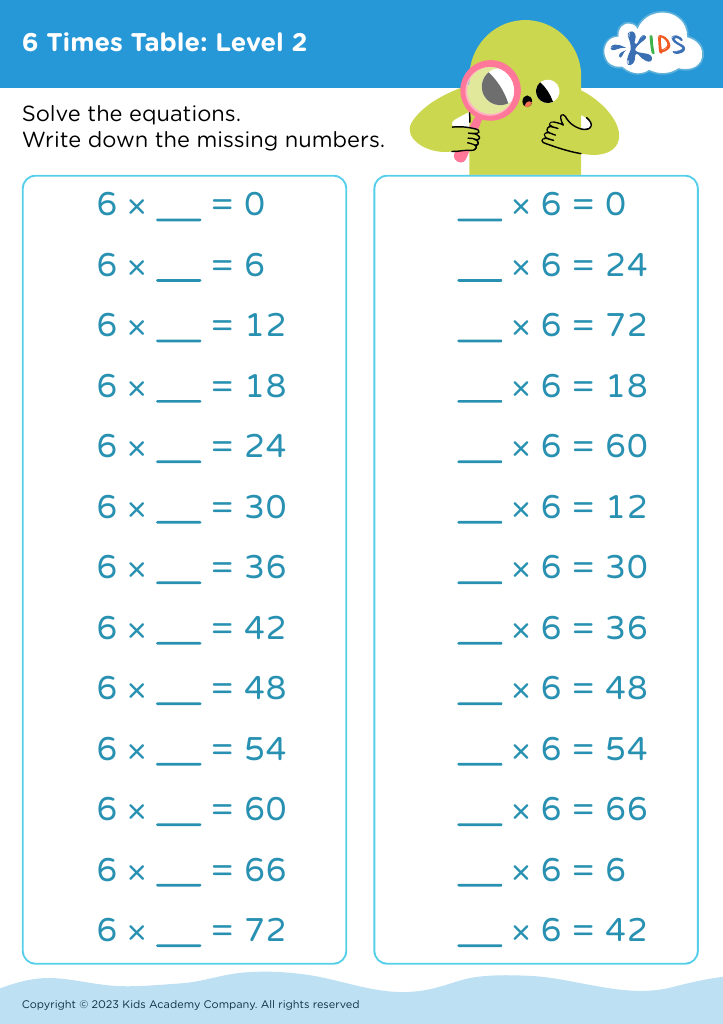
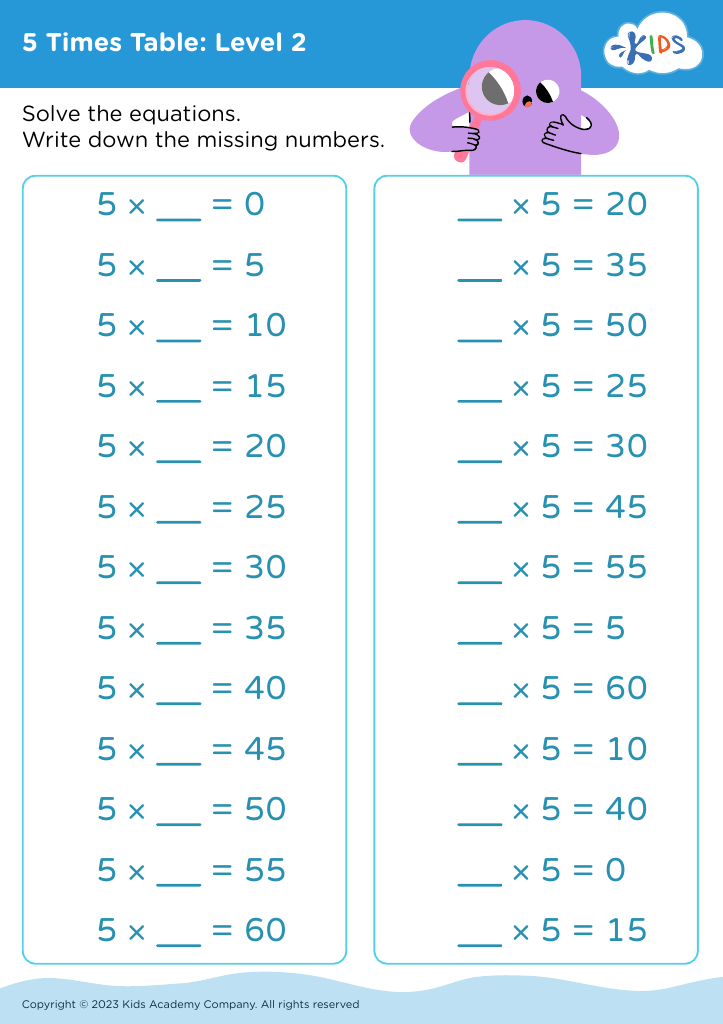
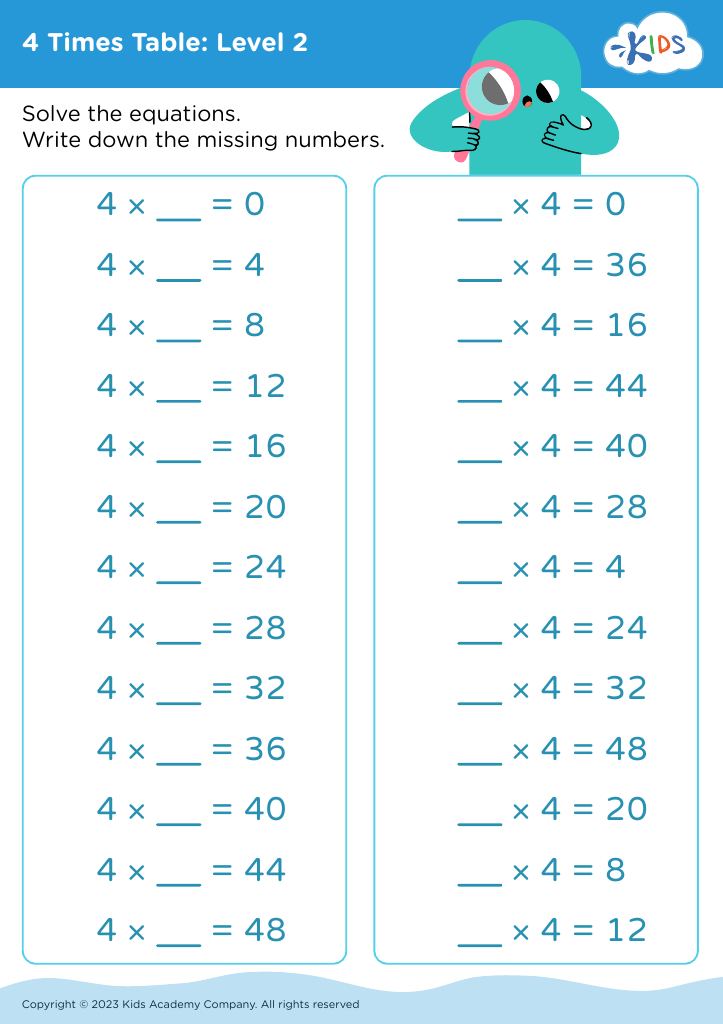
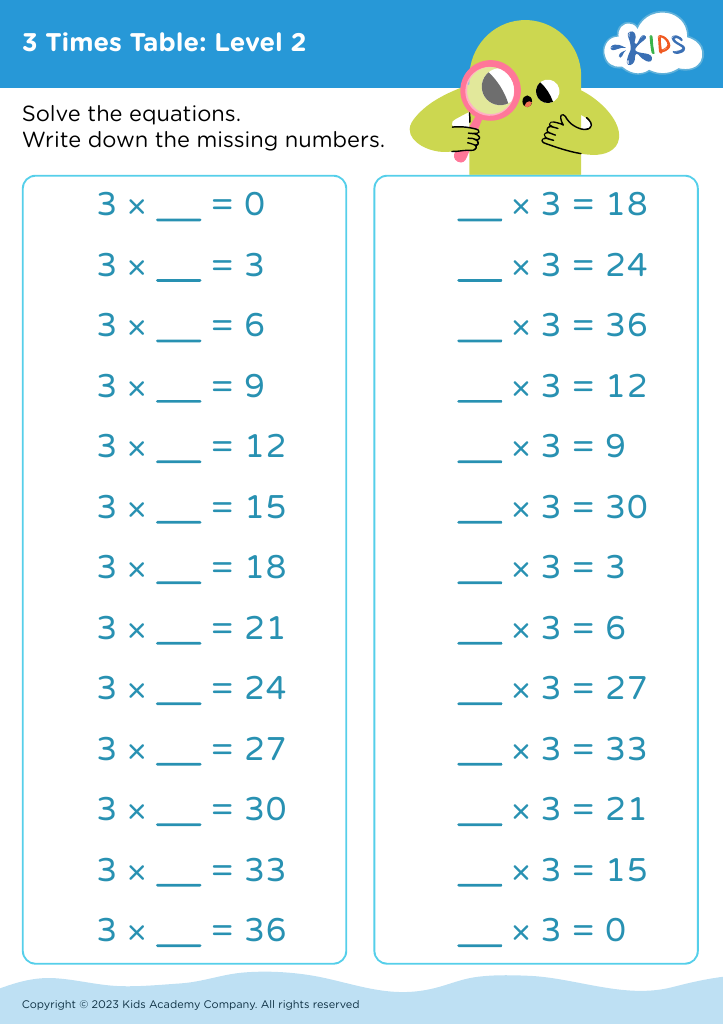
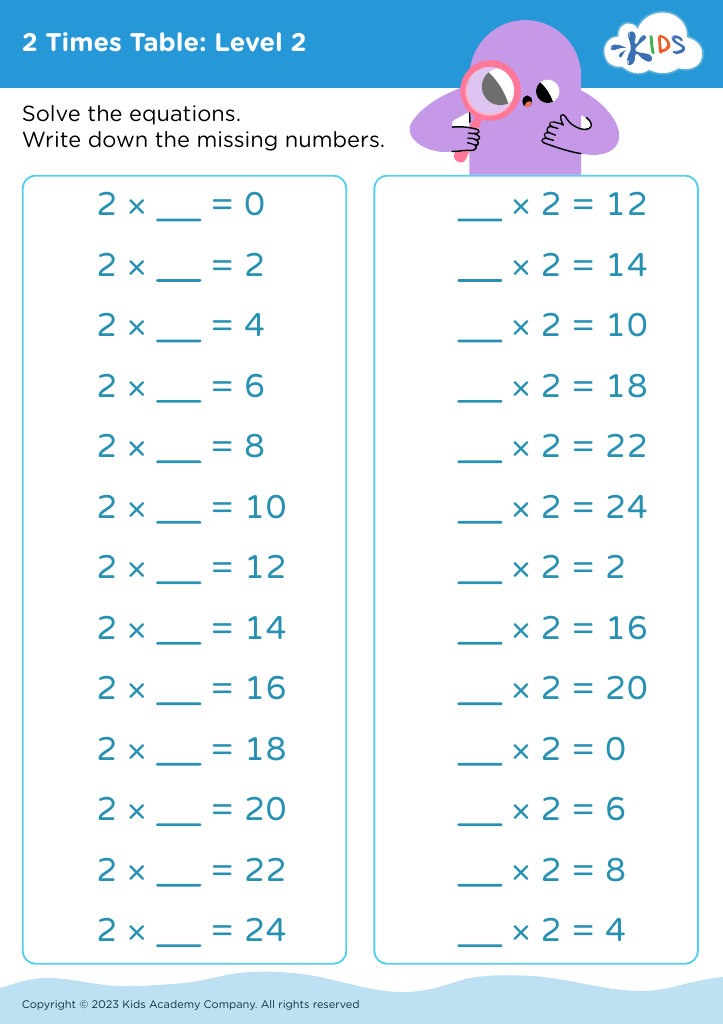







.jpg)
Multiplication practice at ages 7-8 is crucial for foundational math skills and long-term academic success. At this developmental stage, students transition from simple arithmetic to more complex operations, making it the perfect time to introduce multiplication. It serves as a cornerstone for understanding higher mathematical concepts such as division, fractions, and algebra.
Frequent multiplication practice helps solidify automaticity, enabling children to recall facts more readily. This fluency reduces cognitive load, allowing students to tackle multifaceted problems with greater ease. Moreover, it accelerates their problem-solving speed and efficiency, laying the groundwork for more advanced studies.
Beyond academic benefits, multiplication practice bolsters essential life skills. It enhances logical thinking, pattern recognition, and memory—elements that are vital across various disciplines. Additionally, it instills a sense of accomplishment and boosts confidence, encouraging a positive attitude toward learning.
Parental and teacher involvement in multiplication practice also fosters a supportive learning environment. By integrating games, technology, and hands-on activities, they can make learning fun and engaging. Overall, ensuring robust multiplication practice equips children with the tools they need for future academic challenges and everyday tasks. Putting an emphasis on multiplication at this age provides a strong mathematical foundation, facilitating smoother progression through their educational journey.








