Understanding base ten Normal Math Worksheets for Ages 7-8
3 filtered results
-
From - To
Welcome to our "Understanding Base Ten Normal Math Worksheets" designed specifically for children ages 7-8! These interactive worksheets are perfect for enhancing your child's foundational math skills, focusing on the concept of base ten. By engaging with fun exercises that emphasize place value and number composition, students will develop a solid understanding of numbers up to 1000. Our worksheets promote critical thinking and make learning enjoyable through colorful visuals and practical exercises. Ideal for homeschooling, classroom use, or reinforcing skills at home, these resources support your child's journey towards math mastery. Start exploring today and watch them excel in math!
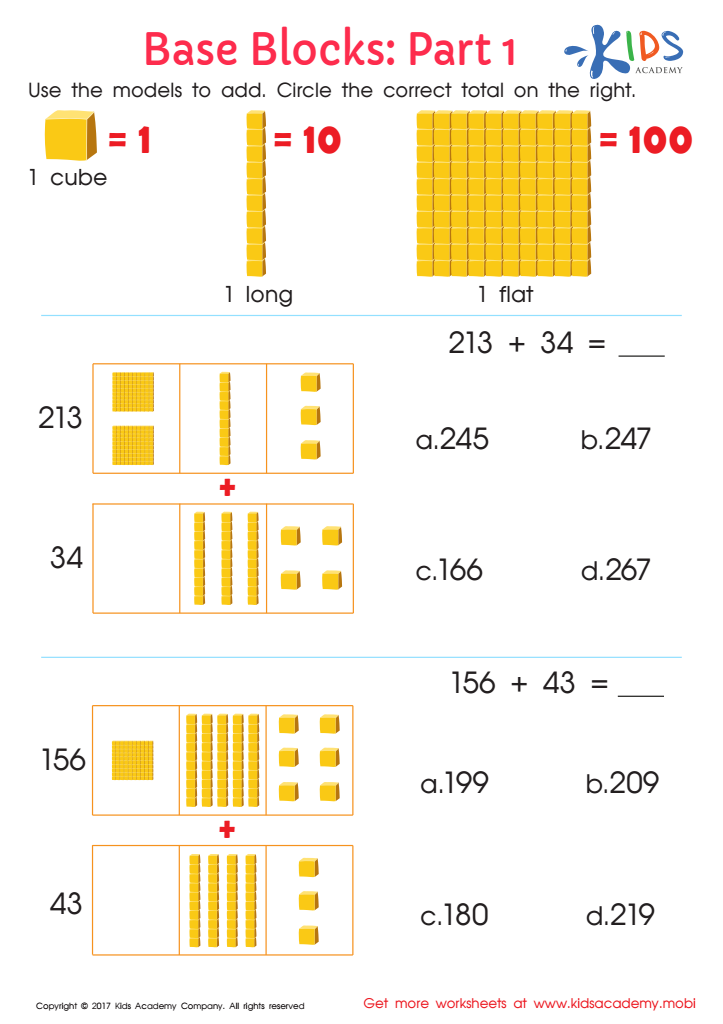
Base Ten Blocks Worksheet: Part 1
 Assign to My Students
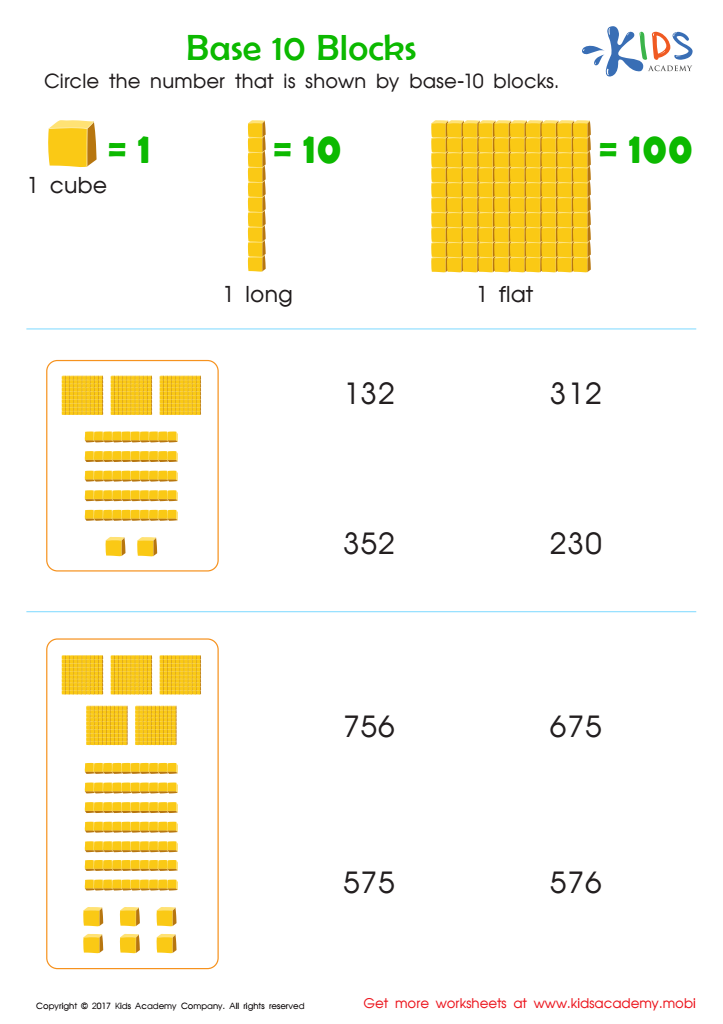
Base Ten Blocks Worksheet
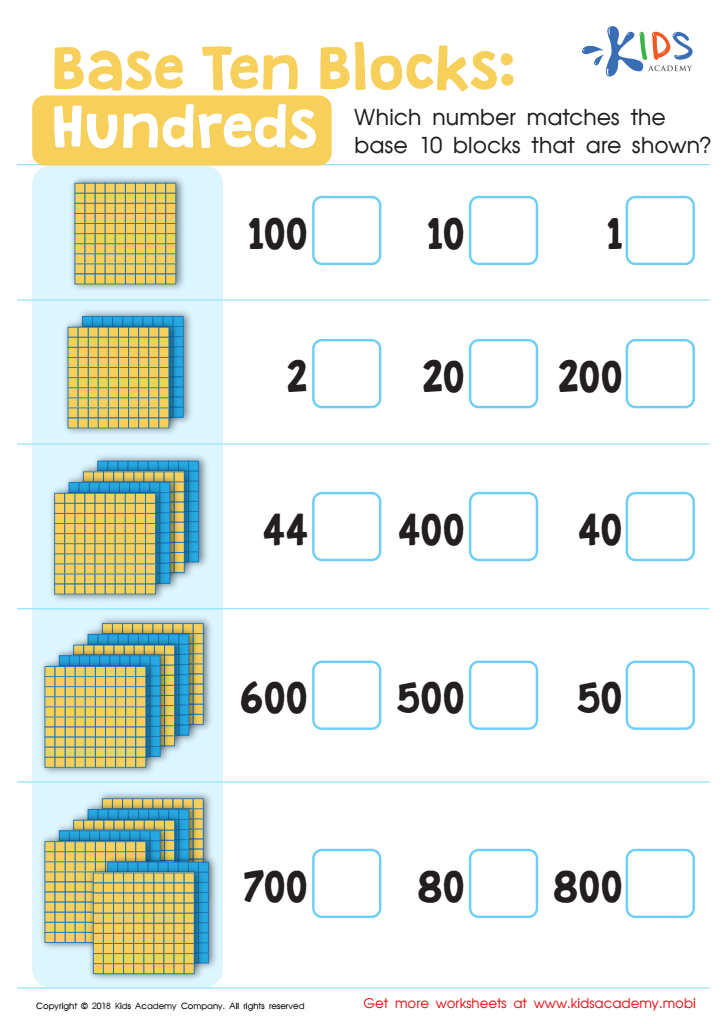
Base Ten Blocks: Hundreds Worksheet







Understanding base ten concepts in math is crucial for children ages 7-8 as it lays the foundation for their numerical literacy and problem-solving skills. At this stage, kids begin to work with larger numbers, and a solid grasp of base ten helps them comprehend how numbers are constructed and how they relate to one another. This understanding fosters a strong number sense, enabling children to perform operations like addition and subtraction with confidence and accuracy.
For parents and teachers, emphasizing base ten methods equips children with critical thinking skills essential for future mathematical concepts. When students see numbers broken down into tens and ones, they learn to visualize, manipulate, and ultimately master more complex arithmetic, like multiplication and division. Furthermore, using base ten enhances students' ability to understand concepts such as regrouping, place value, and decimals—critical elements in advanced math learning.
By fostering this understanding early on, educators and families can empower children to excel in mathematics, transforming what can often be seen as a daunting subject into an enjoyable learning journey. This not only boosts academic confidence but also nurtures a lifelong appreciation for math in everyday life. Overall, awareness of base ten is integral to students' overall educational development.








