
Understanding comparisons Normal Math Worksheets for Ages 7-8
3 filtered results
Difficulty Level
Grade
Age
-
From - To
Subject
Activity
Standards
Welcome to our “Understanding Comparisons” Normal Math Worksheets designed specifically for children aged 7-8! These engaging worksheets aim to help young learners grasp the concept of comparisons using fun, easy-to-understand exercises. Students will explore comparing numbers, quantities, and a variety of objects, enhancing their analytical skills. Our carefully crafted activities not only make learning enjoyable but also build strong foundations in mathematics essential for future success. Perfect for both classroom use and home study, these worksheets cater to early grade teachers and parents alike, making learning an enriching experience. Dive into the world of comparisons today!
Favorites
With answer key
Interactive
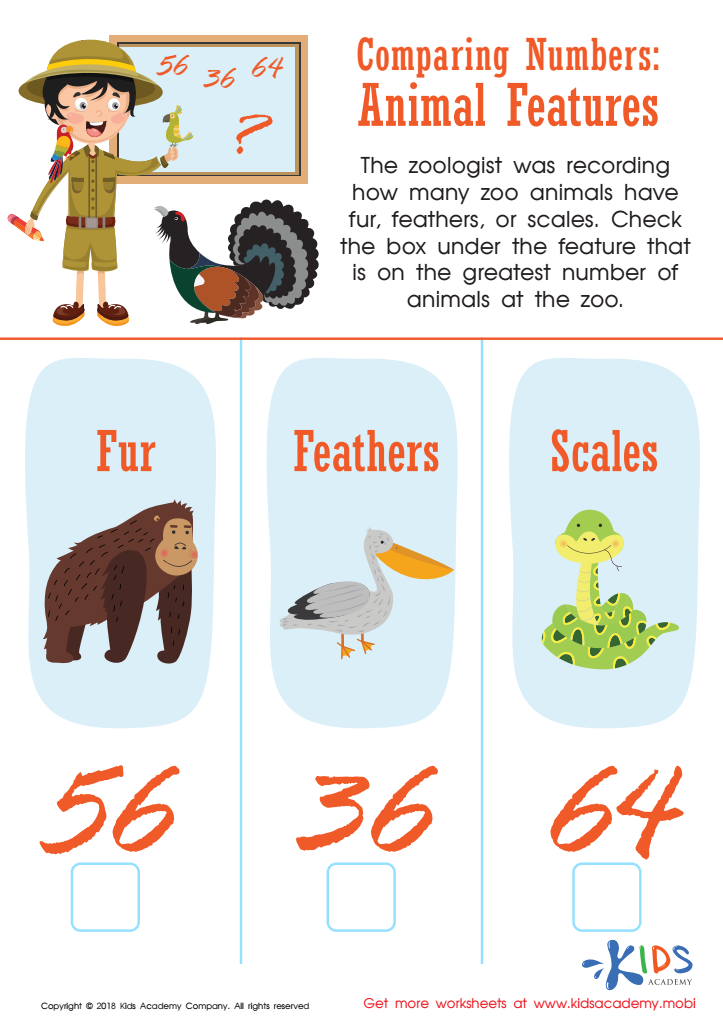
Animal Features Worksheet
Let your kids join a budding zoologist! They can count zoo animals' fur, feathers or scales, then use numbers and comparison to check the box with the most friends. The PDF will captivate them and help them understand how the value of '6' changes based on its position.
 Assign to My Students
Animal Features Worksheet
Worksheet
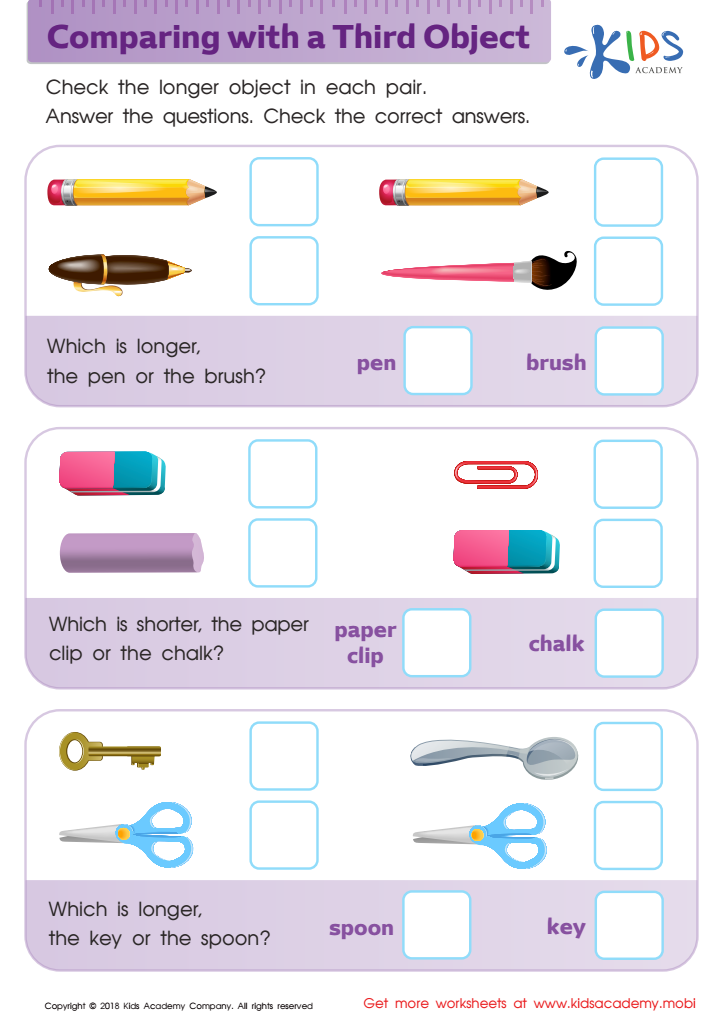
Comparing with a Third Object Worksheet
Help your child master measurement skills with this free downloadable math worksheet! Ask them to compare each pair of objects, checking the box for the longer one. Then, read the question and compare the objects across the pairs before ticking the box and continuing to the next group of pictures.
Comparing with a Third Object Worksheet
Worksheet
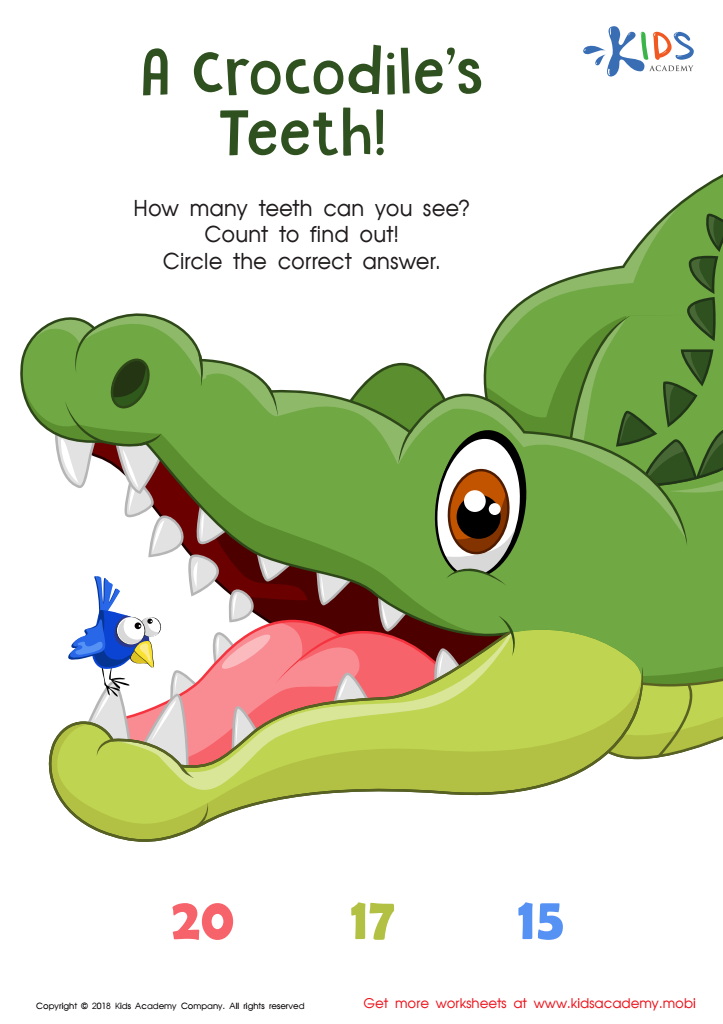
A Crocodile's Teeth Worksheet
Show your child the animal image and ask them to identify it. If they watch animal shows, they'll likely be interested. Count the teeth together, then look at the options and help them circle the right one.
A Crocodile's Teeth Worksheet
Worksheet
Join Kids Academy for Free
Who is primarily going to use this learning content?







Understanding comparisons is a crucial aspect of math for children ages 7-8, and both parents and teachers should prioritize it for several reasons. First, this concept lays the groundwork for critical thinking and problem-solving skills. When students learn to compare numbers, sizes, or quantities, they develop the ability to analyze relationships and make informed decisions—skills that extend beyond mathematics into everyday life.
Moreover, mastering comparisons helps enhance children's numerical fluency, as they become more comfortable with concepts of greater than, less than, or equal to. This understanding nurtures confidence in their abilities and facilitates smoother transitions into more complex math topics such as subtraction and addition strategies.
Additionally, understanding comparisons cultivates essential statistical skills. At this age, children can start to interpret simple data, grasp concepts of distribution, and recognize patterns. Helping kids learn to compare sets of information encourages curiosity and engagement with mathematical concepts, promoting a lifelong love for learning.
Finally, a firm grasp of comparisons creates a shared language between parents, teachers, and students, fostering collaboration in their educational journey. By caring about this foundational skill, adults play a vital role in shaping children’s mathematical understanding and critical competencies for future success.








