Reading comprehension Normal Multiplication Worksheets for Ages 7-8
5 filtered results
-
From - To
Unlock your child’s potential with our engaging Reading Comprehension Normal Multiplication Worksheets designed specifically for ages 7-8! These printable resources seamlessly integrate reading comprehension skills with essential multiplication practice, enhancing both math fluency and literacy. Each worksheet features age-appropriate stories that challenge young learners to solve multiplication problems within various contexts, reinforcing their understanding. Ideal for classroom or home use, these worksheets encourage critical thinking and problem-solving in a fun and interactive way. Watch your child build confidence in their math abilities while strengthening their reading skills with our tailored worksheets. Start exploring our collection today for a comprehensive learning experience!
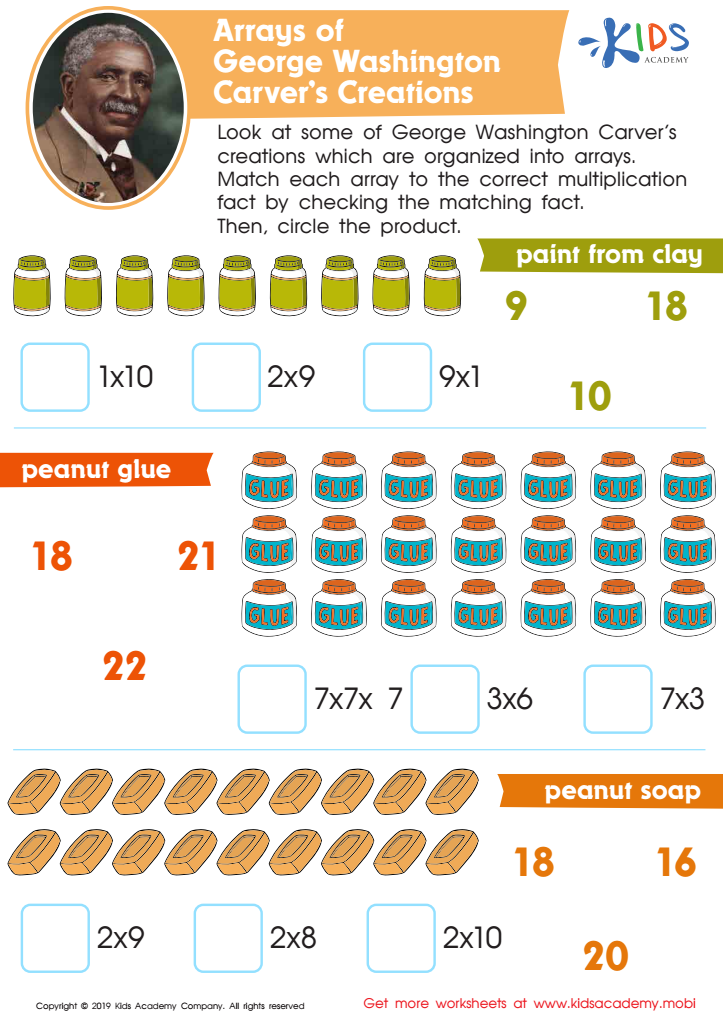
Arrays of George Washington Carver’s Creations Worksheet
 Assign to My Students
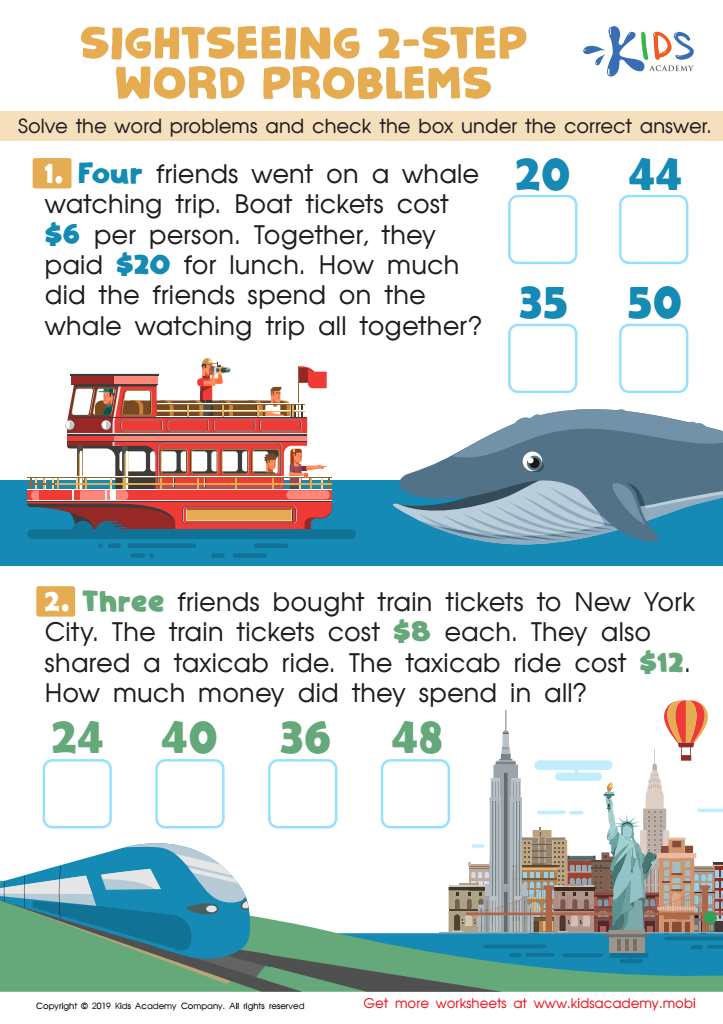
Sightseeing 2-Step Word Problems Worksheet
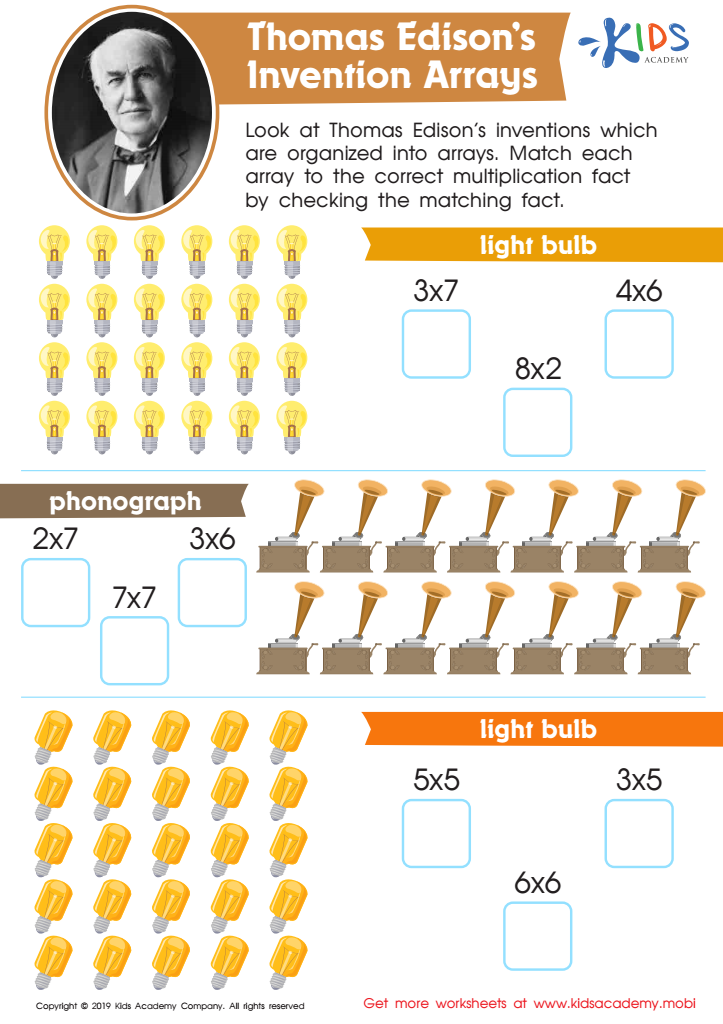
Thomas Edison’s Invention Arrays Worksheet
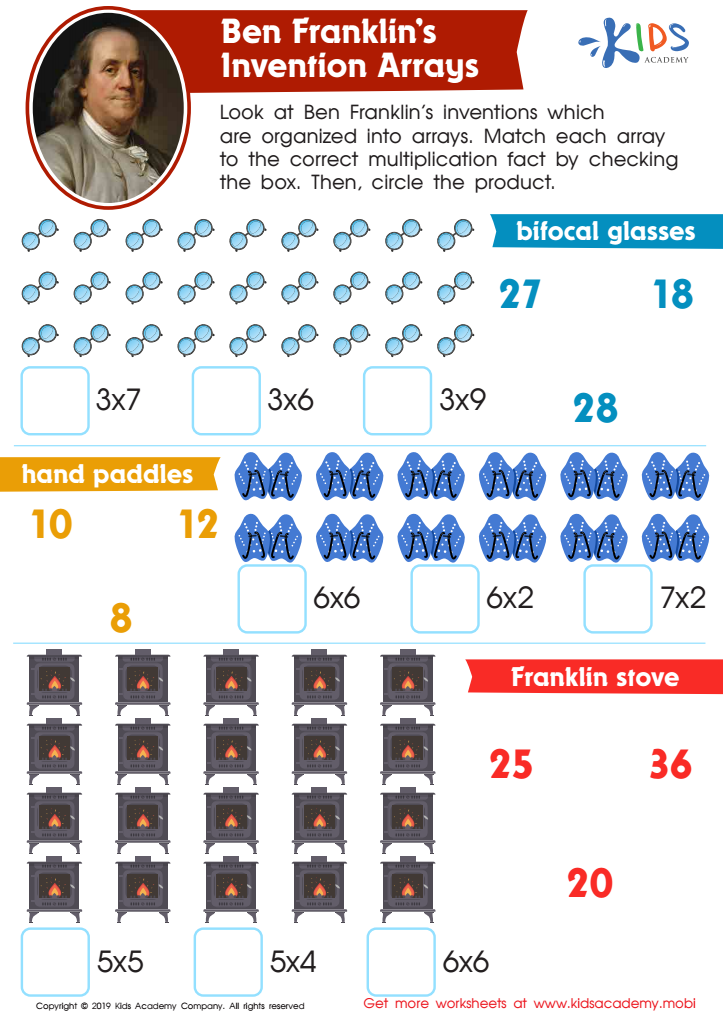
Ben Franklin’s Invention Arrays Worksheet
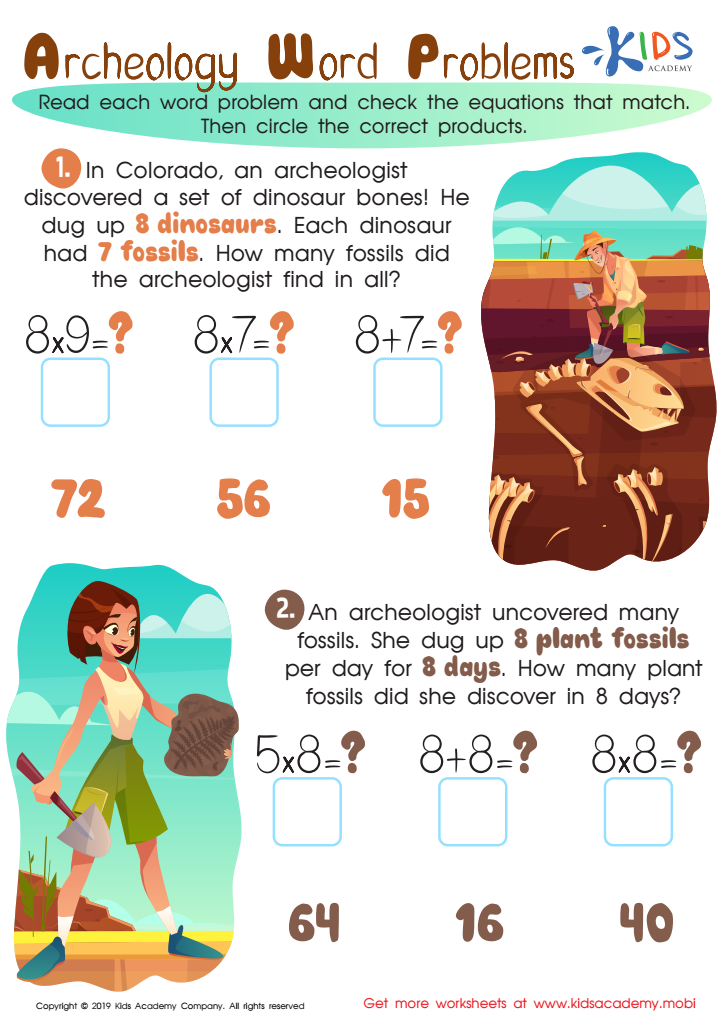
Archeology Word Problems Worksheet








Reading comprehension and multiplication skills are fundamental for children ages 7-8, as they set the groundwork for future academic success. At this age, children transition from learning to read to reading to learn, making comprehension crucial. Understanding texts not only boosts literacy but also enhances critical thinking, enabling students to make connections across subjects, including math.
In parallel, mastering normal multiplication conceptually solidifies numerical fluency, which is essential in later math learning processes such as division, fractions, and problem-solving. When students can quickly recall multiplication facts, it fosters confidence and reduces anxiety in math-related tasks.
Both skills complement each other; for example, word problems require students to interpret language while applying mathematical skills. By promoting proficiency in both areas, parents and teachers help build a strong foundation for their children. Supporting these skills can lead to enhanced cognitive development and academic achievement, ensuring students can grasp more complex subjects in the years to come. Engaging in fun, hands-on activities that encourage reading and math practice at home or school can make learning enjoyable, ultimately fostering a lifelong love for both reading and numbers.








