Understanding patterns Normal Multiplication Worksheets for Ages 7-8
3 filtered results
-
From - To
Explore our "Understanding Patterns Normal Multiplication Worksheets" designed specifically for children ages 7-8. These engaging worksheets help young learners grasp the fundamentals of multiplication by identifying patterns and relationships within numbers. With a variety of exercises, students can enhance their mathematical comprehension while developing critical thinking skills. Whether mastering times tables or discovering the concept of skip counting, these resources make learning interactive and enjoyable. Perfect for classroom instruction or at-home practice, our worksheets provide parents and teachers with the tools needed to support a child's progress in multiplication. Start fostering a solid math foundation today!
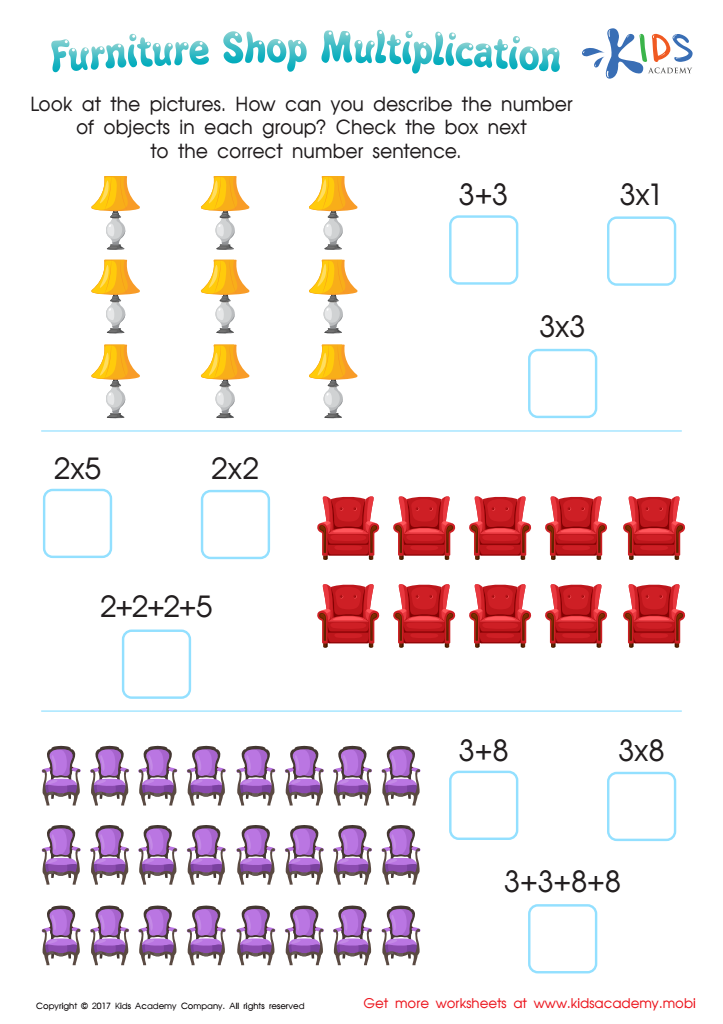
Furniture Shop Worksheet
 Assign to My Students
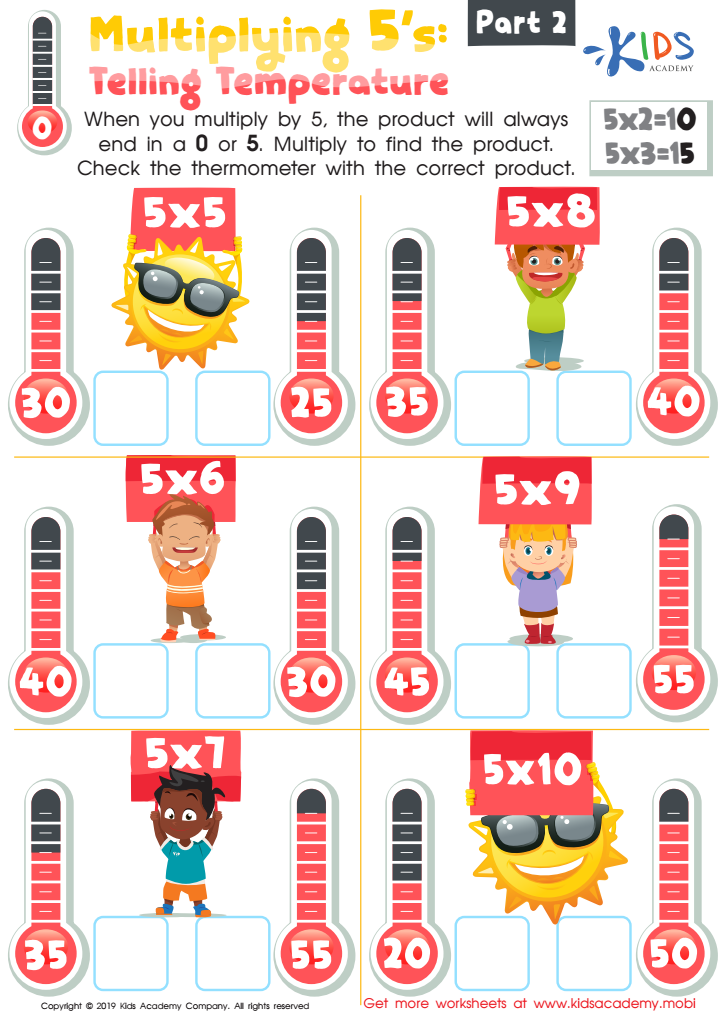
Multiplying 5’s: Telling Temperature Part 2 Worksheet
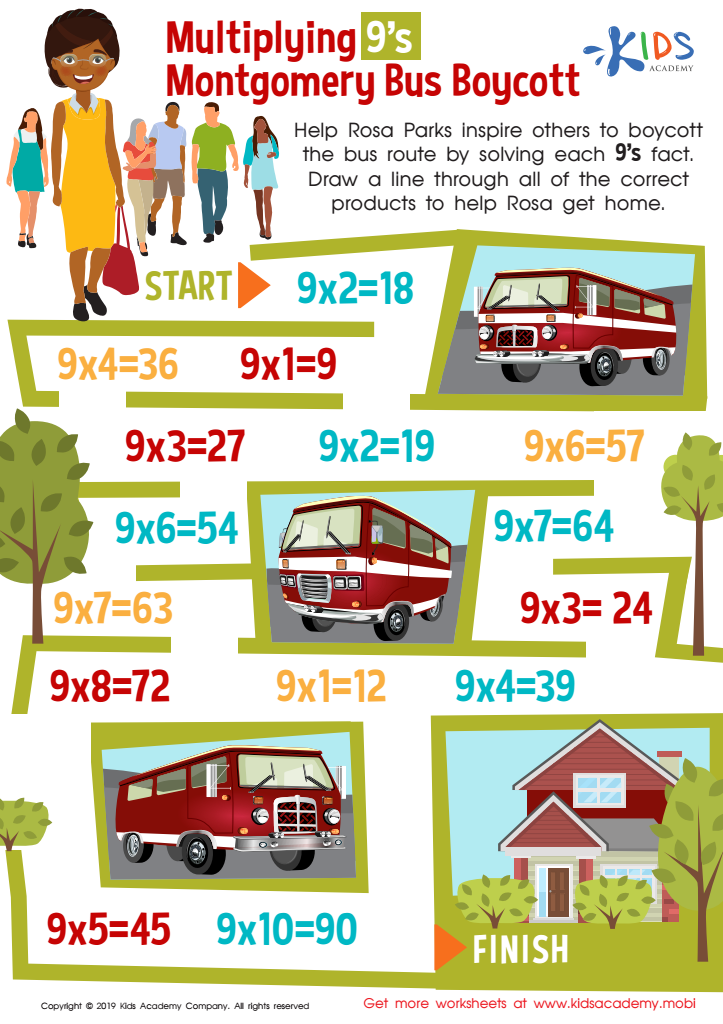
Multiplying 9’s Montgomery Bus Boycott Worksheet







Understanding patterns in normal multiplication is crucial for children aged 7-8 because it forms the foundation for their mathematical development. At this age, children are transitioning from simple arithmetic to more complex problem-solving skills. Recognizing multiplication patterns, such as the commutative and associative properties, helps them see relationships between numbers, which deepens their understanding of mathematics.
When children identify patterns, they can develop strategies for mental math, making calculations faster and more intuitive. For example, recognizing that multiplying by 2 is the same as doubling a number encourages efficiency. This understanding nurtures confidence in their mathematical abilities, making learning more enjoyable.
Moreover, grasping these concepts early promotes critical thinking and analytical skills, which are essential in everyday decision-making and more advanced math in the future. Parents and teachers who emphasize these foundational skills help set their children on a path toward success in math and related disciplines. Ultimately, understanding patterns in multiplication aids in building a strong numerical intuition, which is invaluable not just in academics, but in real-life scenarios such as budgeting, cooking, and time management. Tasks that involve multiplication become less daunting, fostering a positive attitude toward math as a whole.








