Phonics practice Normal Reading Worksheets for Ages 7-8
4 filtered results
-
From - To
Discover engaging Phonics Practice Normal Reading Worksheets designed specifically for children aged 7-8. Our carefully curated resources help young learners strengthen their phonics skills through fun and interactive exercises. These worksheets focus on building essential reading abilities by reinforcing sound-letter relationships, improving vocabulary, and enhancing overall comprehension. Each activity is designed to make learning enjoyable while providing educators and parents with effective tools to support literacy development. With a variety of exercises that cater to different learning styles, kids will gain confidence in their reading skills. Explore our collection and watch your child's love for reading blossom!
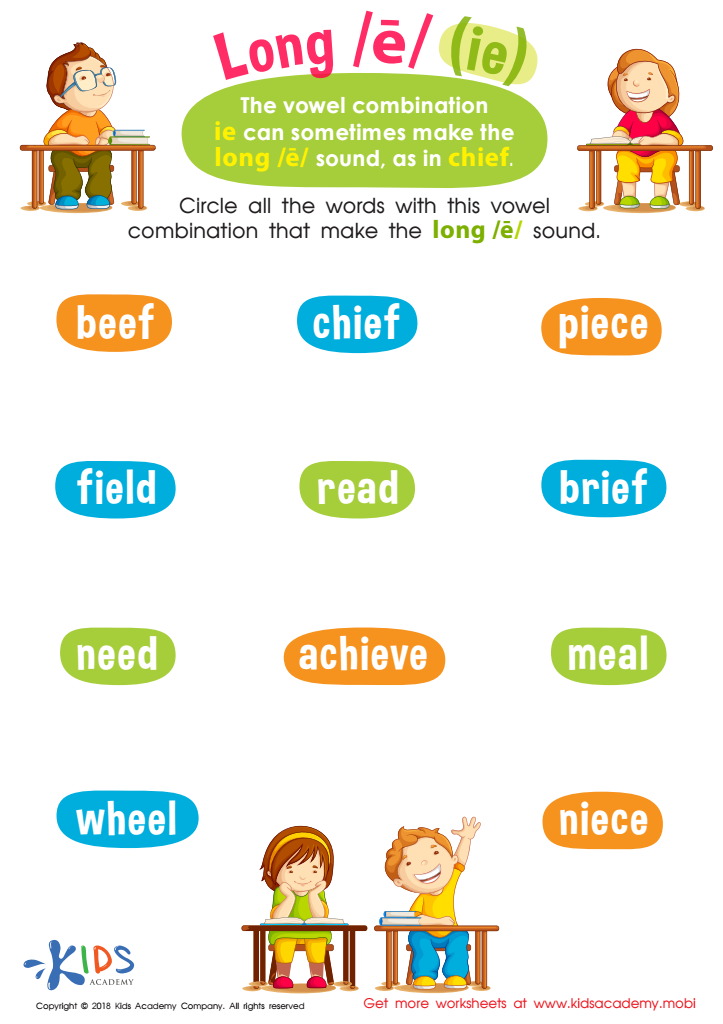
Reading: Long E and IE Worksheet
 Assign to My Students
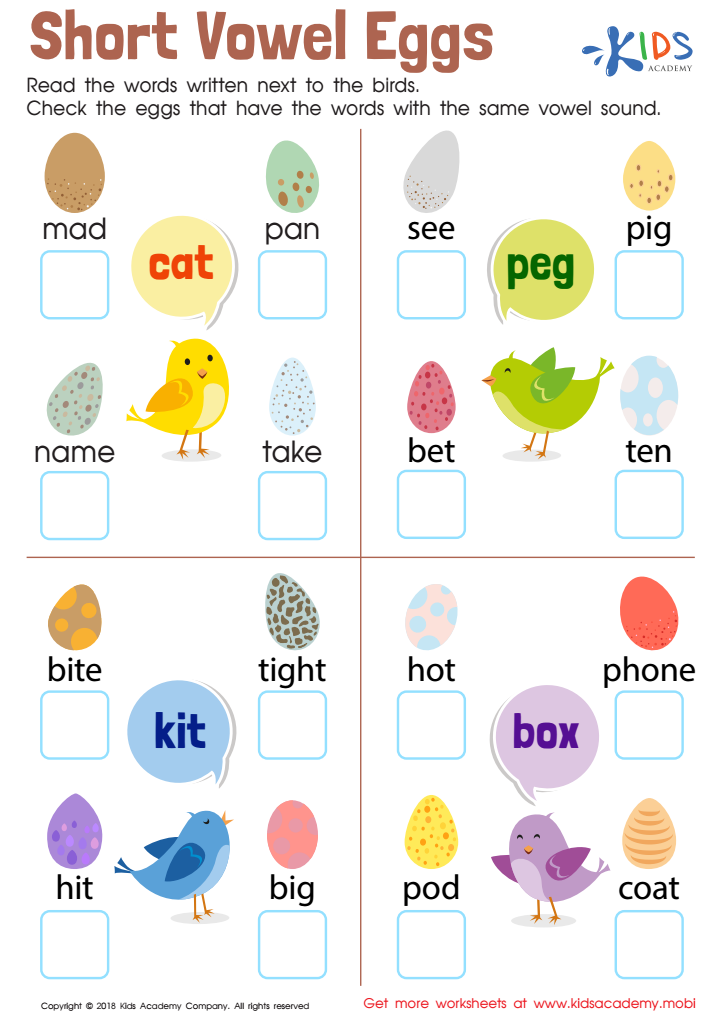
Short Vowel Eggs Worksheet
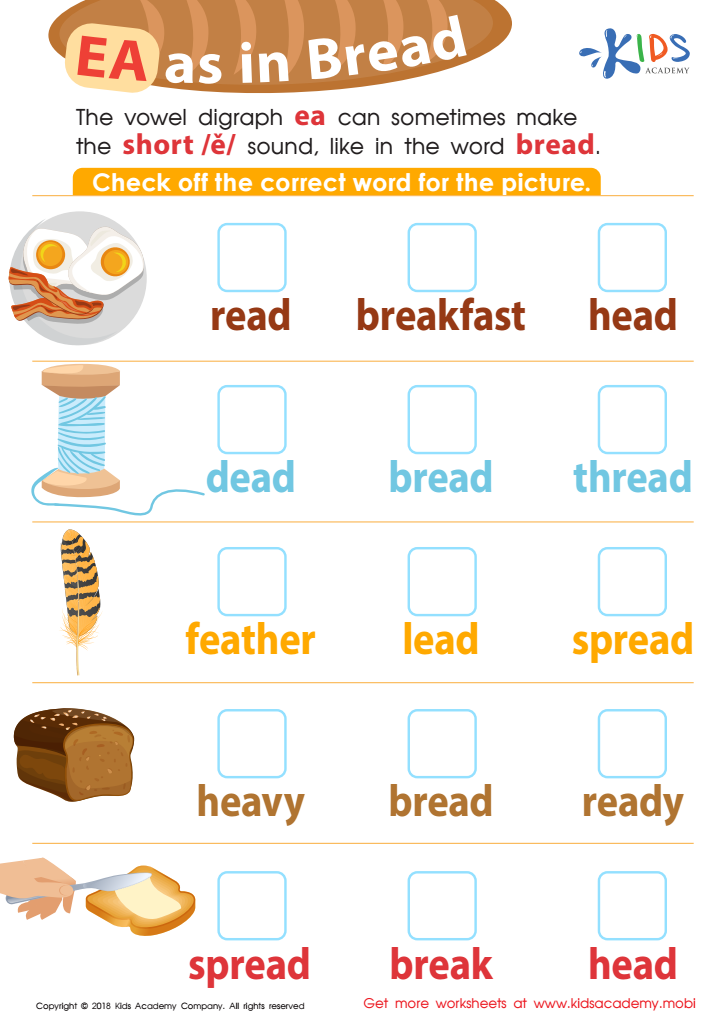
Reading: EA as in Bread Worksheet
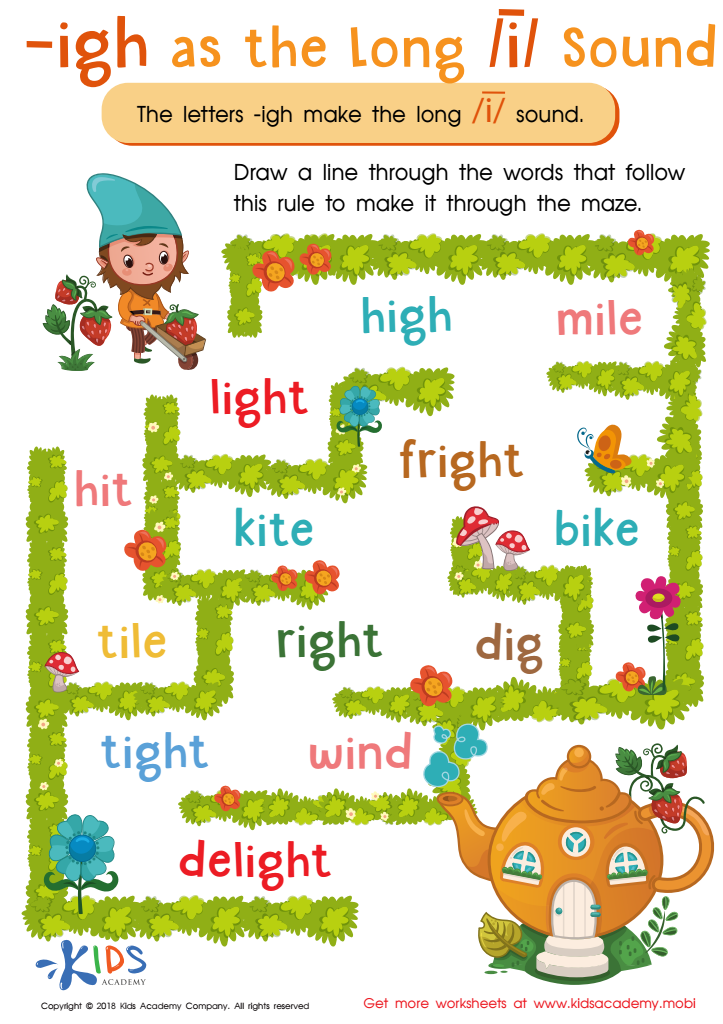
Reading: IGH as Long I Worksheet






Phonics practice is essential for children aged 7-8 as it serves as a fundamental building block for literacy development. At this age, children are transitioning from learning to read to reading to learn, and solid phonics skills greatly enhance their reading proficiency and comprehension.
Understanding the relationship between letters and sounds allows children to decode unfamiliar words independently. This is crucial as they encounter more complex texts that demand deeper comprehension and critical thinking skills. Regular phonics practice can boost their confidence, transitioning them into more advanced reading levels and improving their overall academic performance.
Moreover, phonics instruction equips children with strategies to tackle spelling and writing challenges, which are linked closely to their reading skills. As they learn to read different genres and subjects, a solid phonics foundation enables them to engage with a wider variety of texts, fostering a love for reading and continuous learning.
Parents and teachers should collaborate to provide consistent phonics practice, ensuring a supportive environment for children. By prioritizing phonics, we lay a strong educational foundation that enhances literacy skills and nurtures a lifelong passion for reading. This investment not only benefits individual students but also contributes positively to overall learning communities.








