Understanding suffixes Normal Reading Worksheets for Ages 7-8
3 filtered results
-
From - To
Unlock the key to reading comprehension with our "Understanding Suffixes" worksheets, designed specifically for children ages 7-8. These engaging, age-appropriate activities help young learners grasp the concept of suffixes, enhancing their vocabulary and language skills. By exploring various word endings, children will discover how suffixes change word meanings and grammatical functions, empowering them to decode and read more effectively. This essential skill fosters confidence and enthusiasm for reading. With colorful visuals and interactive exercises, our worksheets make learning suffixes a fun experience! Perfect for parents and teachers alike, these resources support enhanced literacy development in young readers. Start their journey today!
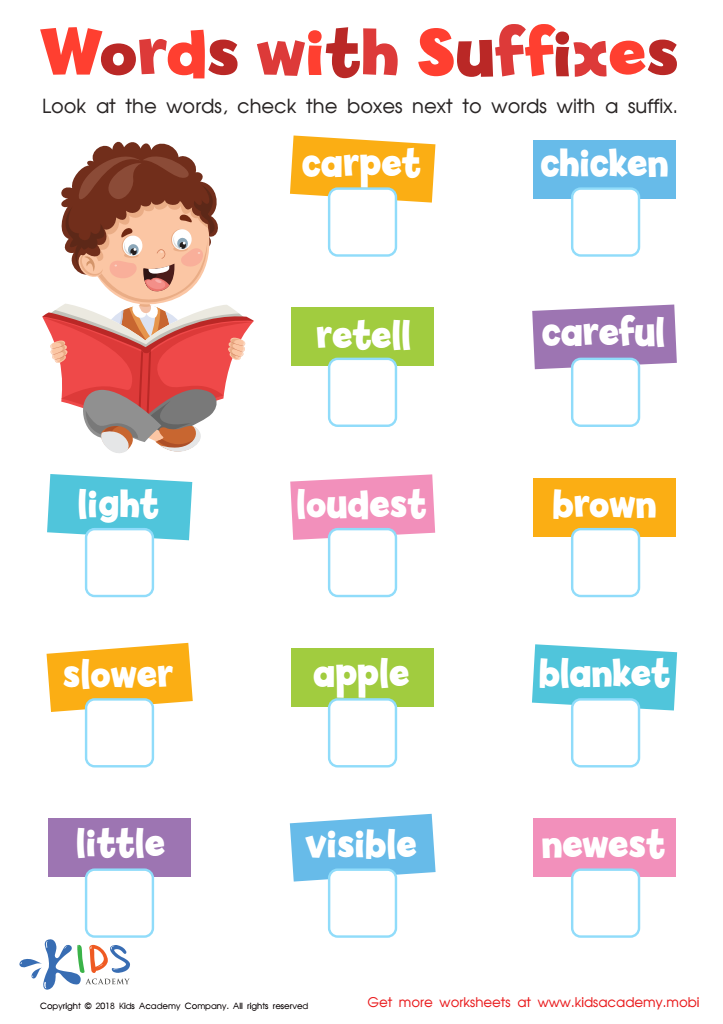
Reading: Words With Suffixes Worksheet
 Assign to My Students
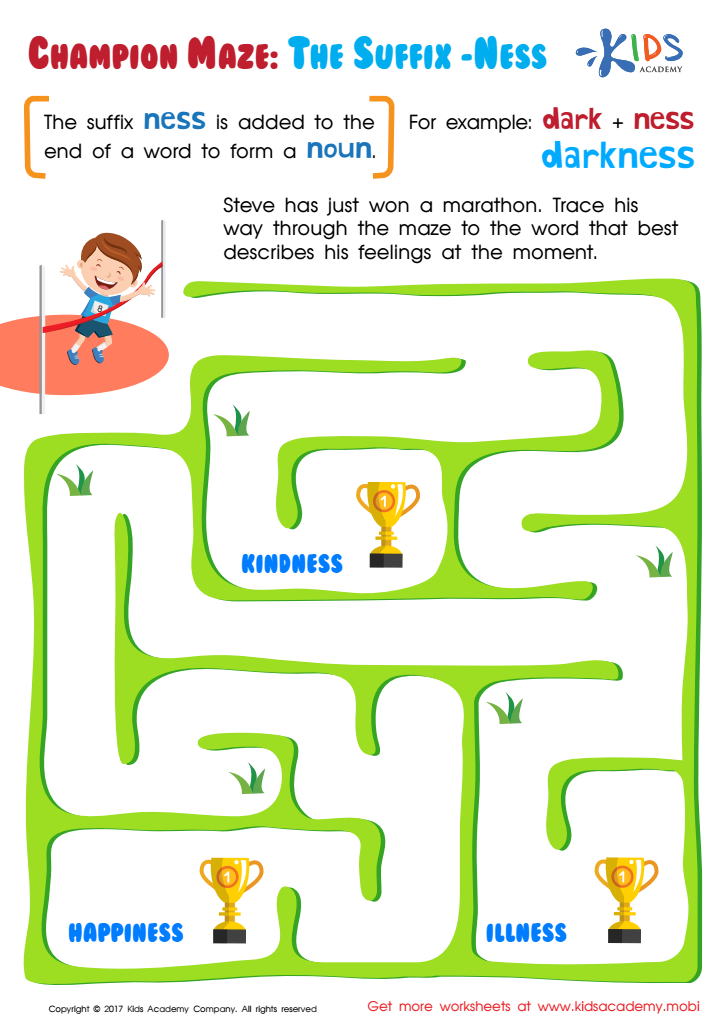
Suffix Ness Worksheet
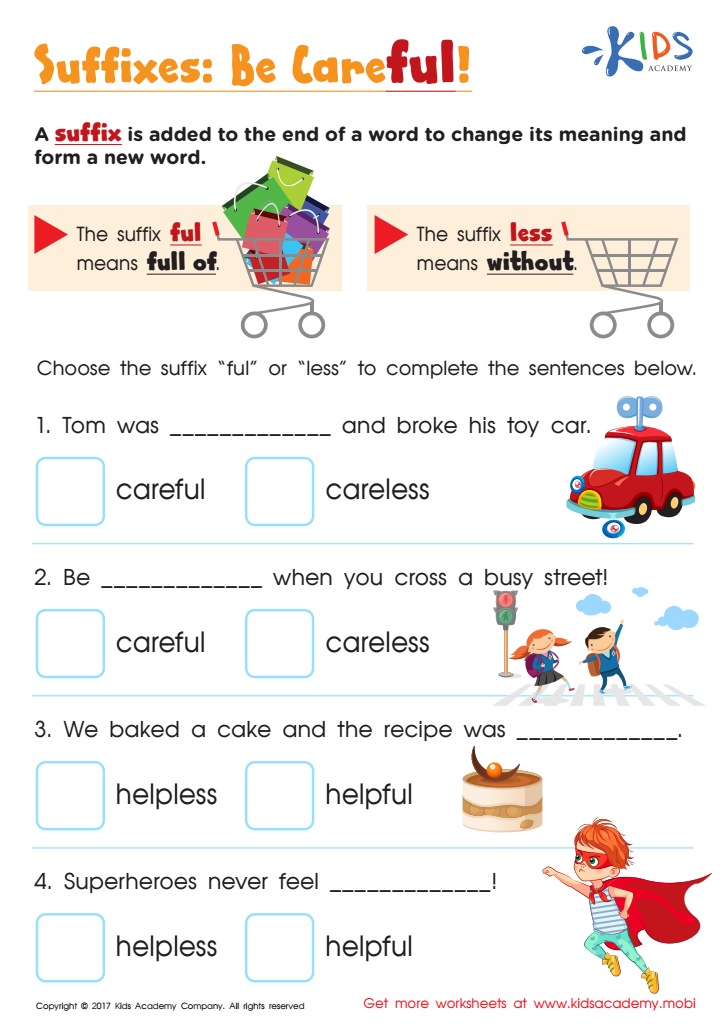
Suffixes Ful and Less Worksheet








Understanding suffixes is crucial for children aged 7-8, as it plays a significant role in their reading and language development. For parents and teachers, recognizing the importance of suffixes enhances vocabulary and comprehension skills. Suffixes are word endings that can change the meaning and grammatical function of a word. By teaching children to identify and use suffixes, they can unlock new words and meanings, expanding their language repertoire.
For instance, recognizing that adding “-ful” to “cheer” transforms it into “cheerful” helps children grasp how language is constructed. This understanding not only aids in reading fluency but also improves writing skills, allowing young learners to express themselves more effectively.
Moreover, strong vocabulary skills foster a love for reading, opening doors to various texts and genres. This can cultivate critical thinking and creativity as students engage with more complex stories and ideas. As language is foundational for academic success, an emphasis on suffixes empowers children to become confident, independent readers. In essence, when parents and teachers focus on teaching suffixes, they are equipping children with tools that will enhance their literacy skills, ultimately impacting their overall academic journey positively.








