Moral understanding Normal Reading Comprehension Worksheets for Ages 7-8
5 filtered results
-
From - To
Enhance your child's reading skills with our engaging Moral Understanding Normal Reading Comprehension Worksheets, designed specifically for ages 7-8. These worksheets encourage young learners to explore important moral lessons while improving their comprehension abilities. Each activity is crafted to nurture critical thinking and empathy, allowing children to relate stories to real-life situations. Students will engage with relatable scenarios that challenge them to think about right and wrong. Perfect for parents and educators, these worksheets provide a valuable resource for fostering both literacy and moral development. Download now and let your child embark on a journey toward understanding ethics through fun reading exercises!
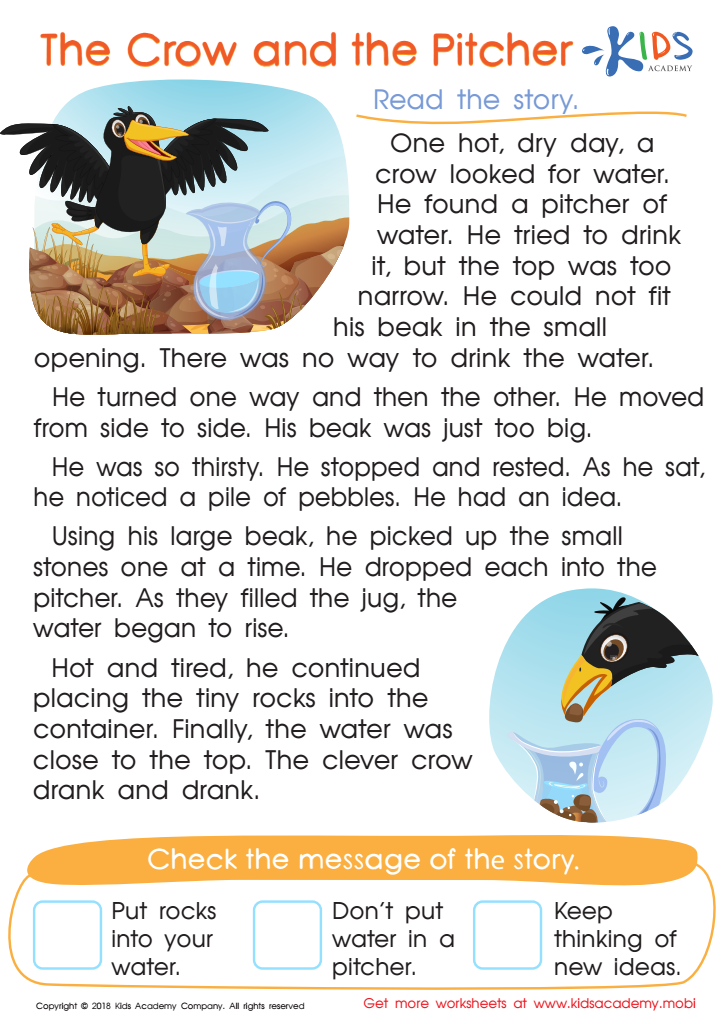
The Crow and the Pitcher Worksheet
 Assign to My Students
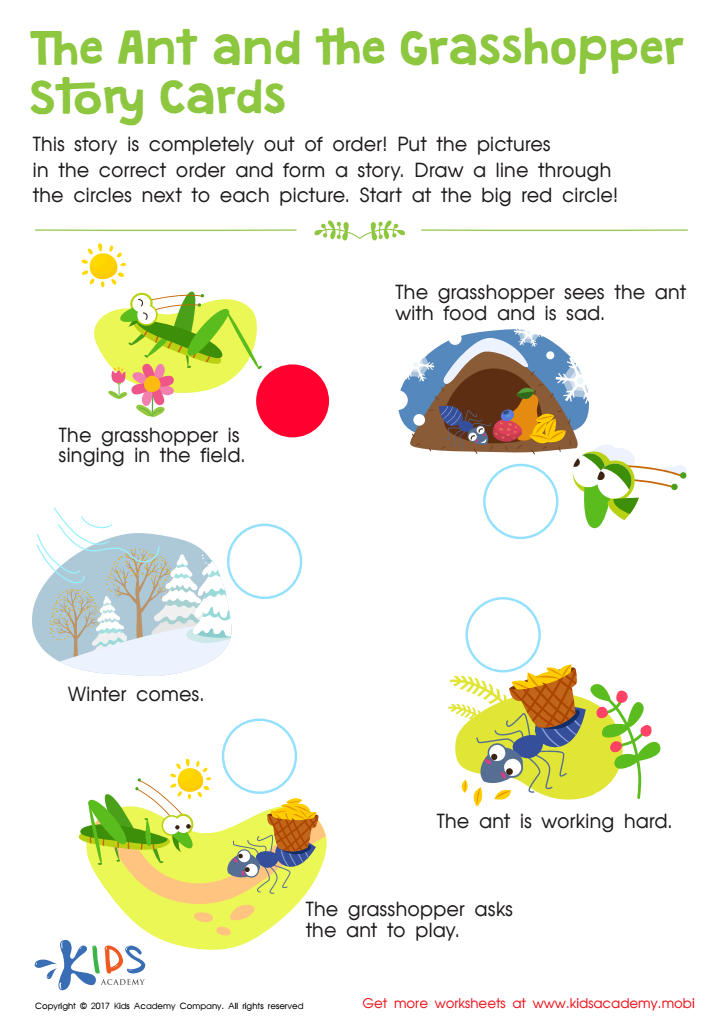
The Ant and The Grasshopper Worksheet
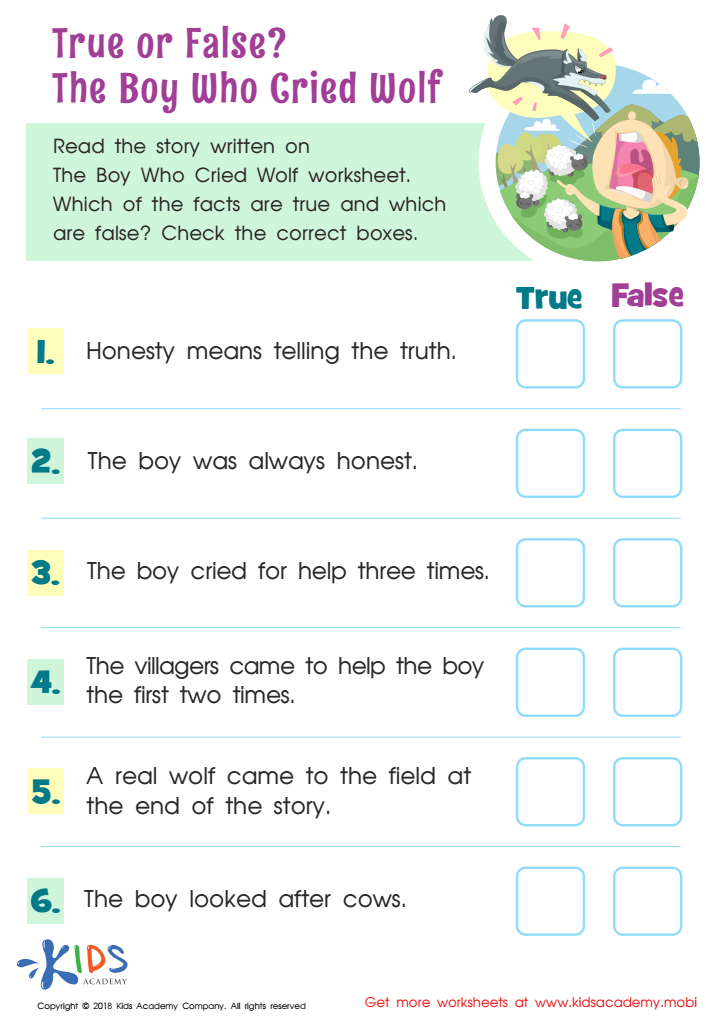
True or False? The Boy Who Cried Wolf Worksheet
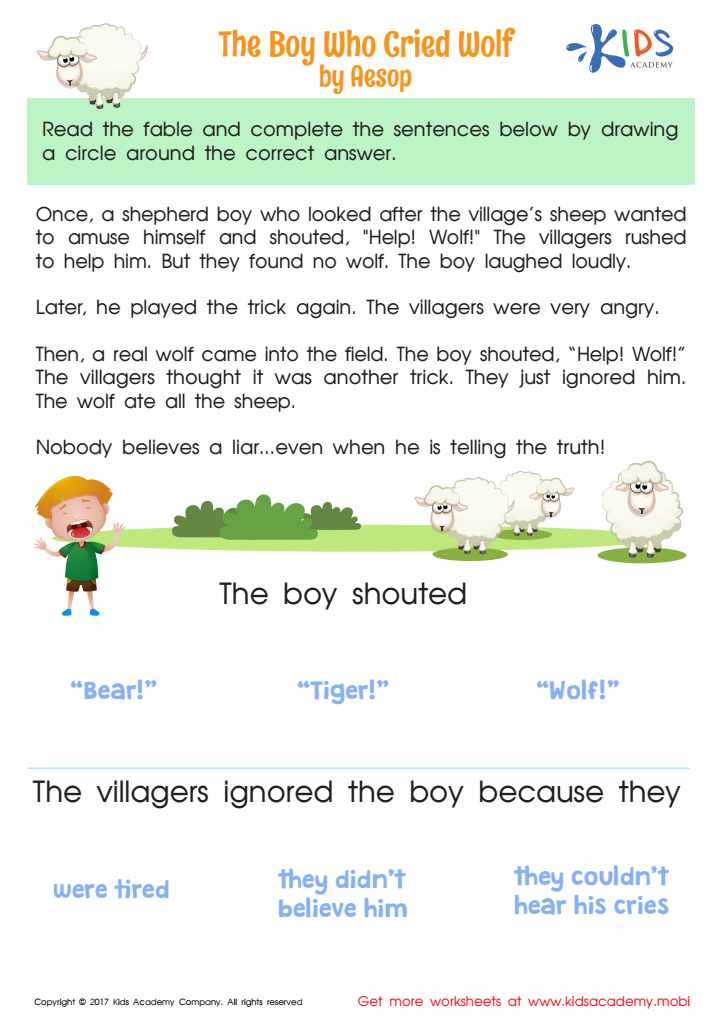
The Boy Who Cried Wolf Worksheet
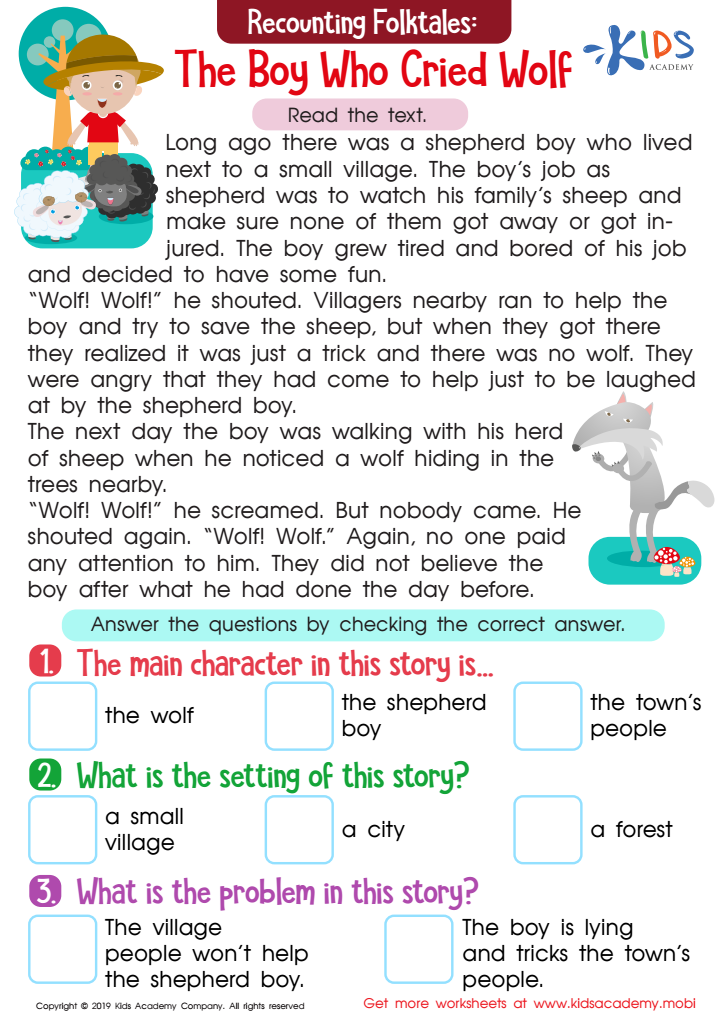
The Boy Who Cried Wolf Part 1 Worksheet





.jpg)
Moral understanding and reading comprehension are crucial components of a child's development, especially for ages 7-8. At this age, children begin to explore complex social interactions and understand the nuances of right and wrong. This moral development is intricately linked to their ability to comprehend and engage with texts, which often include moral dilemmas and ethical themes.
By fostering moral understanding through reading, parents and teachers can cultivate empathy, critical thinking, and decision-making skills. When children read stories that present moral challenges, they learn to empathize with characters, consider different perspectives, and reflect on their values. This helps them navigate their own moral landscape and become more thoughtful individuals.
Moreover, effective reading comprehension skills enable children to understand and analyze the messages within texts. Mastery of these skills not only enhances their academic performance but also encourages them to ask questions, form opinions, and engage in discussions about ethical issues. This combination of moral understanding and comprehension prepares children to become responsible and socially aware members of their communities. Ultimately, caring about these areas ensures that parents and teachers equip children with the tools needed for both personal growth and societal contribution.








