Story sequencing Normal Reading Comprehension Worksheets for Ages 7-8
10 filtered results
-
From - To
Our "Story Sequencing Normal Reading Comprehension Worksheets for Ages 7-8" are thoughtfully designed to enhance young learners' understanding of narrative structure and improve their reading skills. Tailored specifically for early grade students, these worksheets offer engaging stories followed by sequencing activities that challenge kids to put events in the correct order. By focusing on critical thinking and comprehension, these worksheets help children grasp the concepts of beginning, middle, and end, laying a solid foundation for more advanced reading skills. Perfect for both classroom and home use, they make learning fun and effective for your growing reader.
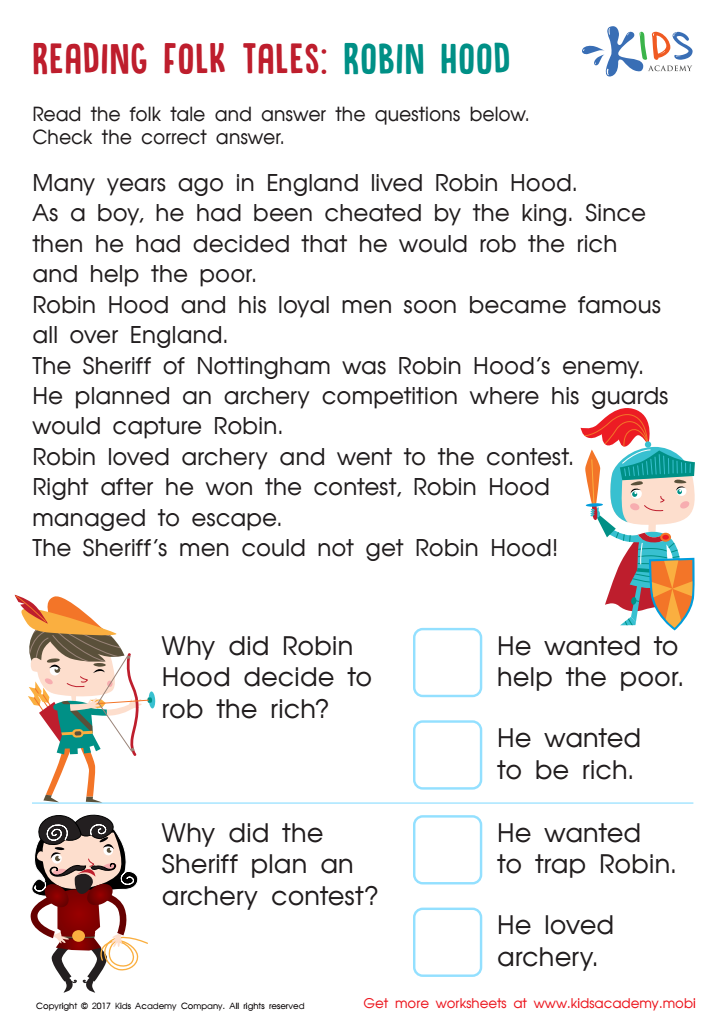
Robin Hood Folktale Worksheet
 Assign to My Students
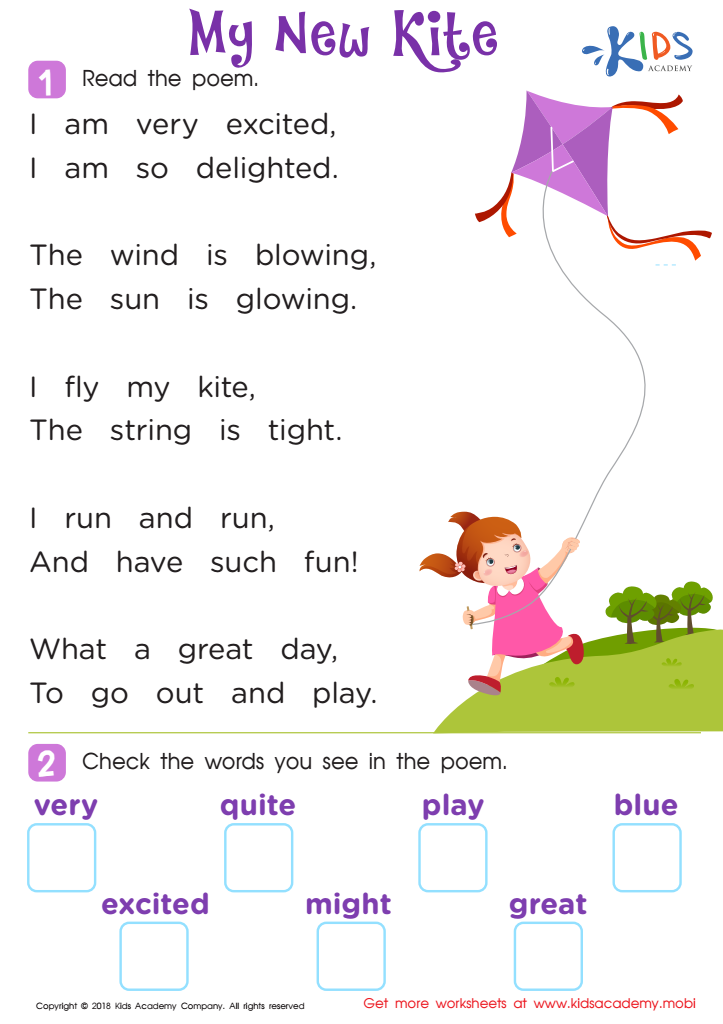
Poem: My New Kite Worksheet
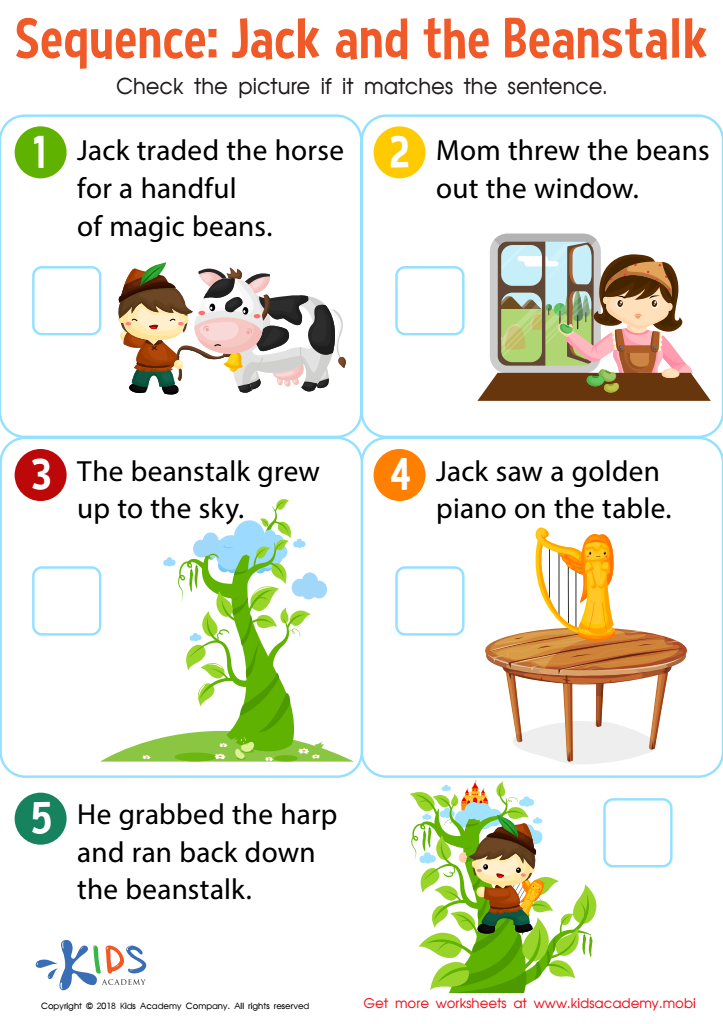
Sequence: Jack and The Beanstalk Worksheet
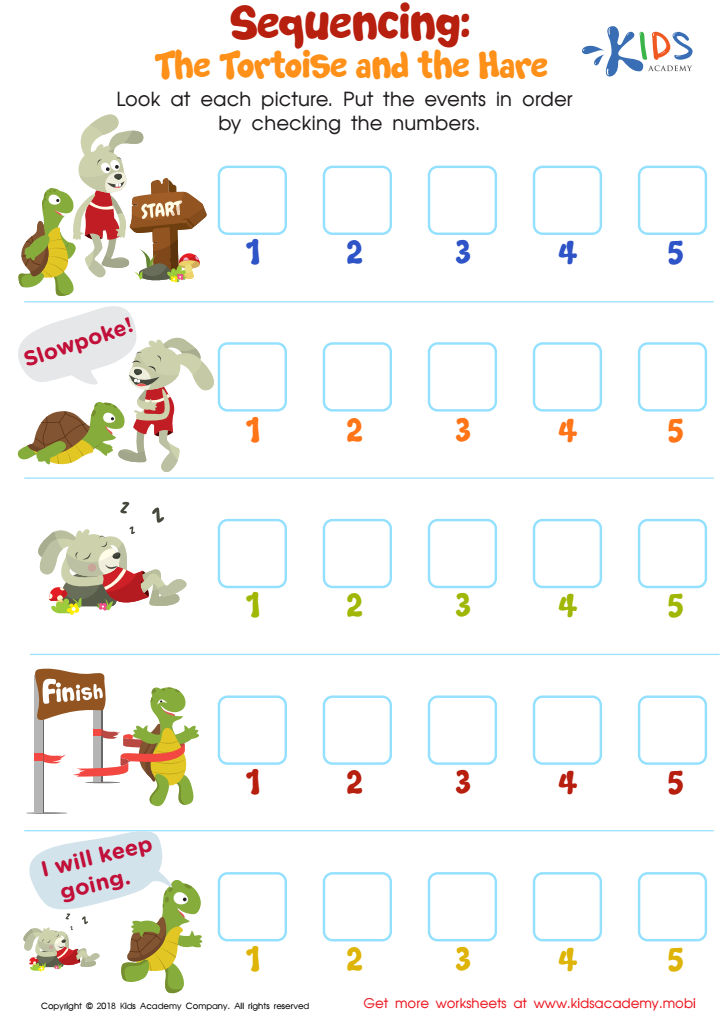
Sequencing: The Tortoise and the Hare Worksheet
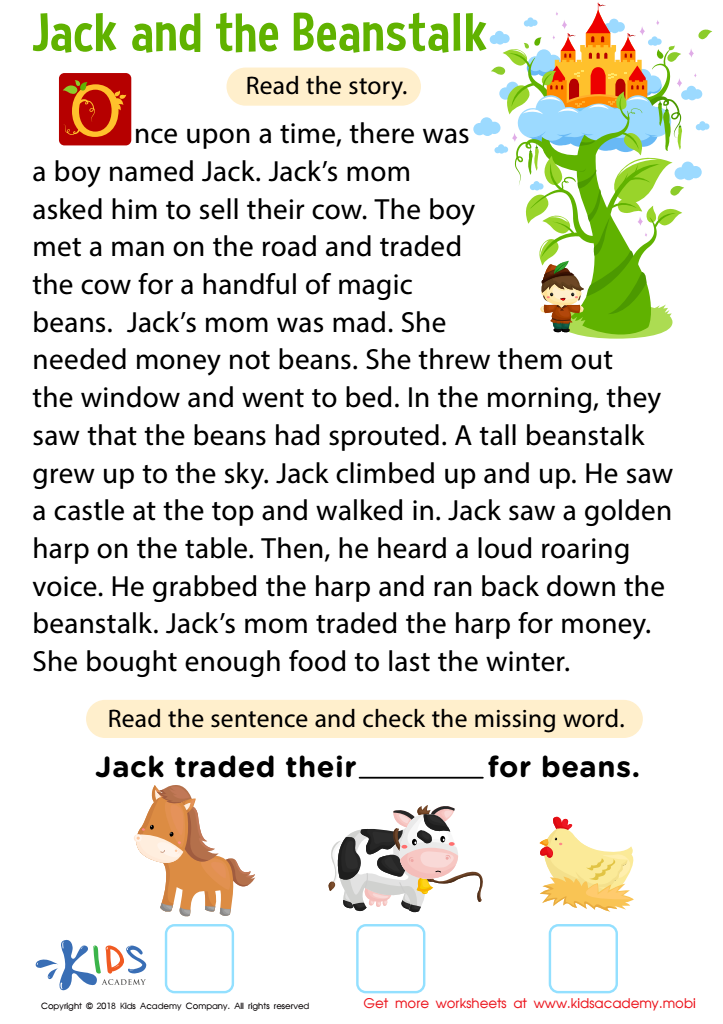
Jack and Beanstalk Worksheet
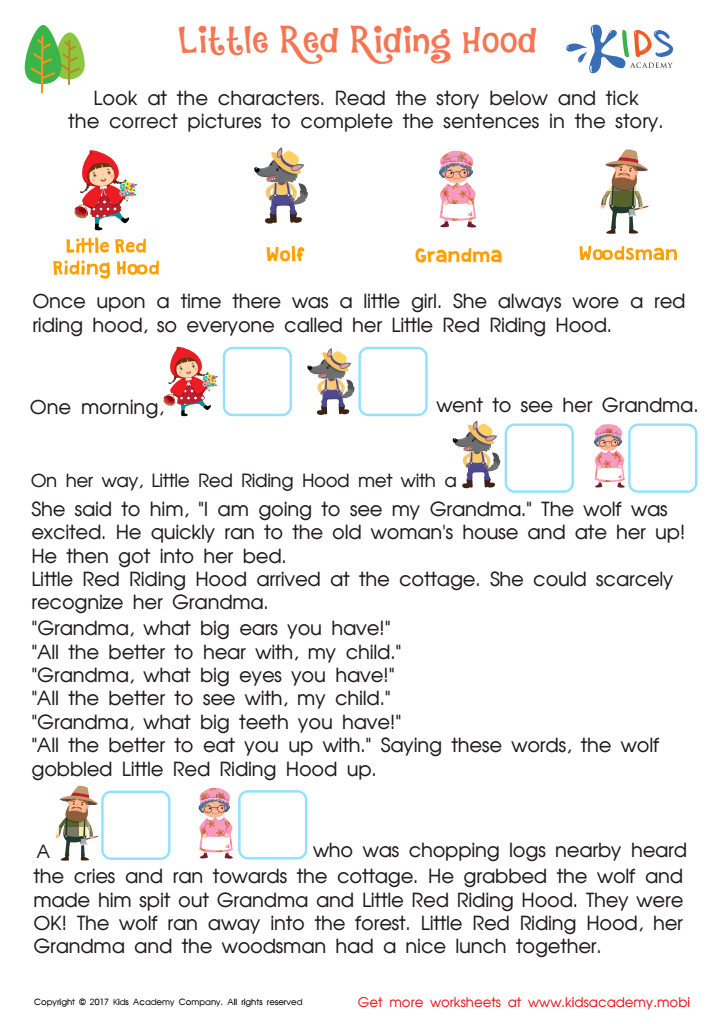
Little Red Riding Hood Printable
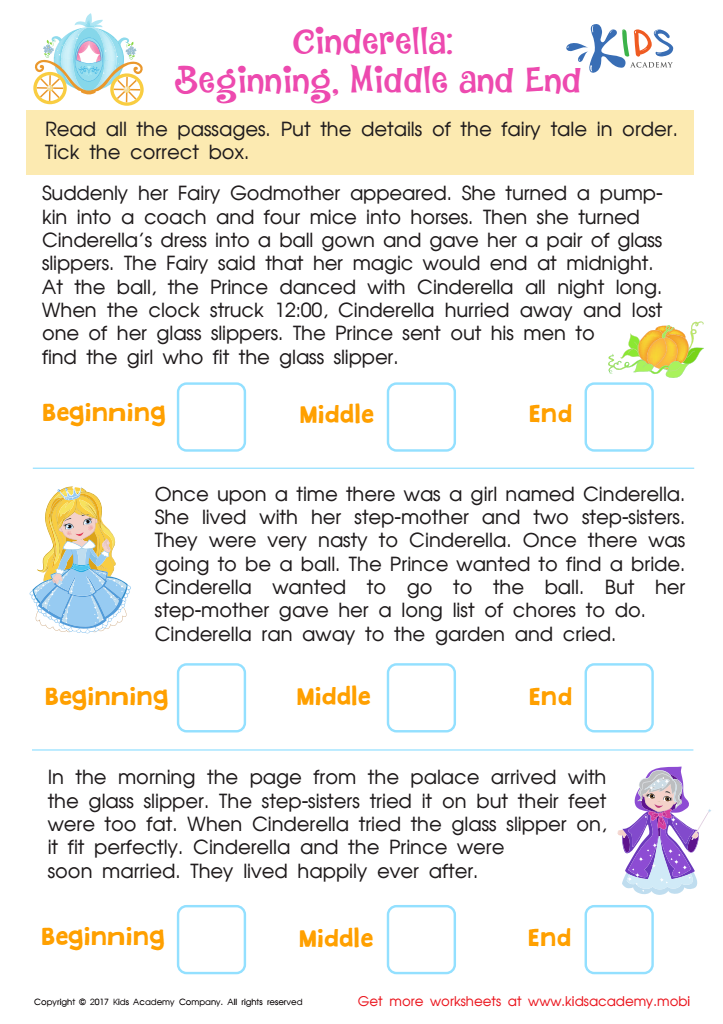
Cinderella: Beginning, Middle and End Worksheet
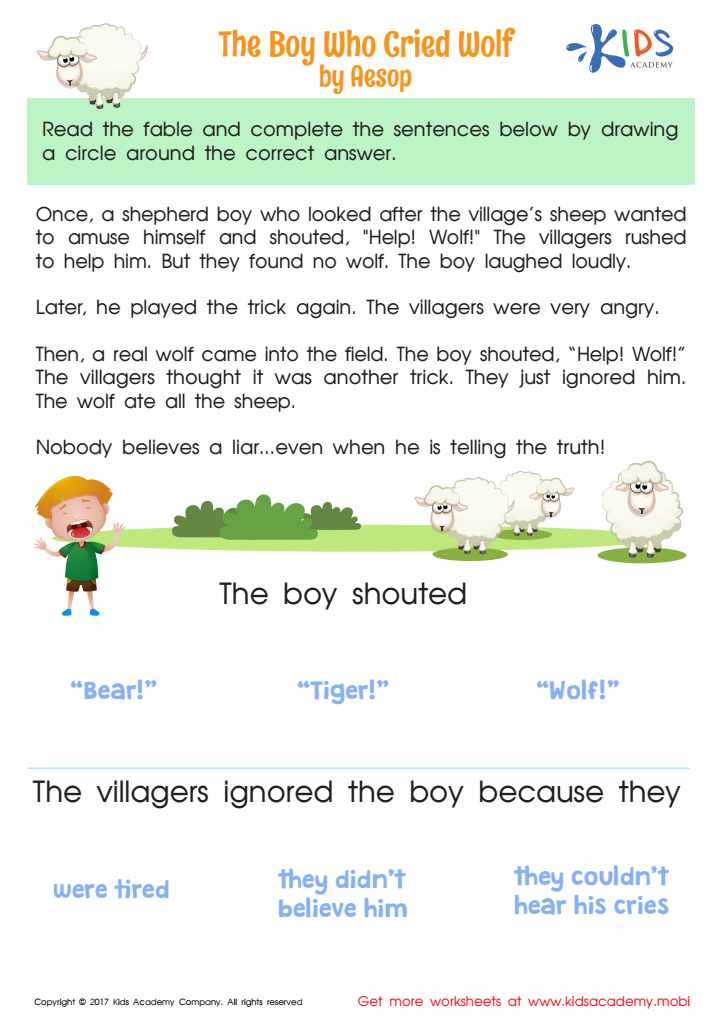
The Boy Who Cried Wolf Worksheet
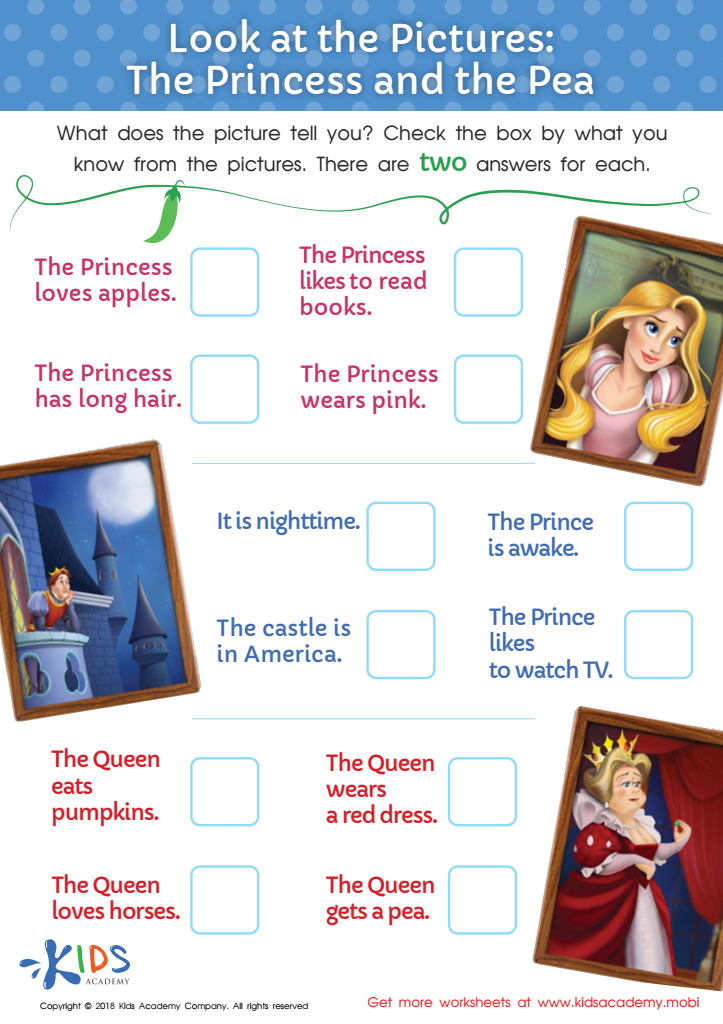
Look at the Pictures: The Princess and the Pea Worksheet
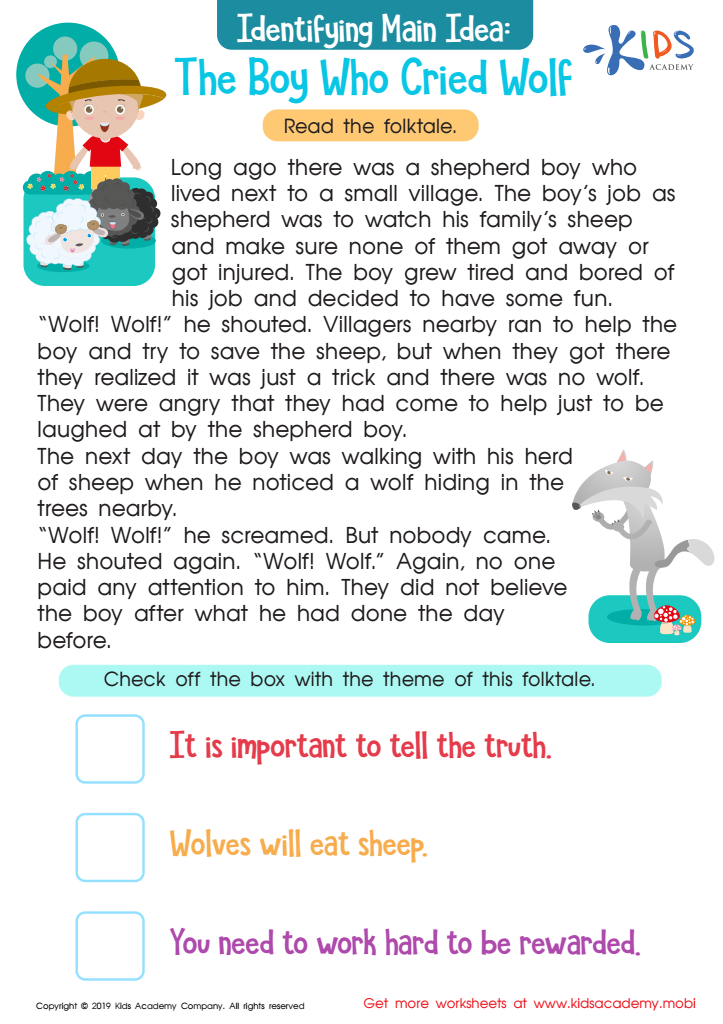
The Boy Who Cried Wolf Part 2 Worksheet







Story sequencing and normal reading comprehension are foundational skills for children aged 7-8 and are critical to their academic and personal development. Story sequencing, the ability to identify the beginning, middle, and end of a story, helps children understand narrative structure. This skill is essential because it promotes logical thinking and helps children grasp the cause-and-effect relationships that make up real-life scenarios.
When children can sequence stories accurately, their reading comprehension improves significantly. Reading comprehension refers to the ability to understand, interpret, and derive meaning from texts. It is an essential skill for academic success across all subjects, not just for reading and language arts. Good reading comprehension skills enable children to follow instructions, solve problems effectively, and engage meaningfully in discussions.
Furthermore, these skills are foundational for more advanced literacy skills. Without a solid understanding of story structure and the ability to comprehend what they read, children may struggle with higher-level critical thinking, writing, and even communicating their thoughts clearly.
Parents and teachers should prioritize story sequencing and normal reading comprehension because they cultivate a love for reading while boosting confidence and enthusiasm for learning. In the broader scope, these skills foster lifelong learning habits, setting children up for future success both inside and outside the classroom.








