Identifying story elements Normal Reading Fiction Worksheets for Ages 7-8
3 filtered results
-
From - To
Enhance your child's reading comprehension skills with our "Identifying Story Elements" worksheets designed for ages 7-8! These engaging and interactive worksheets focus on key components of fiction, including characters, setting, plot, and theme. Children will enjoy exploring captivating stories while developing critical thinking and analytical skills vital for understanding narratives. Each worksheet encourages independent learning and reinforces essential vocabulary and comprehension strategies. Perfect for classroom use or at-home learning, these resources make literary analysis fun and accessible. Help your young readers master story elements with our carefully crafted exercises and watch their confidence soar in reading fiction!
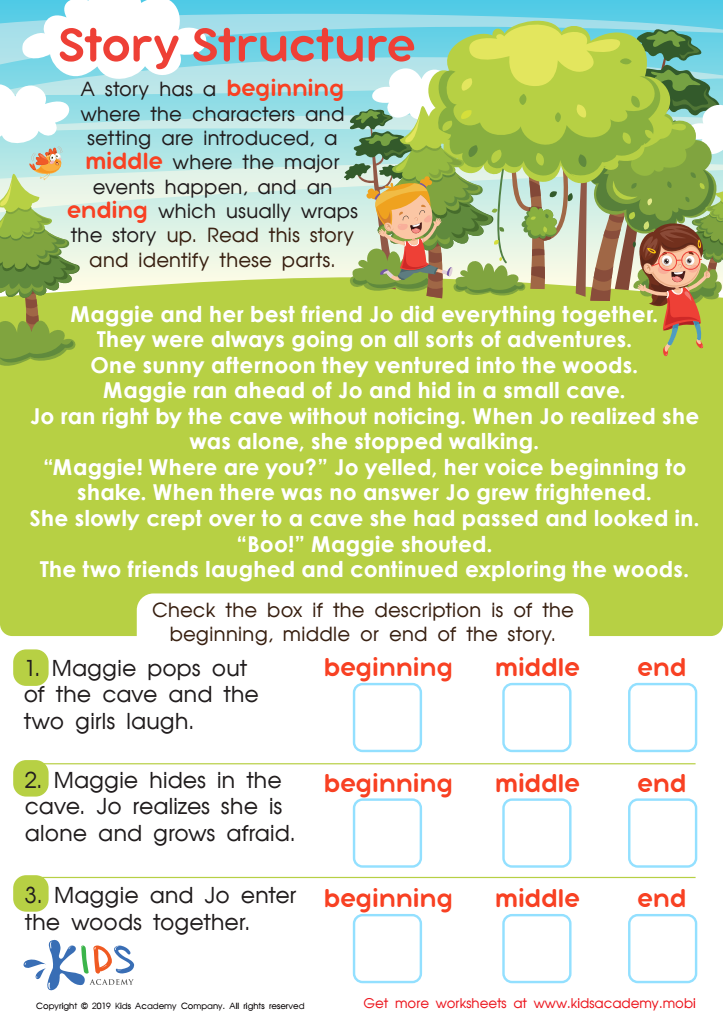
Story Structure Worksheet
 Assign to My Students
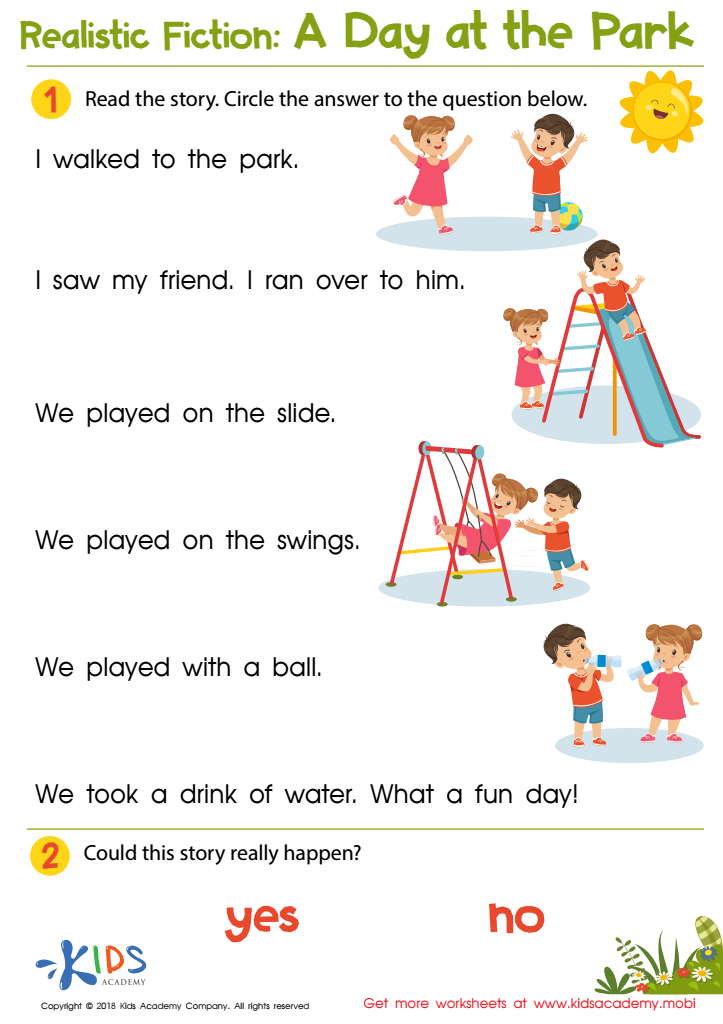
A Day at the Park Worksheet
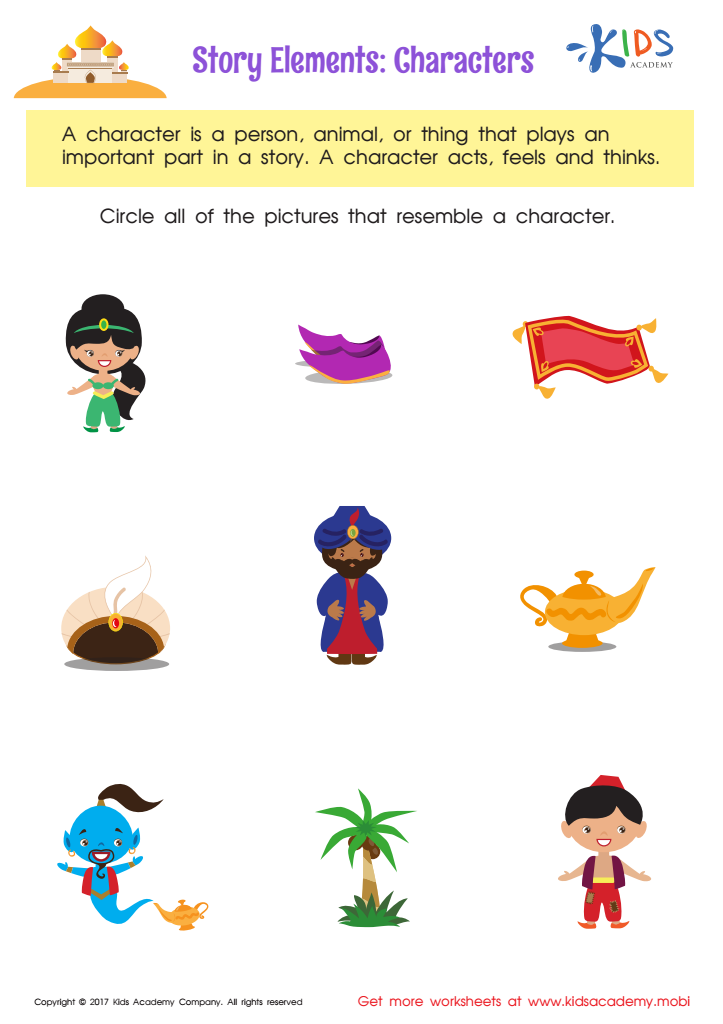
Story Elements Printable








Identifying story elements is crucial for children aged 7-8 as it lays the foundation for their reading comprehension and critical thinking skills. When parents and teachers help children recognize key components of fiction—such as characters, setting, plot, conflict, and theme—they are equipping them with tools necessary for deeper understanding and enjoyment of literature.
Recognizing characters allows children to relate to others’ experiences, fostering empathy and emotional intelligence. Understanding the setting helps them visualize stories and appreciate contexts, while engaging with the plot and conflict enhances their predictive and inferential skills. These elements stimulate a child's imagination and creativity, making reading an interactive experience.
Additionally, identifying story elements nurtures analytical abilities, promoting skills that are transferrable across subjects in school. Parents and teachers can use questions about these elements during read-aloud sessions, prompting discussion and encouraging children to express their thoughts, improving their verbal skills and confidence.
Ultimately, proficiency in identifying story elements not only enriches a child's reading experience but also fosters a lifelong love for reading, essential for academic success and personal growth. Thus, engaging children in story elements is an investment in their educational journey and overall development.







