Reading comprehension Normal Reading Fiction Worksheets for Ages 7-8 - Page 3
51 filtered results
-
From - To
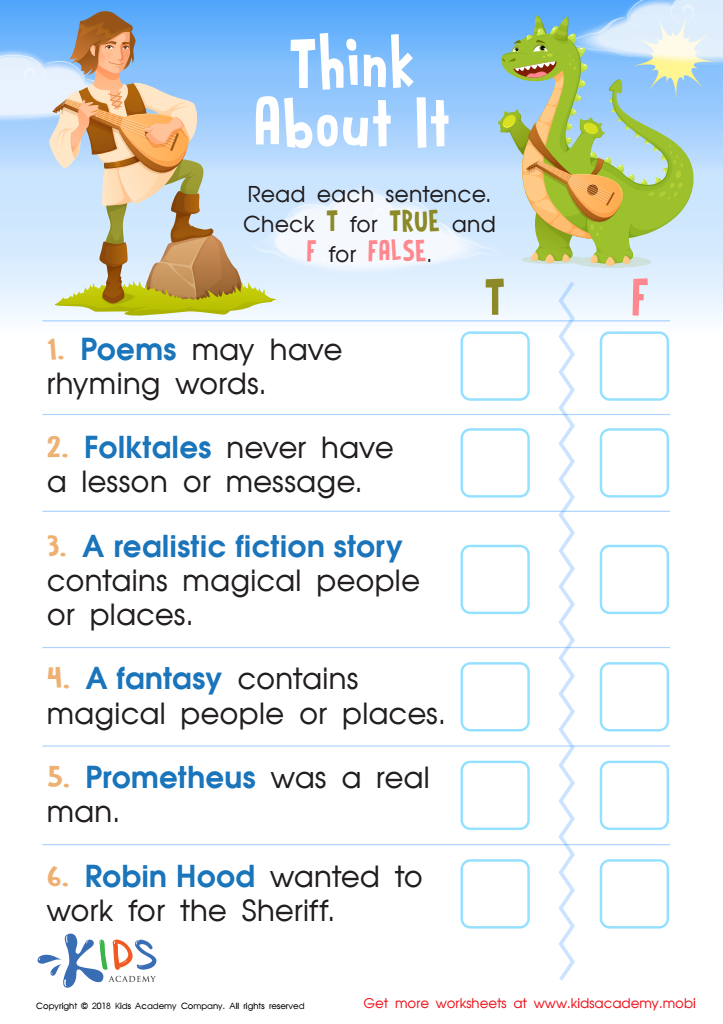
Think About It: Assessment Worksheet
 Assign to My Students
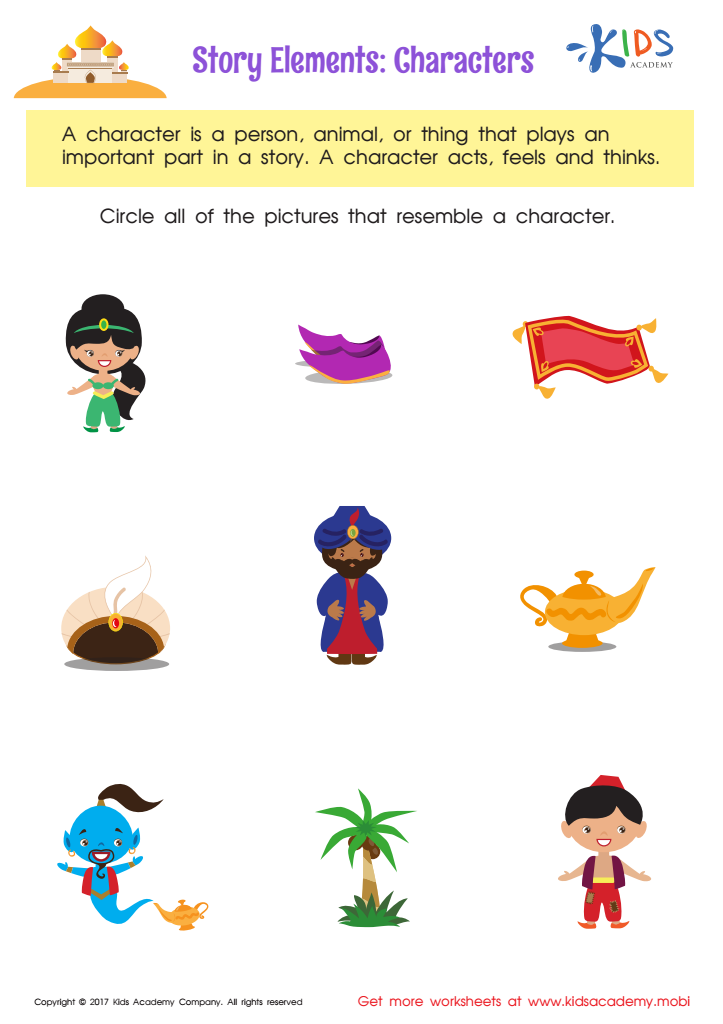
Story Elements Printable
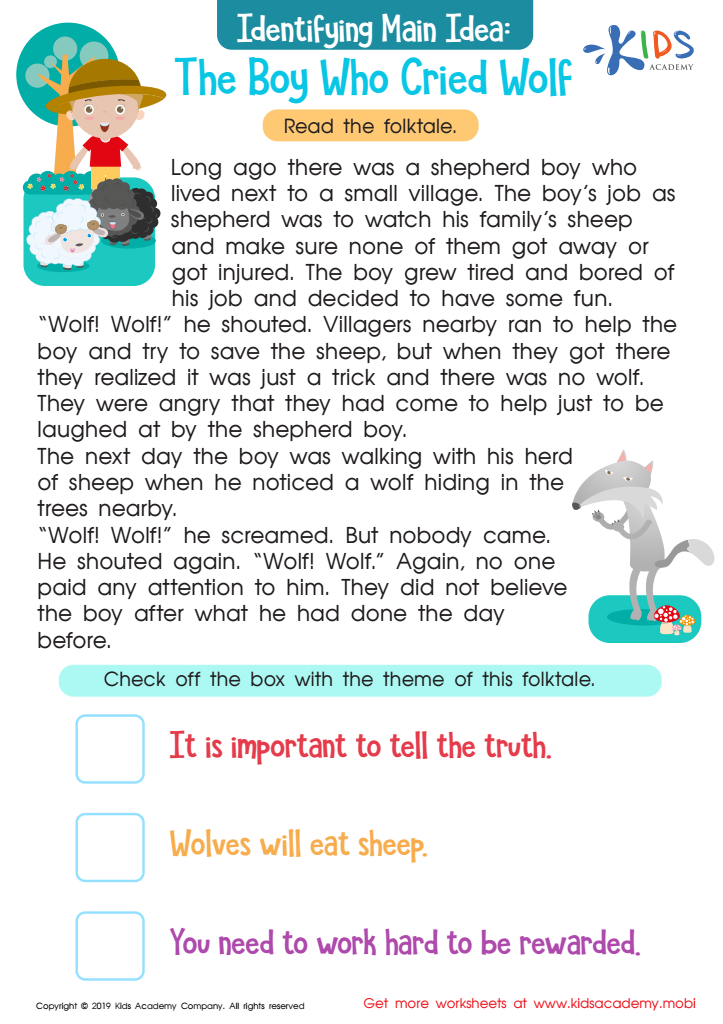
The Boy Who Cried Wolf Part 2 Worksheet







Parents and teachers should prioritize reading comprehension in fiction for ages 7-8 because it plays a crucial role in a child's cognitive and emotional development. At this age, children are at a critical stage in their learning journey, and fostering strong reading skills can significantly benefit their overall academic performance.
Reading fiction helps children develop imagination and creativity as they explore new worlds and characters. It enhances their vocabulary and language skills, as they encounter diverse sentence structures and unfamiliar words within engaging contexts. Moreover, understanding stories improves critical thinking and problem-solving abilities as children predict outcomes, analyze characters' motives, and infer meanings.
Emotionally, engaging with fiction allows children to empathize with diverse characters, fostering emotional intelligence. They begin to understand different perspectives and emotions, which can improve their social skills and interactions with peers.
Additionally, reading comprehension is foundational for other subjects. A strong ability to understand and process text aids in grasping complex concepts in science, social studies, and mathematics, setting the stage for future academic success. Therefore, by supporting reading comprehension in fiction, parents and teachers lay down a vital groundwork for a child's broader educational and personal growth.
Conclusively, prioritizing reading comprehension in fiction helps create well-rounded, empathetic, and academically prepared children, ready to tackle future challenges.







