Number Recognition Normal Science Worksheets for Ages 7-8
4 filtered results
-
From - To
Explore our engaging Number Recognition Normal Science Worksheets designed specifically for ages 7-8! These worksheets offer a fun and interactive way for young learners to enhance their number recognition skills while seamlessly integrating science concepts. Each activity encourages critical thinking and strengthens children’s understanding of numerical values through colorful illustrations and age-appropriate challenges. Perfect for classroom or at-home learning, our worksheets foster a deeper connection between math and science. Empower your child’s educational journey with resources that make learning exciting and effective. Download our Number Recognition worksheets today and watch your child's confidence soar in math and science!
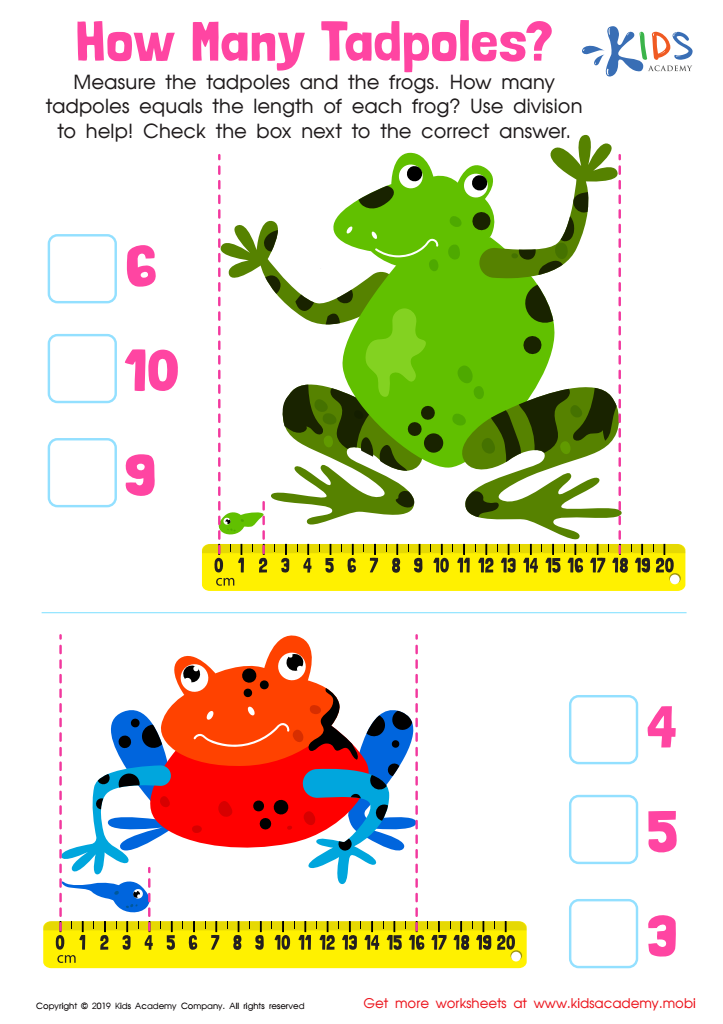
How Many Tadpoles Worksheet
 Assign to My Students

African Wildlife: Giraffe Worksheet
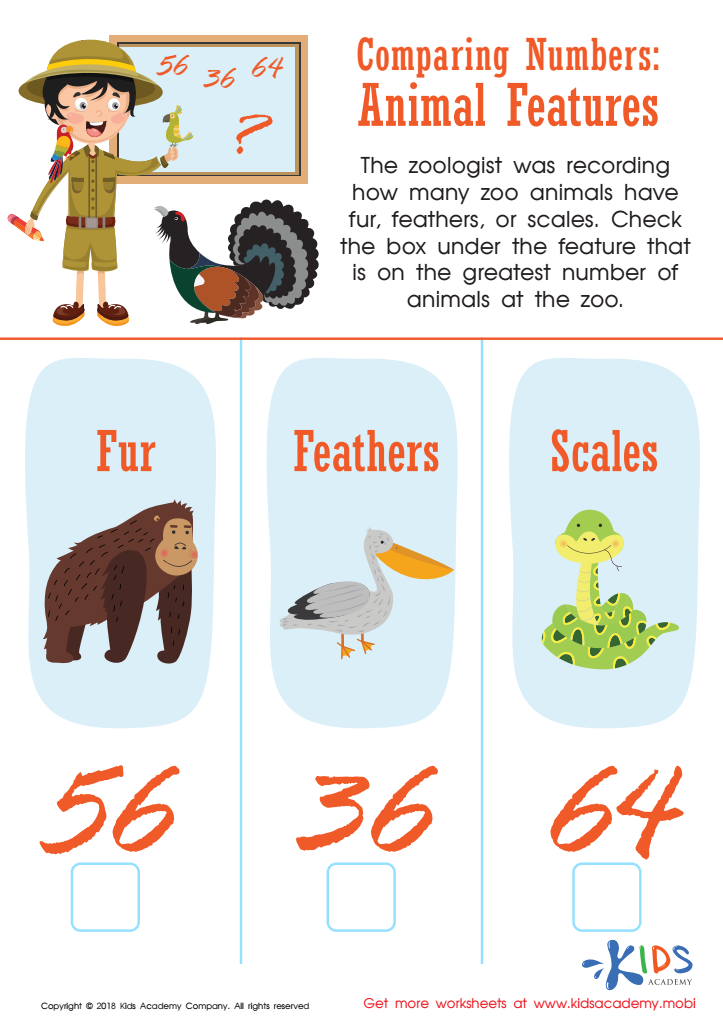
Animal Features Worksheet
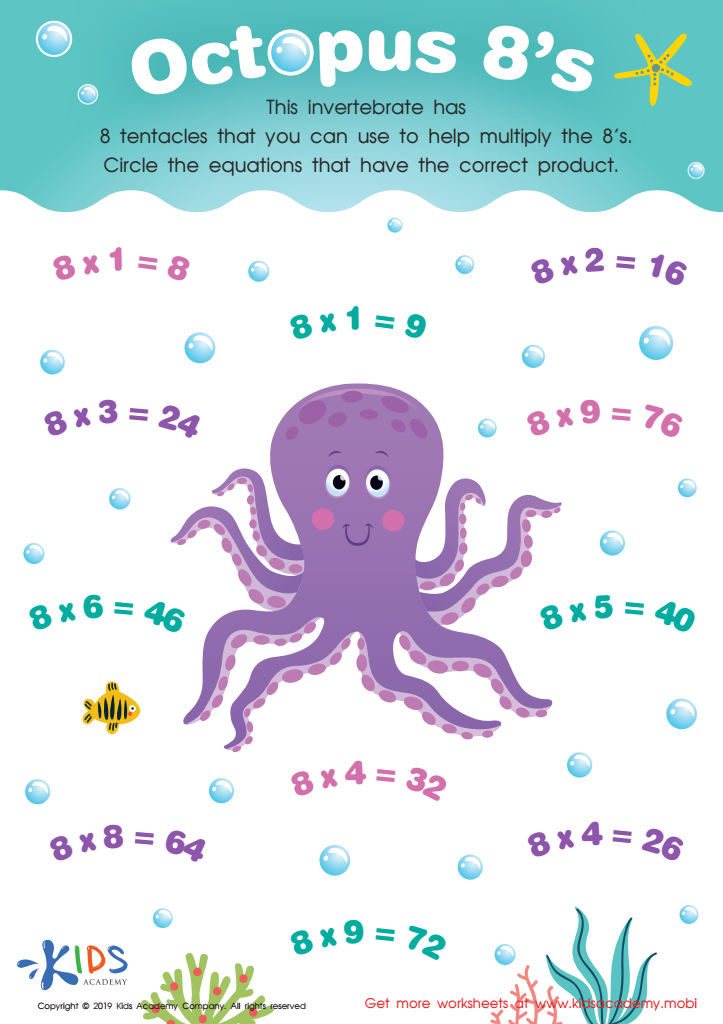
Octopus 8’s Worksheet





.jpg)


Number recognition is a vital skill for children aged 7-8 as it lays the foundation for more complex mathematical concepts. Parents and teachers should care about this developmental milestone because it directly influences a child's overall academic success and confidence in mathematics.
At this age, children begin to encounter increasingly abstract math concepts, including addition, subtraction, and basic problem-solving skills. A strong grasp of number recognition enables them to easily identify numbers, understand their values, and appreciate their relationships to one another. This understanding reduces anxiety around math—a common fear among young learners—and fosters a positive attitude toward future mathematical challenges.
Additionally, number recognition is not just about visual identification; it also promotes critical cognitive skills such as comprehension and analytical thinking. As children master number recognition, they develop the ability to make connections between numbers and real-world applications, such as budgeting, telling time, and measuring.
Involving parents and teachers in enhancing number recognition can facilitate a supportive learning environment. This strong collaborative approach ensures that learning continues at home and in the classroom, allowing children to become proficient in foundational math skills that will serve them throughout their educational journey and beyond. Thus, nurturing number recognition skills is essential for holistic development in 7-8-year-olds.







