Understanding forces Normal Science Worksheets for Ages 7-8
6 filtered results
-
From - To
Discover our "Understanding Forces" science worksheets tailored for children aged 7-8! These engaging resources are designed to spark curiosity about the world of physics, focusing on fundamental concepts like gravity, friction, and magnetism. Each worksheet features age-appropriate activities that encourage critical thinking and hands-on learning. Kids will enjoy exploring how forces impact their everyday life through fun illustrations and practical examples. Ideal for classroom use or at-home learning, our worksheets help reinforce essential STEM skills in a playful and interactive way. Start your child's journey into the fascinating world of forces today!
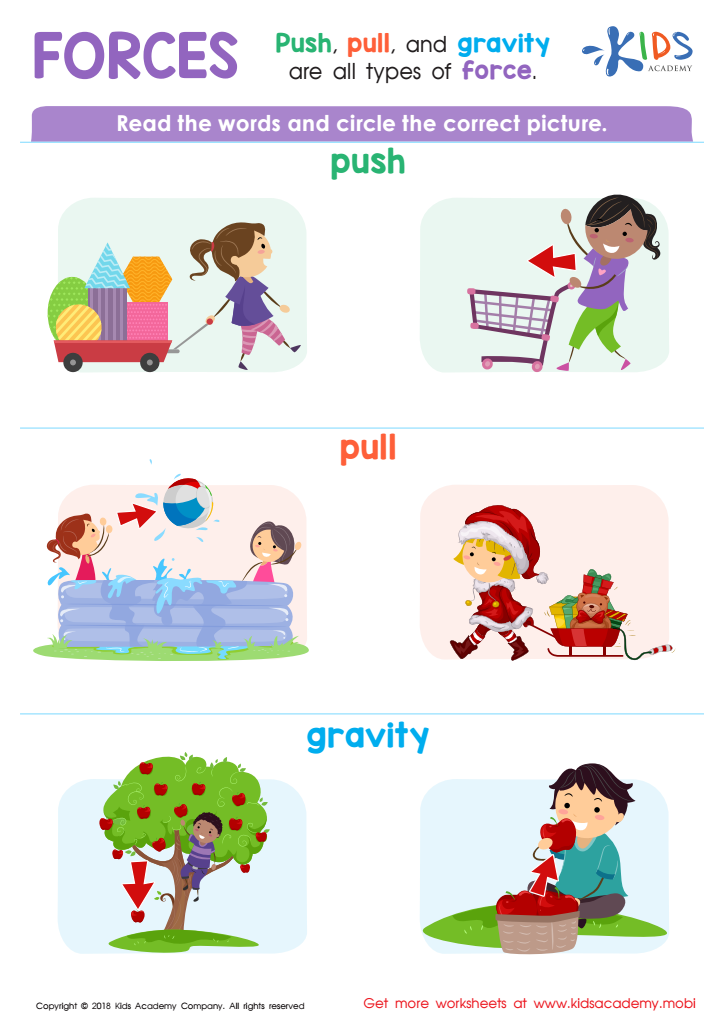
Forces Worksheet
 Assign to My Students
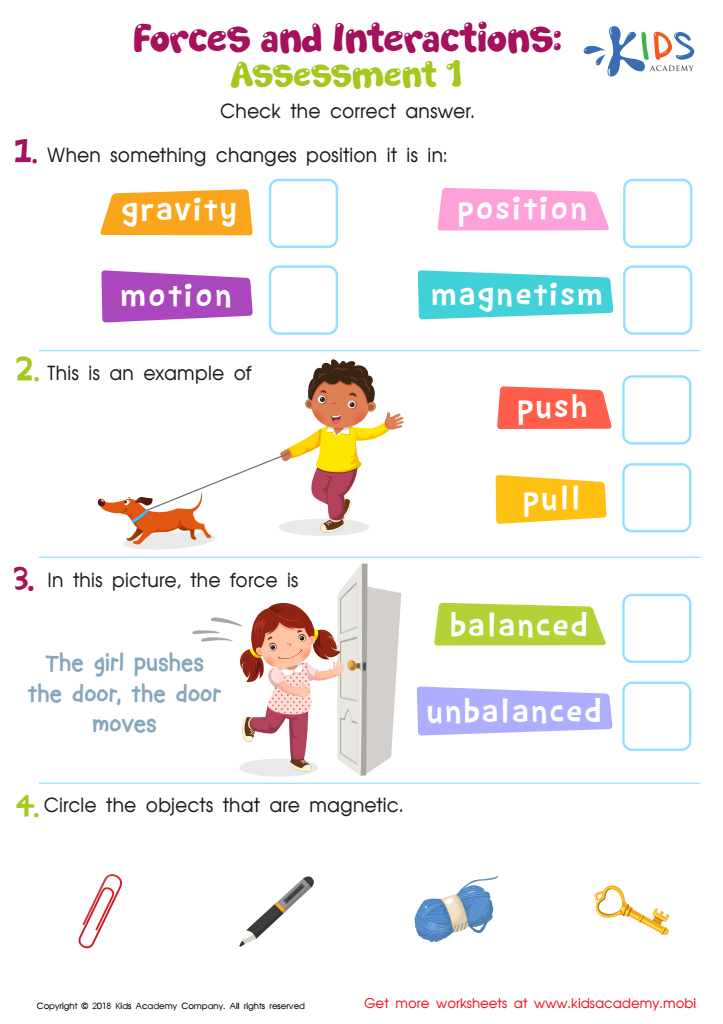
Forces and Interactions Printable
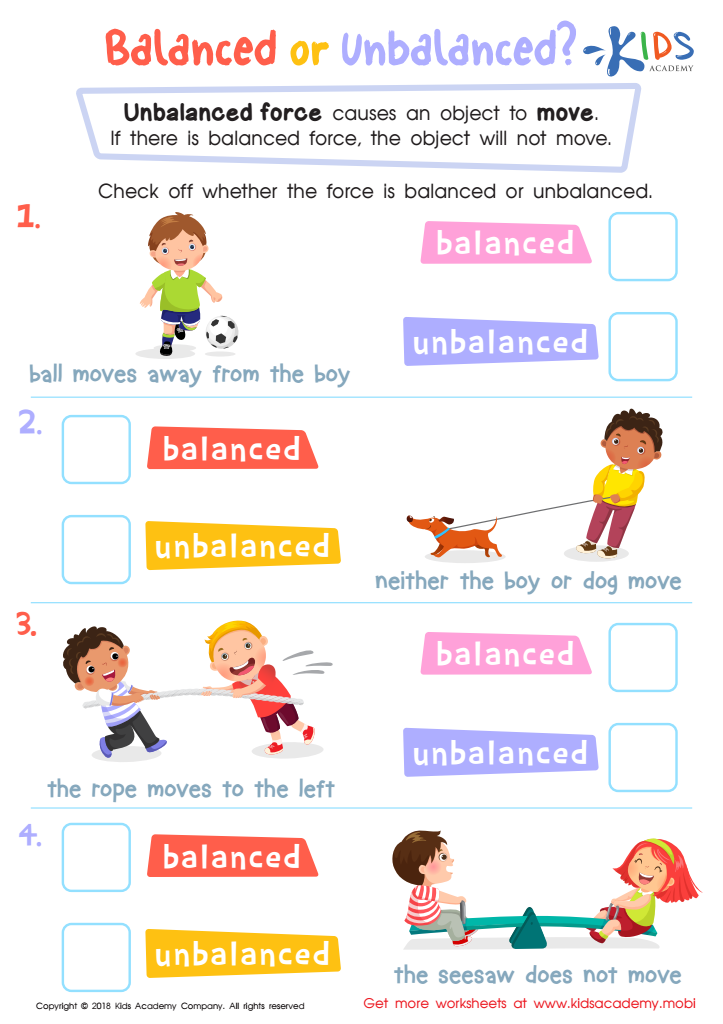
Balanced or Unbalanced Science Worksheet
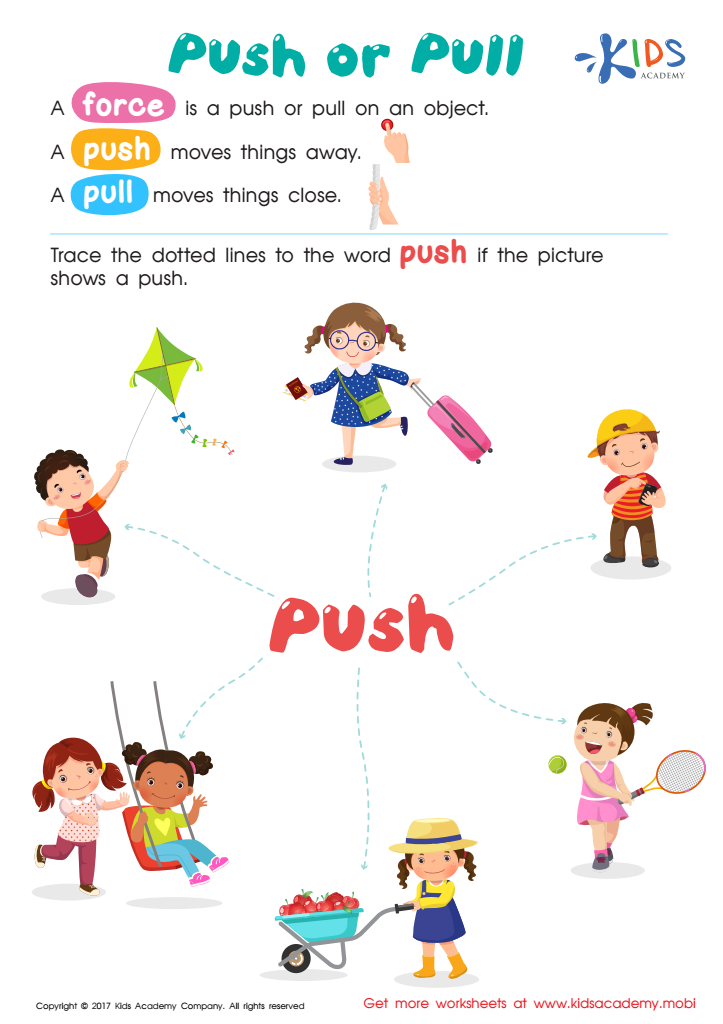
Push or Pull Worksheet
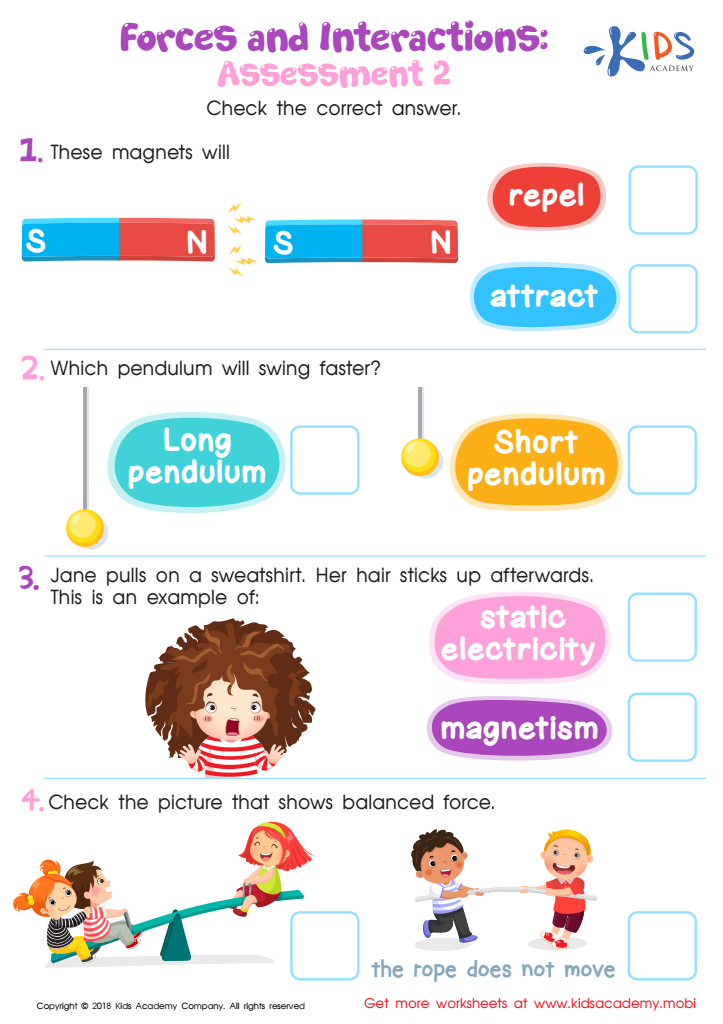
Forces and Interactions Worksheet For 3rd Grade
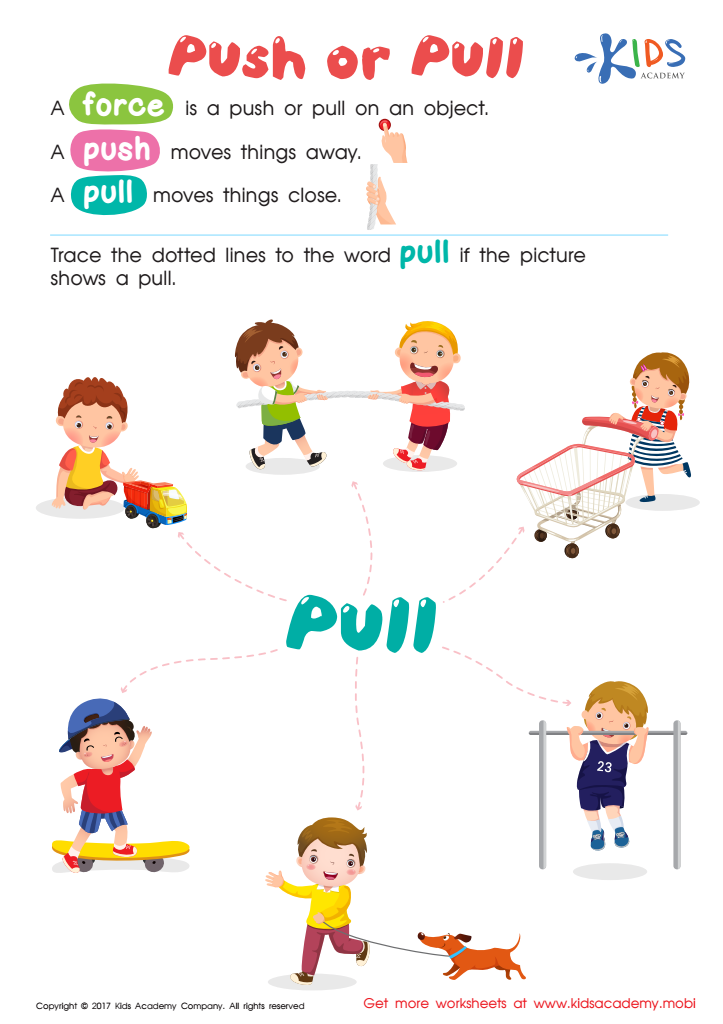
Pull or Push Worksheet


.jpg)



%20(1).jpg)
Understanding forces is essential for children aged 7-8, as it lays the groundwork for critical thinking and scientific reasoning. At this age, children are naturally curious about the world around them, and exploring the concept of forces can help cultivate that curiosity. Shared learning experiences between parents, teachers, and students can deepen children’s understanding of fundamental concepts like push and pull, gravity, and friction.
When parents and teachers engage in activities that explore forces—such as simple experiments with toys, magnets, or everyday objects—they not only enrich children’s academic experiences but also foster a love for science. This hands-on learning enhances problem-solving skills and encourages creativity, critical elements in a well-rounded education.
Moreover, an understanding of forces has practical applications in everyday life. Teaching children how forces affect movement helps them comprehend concepts related to safety, sports, and transportation. Ultimately, supporting children in grasping these fundamental principles of science not only aligns with curriculum standards but also promotes essential life skills that will benefit them throughout their educational journey and beyond. Engaging with forces at this age builds a strong foundation for future scientific learning and empowers children to think logically and explore the world with confidence.







