Counting skills Normal Plants and Animals Worksheets for Ages 7-8
4 filtered results
Difficulty Level
Grade
Age
-
From - To
Subject
Activity
Standards
Discover engaging "Counting Skills: Normal Plants and Animals" worksheets designed specifically for children ages 7-8! These fun and educational resources will enhance your child's numeracy skills while exploring the fascinating world of flora and fauna. Each worksheet features colorful illustrations, interactive counting exercises, and relatable plant and animal themes to capture young learners' imaginations. As children count and compare various plants and animals, they will develop critical thinking and problem-solving abilities in a delightful way. Perfect for homeschooling or supplementary learning, these worksheets are a great way to nurture a love for nature alongside essential counting skills. Download today and watch your child thrive!
Favorites
With answer key
Interactive
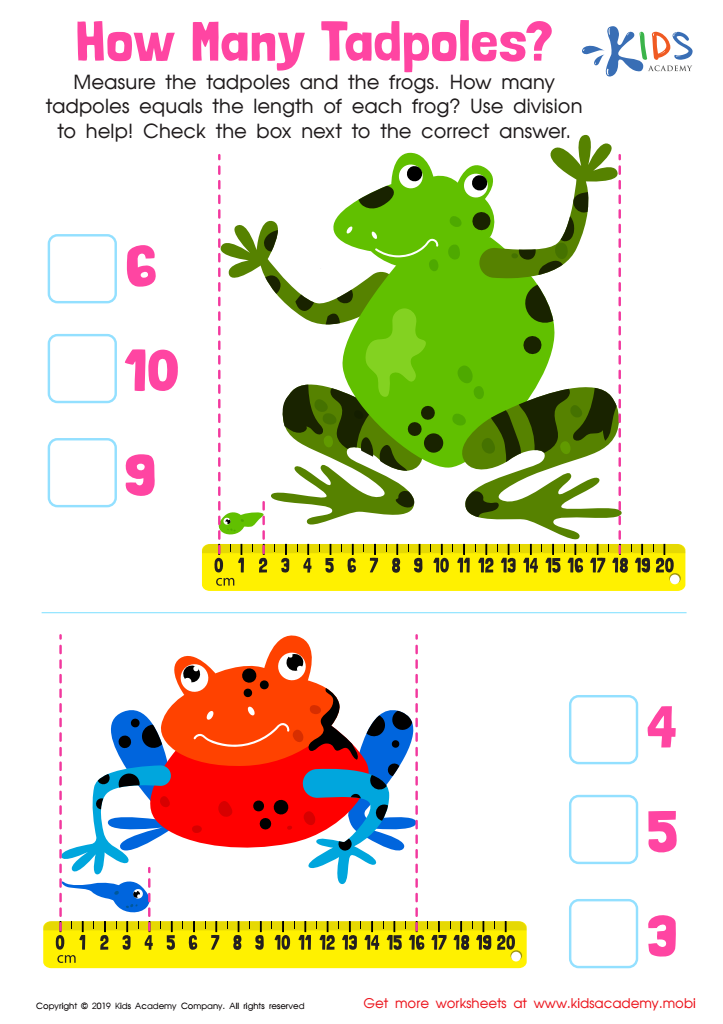
How Many Tadpoles Worksheet
Kids love tadpoles! They'll have fun using them to work out the measurements of their frog friends. By dividing the length of the frogs by the length of the tadpoles, children can deduce how many tadpoles it takes to equal a frog. With the use of 'how many' and 'each' they'll solve math problems without realizing it!
 Assign to My Students
How Many Tadpoles Worksheet
Worksheet

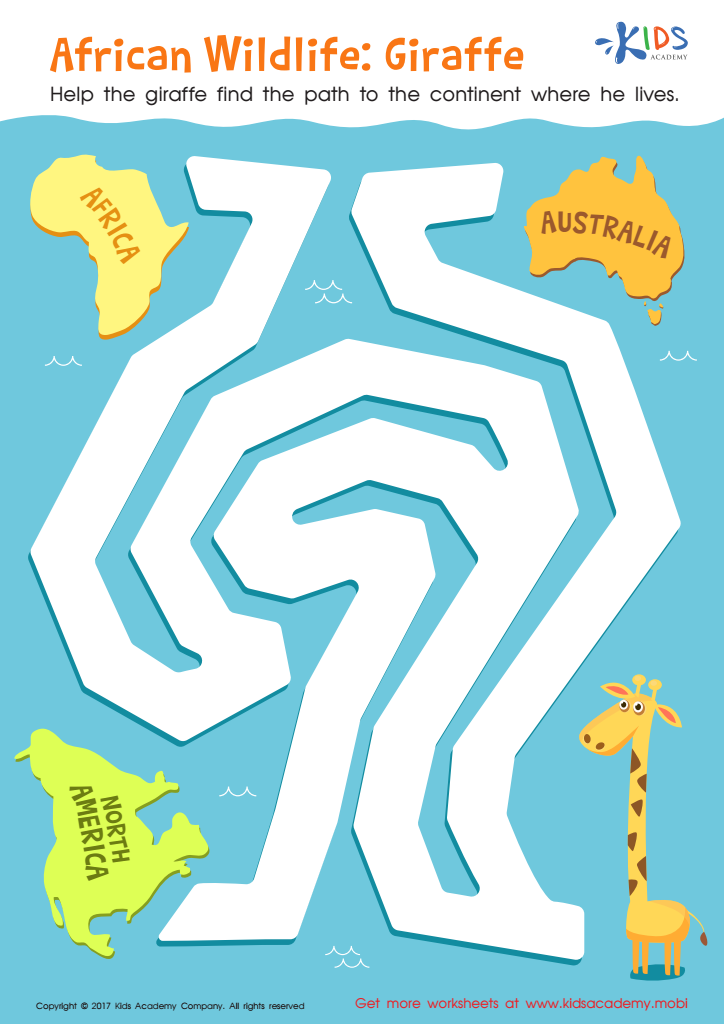
African Wildlife: Giraffe Worksheet
Help the giraffe get home! This African wildlife giraffe worksheet will boost your child's logical reasoning skills while they complete a maze to help the giraffe navigate choppy waters. Learn about different continents and their unique climates, practice problem solving and expand knowledge of the world and its habitats. Perfect for inspiring little learners!
African Wildlife: Giraffe Worksheet
Worksheet
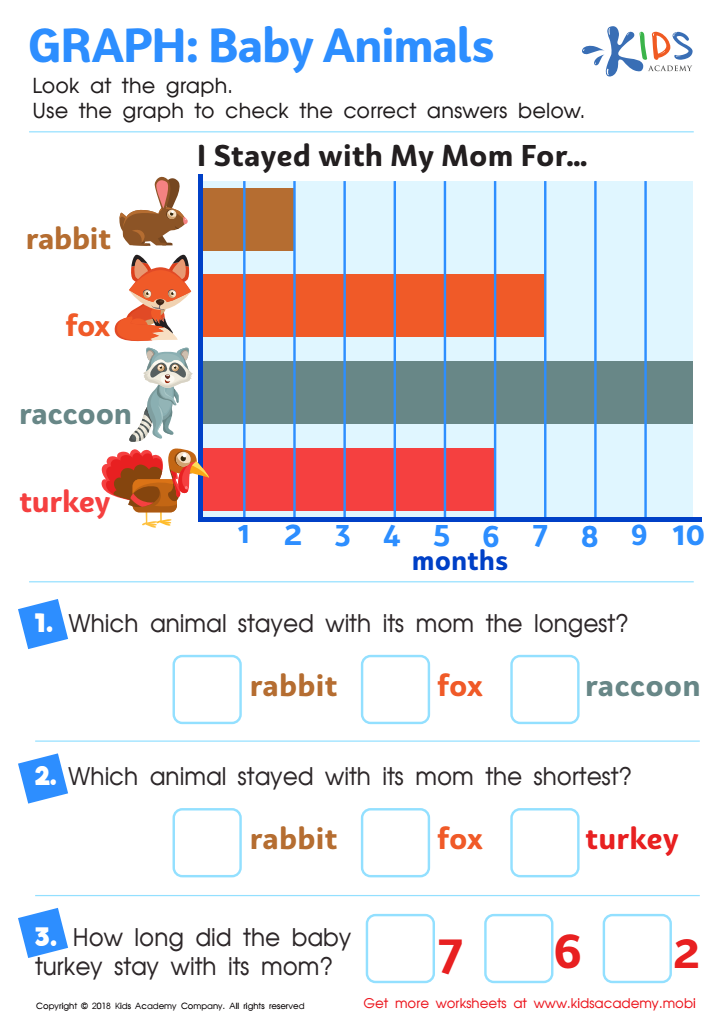
Graph: Baby Animals Worksheet
Graphs are essential for learning in math, science and ELA. This worksheet featuring baby animals is a fun way to practice reading graphs. Look at the graph and answer the questions below it. Check the boxes for the right answers based on the data.
Graph: Baby Animals Worksheet
Worksheet
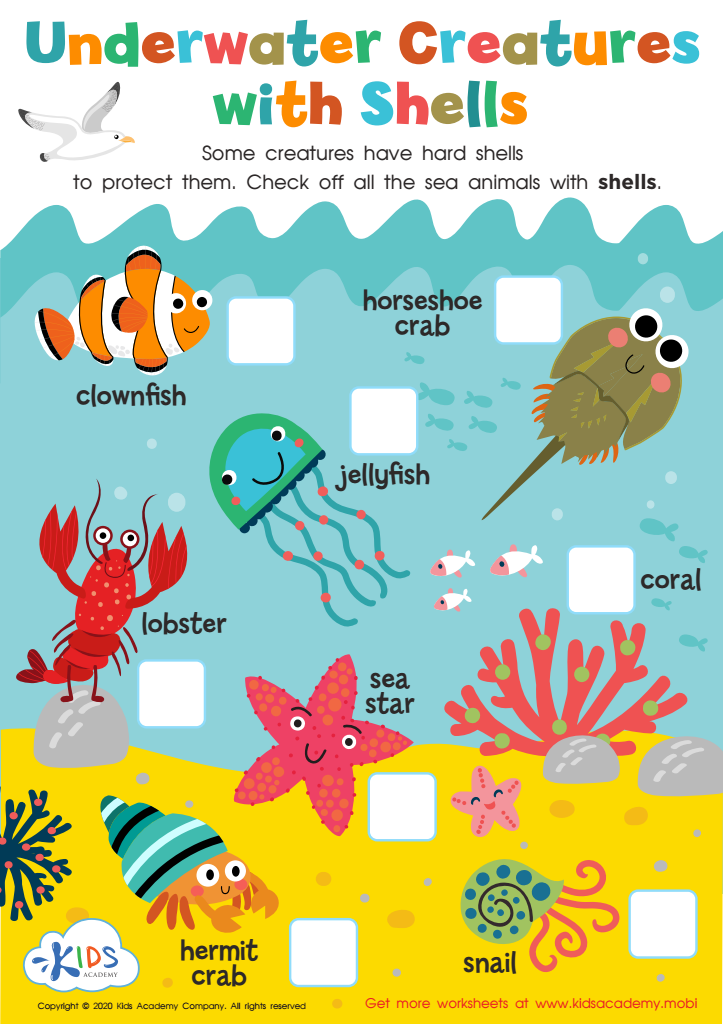
Underwater Creatures with Shells Worksheet
Teach your child about sea creatures with this vibrant PDF science worksheet! Comb through the colorful image to identify animals with shells; compare them to others and check them off. Let them know shells don't just wash up on beach, they serve as protection for sea creatures!
Underwater Creatures with Shells Worksheet
Worksheet
Join Kids Academy for Free
Who is primarily going to use this learning content?








Counting skills are fundamental for children aged 7-8 as they serve as a foundation for various mathematical concepts needed for everyday life. Recognizing and counting plants and animals helps children develop not only numerical proficiency but also an appreciation for nature.
Understanding counting in relation to normal plants and animals fosters observational skills and critical thinking. When students engage in counting activities, they learn to categorize and compare, enhancing their mathematical reasoning. Moreover, it promotes environmental literacy, encouraging children to recognize their surroundings and understand biodiversity.
Teachers and parents should care about these skills because they integrate learning with real-world applications. For instance, nature walks that involve observing and counting different flora and fauna creates a practical and enriching learning experience. These activities can spark curiosity and a love for science, making learning enjoyable.
Additionally, building a strong base in counting can lead to greater confidence in math as children encounter more complex topics later. Overall, supporting counting skills through the lens of plants and animals not only emphasizes mathematics but also nurtures a well-rounded, inquisitive mindset in young learners, vital for their academic and personal development.