
Multiplication practice Normal Plants and Animals Worksheets for Ages 7-8
6 filtered results
Difficulty Level
Grade
Age
-
From - To
Subject
Activity
Standards
Enhance your child's multiplication skills with our "Multiplication Practice Normal Plants and Animals Worksheets" designed for ages 7-8. These engaging and educational worksheets combine the captivating world of plants and animals with fundamental multiplication exercises. Perfect for young learners, this collection supports mathematical growth while sparking a love for science. Each worksheet features delightful illustrations of flora and fauna, making math practice both fun and informative. Ensure your child builds a strong foundation in multiplication while discovering fascinating facts about nature. Download our expertly crafted worksheets today and watch your child's confidence and knowledge flourish!
Favorites
With answer key
Interactive
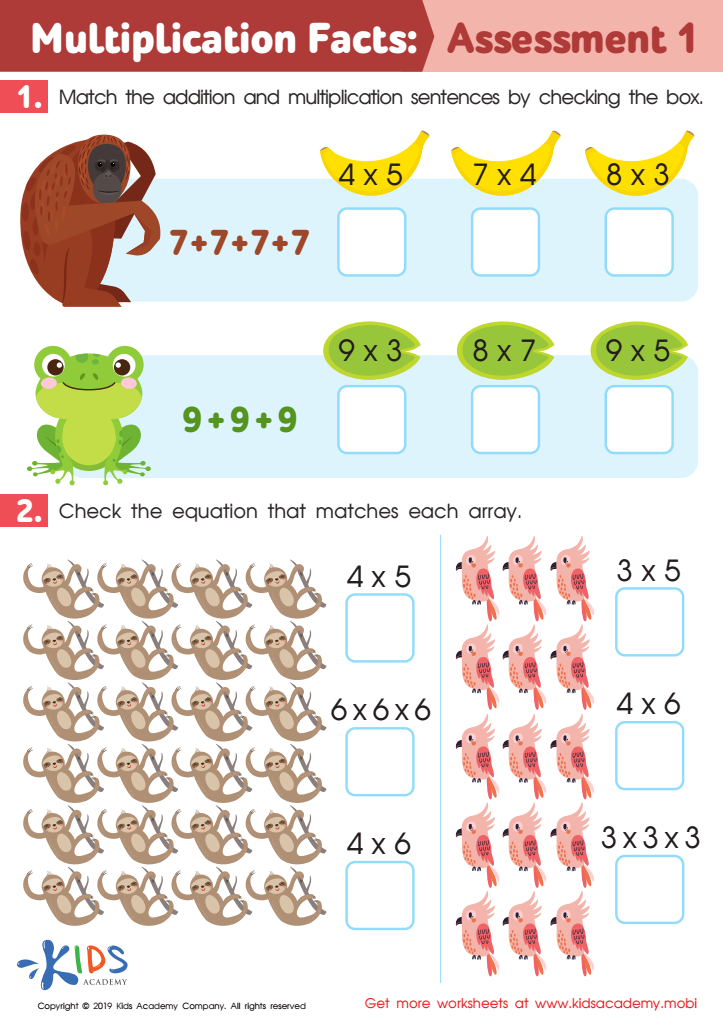
Multiplication Facts: Assessment 1 Worksheet
Teach your kids math with diligence, patience and practice. This colorful worksheet helps by matching addition and multiplication sentences, then checking the equation that matches each array. Perfect for kids having difficulty or to give extra practice. Help your little ones master mathematics with this printout.
 Assign to My Students
Multiplication Facts: Assessment 1 Worksheet
Worksheet











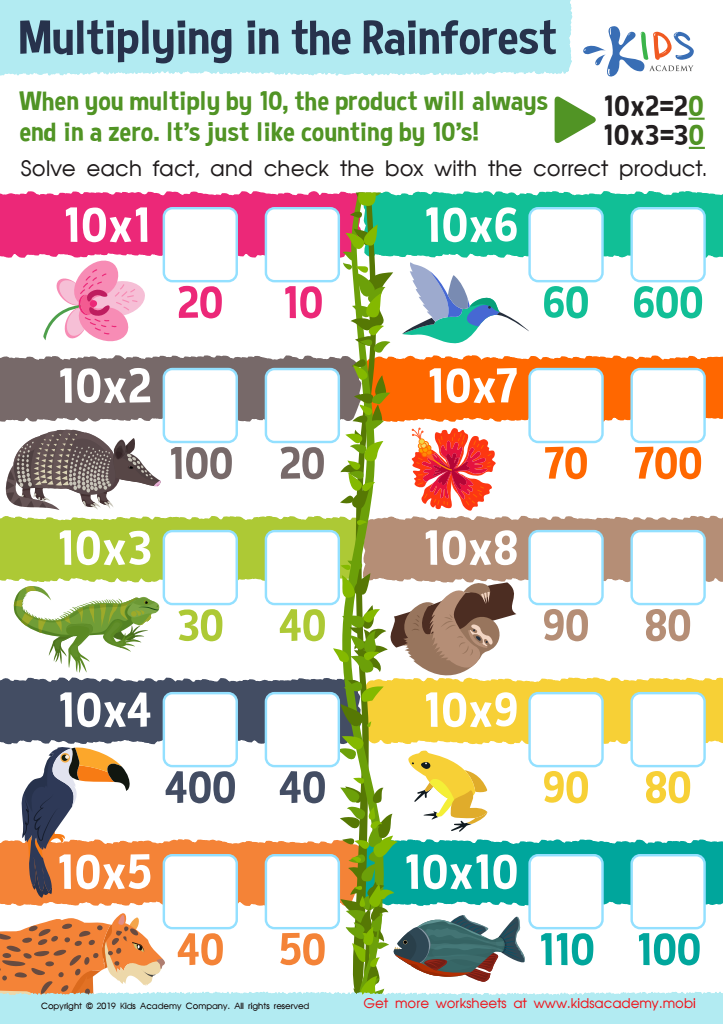
Multiplying in the Rainforest Worksheet
Teaching your child multiplication can be tricky. Help them out with some easy tips! Teach them that when multiplying by 10, the answer always ends in 0. Just like counting by 10's. Show them examples and encourage them to solve the facts, checking their answer with the correct product.
Multiplying in the Rainforest Worksheet
Worksheet
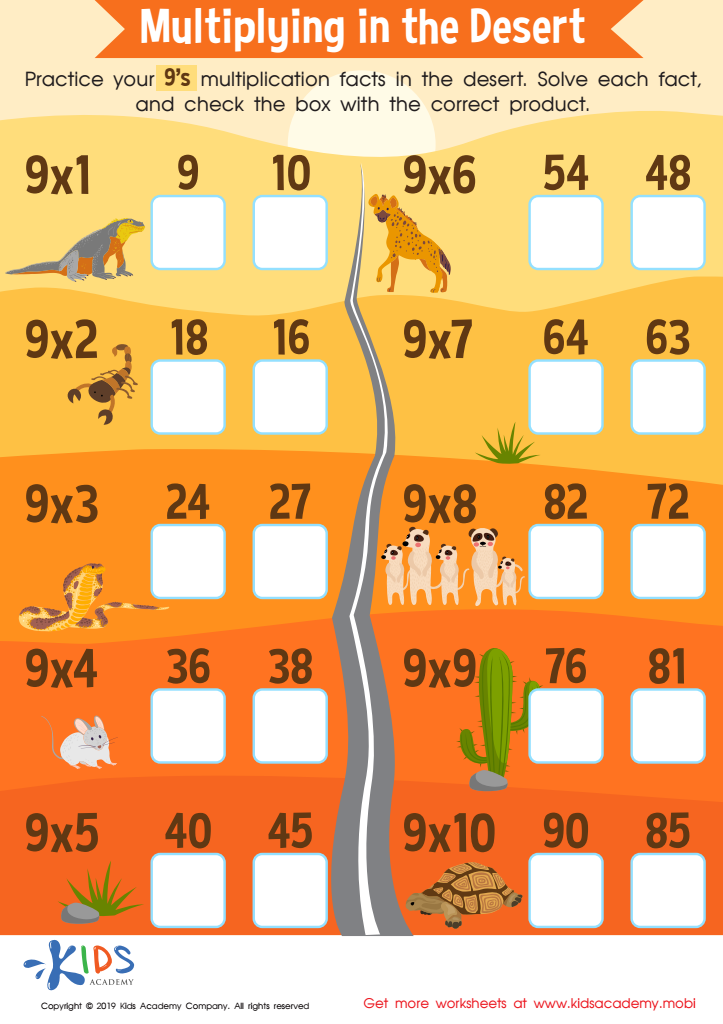
Multiplying in the Desert Worksheet
Help your kids learn the multiplication table faster by introducing them to this fun worksheet! It allows them to learn at a more engaging pace, with the added challenge of naming desert animals. Solve each fact and check the correct product, for an enjoyable and effective way to practice their 9’s multiplication facts.
Multiplying in the Desert Worksheet
Worksheet
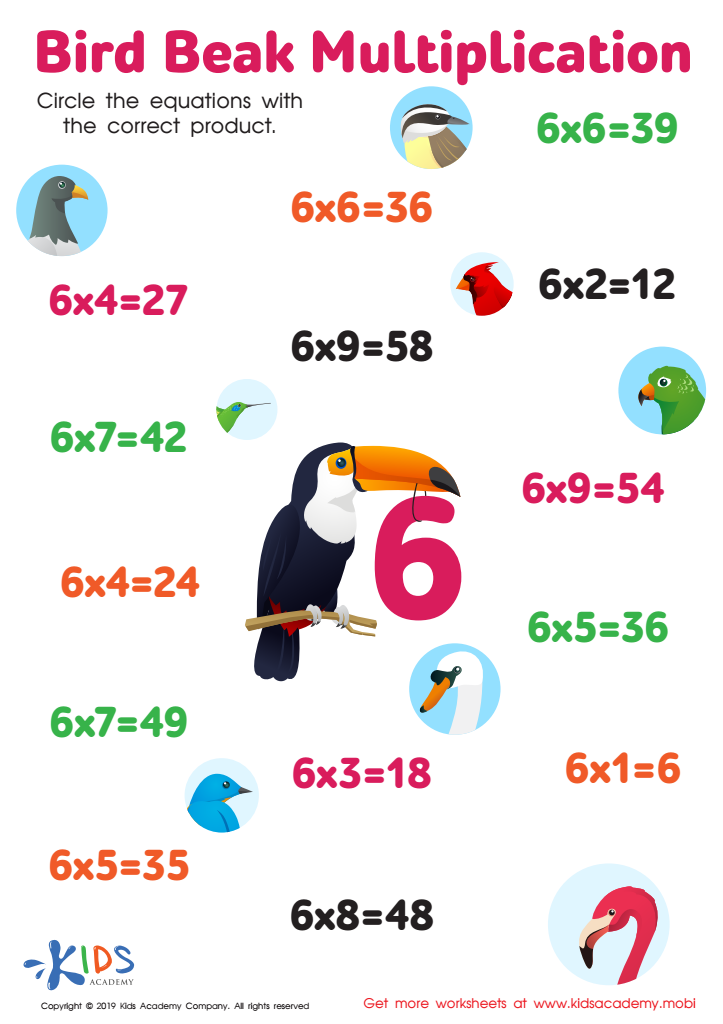
Bird Beak Multiplication Worksheet
Ask your kids to identify the birds in the pic and help them solve the equations. Then, have them circle the correct product. Encourage your kids to explore the wonders of nature with this bird-themed worksheet that'll take their interest to a whole new level, especially if they already have a pet bird or love birds!
Bird Beak Multiplication Worksheet
Worksheet
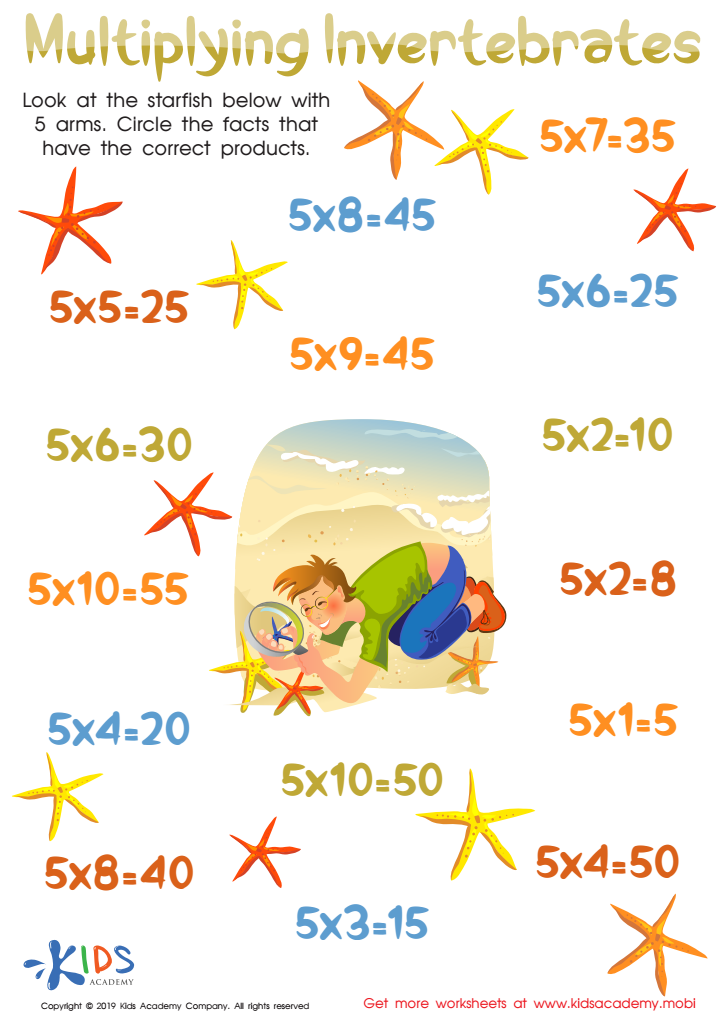
Multiplying Invertebrates Worksheet
Explain to your kids an invertebrate is an animal without a backbone. Examples: squid, jellyfish, octopus. Now, look at the starfish in the picture and help your kids circle the correct facts.
Multiplying Invertebrates Worksheet
Worksheet
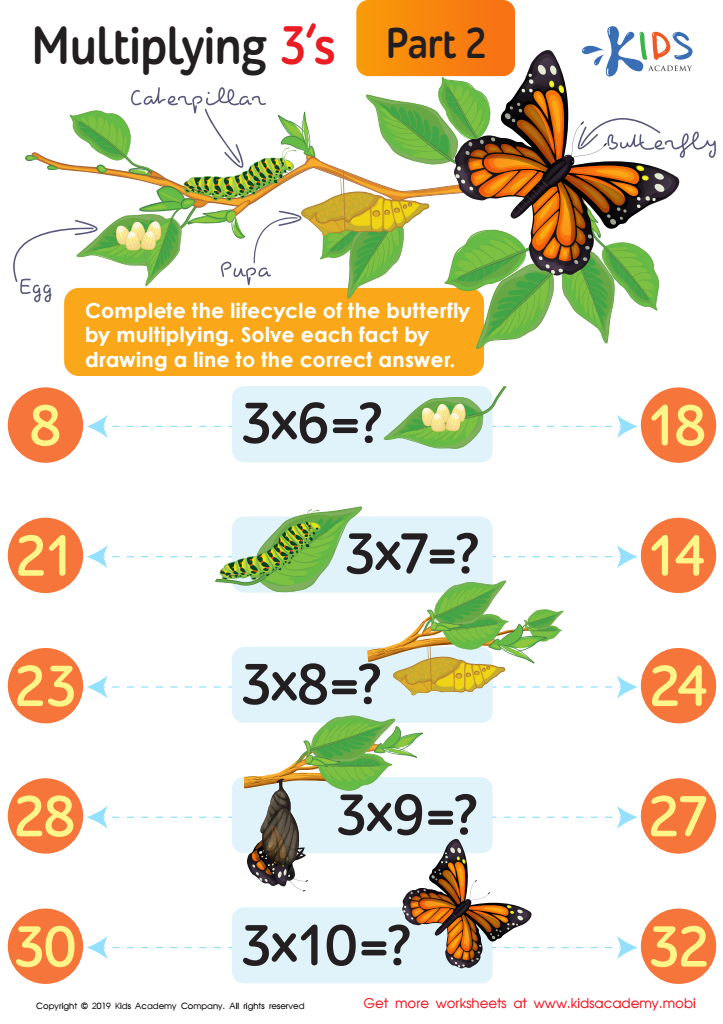
Multiplying 3s Part 2 Worksheet
Once a tiny egg, a butterfly goes through its life cycle. From egg to caterpillar to cocoon to beautiful winged creature! Ask your kids to complete the lifecycle by solving the facts on the worksheet. Help them draw a line to the right answer and let them marvel at the butterfly's amazing transformation!
Multiplying 3s Part 2 Worksheet
Worksheet
Join Kids Academy for Free
Who is primarily going to use this learning content?








Multiplication is a foundational math skill crucial for young children, especially ages 7-8 when they are typically introduced to more complex arithmetic concepts. Proficient multiplication skills set the stage for tackling higher-level math like division, fractions, and algebra. Regular practice instills confidence, fluency, and a deeper understanding of numbers. Research shows that early numerical competence is strongly linked to future academic success in math.
Equally important is knowledge about normal plants and animals. Learning about the natural world fosters curiosity, enhances observational skills, and instills a sense of responsibility toward the environment. For children ages 7-8, discovering the diversity of plants and animals fuels imagination and supports cognitive development. It connects them to broader science topics, laying a foundation for biology, ecology, and environmental science.
Combining multiplication practice with nature themes can be particularly engaging. For example, calculating the number of legs on multiple insects or petals on flowers integrates math skills with fun and relatable contexts. Thus, parents and teachers should prioritize these subjects, as they promote both analytical and ecological intelligence, preparing children for a wide range of future learning pursuits and fostering a well-rounded education.







