Phonics recognition Normal Writing Worksheets for Ages 7-8
3 filtered results
Difficulty Level
Grade
Age
-
From - To
Subject
Activity
Standards
Enhance your child's literacy skills with our Phonics Recognition Normal Writing Worksheets for ages 7-8. Designed to foster reading and writing proficiency, these engaging worksheets help young learners recognize sound-letter relationships and master phonetics in a fun and interactive way. Each worksheet features age-appropriate activities that cater to developing phonics knowledge, promoting confidence in writing, and improving overall communication abilities. Perfect for home practice or classroom use, these resources provide a solid foundation in phonics essential for successful reading and writing. Encourage your child's creativity and learning with our thoughtfully designed worksheets that make mastering phonics enjoyable and effective!
Favorites
With answer key
Interactive
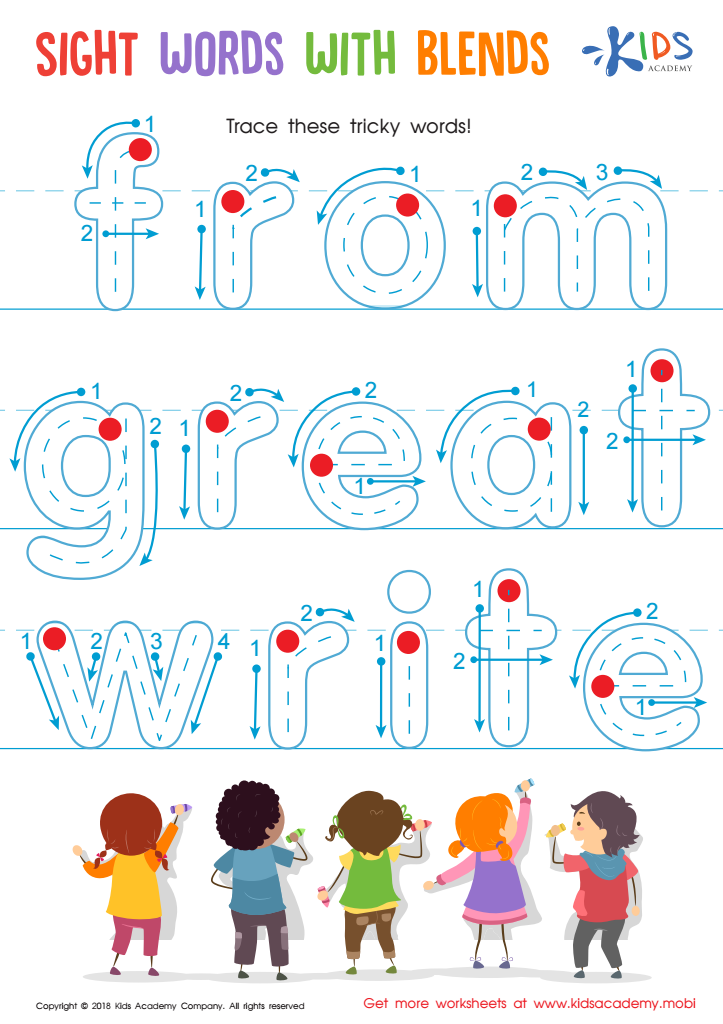
Sight Words with Blends Worksheet
This free PDF lets your children trace and write sight words with tricky blends. The guide numbers help them start from the top, building fine motor skills and enhancing sight word vocab. It's a great way to give your kids a solid foundation for reading!
 Assign to My Students
Sight Words with Blends Worksheet
Worksheet
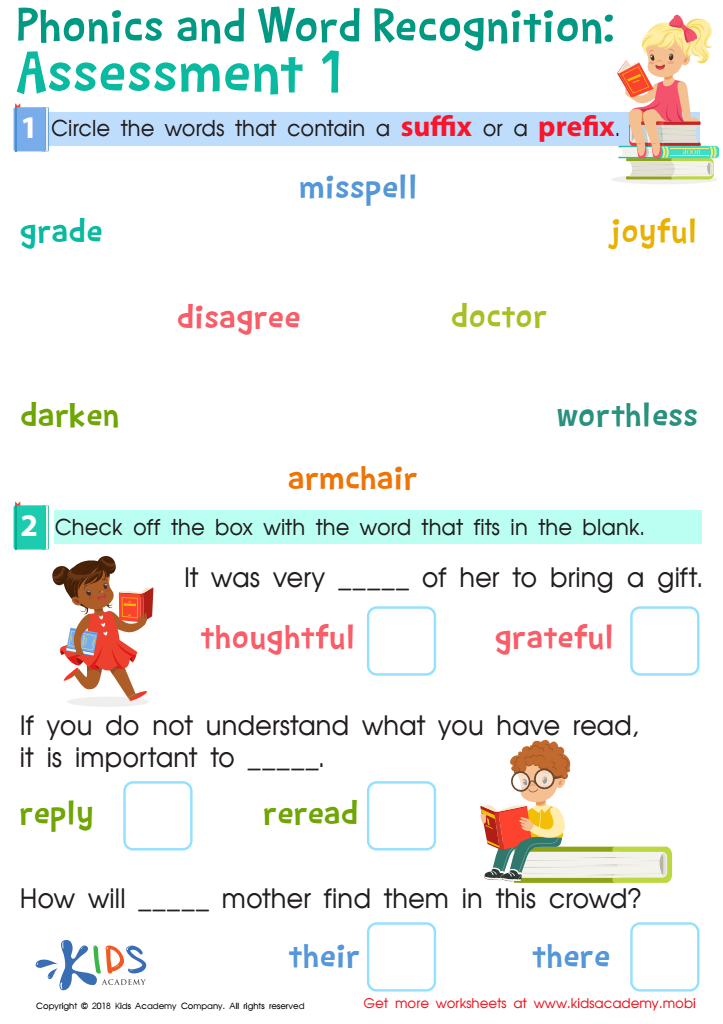
Phonics and Word Recognition: Assessment 1 Worksheet
Explain prefixes (words added to start of another word to give it a new meaning) and suffixes (added to end of word to change its meaning) to your kids with examples like 'unhappy' (prefix) and 'forgetful' (suffix). Now, help your child complete this worksheet, including circling words and checking boxes.
Phonics and Word Recognition: Assessment 1 Worksheet
Worksheet
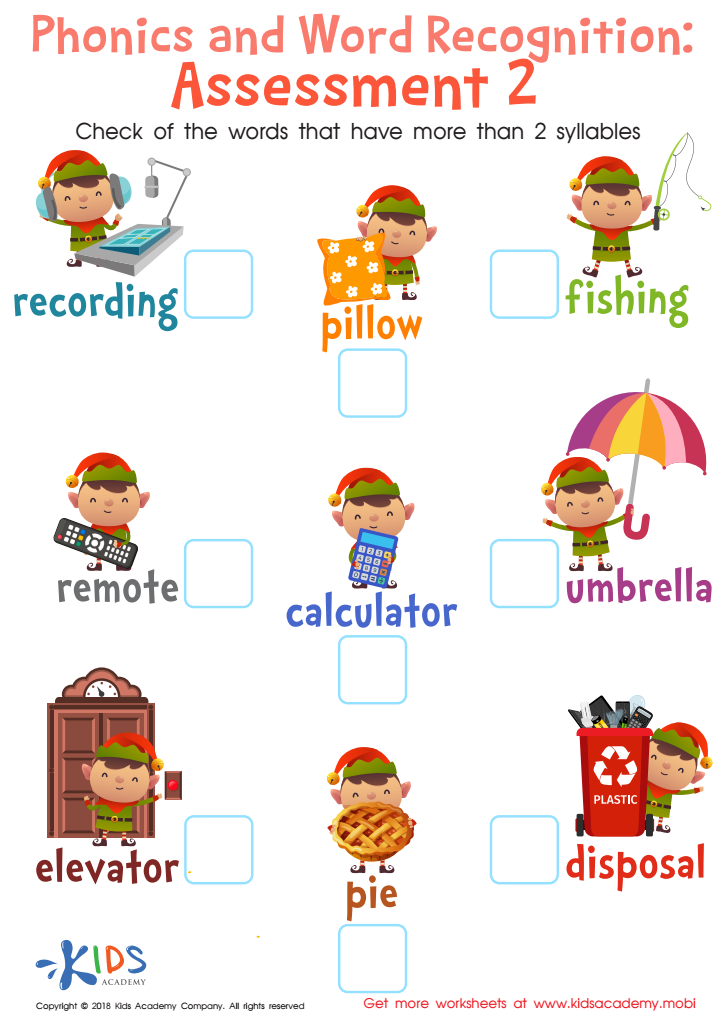
Phonics and Word Recognition: Assessment 2 Worksheet
Help your kids learn proper pronunciation by counting syllables. Most words they'll encounter have 1-3 syllables, making them simple to say. Have them repeat the words in your worksheet after you. Focus on longer words with more than two syllables.
Phonics and Word Recognition: Assessment 2 Worksheet
Worksheet
Join Kids Academy for Free
Who is primarily going to use this learning content?








Phonics recognition is crucial for children aged 7-8 as it lays the foundation for proficient reading and writing skills. At this age, students are transitioning from learning to read to reading to learn. Understanding phonics equips them with the ability to decode unfamiliar words, enhancing their reading fluency and comprehension. As children begin encountering more complex texts in school, strong phonics skills help them tackle these challenges effectively.
Parents and teachers should prioritize phonics recognition because it directly impacts a child's academic success. Those who struggle with phonics often face difficulties in various subjects, leading to frustration and decreased confidence. Conversely, a solid grasp of phonics boosts motivation and fosters a love for reading, which is essential for lifelong learning.
Moreover, teaching phonics supports spelling and writing, key components of effective communication. Engaging in phonics activities together can also create valuable bonding moments between parents and children, enriching the learning experience. Ultimately, a strong foundation in phonics recognition allows children to explore new ideas, enhances vocabulary, and sets the stage for future academic achievement, making it a priority for both educators and families.