Vowel Recognition Normal Writing Worksheets for Ages 7-8
3 filtered results
Difficulty Level
Grade
Age
-
From - To
Subject
Activity
Standards
Enhance your child's reading and writing skills with our Vowel Recognition Normal Writing Worksheets, specifically designed for ages 7-8. These engaging activities focus on helping young learners identify and differentiate vowels in words, boosting their phonetic awareness and spelling abilities. Each worksheet features fun exercises, from fill-in-the-blanks to creative writing prompts, encouraging kids to practice vowel sounds in various contexts. Our user-friendly format makes learning enjoyable, ensuring your child develops a solid foundation in literacy. Perfect for classroom use or at-home practice, these worksheets are a valuable resource to support your child's educational journey. Explore and watch their confidence grow!
Favorites
With answer key
Interactive
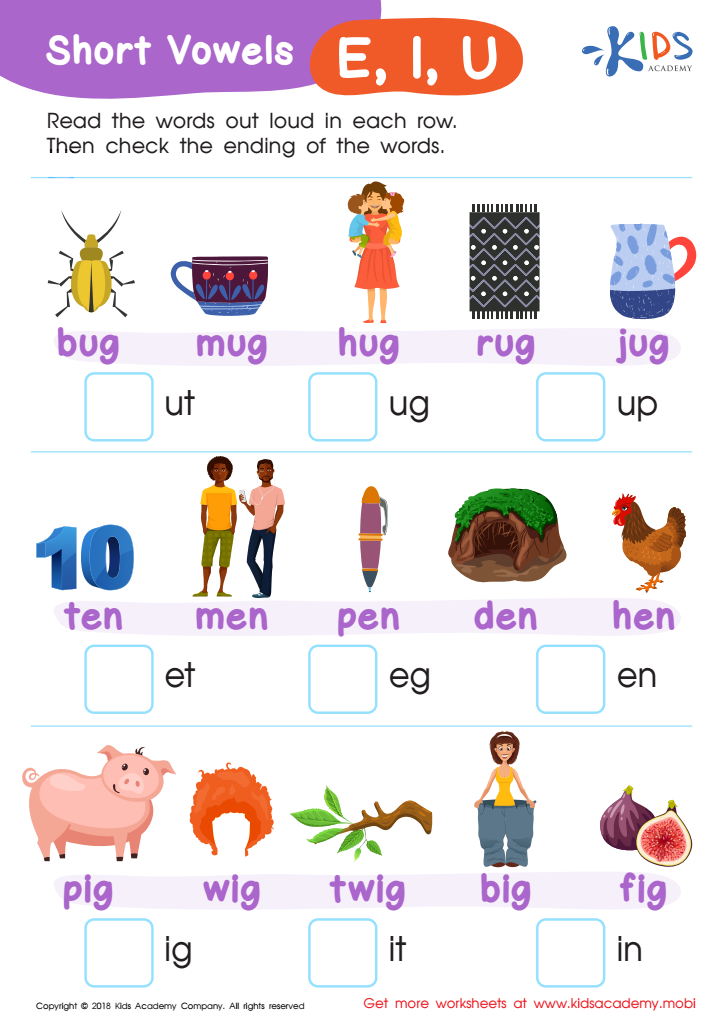
Short Vowels /e/, /i/, and /u/ Worksheet
Your emergent reader can have fun while practicing their short vowel sounds with this free, brightly colored worksheet. They'll identify one-syllable words by their pictures, then match the correct ending for each. They'll gain an understanding of how short vowel sounds vary in closed syllables with different endings, without even realizing it!
 Assign to My Students
Short Vowels /e/, /i/, and /u/ Worksheet
Worksheet
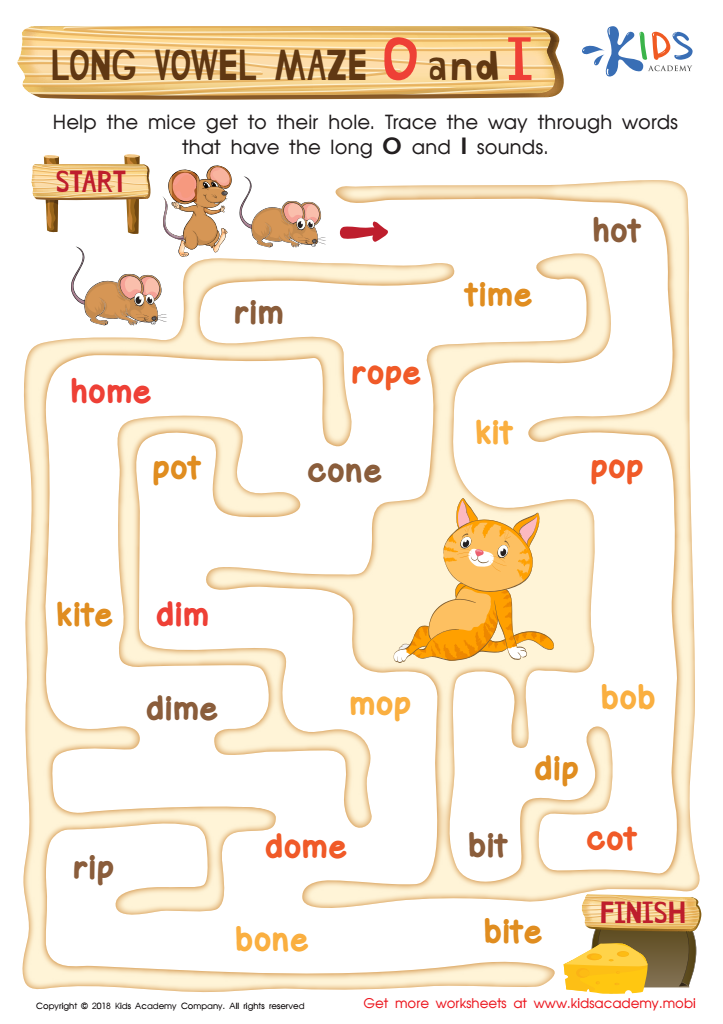
Long Vowel Maze /o/ and /i/ Worksheet
Help your new readers have fun and build their sight word vocabulary! Guide the mice to their prize cheese by having them trace the route on the worksheet, using words with the long o and long i sounds. But watch out for the kitty!
Long Vowel Maze /o/ and /i/ Worksheet
Worksheet
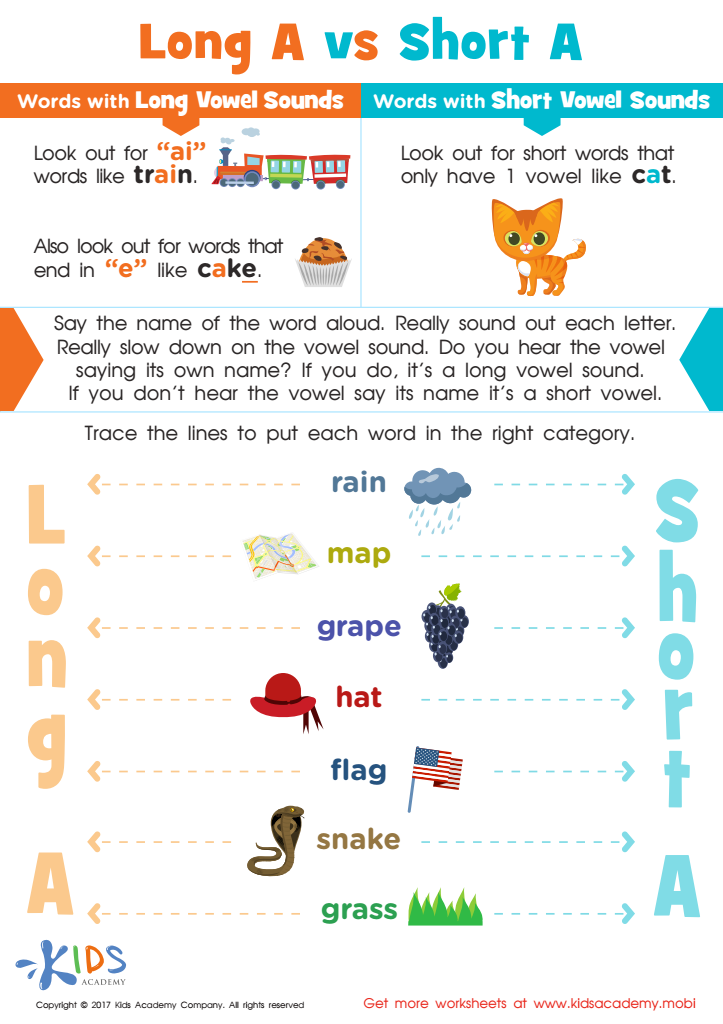
Long and Short Vowel A Spelling Worksheet
Help your child learn tricky spellings by focusing on vowel sounds. Read about each one, see examples and work through the long and short vowel A worksheet. Your child will be able to sound out words to determine if the vowel is long or short.
Long and Short Vowel A Spelling Worksheet
Worksheet
Join Kids Academy for Free
Who is primarily going to use this learning content?







Vowel recognition is a critical skill for children aged 7-8, as it forms the foundation for fluent reading and writing. At this age, students transition from learning to read to reading to learn, making the mastery of vowels even more paramount. Vowels are essential for word formation and pronunciation; thus, their recognition directly impacts a child's ability to decode words and comprehend text.
Parents and teachers should be particularly concerned about vowel recognition because it influences a child's broader literacy skills. Mastery of vowels aids in spelling, enhances vocabulary development, and fosters confidence in communication. As children become more proficient in identifying vowel sounds and patterns, they unlock the ability to understand more complex language structures and texts.
Moreover, focusing on vowel recognition during this developmental stage promotes strong phonetic skills that are crucial for lifelong learning. Children who struggle with vowels may face challenges in mastering more advanced reading and writing concepts in later grades.
Engaging activities that emphasize vowels, such as games and phonetic exercises, not only make learning fun but also help reinforce this essential skill. The support of parents and educators in reinforcing vowel recognition at this stage lays a solid foundation for future academic success.