
Number Recognition Normal Alphabet Worksheets for Ages 7-9
3 filtered results
Difficulty Level
Grade
Age
-
From - To
Subject
Activity
Standards
Enhance your child's learning experience with our "Number Recognition Normal Alphabet Worksheets for Ages 7-9." These expertly designed printables blend engaging activities with educational value, making mastering numbers fun and interactive. Tailored specifically for children aged 7-9, our worksheets boost number recognition and reinforce alphabet knowledge seamlessly. Each sheet is created to support young learners in developing essential skills through entertaining exercises, ensuring a joyful journey into numeracy and literacy. Ideal for home or classroom use, our worksheets offer a comprehensive approach to education, turning everyday learning into an exciting adventure. Download now and kick-start your child's learning today!
Favorites
With answer key
Interactive
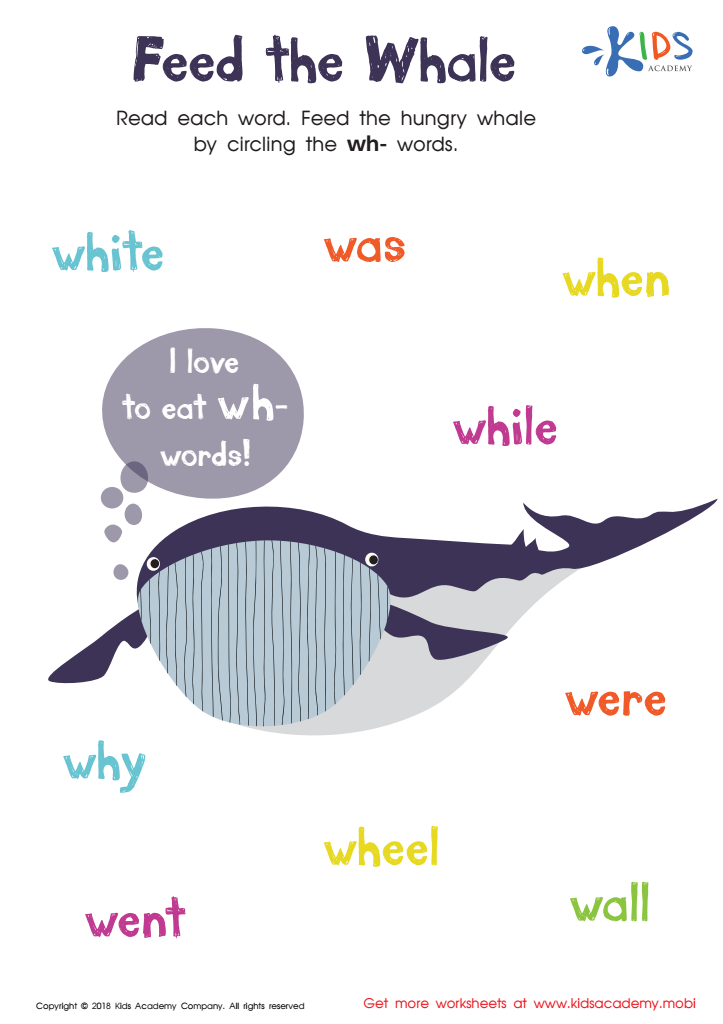
Feed the Whale Worksheet
Help your early reader build beginning consonant and blend recognition with this fun whale worksheet! They'll feed the whale wh- words, circle sight words, and build fine motor skills—all while discriminating between differently colored words.
 Assign to My Students
Feed the Whale Worksheet
Worksheet
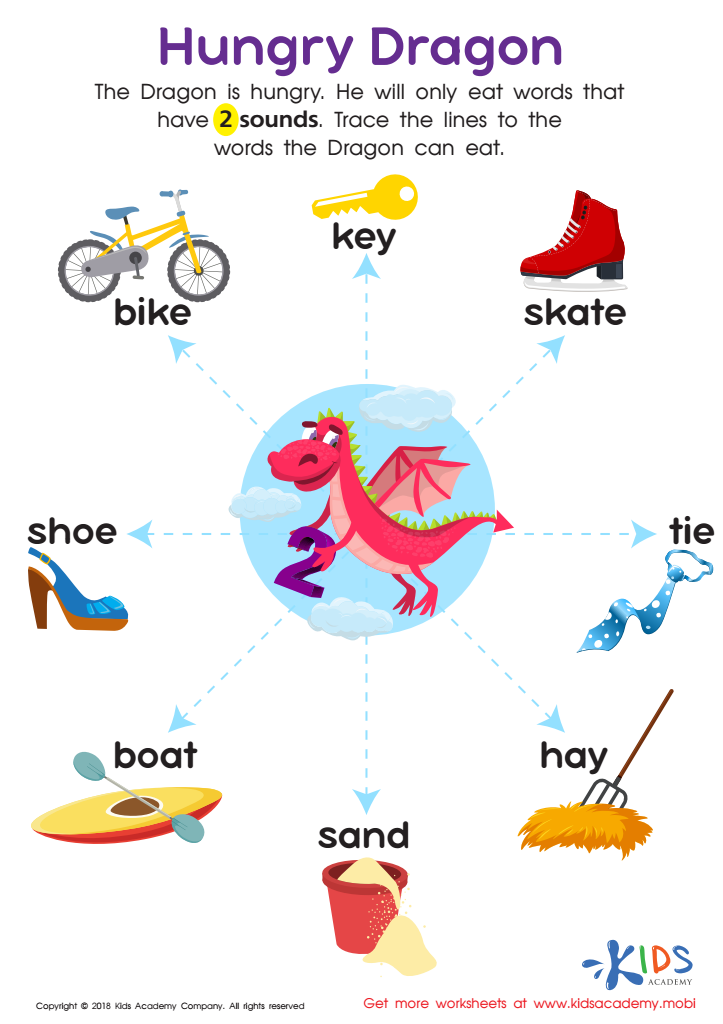
Hungry Dragon Worksheet
Feed the dragon words and watch your child strengthen their phonological awareness and auditory discrimination skills! Download this free PDF for tracing exercises that build their fine motor skills too. Kids will love spending time with the cute dragon while they unwittingly learn reading skills!
Hungry Dragon Worksheet
Worksheet
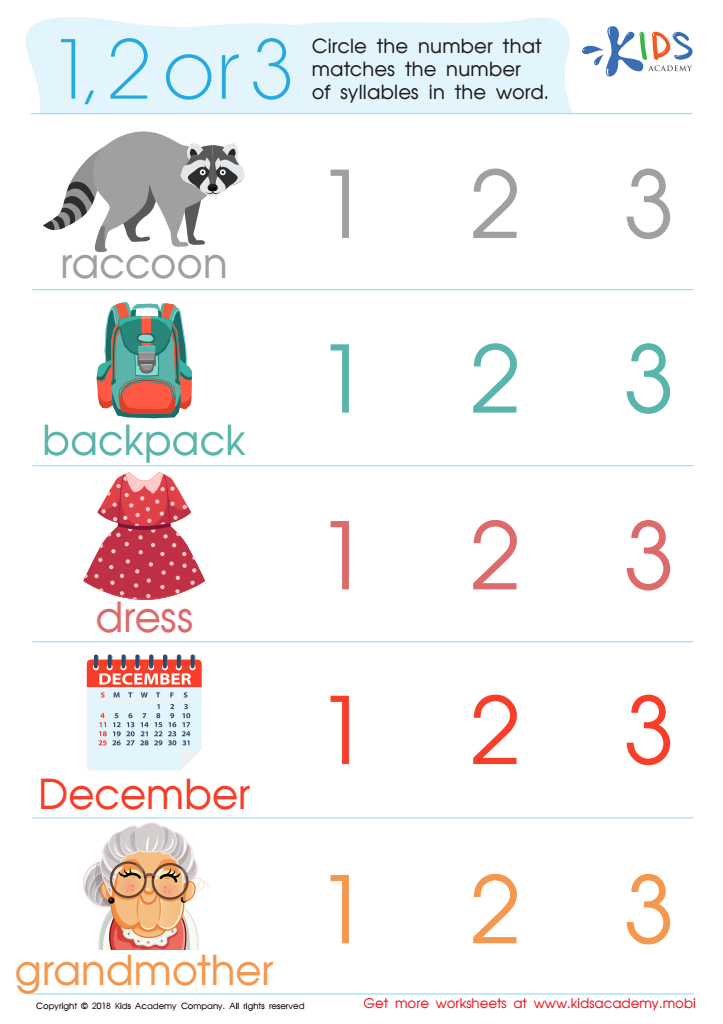
1, 2 or 3? Worksheet
Do your kids know about syllables? Test their understanding with this worksheet. Read the words aloud and ask them to say them with you. Help them circle the number that matches the number of syllables in each word. Perfect for expanding knowledge or testing how much they've already learned.
1, 2 or 3? Worksheet
Worksheet
Join Kids Academy for Free
Who is primarily going to use this learning content?








Number recognition and understanding the normal alphabet are fundamental skills for children aged 7-9, laying the groundwork for their educational journey. By this age, children's brains are in a critical period of cognitive development, where they begin to increasingly coordinate various faculties like memory, attention, and logic.
Firstly, number recognition enhances mathematical understanding. It's not just about knowing numbers; it's about recognizing their value, sequencing, and relationships, which fosters problem-solving capabilities and builds a solid foundation for more complex math concepts they will encounter later.
Secondly, familiarity with the normal alphabet is crucial for literacy. This age is typically when children move from learning to read to reading to learn. Proficiency in recognizing letters not only aids in reading fluency but also helps in spelling, understanding phonics, and developing effective communication skills.
Moreover, both number and letter recognition are intertwined with overall cognitive development. They fortify neural pathways essential for learning, enhancing concentration, and improving academic performance across all subjects. Parents and teachers engaging children in activities that promote these skills—through games, activities, and just everyday interaction—provide them with tools crucial for their success in school and beyond.
Nurturing these basic skills at an early stage ignites a love of learning, builds confidence, and sets children up for a lifetime of academic achievement.







