Reading Skills Normal Alphabet Worksheets for Ages 7-9
5 filtered results
-
From - To
Enhance your child's reading skills with our engaging Normal Alphabet Worksheets tailored for ages 7-9. These worksheets are designed to provide fun, interactive exercises that promote early literacy development. Each activity focuses on identifying letters, forming words, and building vocabulary, helping your child to become a confident reader. With a variety of themes and formats, our worksheets make learning enjoyable, while also reinforcing essential reading skills. Ideal for home or classroom use, these resources encourage independent learning and creativity. Start nurturing your child's reading abilities today and watch them thrive as they unlock the world of books and stories!
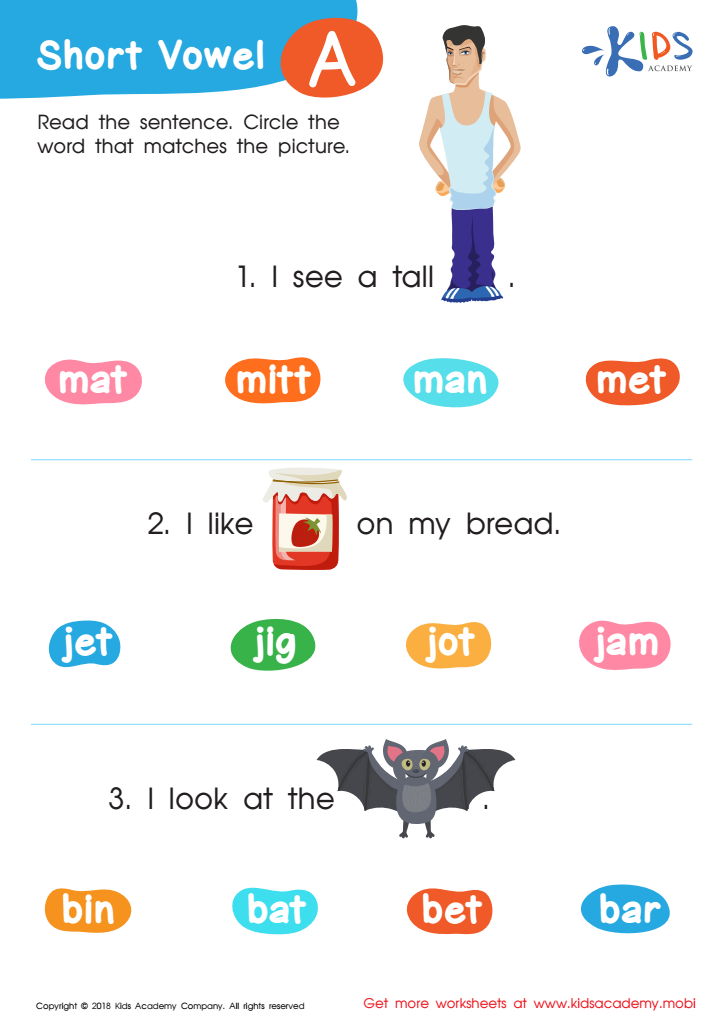
Short Vowel /a/ Worksheet
 Assign to My Students
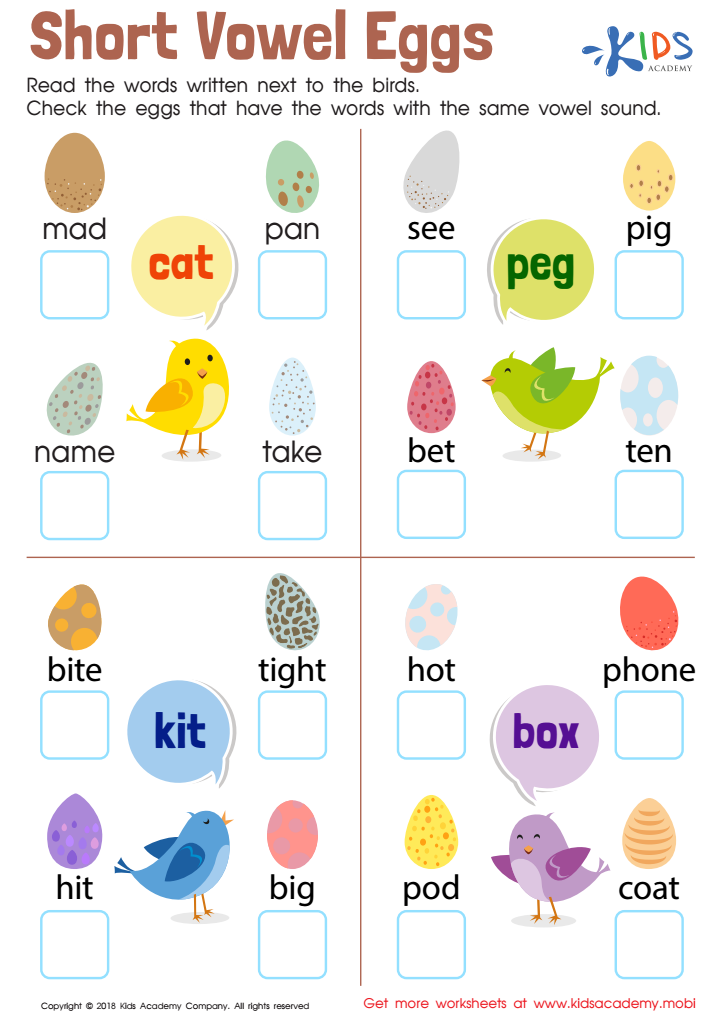
Short Vowel Eggs Worksheet
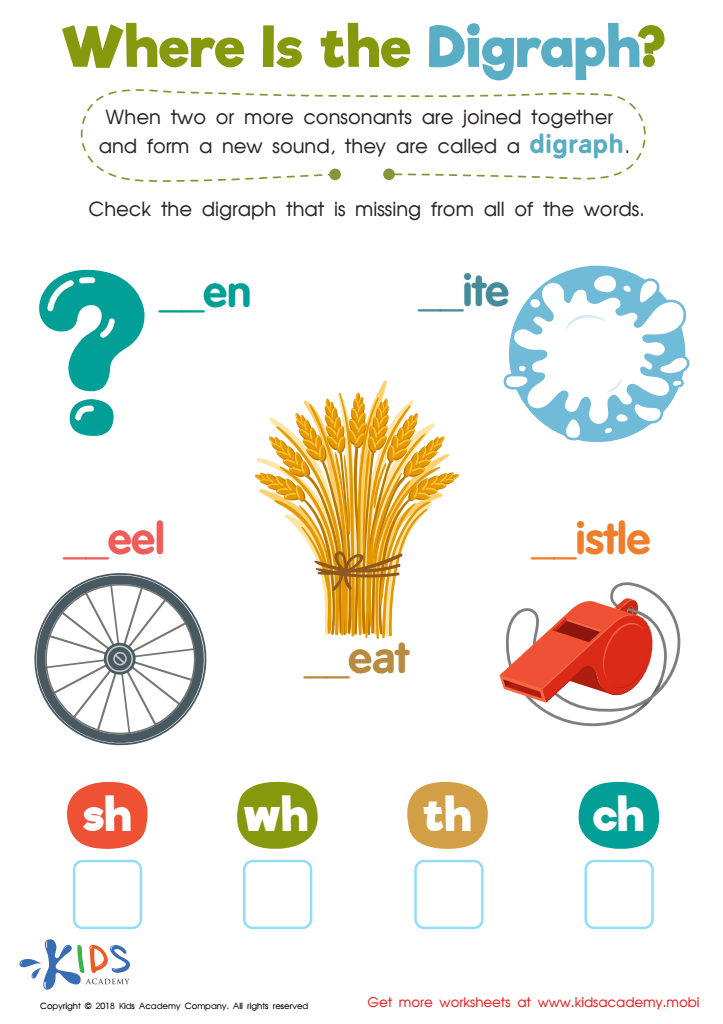
Where Is the Digraph? Worksheet
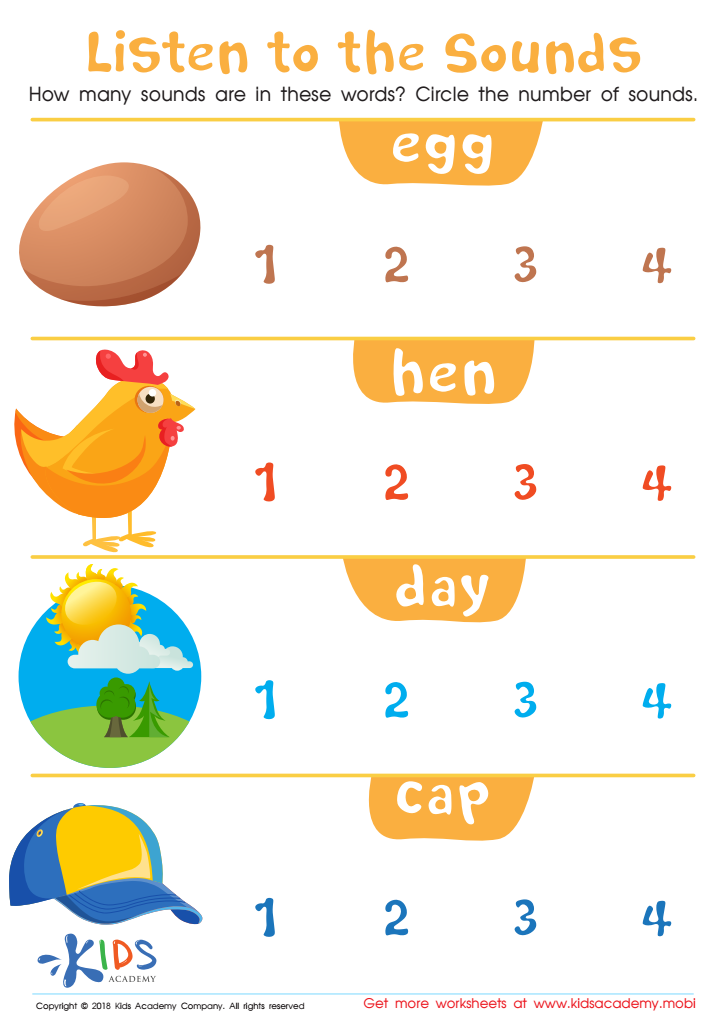
Listen to the Sounds Worksheet
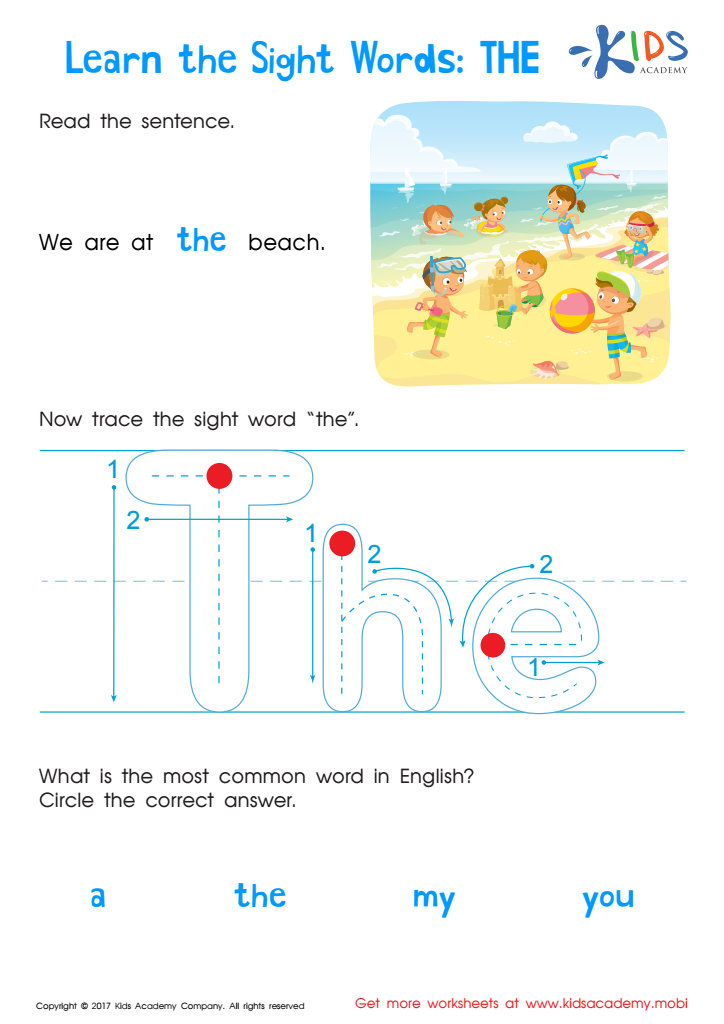
Sight Words: The Worksheet





Reading skills are crucial for children ages 7-9, as this is a pivotal stage in their literacy development. At this age, children are transitioning from learning to read to reading to learn. Mastery of normal alphabet reading at this stage lays the foundation for academic success across subjects, fostering comprehension, critical thinking, and effective communication.
Parents and teachers should care about developing these reading skills because they directly influence a child's confidence and enthusiasm for learning. Proficiency in reading allows children to engage with age-appropriate literature, enhancing their vocabulary and imagination. Additionally, solid reading skills are linked to better performance in standardized tests and overall academic achievement later on.
Furthermore, addressing reading skills during this age helps identify and support struggling readers early on, preventing long-term challenges. By cultivating a love for reading, parents and teachers can create a positive learning environment that encourages children to explore, inquire, and express themselves.
Ultimately, fostering strong reading skills in early childhood leads to lifelong benefits, equipping children with the tools they need to navigate an increasingly complex world, instilling not just academic but also personal and social skills that are essential for their future.







