Filters

31 filtered results

Clear all filters
Favorites
With answer key
Interactive

31 filtered results

Difficulty Level

Grade


Check out this FREE Trial Lesson on Alphabet for age 7-9!

Spell High Frequency Words

Favorites
With answer key
Interactive
  • 7-9
  • Vocabulary expansion
  • Alphabet
  • Normal
Reading: Y as Long I Worksheet

Reading: Y as Long I Worksheet

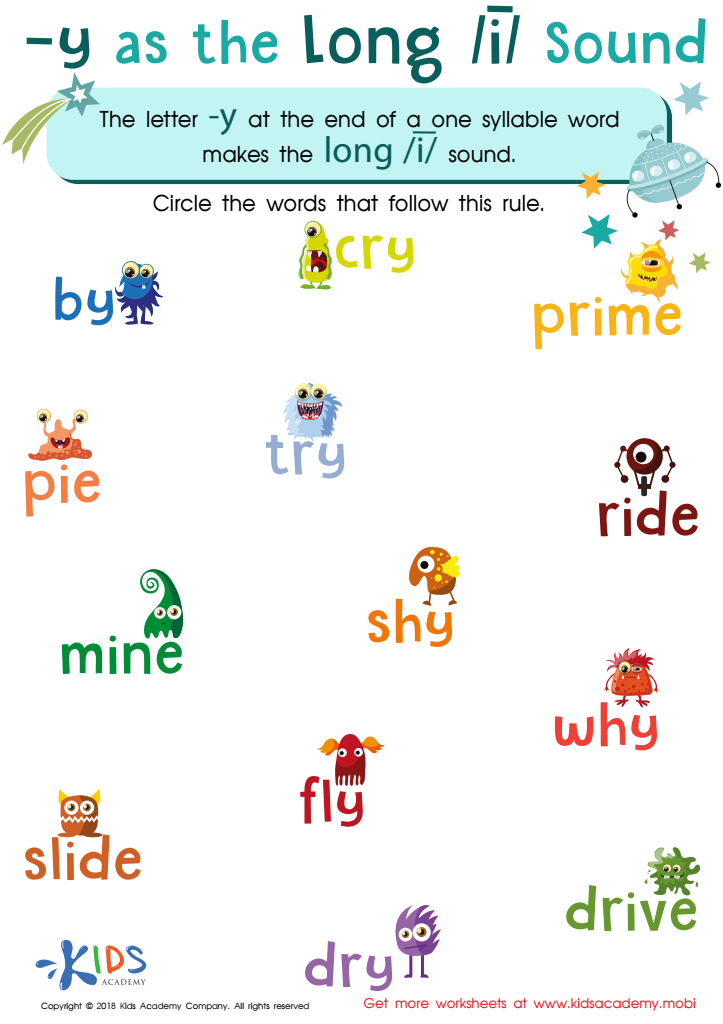
Students need practice and exposure to letters that make different sounds for decoding and reading success. This printable is a great resource for language arts classes: it explains that words ending with Y and having only one syllable make the long I sound. Students will circle all words with Y that have this sound.
Reading: Y as Long I Worksheet
Worksheet
Ou and ow words worksheet

OU and OW Words Worksheet

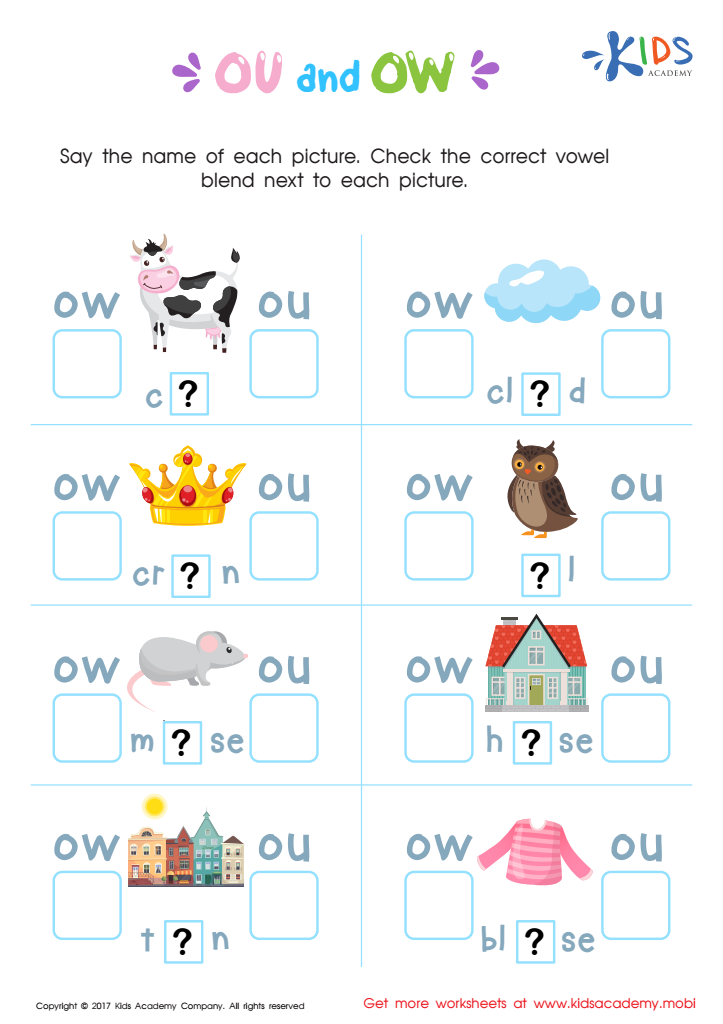
Enhance your child's reading and spelling with this ou and ow words worksheet! Fun pictures and common words make mastering the diphthongs ou and ow easy and enjoyable.
OU and OW Words Worksheet
Worksheet
Double Consonant Worksheet 3rd Grade

Double Consonant Spelling Worksheet

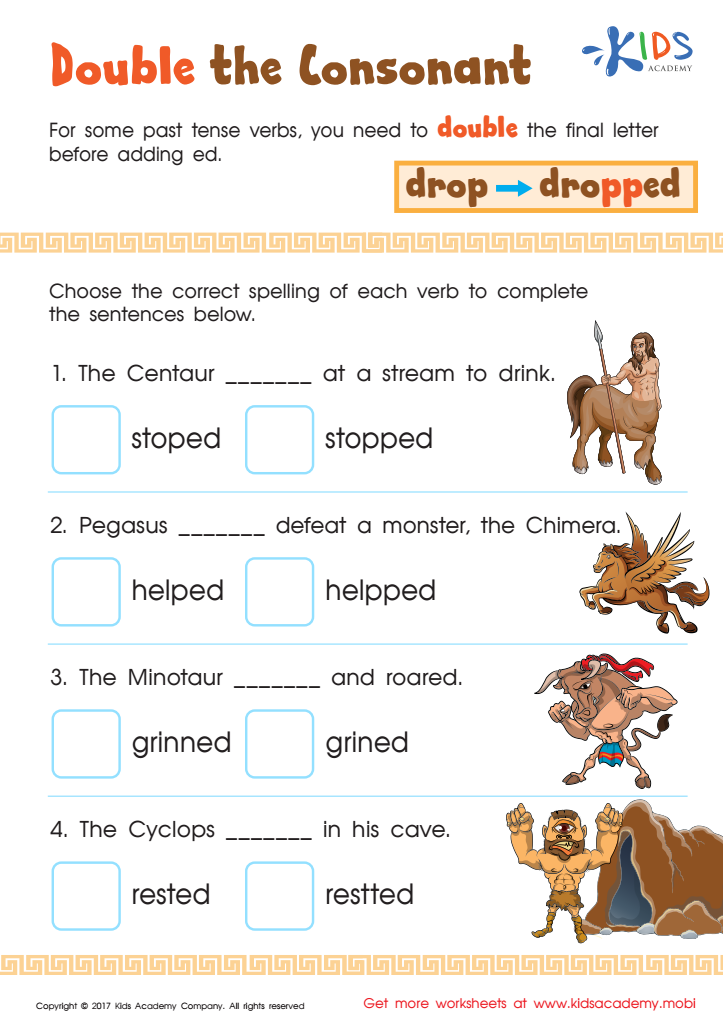
Rewrite: This double consonant worksheet is perfect for 3rd graders to practice recognizing words with doubled letters in the past tense! With a mythology theme, your child can look through the answer choices to find the correct words.
Double Consonant Spelling Worksheet
Worksheet
Reading: EA as in Bread Worksheet

Reading: EA as in Bread Worksheet

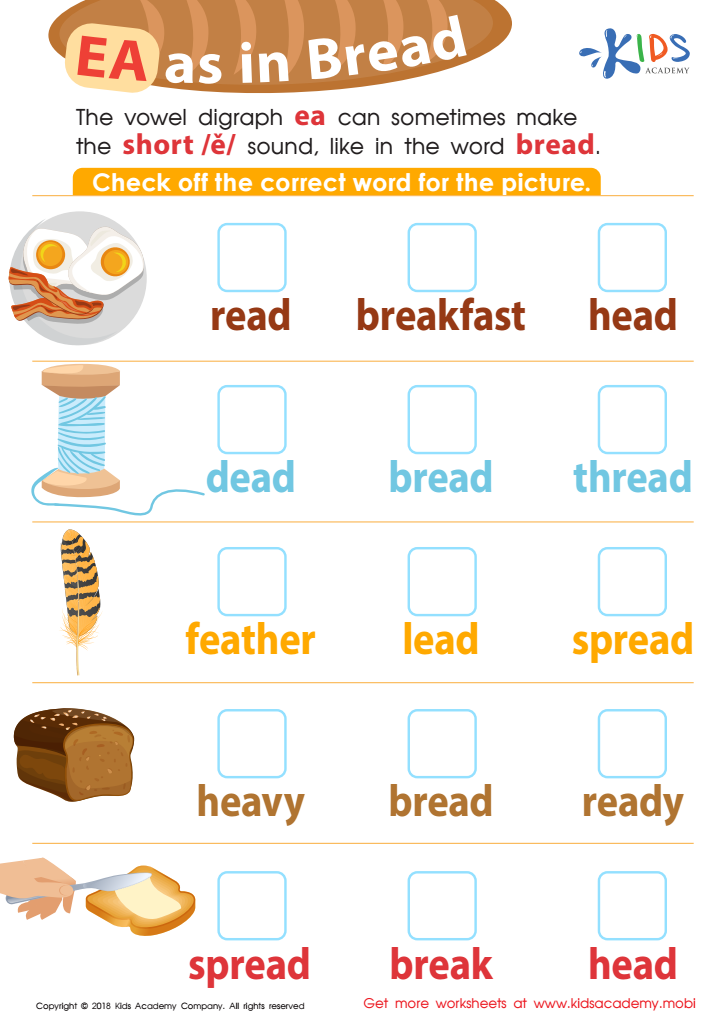
The vowel digraph ea can be read in two ways. Examples of the long sound are "read" and "lead"; examples of the short sound are "bread" and "head". Ask your kids to give you more examples and then have them check off the correct word for the pictures on this worksheet. This will help them understand the ea sound.
Reading: EA as in Bread Worksheet
Worksheet
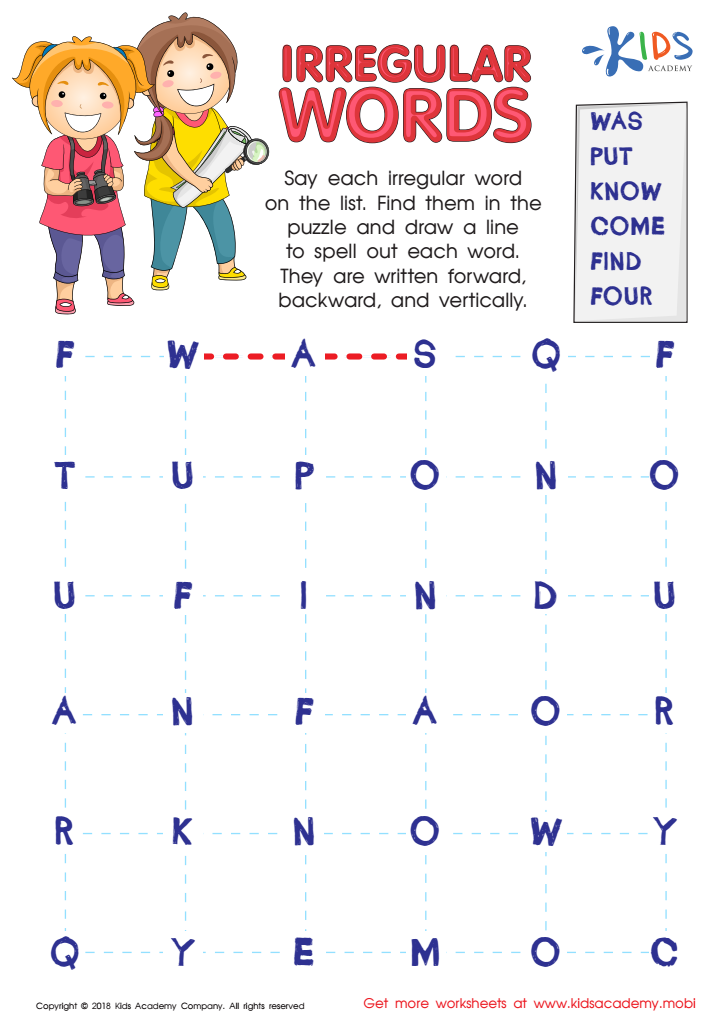
Irregular Words Worksheet

Irregular Words Worksheet

This fun word search worksheet helps kids practice reading irregular words and build their sight word banks. They'll also get practice with visual discrimination and fine motor skills as they hunt down the words.
Irregular Words Worksheet
Worksheet
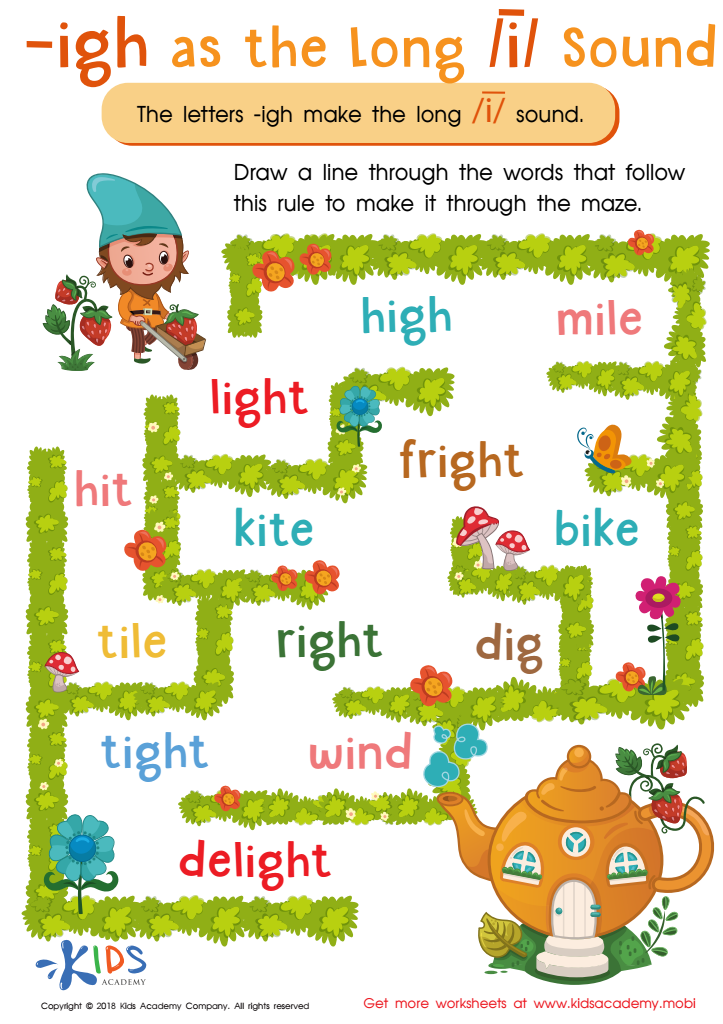
Reading: IGH as Long I Worksheet

Reading: IGH as Long I Worksheet

Kids can have fun and learn with this maze! They'll look for and read words with the 'long I' sound spelled 'igh'. Most words ending with 'T' have this spelling. Decode words while learning about long vowel sounds and their spellings.
Reading: IGH as Long I Worksheet
Worksheet
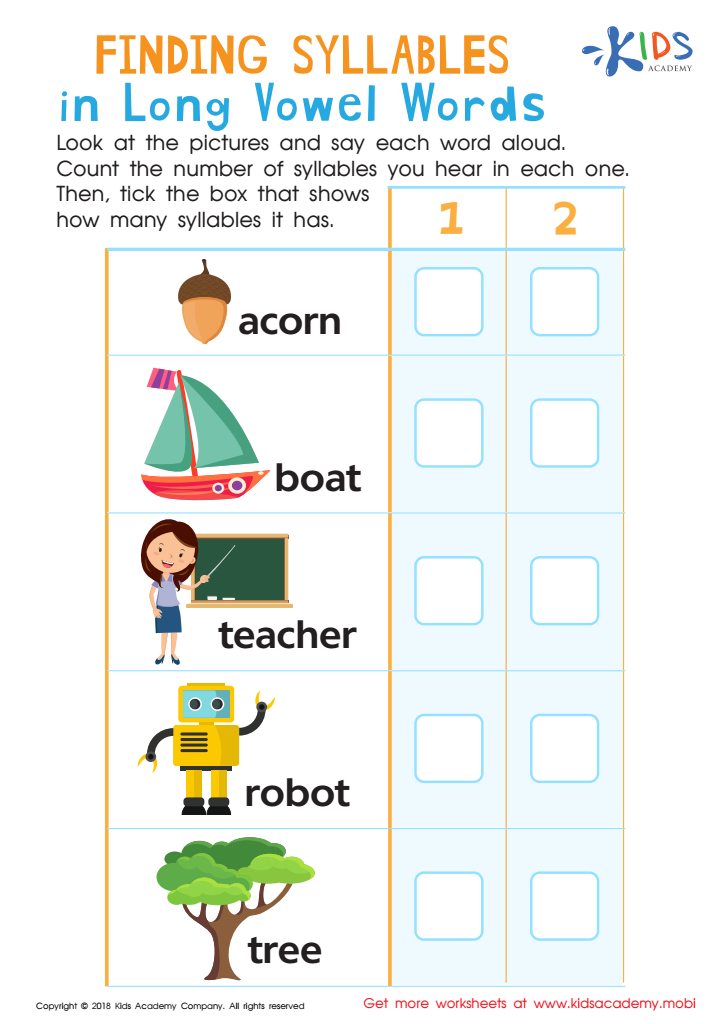
Finding Syllables in Long Vowel Words Worksheet


Finding Syllables in Long Vowel Words Worksheet

Help your kids identify objects and better count syllables in words. Look at the printout images with them and have them say each word out loud. Ask them to count syllables and tick the box with the correct number. With this worksheet, your kids will become more skilled.
Finding Syllables in Long Vowel Words Worksheet

Worksheet


Vocabulary expansion for children aged 7-9 is essential for their academic and social development. At this stage, children are transitioning from learning to read to reading to learn, making a robust vocabulary crucial for their comprehension skills. A strong vocabulary enhances their ability to understand complex texts, express ideas clearly, and engage meaningfully in conversations.

For parents, fostering vocabulary growth supports their child’s confidence in communication, leading to better performance in school. This age is marked by curiosity and exploration; introducing new words allows children to express their thoughts and feelings, encouraging open dialogue between parents and children.

For teachers, vocabulary expansion is a critical component of effective instruction. By integrating rich, varied vocabulary into their teaching, educators can establish strong connections between words and concepts. This not only aids in reading comprehension but also prepares students for future academic challenges.

Additionally, a strong vocabulary promotes critical thinking skills. Children learn to categorize, analyze, and synthesize information, which serves them well in higher education and in their future careers. Ultimately, a robust vocabulary equips children with essential tools for lifelong learning and successful communication, highlighting the need for proactive efforts in vocabulary building at this formative age.