Rhyming skills development Normal Phonics Worksheets for Ages 7-9
4 filtered results
-
From - To
Enhance your child’s phonics journey with our "Rhyming Skills Development" worksheets, tailored for ages 7-9. These engaging worksheets are designed to boost your child's rhyming skills through fun and interactive activities. By using these resources, children can develop a deeper understanding of word patterns, phonetic sounds, and pronunciation, while building a strong foundation in literacy. Each carefully crafted worksheet merges education with entertainment, ensuring children stay motivated and excited to learn. Perfect for both classroom and at-home learning, these worksheets offer a rich, educational experience that aligns with essential phonics development milestones.
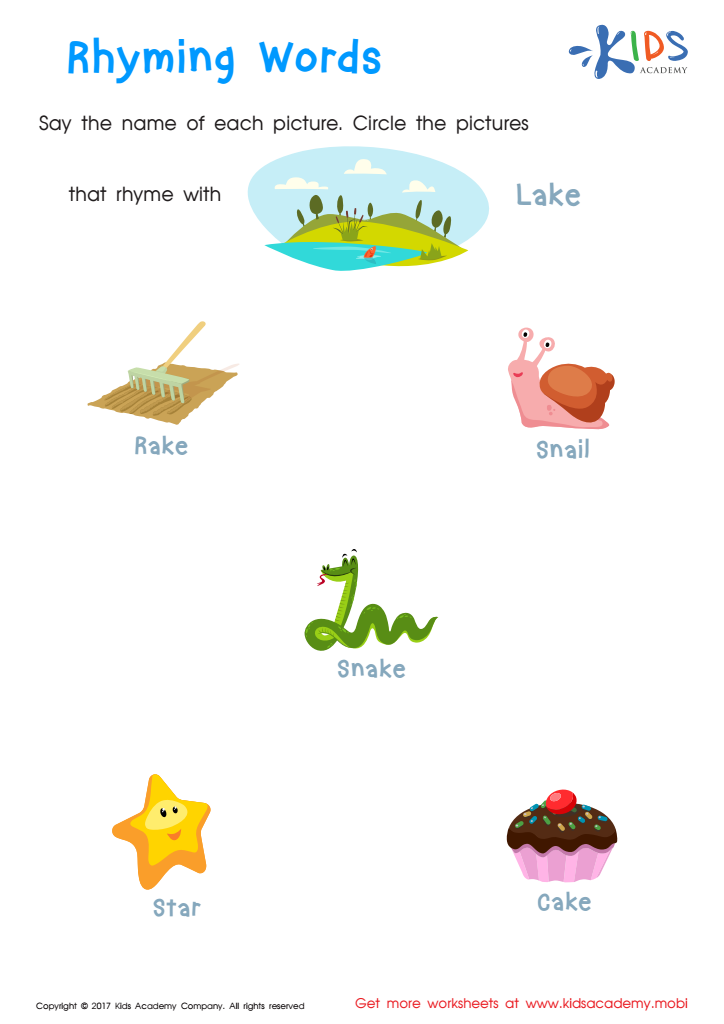
Rhyming Words Rhyming Worksheet
 Assign to My Students
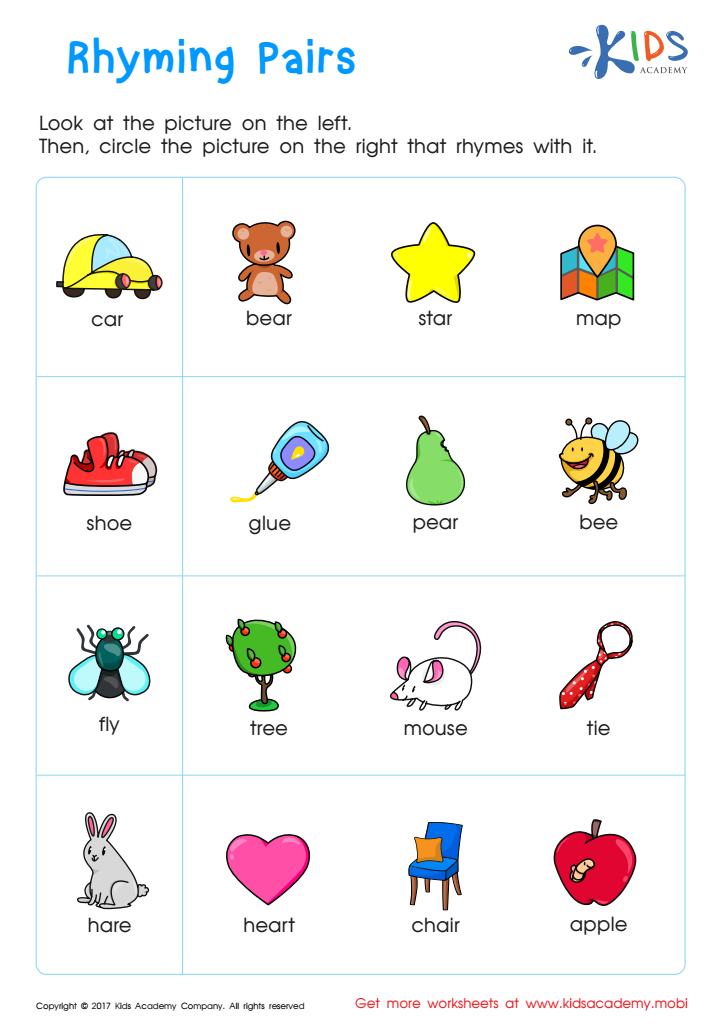
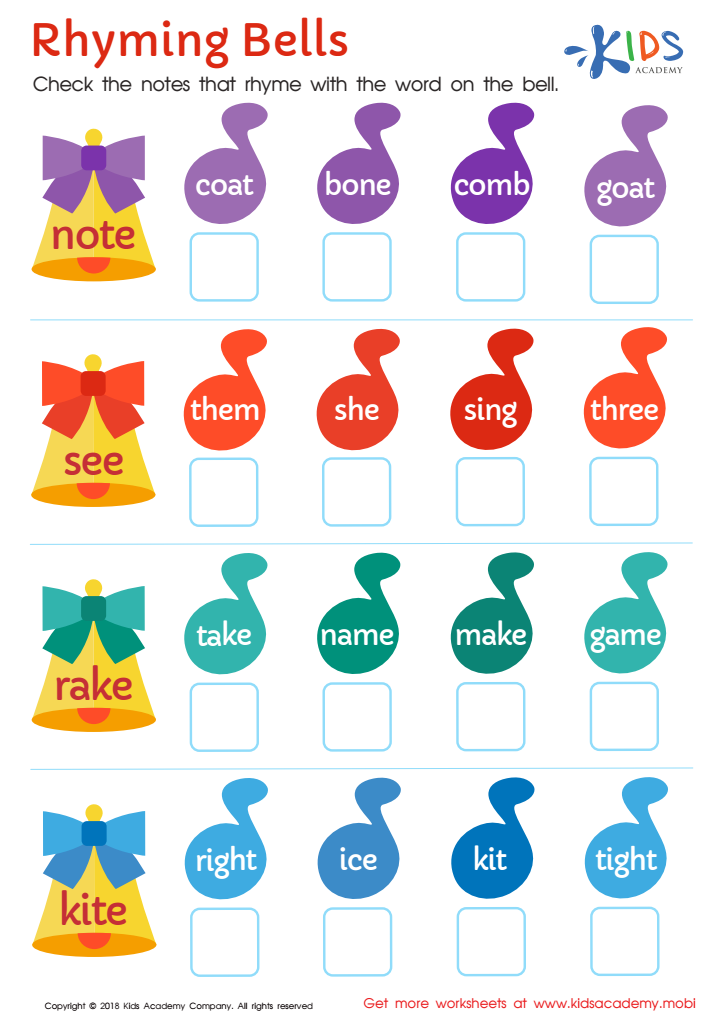
Rhyming Bells Worksheet
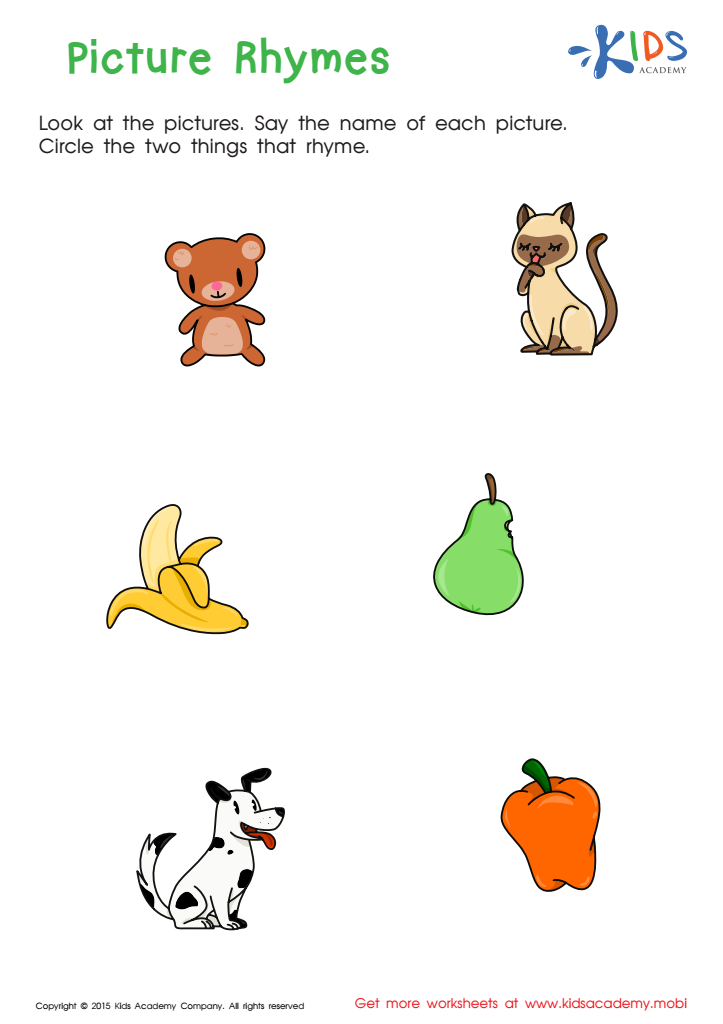
First Words: Picture Rhymes Worksheet








Rhyming skills development in children aged 7-9 plays a crucial role in their overall language learning and literacy foundation. Rhyming enhances phonemic awareness, which is the ability to hear, identify, and manipulate individual sounds in spoken words. This is fundamental as phonemic awareness is a strong predictor of a child's ability to read and spell. When children understand rhymes, it helps them recognize patterns in language, which is essential for decoding new words during reading.
Moreover, rhyming fosters auditory discrimination skills, enabling children to distinguish between different sounds. This also aids in successful listening and verbal communication. Engaging with rhymes can make learning more enjoyable and boost memory retention; children are more likely to remember strings of words that rhyme due to the rhythmic and melodic qualities of rhyming language.
In addition, social interaction improves as children share rhymes and poems with peers, enhancing communication and social skills. Rhyming activities encourage creativity and help children feel more confident in playing with language and sounds. Therefore, teachers and parents should integrate formal and informal rhyming exercises into daily routines to support a child's literacy development, as this skill is foundational for their ongoing educational journey.







