Vocabulary development Normal Phonics Worksheets for Ages 7-9
6 filtered results
-
From - To
Enhance your child's language skills with our expertly designed Vocabulary Development Phonics Worksheets, tailored for ages 7-9. These engaging resources focus on reinforcing phonics to expand vocabulary, improve reading comprehension, and support confident communication. Each worksheet is crafted by educational professionals to combine fun and learning, ensuring your child progresses seamlessly. Packed with varied activities, the worksheets involve decoding words, understanding meanings, and mastering pronunciation. Perfect for classroom support or home learning, our materials are aligned with educational standards, helping young learners achieve essential literacy milestones. Foster your child's love for words and reading with our trusted resources!
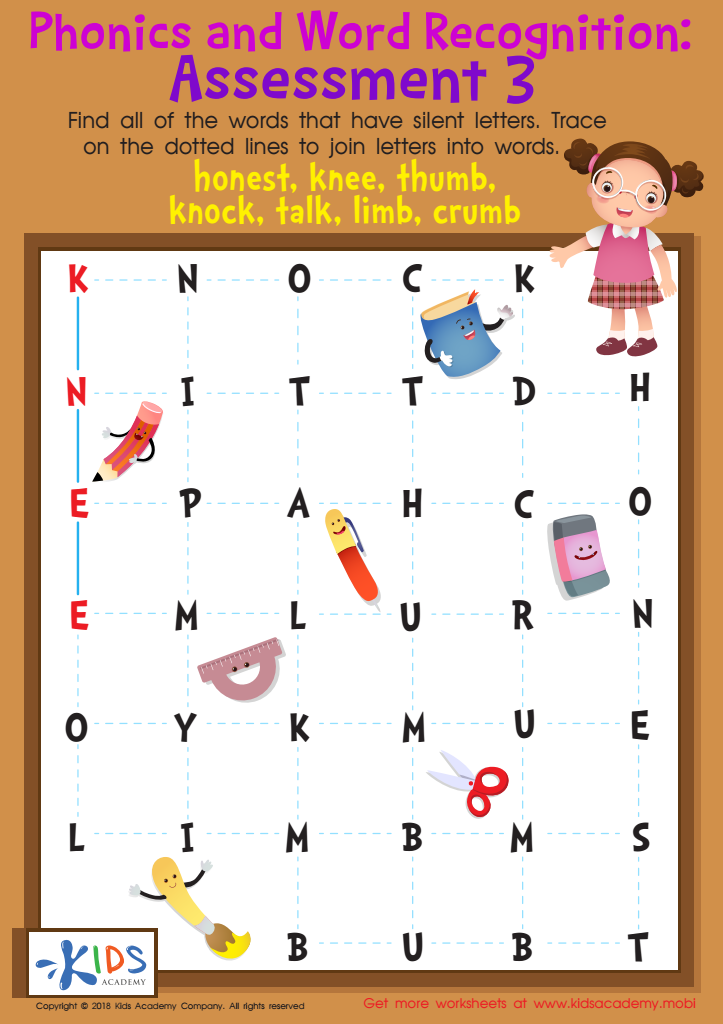
Phonics and Word Recognition: Assessment 3 Worksheet
 Assign to My Students
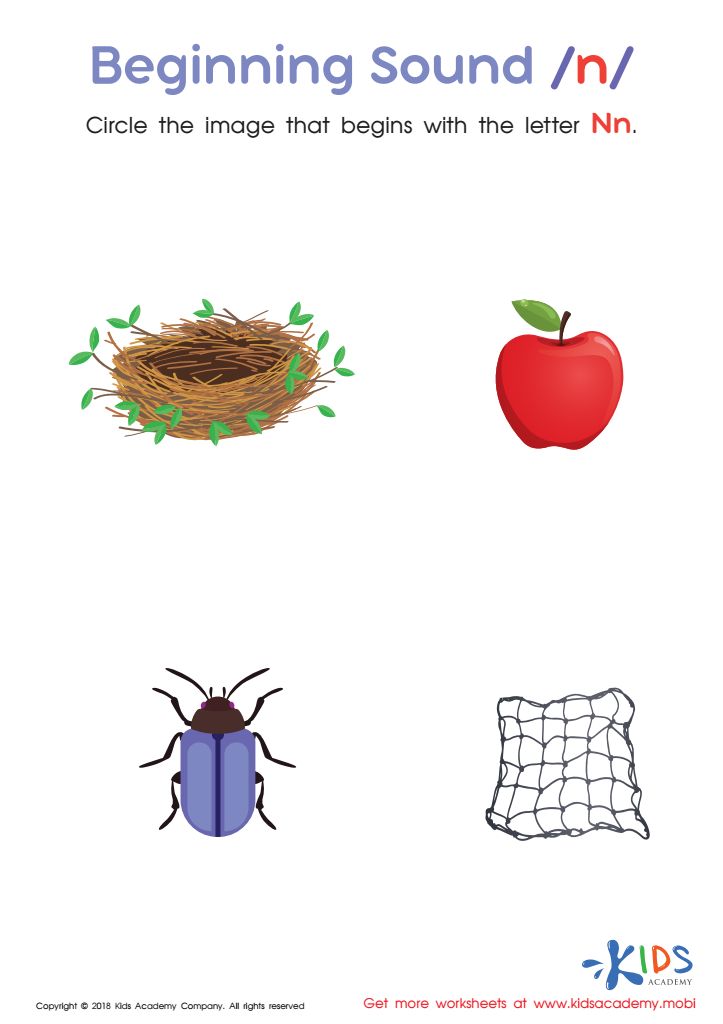
Beginning Sound «n» Worksheet
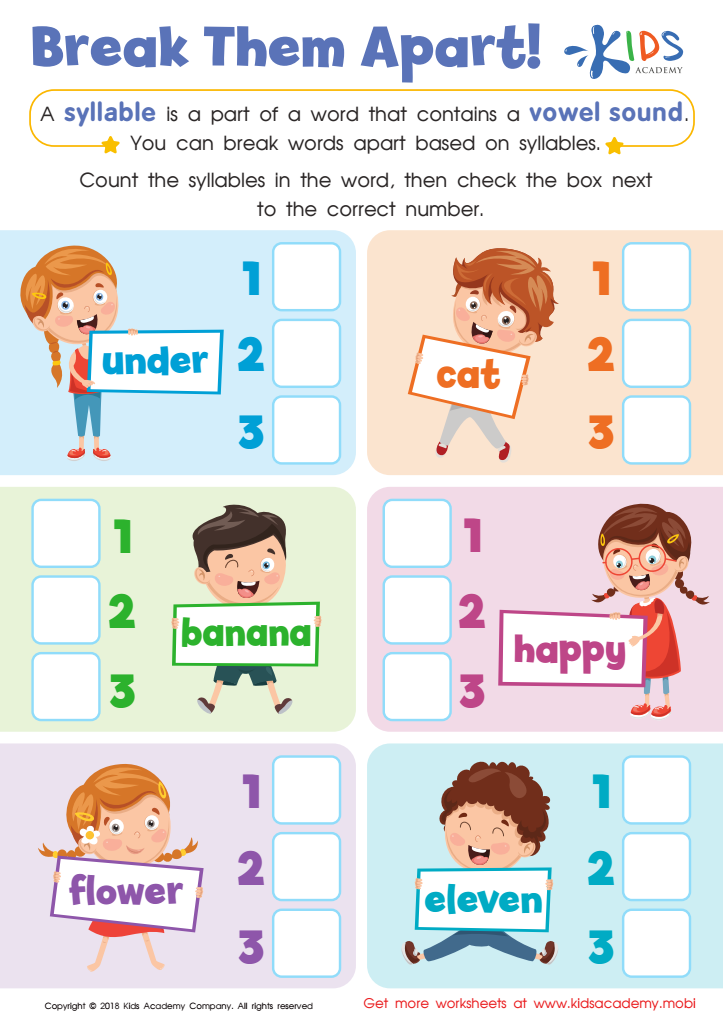
Reading: Break Them Apart Worksheet
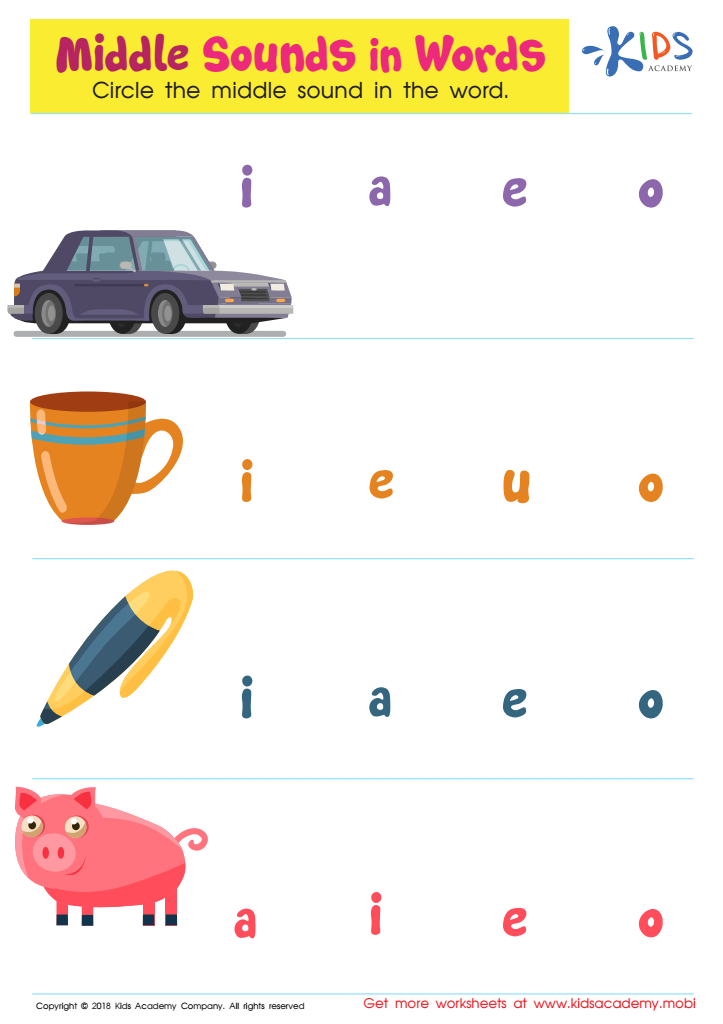
Middle Sounds in Words Worksheet
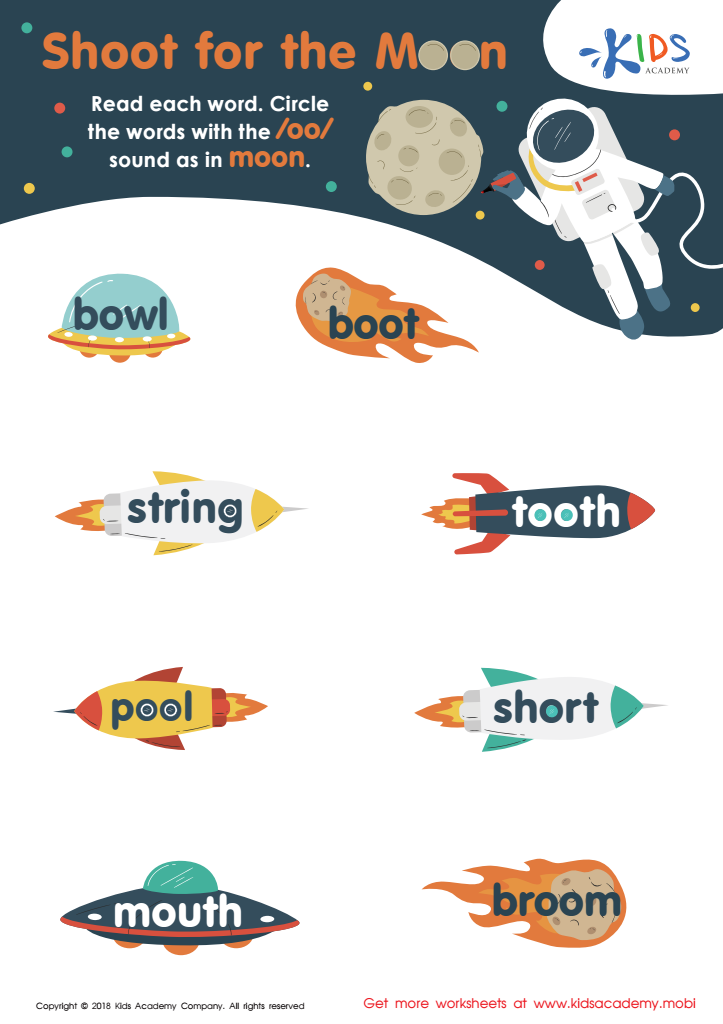
Reading: Shoot for the Moon Worksheet
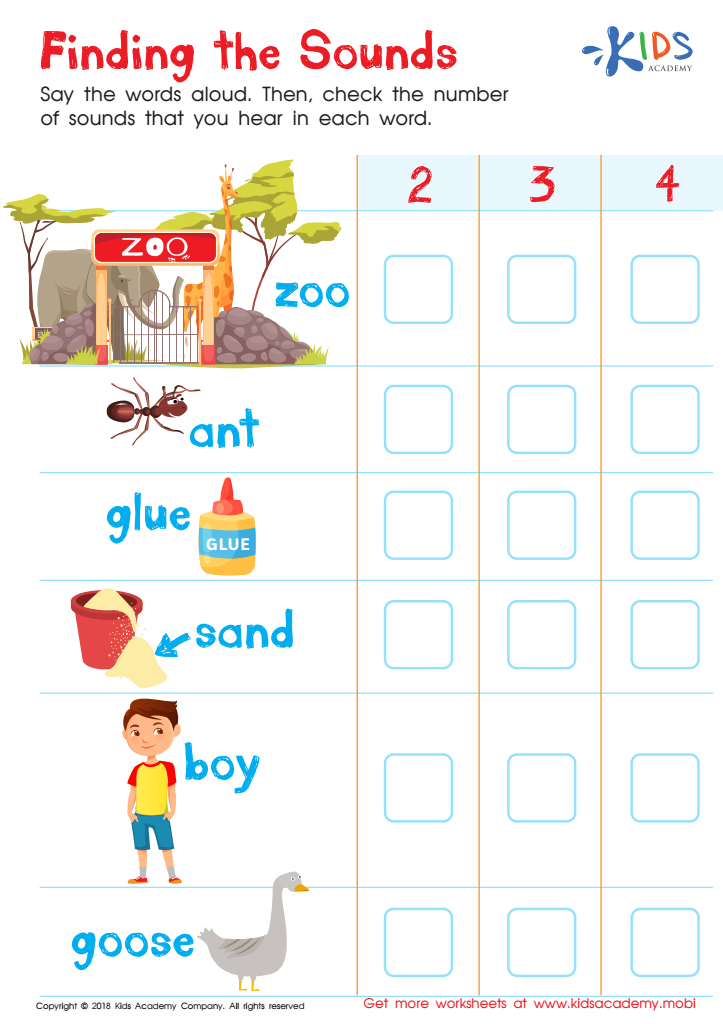
Finding the Sounds Worksheet








Parents and teachers should care about vocabulary development and normal phonics for children aged 7-9 due to their fundamental role in balanced literacy and overall academic growth. At this age, children's brains are highly adaptable and primed for language absorption. A robust vocabulary helps pupils express themselves clearly and understand complex instructions or texts, directly impacting their comprehension and communication skills. Phonics, the relationship between letters and sounds, is crucial for reading proficiency. By mastering phonics, children decode new words more easily, contributing to reading confidence and fluency.
Reading fluency, in turn, opens doors to gaining knowledge across subjects like math, science, and history. Without a solid foundation in phonics and vocabulary, children might struggle to progress intellectually and can become disengaged. Engagement with a wide range of words through reading, conversation, and interactive activities nurtures curiosity and builds a love of learning that lasts into adulthood.
Moreover, strong language skills are linked to better social interactions. Children with a rich vocabulary can articulate their thoughts, understand others, and build stronger relationships with peers. Thus, attention to vocabulary development and phonics is paramount, ensuring children achieve their fullest potential academically and socially.







