Word identification Normal Phonics Worksheets for Ages 7-9
5 filtered results
-
From - To
Enhance your child's reading skills with our Word Identification Normal Phonics Worksheets for ages 7-9. Designed specifically for young learners, these engaging worksheets help kids excel in recognizing and understanding words through phonics. Each exercise is crafted to reinforce essential word identification skills, boosting confidence and proficiency in reading. Perfect for use at home or in the classroom, our colorful and interactive phonics worksheets make learning fun and effective. Discover a wide range of activities that cater to different learning styles and pave the way for literacy success at Kids Academy.
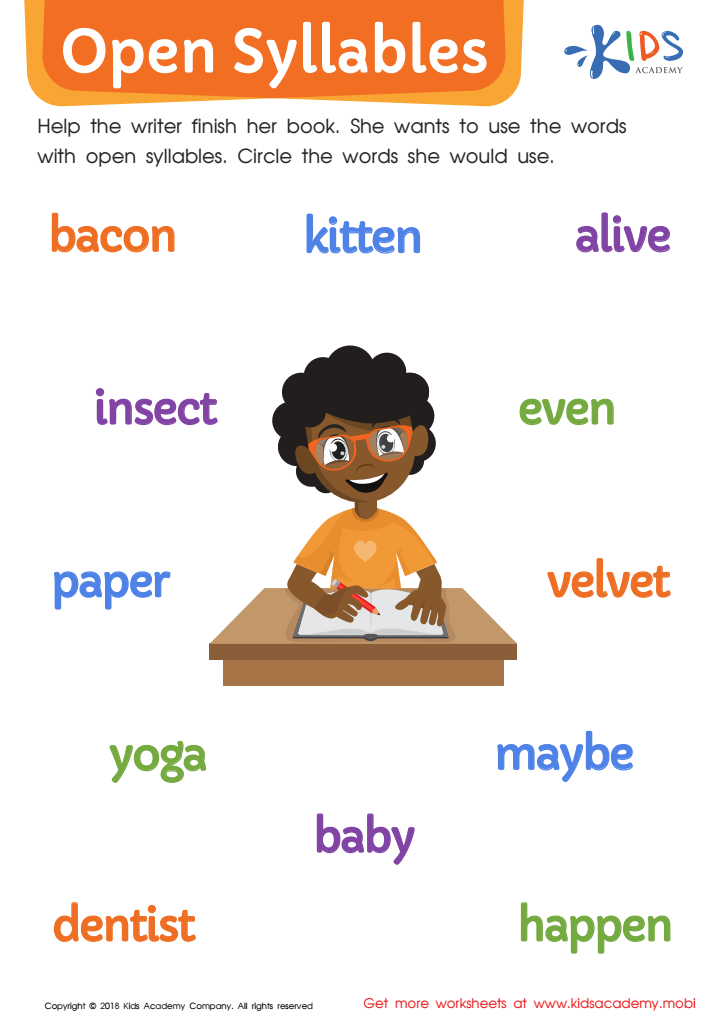
Open Syllables Worksheet
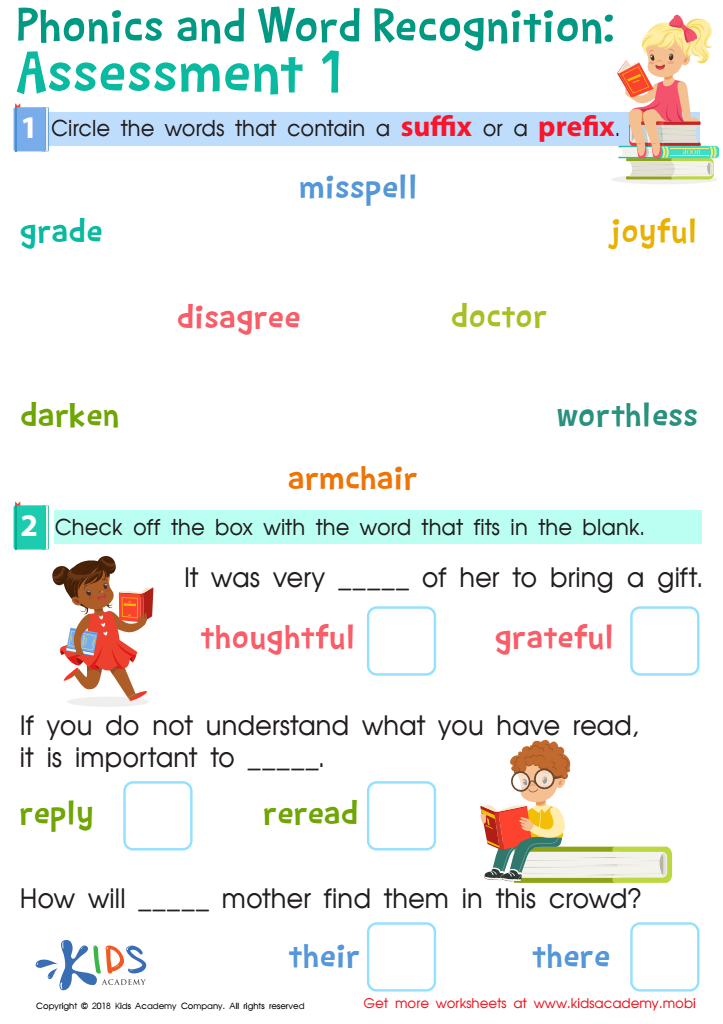
Phonics and Word Recognition: Assessment 1 Worksheet
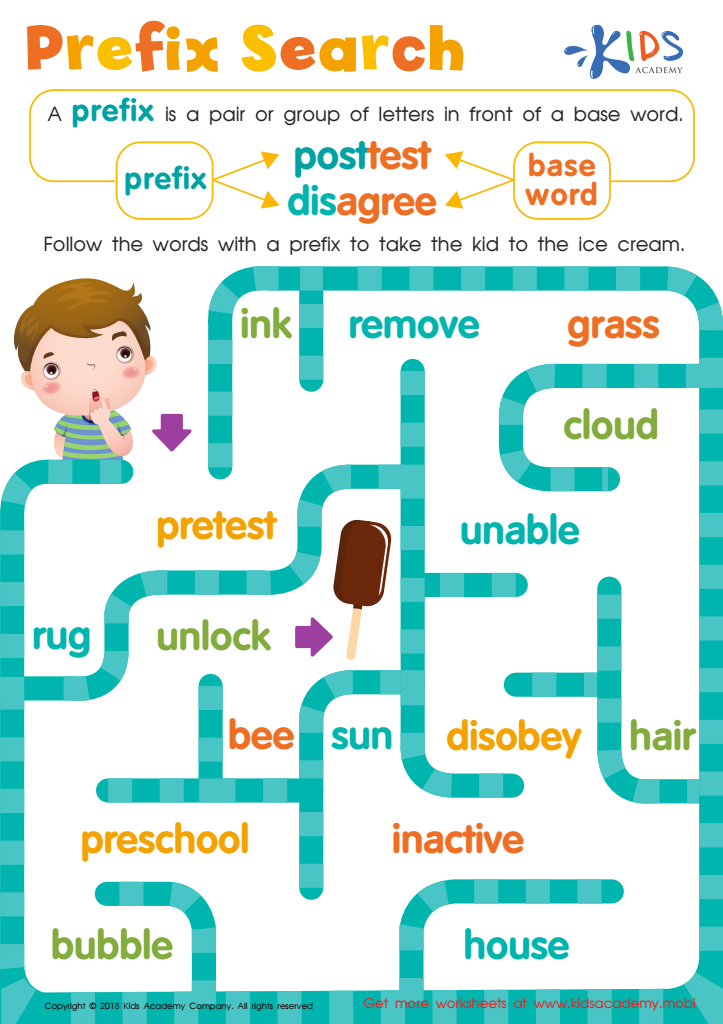
Reading: Prefix Search Worksheet
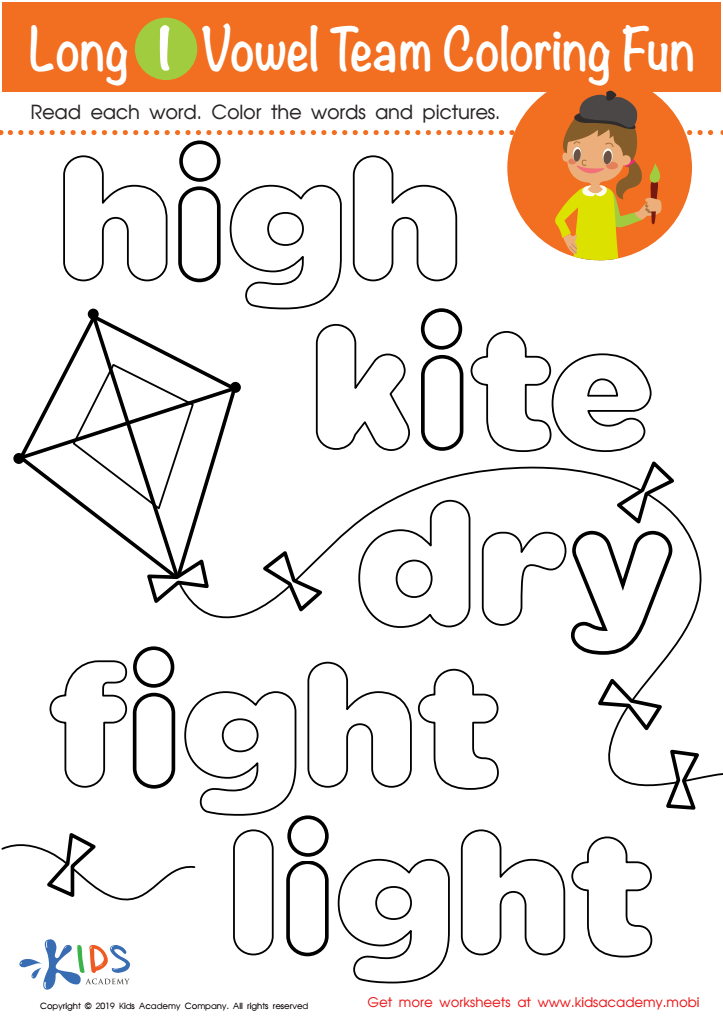
Long I Vowel Team Coloring Worksheet
 Assign to My Students
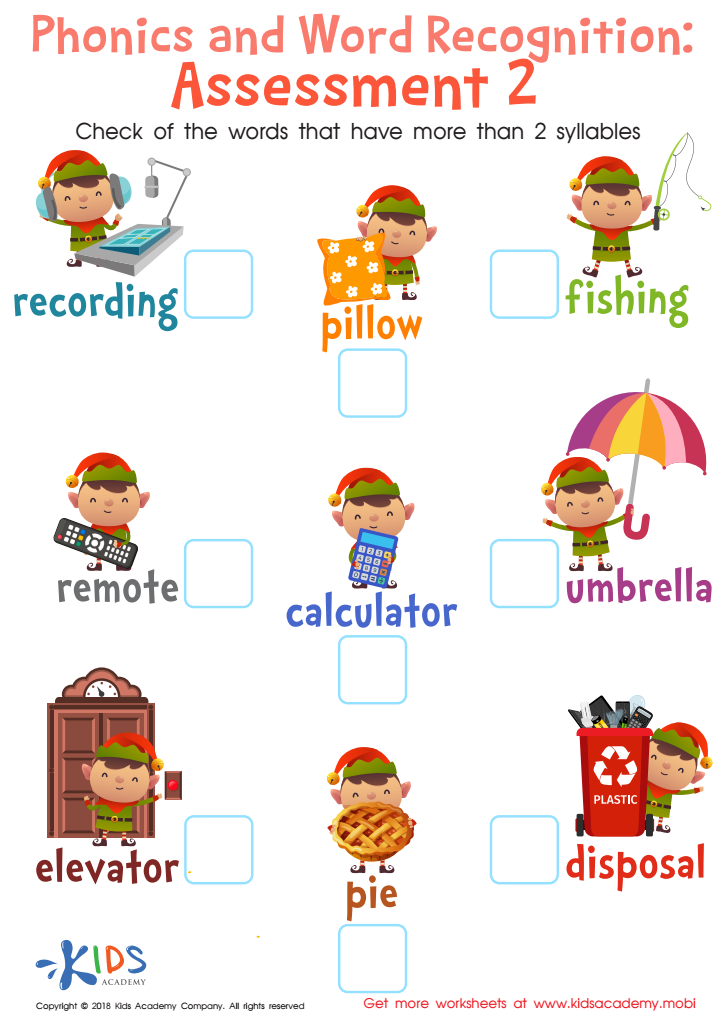
Phonics and Word Recognition: Assessment 2 Worksheet








Word identification and normal phonics for children ages 7-9 are pivotal components in early literacy and education, setting the foundation for lifelong learning and communication. During these formative years, children transition from learning to read to reading to learn. Mastery of word identification allows them to recognize and understand words swiftly, which facilitates smoother reading and enhances their comprehension skills.
Phonics, which is the method of teaching reading based on the sounds that letters represent, is fundamental to developing these skills. It equips children with the ability to decode unfamiliar words by recognizing patterns, letter combinations, and sounds. When parents and teachers prioritize phonics, they ensure that children build robust reading skills, aiding their vocabulary expansion and fostering a love for reading.
Moreover, effective word identification and phonics instruction have profound academic and emotional benefits. Academically, children proficient in these areas perform better across subjects as reading is integral to math, science, and social studies. Emotionally, strong reading skills bolster children's self-confidence and independence, as they are less likely to struggle with reading-related tasks.
Overall, investing in word identification and phonics is investing in children’s comprehensive development, enabling them to thrive academically and socially. Enthusiastic participation from both parents and teachers in enhancing these skills can make a towering difference in a child's educational journey.







