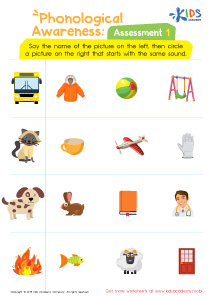
Normal Rhyming Worksheets for Ages 7-9
12 filtered results
-
From - To
Introducing our vibrant and engaging "Normal Rhyming Worksheets for Ages 7-9," designed to make language fun and educational! Perfect for young learners, these worksheets enhance phonemic awareness and boost reading skills. Through playful activities, children will practice recognizing rhyme pairs and build a stronger vocabulary while having a blast. Each worksheet offers a delightful mix of challenges, from matching rhyming words to crafting simple poems. With colorful illustrations and captivating exercises, our rhyming worksheets are perfect for home or classroom use. Foster a love for reading and help your child excel with our dynamic and enjoyable resources.
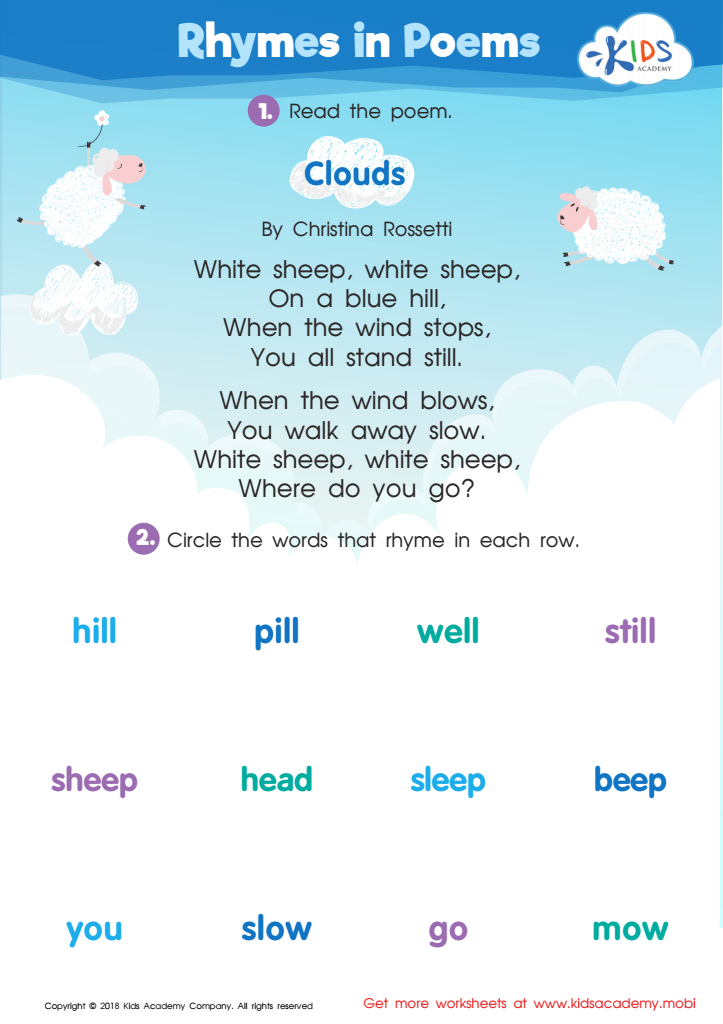
Rhymes in Poems Worksheet
 Assign to My Students
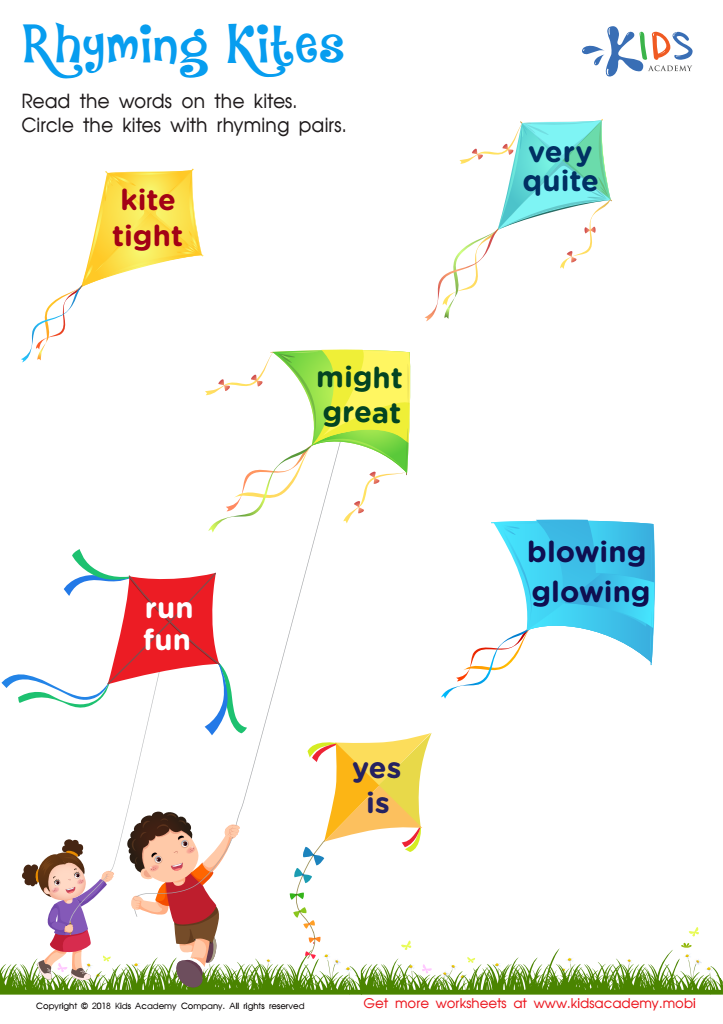
Rhyming Kites Worksheet
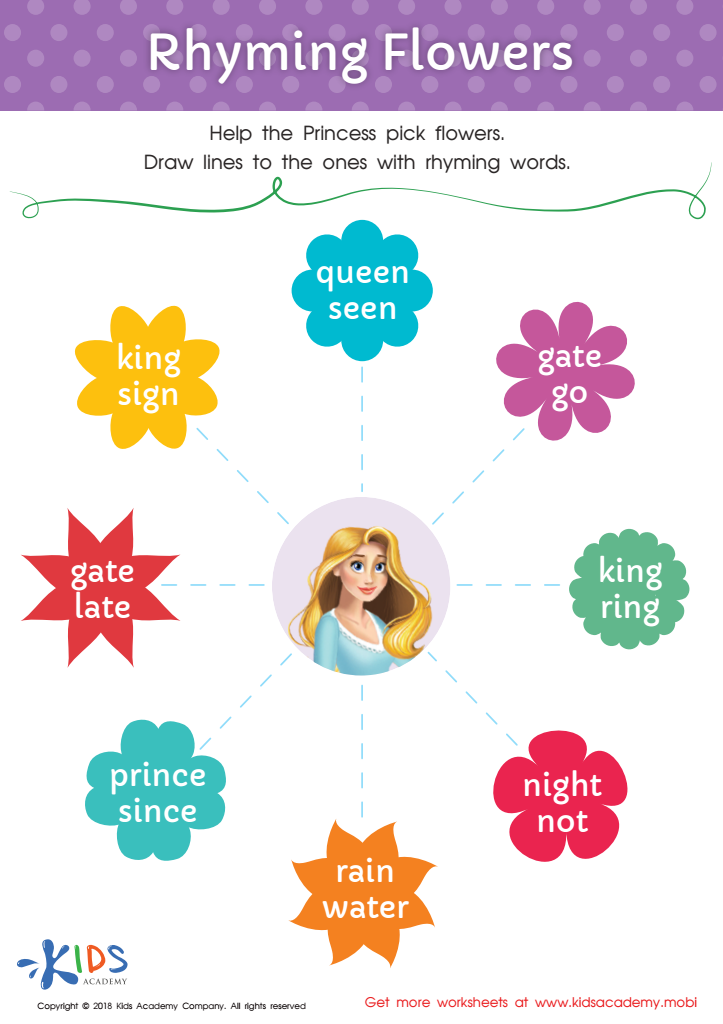
Rhyming Flowers Worksheet
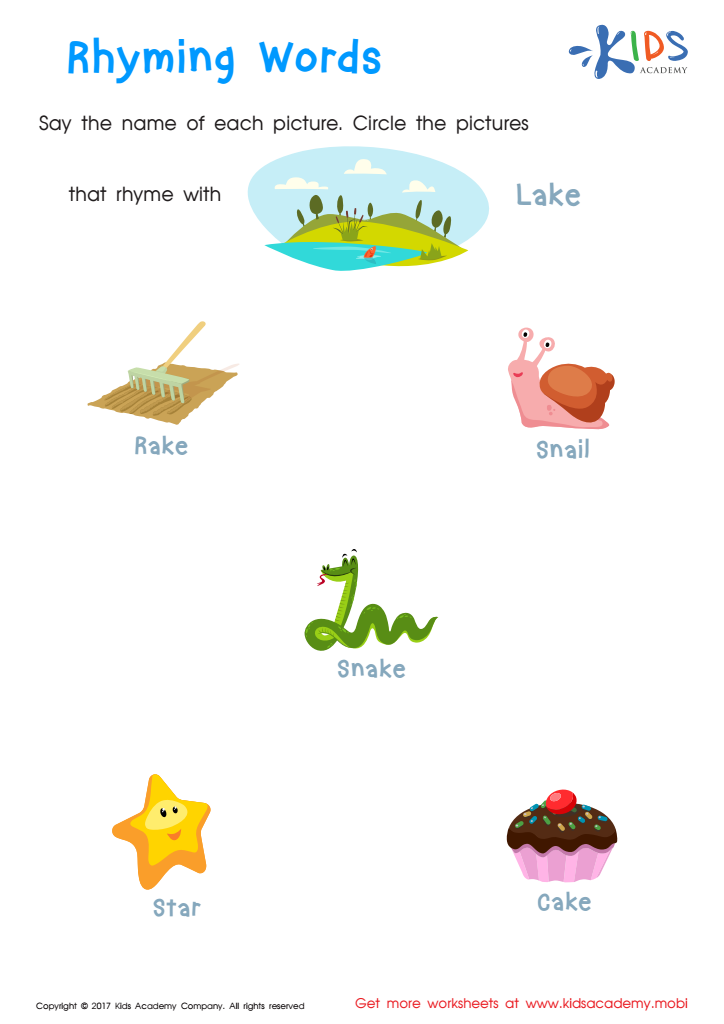
Rhyming Words Rhyming Worksheet
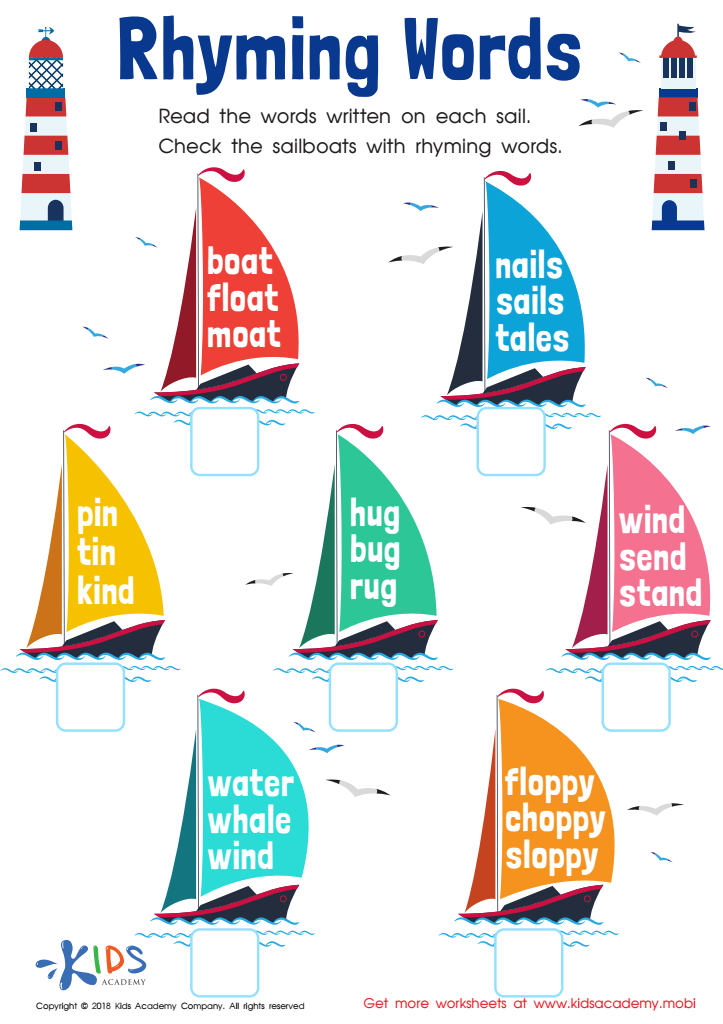
Rhyming Words Worksheet
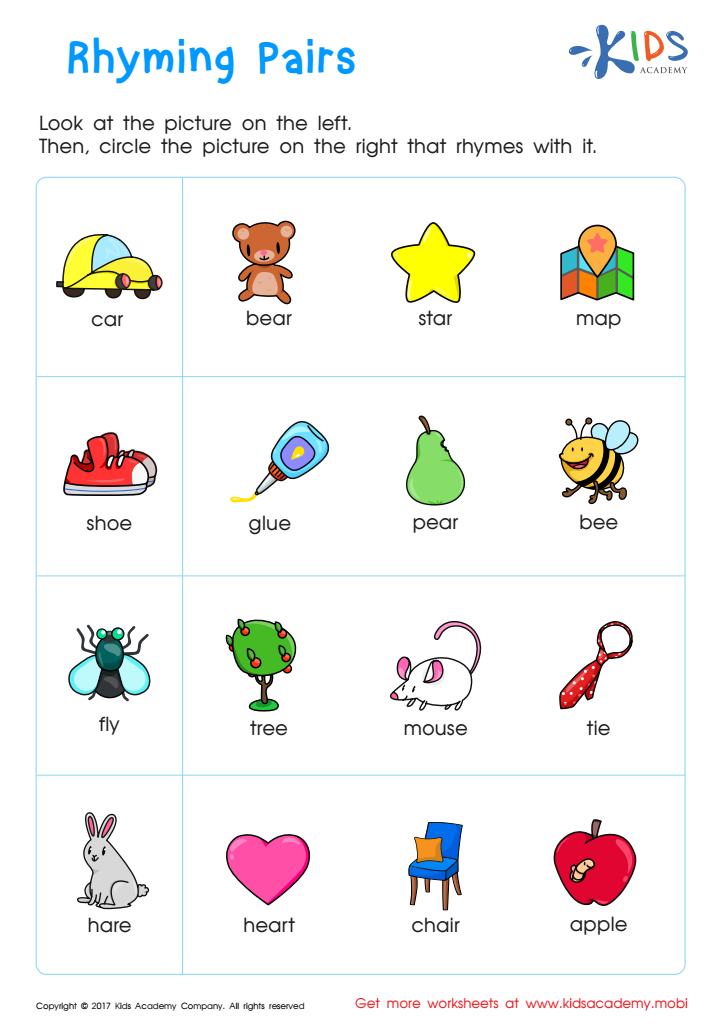
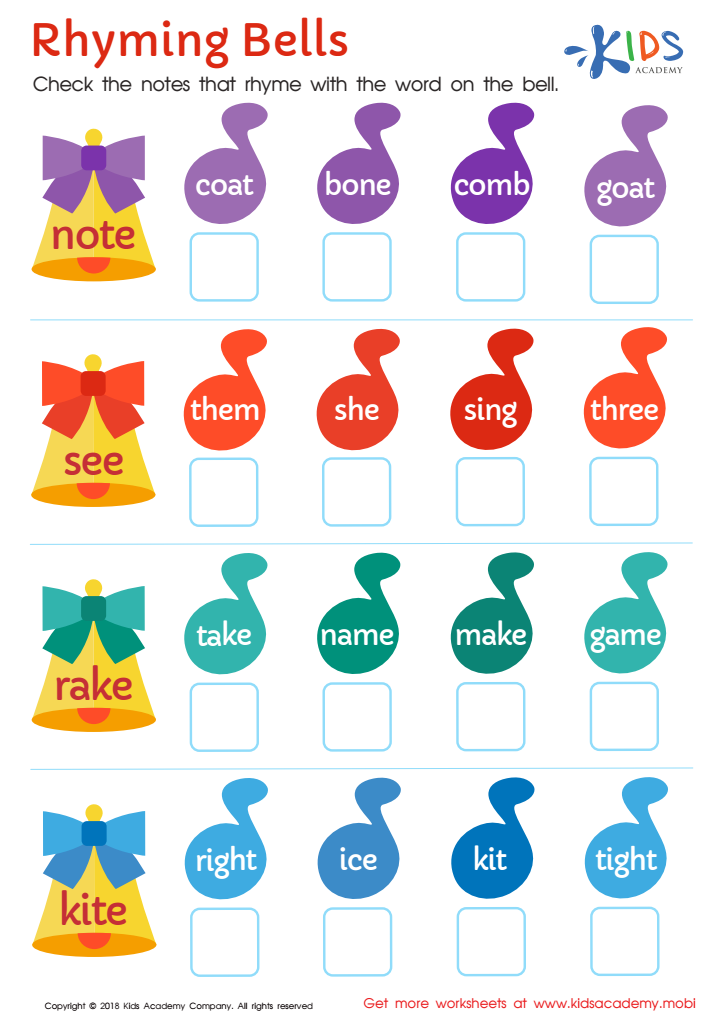
Rhyming Bells Worksheet
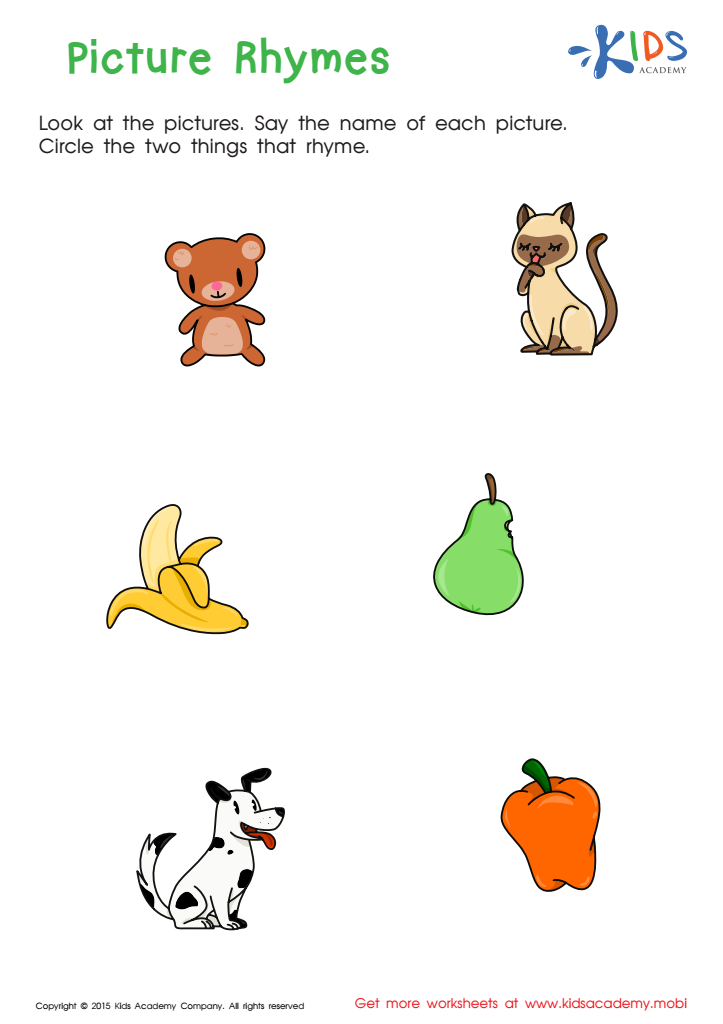
First Words: Picture Rhymes Worksheet
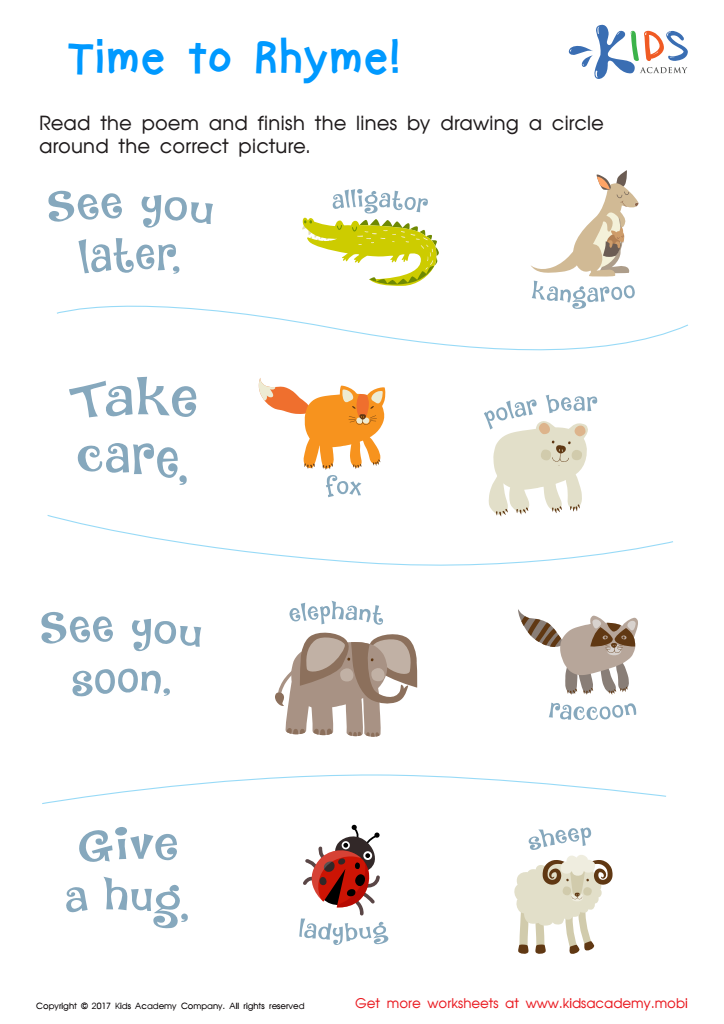
Time to Rhyme Rhyming Worksheet
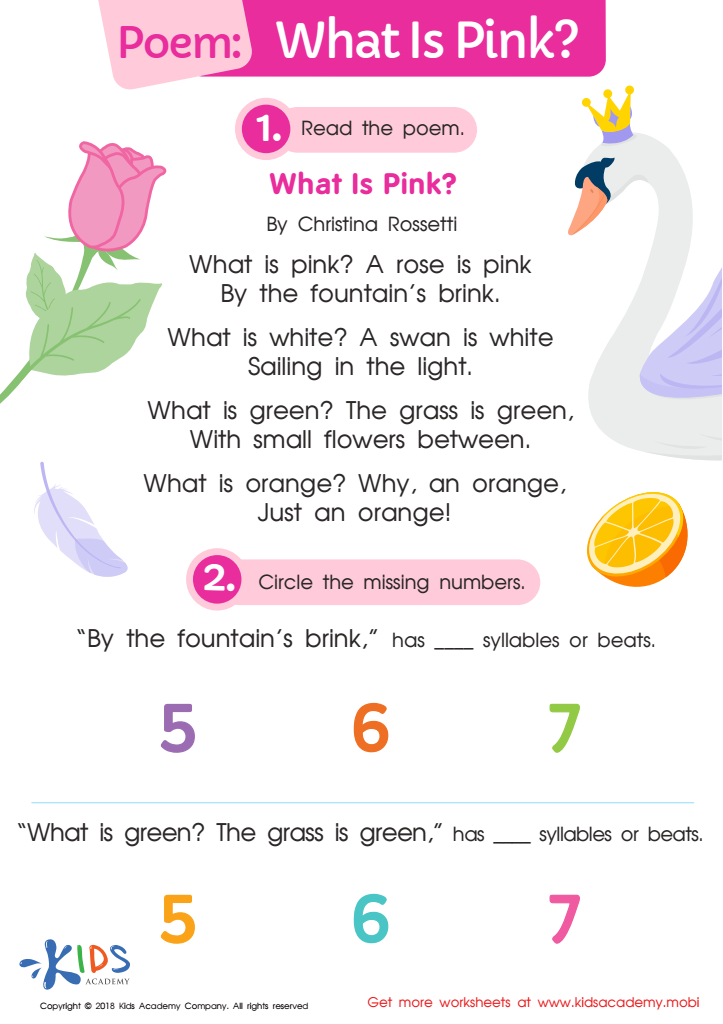
Poem: What Is Pink? Worksheet
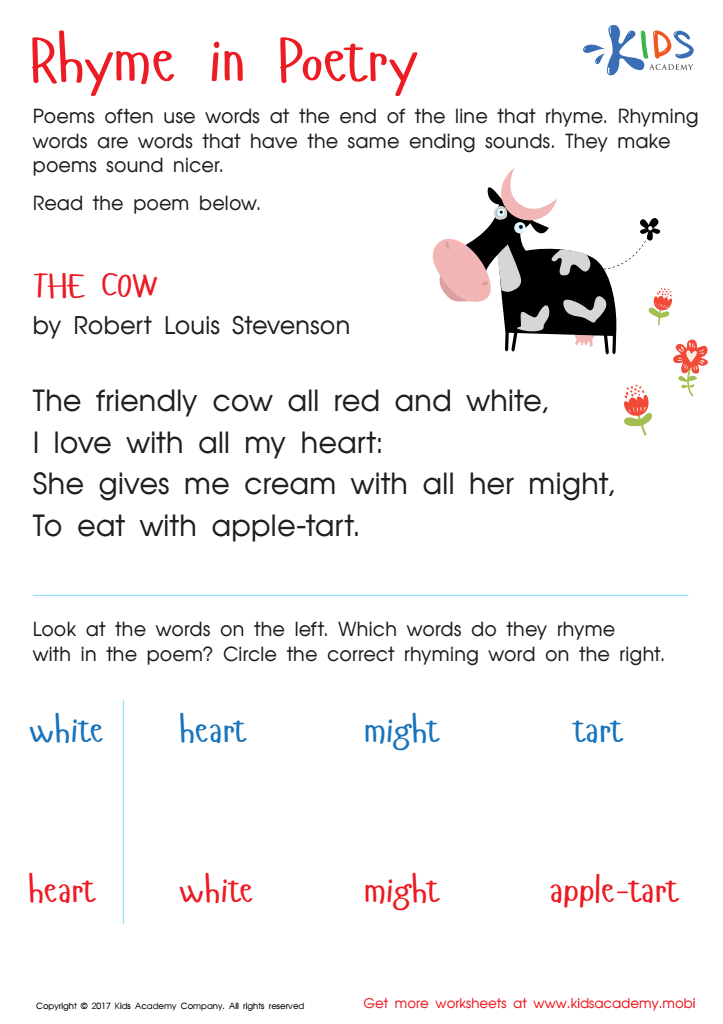
Rhyme In Poetry Worksheet
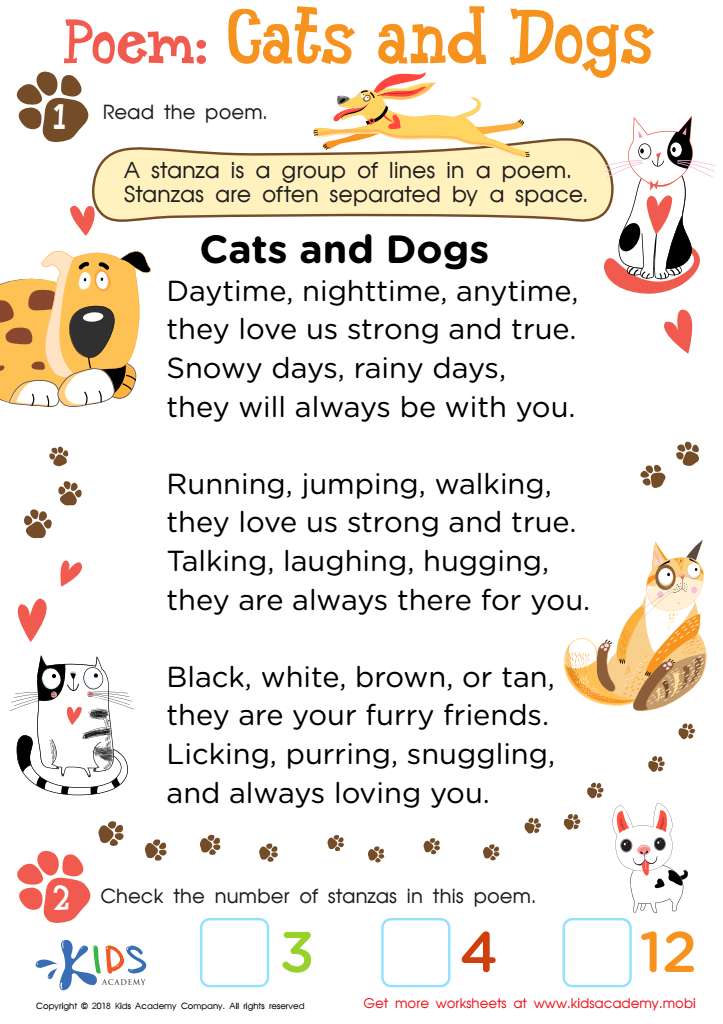
Poem: Cats and Dogs Worksheet








Parents and teachers should care about normal rhyming for children aged 7-9 because it is a foundational skill that significantly impacts their language development and literacy skills. At this stage, children are transitioning from learning to read to reading to learn, and rhyming exercises help reinforce phonemic awareness—the ability to hear, identify, and manipulate individual sounds in spoken words. Phonemic awareness is closely linked to reading proficiency; children who understand rhyme can detect analogies in word patterns, aiding in their ability to decode new words.
Moreover, rhyming enhances a child's ability to predict and construct words, which bolsters their spelling and creative writing skills. Engagement with rhymes can also make language learning fun and memorable, encouraging a positive attitude toward reading and phonics. Rhyming stories, songs, and poems captivate children’s attention, making learning a dynamic and enjoyable process. In addition to academic benefits, rhyming can be a social activity, promoting interactive play, listening, and communication skills. It can also serve as an emotional bonding experience between children and adults, fostering support and encouragement in a friendly and stimulating environment. Integrating rhymes into daily lessons and home practices creates a rich linguistic environment crucial for comprehensive early development.