Reading comprehension Normal Short Vowels Worksheets for Ages 7-9
5 filtered results
-
From - To
Enhance your child's reading skills with our Reading Comprehension Normal Short Vowels Worksheets, designed specifically for ages 7-9. These worksheets focus on standard short vowels and provide engaging exercises to help young learners improve their reading proficiency. Each worksheet includes a variety of activities aimed at boosting vocabulary, decoding words, and understanding basic sentence structures. Perfect for reinforcing language arts lessons, these educational resources make learning fun and effective. Give your child the tools they need to succeed in reading comprehension by incorporating these expertly crafted worksheets into your daily routine. Visit our website to download and start today!
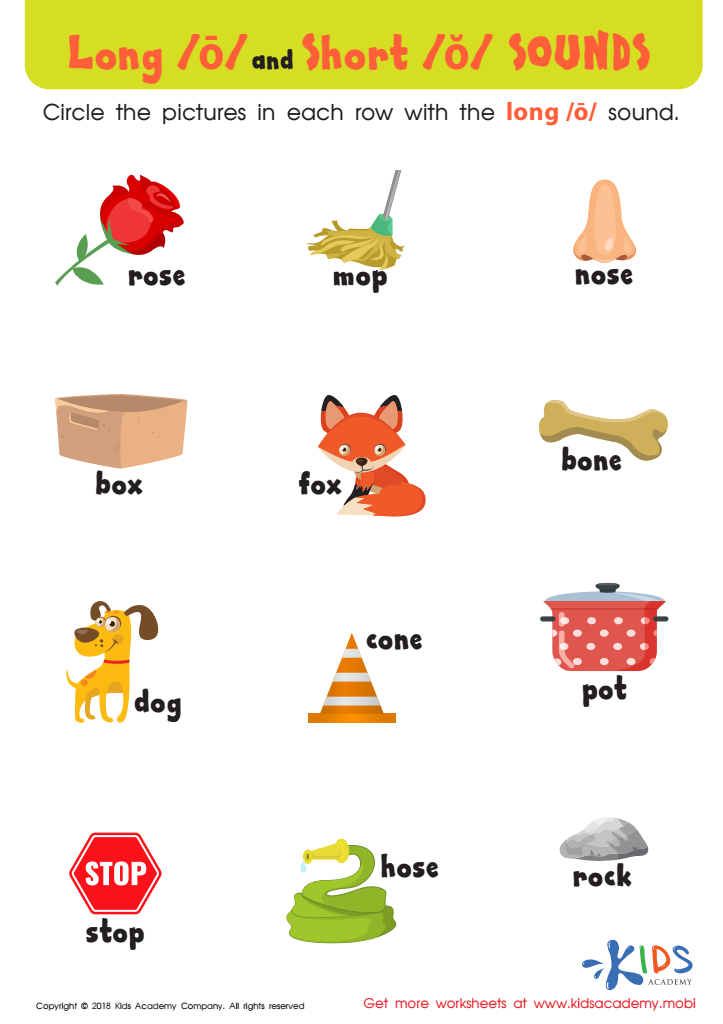
Reading: Long O and Short O Sounds Worksheet
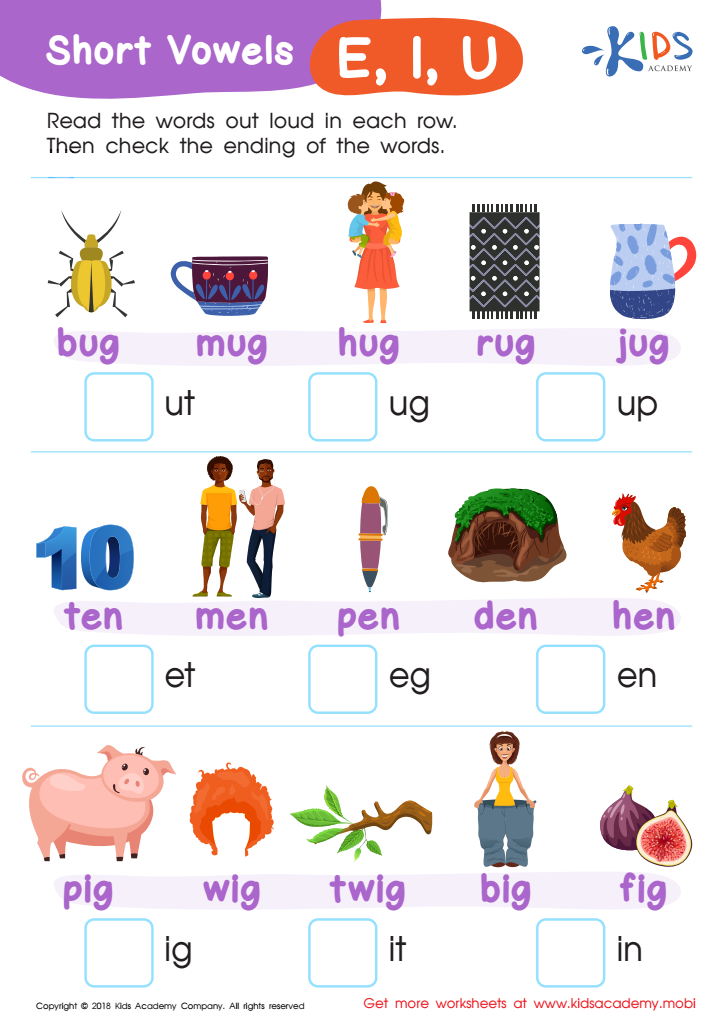
Short Vowels /e/, /i/, and /u/ Worksheet
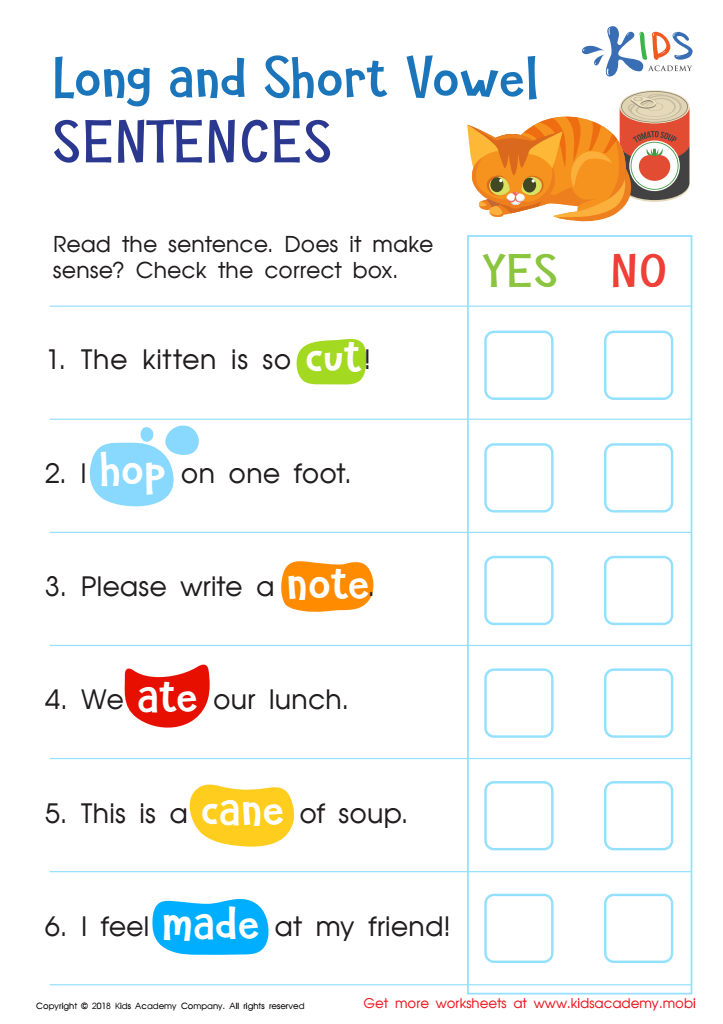
Long and Short Vowel Sentences: Assessment Worksheet
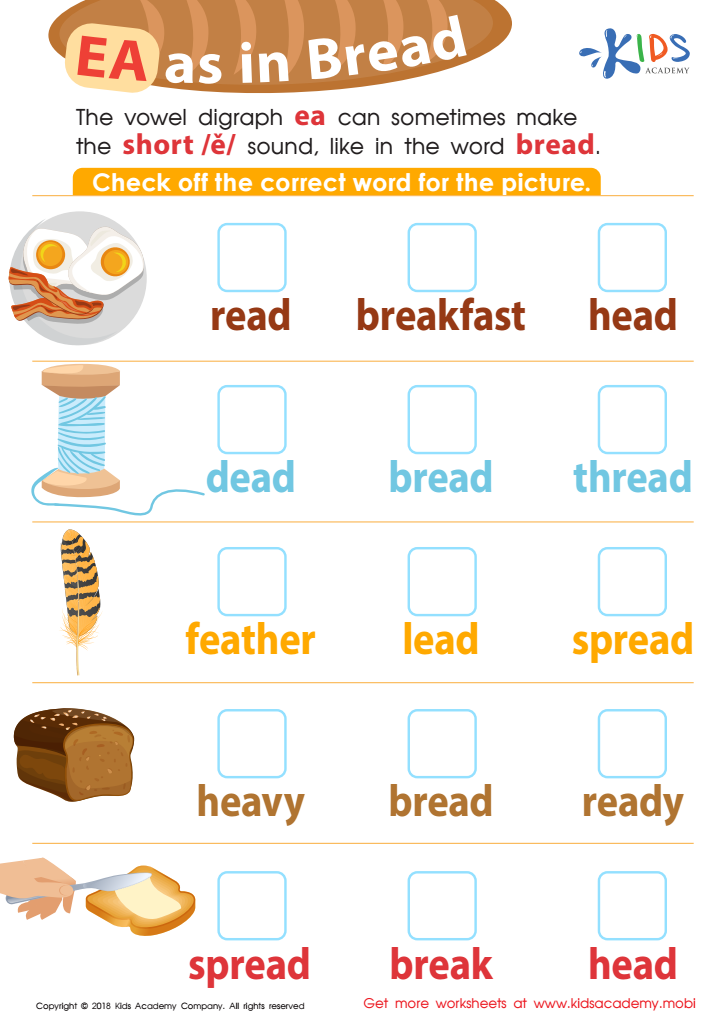
Reading: EA as in Bread Worksheet
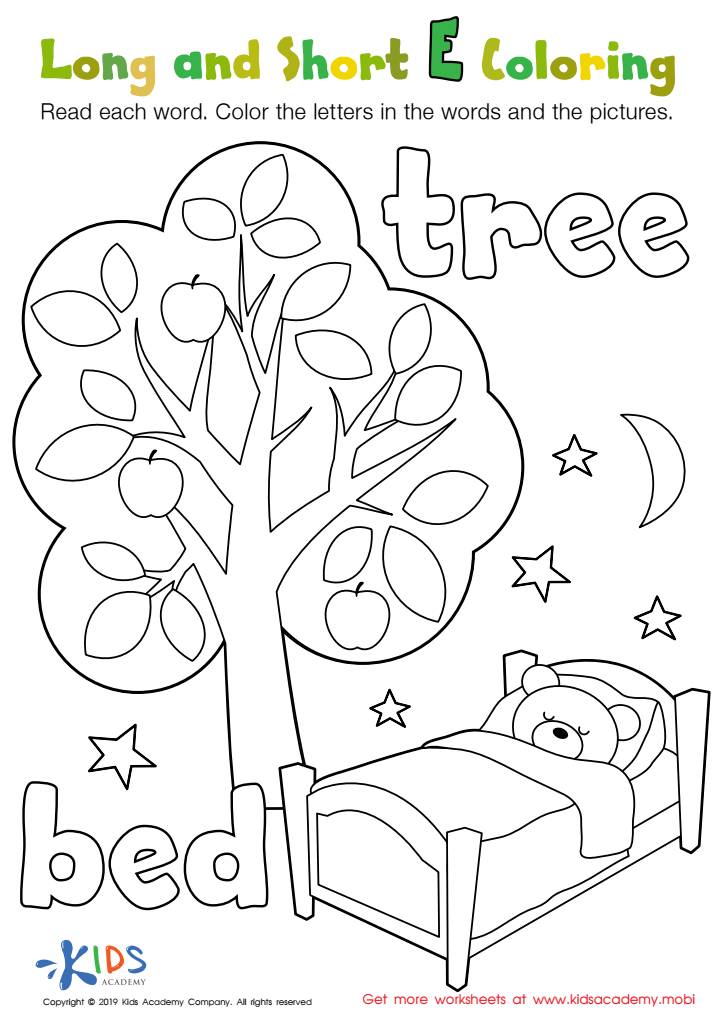
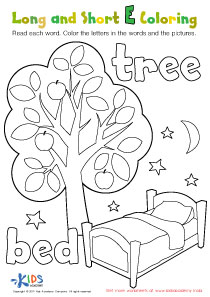
Long and Short E Worksheet
 Assign to My Students



Reading comprehension is a vital skill for young learners, and a focus on normal short vowels is particularly important for children ages 7-9. This developmental stage is crucial because children are transitioning from "learning to read" to "reading to learn." Mastery of short vowels forms the foundation for accurate and fluent reading, directly influencing comprehension.
Short vowels are present in many basic, everyday words that children commonly encounter. Understanding these vowel sounds helps young readers decode words quickly and effectively, boosting their confidence and reading fluency. Without strong skills in short vowel recognition, children may stumble over simple words, leading to frustration and reduced motivation to read.
Improved reading comprehension enables children to better grasp the meaning of texts, enhancing their overall learning experience. When students can read and understand written material effortlessly, they are more likely to engage with books, follow instructions, and succeed across various subjects. Moreover, early mastery of short vowels aids in spelling, writing, and oral language skills, all of which are interconnected aspects of literacy.
Parents and teachers should prioritize short vowel instruction to lay a strong literacy foundation. By doing so, they can support lifelong reading habits, academic success, and a love of learning in children during these formative years.